
FLORIDA · BIG CYPRESS NATIONAL PRESERVE · JANUARY
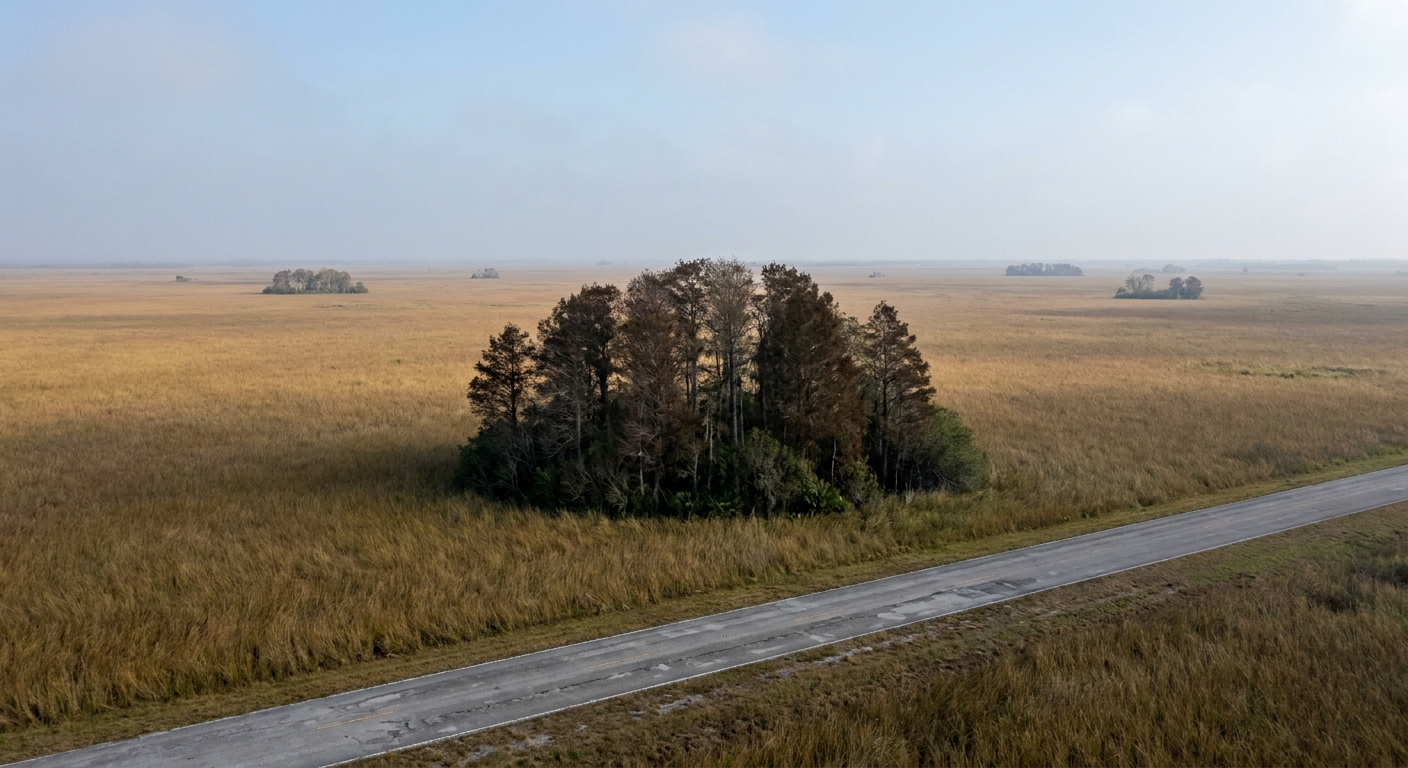
West of Miami, the Tamiami Trail runs straight into a country of cypress domes, sawgrass prairie and dark strands of water. In January the drive out on US-41 lands in Florida’s dry season, with cool air at dawn and afternoons made for walking a boardwalk in shirtsleeves.
You have already picked the preserve. The open question is the date. January brings the lightest rain of the three midwinter months and the coolest mornings. It also brings short days and chilly nights inland. If a bigger south Florida trip is taking shape around it, our Everglades guide covers the national park next door, and the seven-day itinerary shows how the two fit into one week.
JANUARY AT A GLANCE · BIG CYPRESS NATIONAL PRESERVE
January suits a walking-and-driving trip into Big Cypress: the least rain of December, January and February on NOAA’s Miami record, cool mornings, and 10 hours 45 minutes of daylight to fill.
DRY SEASON · NOAA MIAMI NORMALS 1991–2020 · TWO DAYS · CAR ESSENTIAL
Go for: boardwalk and trail walks at midday, dry gravel drives on Loop Road and Turner River Road, and a drier sky than December or February.
Think twice before: tent camping without a warm sleeping bag. The 61.0°F low comes from Miami, and inland nights run colder.
Climate: NOAA NCEI, Miami station · Daylight: sunrise-sunset.org · full sources at the end
On this page
- Big Cypress weather in January76.2°F highs, 61.0°F lows, 3.8 rain days
- How cold Big Cypress gets on January morningsWhat to wear at 7 a.m. and 2 p.m., and frost
- Big Cypress crowds and prices in JanuaryHoliday weeks, booking order, lodging tax
- Things to do in Big Cypress in JanuaryOasis Visitor Center, Kirby Storter, Loop Road
- A two-day Big Cypress itineraryDay one on Loop Road, day two on Turner River Road
- January vs December and FebruaryHow the three months compare on rain and warmth
- Is January a good time to visit Big Cypress?Who should go, and why February is the fallback
Every figure here comes from one NOAA station in Miami, on the coast, and our sources hold no thermometer inside the preserve. Read the temperatures below as the city’s, with inland dawns running colder. For the preserve’s other months, start from our Big Cypress overview, and for the whole state’s calendar, the Florida best-time guide.
Big Cypress National Preserve weather in January: average highs, lows and rain days
| January measure | Value | What it means on the ground |
|---|---|---|
| Average high | 76.2°F | Shirtsleeves by early afternoon |
| Average low | 61.0°F | Miami figure · inland dawns run colder |
| Precipitation | 1.83 in | Lightest of December to February |
| Days with 0.10 in or more | 3.8 | About one day in eight |
| Daylight on January 15 | 10 h 45 min | Sunrise 7:07 a.m. · sunset 5:52 p.m. EST |
NOAA’s National Centers for Environmental Information set the January normals at an average high of 76.2°F and an average low of 61.0°F, with 1.83 inches of precipitation, averaged over 1991–2020 at station USW00012839 in Miami. That is a real thermometer and not a grid-cell reanalysis. It stands on the coast, though, while the preserve lies inland on the Tamiami Trail, where winter nights run colder than the city’s. Treat the low as an upper bound for dawn in the swamp.
At least a tenth of an inch of rain falls on 3.8 days in an average January. Spread across 31 days, that comes to roughly one day in eight, so a two-day trip usually stays dry. Wet days are modest too: 1.83 inches over 3.8 days averages under half an inch each. Carry a light shell for the boardwalk and save the gravel roads for the next dry morning.
Between the 61.0°F average low and the 76.2°F average high sits a swing of 15.2°F, and inland it can stretch wider. Pack for both ends: a fleece or light jacket for the first hour, a sun hat and plenty of water for midday, long sleeves and insect repellent for late afternoon, and closed shoes that can take a damp trail.
On January 15 the preserve gets about 10 hours 45 minutes of daylight. Sunrise-sunset.org puts sunrise at 12:07 UTC and sunset at 22:52 UTC, or 7:07 a.m. and 5:52 p.m. Eastern Standard Time. Aim to be back on paved US-41 before 5:52 p.m., since the gravel stretches of Loop Road and Turner River Road have no lighting.
How warm is Big Cypress National Preserve in January?
The 76.2°F high and 61.0°F low are thirty-year averages. We could not read a January record high or record low from our sources, so we give no extremes for the month. We also found no water-temperature reading for the preserve’s freshwater strands, so we give no swim figure.
Starting at 7:07 a.m., you meet the air near its low: begin in a fleece over a T-shirt, with long pants. By early afternoon, close to the 76.2°F average high, the fleece goes in the pack and a hat matters on the open sawgrass, where shade is scarce. Keep the layer handy for the drive out, as the light drops toward 5:52 p.m. and the temperature follows.
Our NOAA source gives averages, and we found no count of January nights at or below 32°F for Miami or for the preserve, so we cannot say how often frost reaches the Tamiami Trail. Campers should bring a sleeping bag rated well below the 61.0°F coastal normal and check the National Weather Service forecast the day before driving out.
How busy is Big Cypress National Preserve in January? Crowds and prices
January falls inside Florida’s dry season, November through April, and its first days carry the tail of the holiday weeks that our Florida overview names as a statewide price peak. Beyond that calendar fact, we found no occupancy or room-rate series for the towns around the preserve, so we crown no January week cheap or expensive.
We have no booking-window data either, so we give no number of weeks. Reserve in order of scarcity: the rental car and a refundable bed near the preserve first, then the rest. Our flights guide covers which airport to fly into, and the Florida trip-cost guide prices a vacation in three tiers.
We could not verify the tourist development tax rate for the counties around the preserve, so we give no percentage. Check the full total, tax and fees included, on the booking screen before you pay.
Spend any extra money on location. A room near the preserve, rather than in downtown Miami, puts you on the Tamiami Trail close to the 7:07 a.m. sunrise and leaves full daylight for Loop Road before the 5:52 p.m. sunset. Our where-to-stay guide weighs the bases, and the getting-around guide covers the drive.
Things to do in Big Cypress National Preserve in January
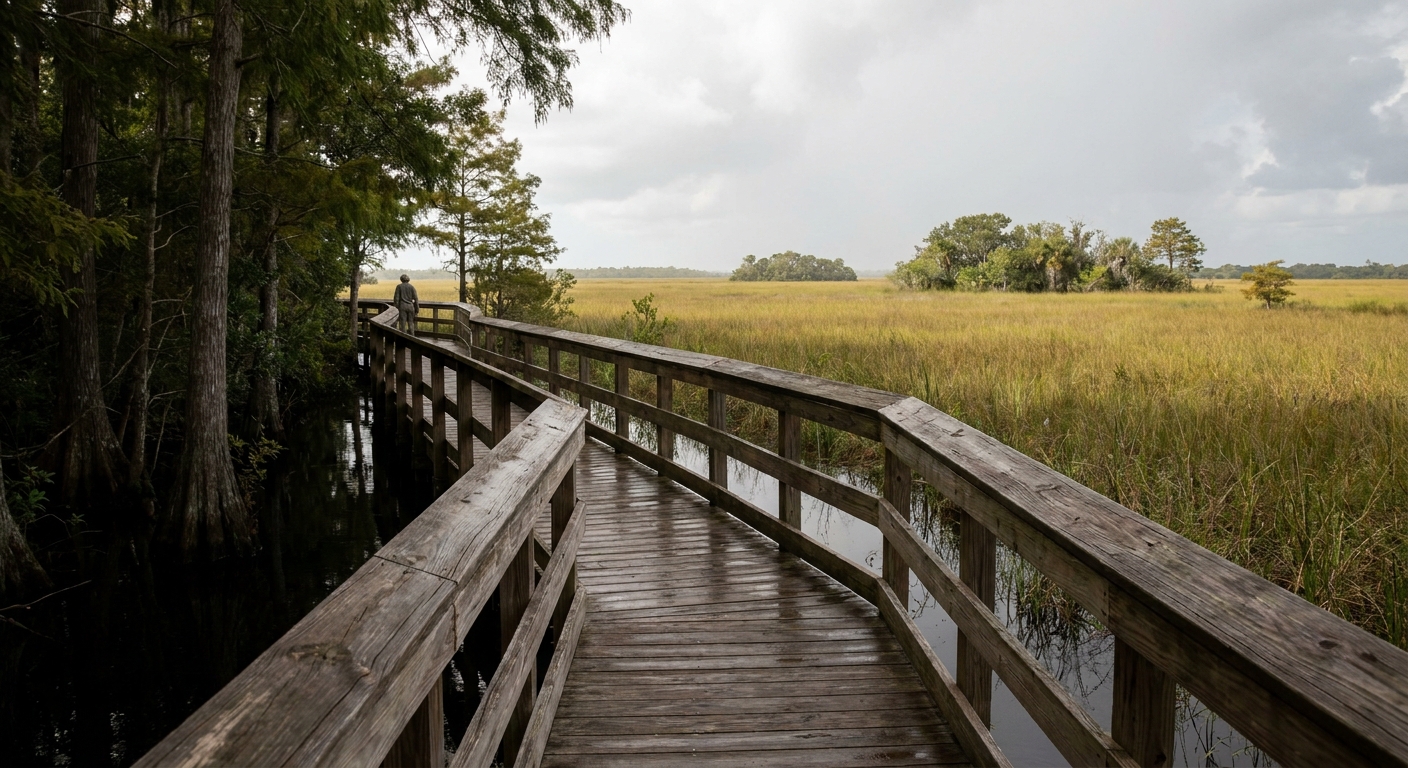
January lets you walk the preserve at midday. With a 76.2°F average high on the Miami record and 1.83 inches of rain, a boardwalk stroll or a stretch of trail at noon stays comfortable, and 3.8 rain days leave most of the month dry for the gravel roads. Our Everglades calendar explains how the dry season shapes wildlife viewing in the park next door.
Begin at the Oasis Visitor Center on the Tamiami Trail (US-41), then head to the Kirby Storter Roadside Park boardwalk, which leads into a cypress dome. Loop Road branches south off US-41 through cypress strand, and Turner River Road heads north on gravel. The Florida National Scenic Trail starts its run north inside the preserve. Check the National Park Service preserve site for current visitor-center hours, boardwalk lengths, and parking counts before setting out.
From December to January, the Miami station’s average high drops 2.0°F and its low drops 3.3°F, and inland the dip feels sharper at dawn. With no water temperature for the strands, the change you notice is in the air: fleece weather on the early boardwalk, easy walking on the trail after lunch.
We could not confirm the current fee schedule for the preserve’s roads, boardwalks or visitor centers, so we name no price, free or paid. The NPS site lists fees and any January ranger programs.
Big Cypress National Preserve in January: a two-day itinerary
Day one. Be on US-41 for the 7:07 a.m. sunrise, fleece on, and walk the Kirby Storter boardwalk while the air sits near its low. Around 9 a.m., stop at the Oasis Visitor Center (hours unverified, check NPS). Late morning, drive Loop Road slowly with the windows down. Pack lunch, as services along the drive are few, and eat as the day nears its 76.2°F average high. In early afternoon, walk a first section of the Florida Trail. Turn back by 5 p.m. to reach pavement before the 5:52 p.m. sunset.
Day two. Head north on Turner River Road in the morning, then return to US-41 and the Big Cypress Swamp Welcome Center. If one of January’s 3.8 rain days lands on you, trade the gravel for the visitor centers and the boardwalk, which stays walkable in a shell, and push the drive to the next dry morning. A third day adds Shark Valley in Everglades National Park.
Big Cypress National Preserve in January vs December and February
| NOAA normal, Miami station | December | January | February |
|---|---|---|---|
| Average high | 78.2°F | 76.2°F | 78.2°F |
| Average low | 64.3°F | 61.0°F | 63.2°F |
| Precipitation | 2.44 in | 1.83 in | 2.15 in |
| Days with 0.10 in or more | 3.7 | 3.8 | 3.6 |
| Water temperature | Not verified | Not verified | Not verified |
January runs 2.0°F cooler by day than December and February, whose average highs both sit at 78.2°F. At night the gap widens: January’s 61.0°F low trails December by 3.3°F and February by 2.2°F. Rain moves the other way. January is the driest of the three at 1.83 inches, against 2.44 in December and 2.15 in February, even though its 3.8 rain days edge past December’s 3.7 and February’s 3.6.
Shift four weeks earlier into December and nights gain 3.3°F, but you land in the holiday weeks and take on 0.61 more inches of rain. February, four weeks later, keeps December’s 78.2°F afternoons with nights 2.2°F warmer than January’s, for 0.32 more inches. We found no price series for either month, so weigh warmer nights against a drier sky.
Is January a good time to visit Big Cypress National Preserve?
Yes for day hikers, boardwalk walkers, photographers and anyone driving the gravel roads: January brings the lowest rainfall of the three midwinter months and walking afternoons near 76.2°F on the Miami record. No for travelers who want warm evenings outside or tent nights without a proper sleeping bag, since inland lows fall below the coastal 61.0°F.
If cool nights rule January out, pick February. It matches December’s 78.2°F average high, adds 2.2°F to January’s low and keeps rainfall at 2.15 inches, below December’s 2.44. It also sits clear of the holiday weeks.
Of the three midwinter months, January alone pairs the lowest NOAA rainfall, 1.83 inches, with the coolest walking afternoons, at a 76.2°F average high.
The last word
Book the bed close to the preserve and the rest of January follows: fleece at the 7:07 a.m. start, T-shirt by lunch, back on pavement by sunset. A true downpour stays rare. On NOAA’s Miami record, an inch or more of rain falls on 0.4 day in an average January, about two Januaries in five, so keep a shell in the car and Loop Road on a flexible morning.
Sources & data for this guide
- January normals (76.2°F high, 61.0°F low, 1.83 in, 3.8 days at 0.10 in or more, 0.4 day at 1 in or more) · NOAA NCEI monthly normals 1991–2020, station USW00012839, Miami · checked Sep 24, 2026
- December and February normals · same NOAA NCEI station and period · checked Sep 24, 2026
- Station caveat: the thermometer stands in Miami, on the coast. The preserve lies inland, where winter nights run colder, and we found no official normal inside it · checked Sep 24, 2026
- Daylight, sunrise and sunset on January 15 (12:07 and 22:52 UTC, converted to EST) · sunrise-sunset.org · checked Sep 24, 2026
- Not verified by us: water temperature, freezing-night counts, record highs and lows, lodging tax, fees, visitor-center hours, boardwalk lengths and room rates · check the National Park Service and your booking site before you go
- Place descriptions and the itinerary are editorial.
To plan your stay
- Best Time to Visit Big Cypress National Preserve: Dry Season Months, Summer Heat and Rainfall
- Big Cypress National Preserve in February: Weather, Daylight and January vs March
- Big Cypress National Preserve in December: Weather, Daylight, Crowds and a Two-Day Plan
- Big Cypress National Preserve in March: Weather, Rain Days, Crowds and a Two-Day Plan