
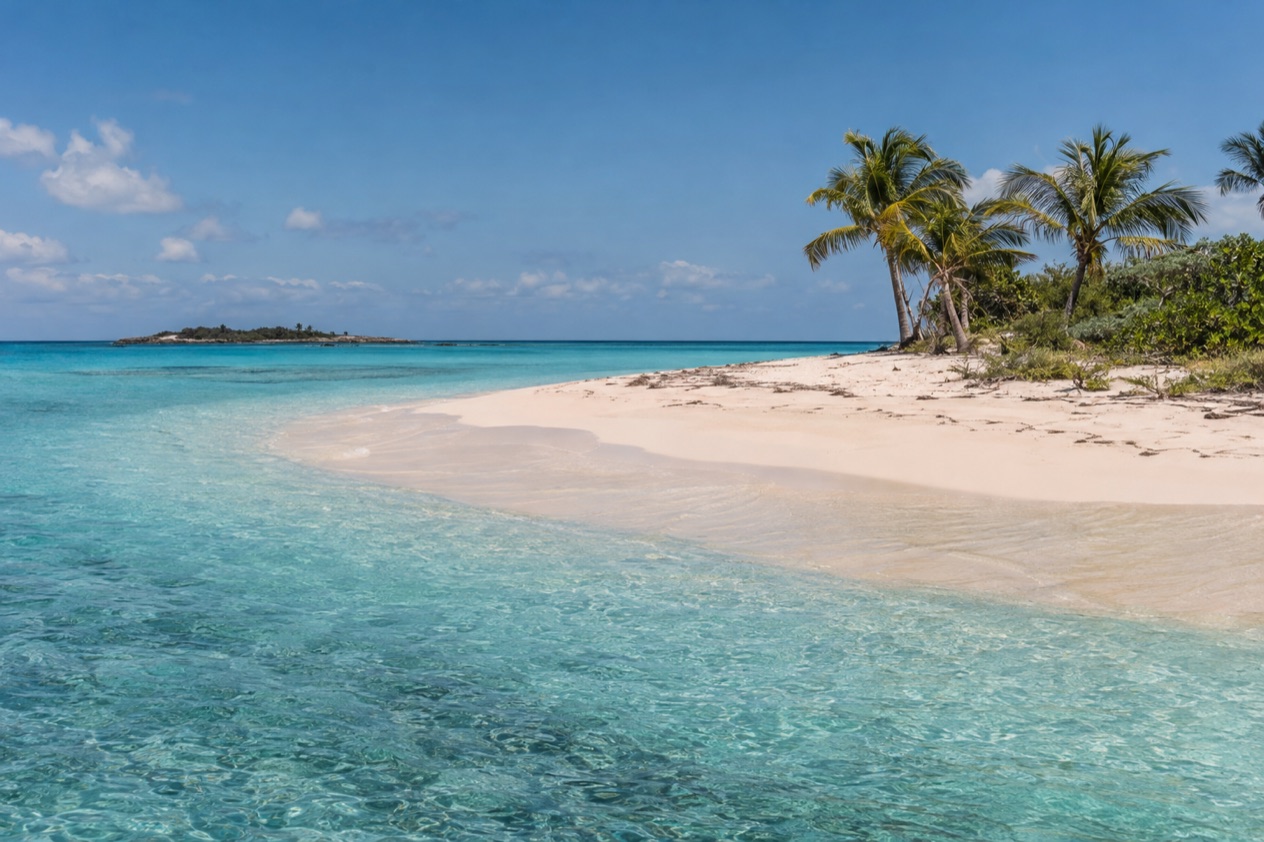
The path ends among coconut palms, and then the trees open onto a long curve of soft white sand with clear water lapping at its edge. At the southern tip of Elbow Cay, in the Abacos, Tahiti Beach feels set apart from the rest of the island. This is a visit for a slow morning or afternoon of wading, shell hunting and walking out across the sand when the tide goes down.
Is visiting Tahiti Beach worth it?
Yes, if you like beaches that ask very little of you: no resort, no boardwalk, just sand, palms and shallow water. It suits couples, families, walkers and anyone who enjoys looking for shells more than lying beside a bar.
What sets it apart from the other beaches around the Abacos is the way it is reached and the way it changes with the tide. It is secluded and can be reached only on foot, by bike or by boat, so arriving is part of the outing.
Then, at low tide, a sand bar stretches far out into the water, and the beach becomes a place to wander rather than simply sit. Starfish and sand dollars turn up in the shallows, and the water is clear enough that you can see them.
Elbow Cay itself adds to the appeal. The village of Hope Town, with its candy-striped lighthouse and quiet lanes, sits on the same island, so a beach morning pairs naturally with an afternoon among the colorful cottages and harbor views. Together they make a day that feels like the Out Islands at their most unhurried.
What to see at Tahiti Beach
The beach and its coconut palms
The first thing you notice is the sand, soft and white, and the line of coconut trees behind it. The beach arcs gently into the water, giving it the look of a small natural amphitheater facing the sea. The shade under the palms is a welcome place to leave your things.
Look at the water’s edge. The clear shallows make it easy to spot what lies on the bottom, and the beach is a favorite for swimming and for gathering shells. Take your time, since the pleasure here is in small discoveries rather than in a list of sights.
The sand bar at low tide
When the tide drops, a sand pathway stretches far out into the ocean, an endless-feeling ribbon of pale sand with water on both sides. Walking it gives a sense of being out on the sea without a boat, and the light on the wet sand makes it a favorite for photographs.
The bar comes and goes with the tide, so what you see at midday can look very different an hour or two later. Watch how the water moves around your feet and turn back before the shallows deepen.
Shells, starfish and sand dollars
Shell collecting is one of the quiet pleasures of Tahiti Beach, and the shallows are known for starfish and sand dollars as well. Children tend to take to this at once, wading slowly with eyes on the bottom, and adults often join them.
Go gently with anything alive. Admire starfish where they lie and leave them in the water, and keep your collecting to empty shells and the sand dollars you find lying on the sand.
Hours, tickets and rules
Tahiti Beach is a natural beach rather than a ticketed site, so there is no gate, no booth and no schedule to plan around. You arrive on foot, by bike or by boat and spend as long as you like. For questions about the beach, the Abaco Tourist Office can be reached by phone or email.
| Site | Open | Contact |
|---|---|---|
| Tahiti Beach, southern tip of Elbow Cay | Secluded beach reached only on foot, bike or by boat | Abaco Tourist Office, (242) 699-0152, [email protected] |
The beach is described as a spot for swimming, collecting shells, starfish and sand dollars. Access is limited to people arriving on foot, by bike or by boat. Cars and golf carts are permitted on the outskirts of Hope Town, which is the village nearest the beach on Elbow Cay.
How to get to Tahiti Beach
Tahiti Beach lies on the southern tip of Elbow Cay, and it can be reached only on foot, by bike or by boat. That sets the shape of the trip: you come to Elbow Cay first, and then make your way to the southern end by one of those three means.
On foot or by bike, you head south on the island. Hope Town is the village on Elbow Cay, a district with a small year-round community, and it makes a natural base for setting out. Cars and golf carts are permitted on the outskirts of Hope Town, but the beach itself is not reached that way.
By boat, you can arrive by water at the beach’s shore, which suits anyone already exploring the Abacos by sea. The arc of sand and the shallow, clear water are easy to appreciate from the approach. Whichever way you come, the last stretch is a quiet one, with palms ahead and the sea beside you.
When to visit Tahiti Beach
The tide matters more than the clock here. Low tide is when the sand bar stretches far out and the beach feels endless, so plan your visit around it if you want to walk out onto the sand. At high tide the beach is still a pleasant arc of sand and palms, but the long pathway is gone.
Within the day, morning and late afternoon are gentler times for walking the sand and looking for shells, while the middle of the day suits a swim in the clear shallows and a rest under the coconut trees. The light is softest at the edges of the day, which also flatters photographs of the bar.
As for the season, the Atlantic hurricane season runs from June 1 to November 30, so visits in those months fall within it. Outside those dates you are outside the official hurricane season. Whatever the month, a beach day here is built around sun, sand and the tide.
Tips for your visit
Bring what makes a beach day comfortable on a secluded shore: water, something to eat, a hat and sunscreen, and shoes you can wear for the walk or the ride in. Since the beach is reached only on foot, by bike or by boat, pack light enough to carry comfortably.
Plan a relaxed stretch of time rather than a quick stop. The pleasures here are slow ones: wading, collecting shells, walking the sand bar when the tide is low and watching the clear water. A mask or a small bucket for temporary shell viewing can add to the fun for children.
Combine the beach with Hope Town, the village on the same island. Its Elbow Reef Lighthouse, built in 1862 and operational since 1864, is one of the last kerosene-fueled lighthouses in the world, still run by the Elbow Reef Lighthouse Society, a Bahamian non-profit. Its first order Fresnel lens flashes five times every 15 seconds, a rhythm you may notice at night.
For families, the shallow, clear water and the hunt for shells make the beach a natural fit. Because access is on foot, by bike or by boat, think about how far everyone is comfortable traveling before you set out.
Good to know before you go
The U.S. State Department rates the Bahamas Level 2, “Exercise increased caution”, and says most crime occurs in Nassau on New Providence and in Freeport on Grand Bahama.
Tahiti Beach is a simple, undeveloped stretch of shore, so bring what you need for the day and take your trash home with you. The Abaco Tourist Office handles inquiries about the beach by phone or email. Keep an eye on the season too, since the Atlantic hurricane season runs from June 1 to November 30 and storms can shape travel plans in those months.
Sources
- Bahamas Ministry of Tourism, Investments & Aviation (bahamas.com), Tahiti Beach (https://www.bahamas.com/natural-wonders/tahiti-beach), checked October 10, 2026
- Wikipedia, Hope Town (https://en.wikipedia.org/wiki/Hope_Town), checked October 10, 2026
- U.S. Department of State, The Bahamas Travel Advisory, Level 2 (https://travel.state.gov/), checked October 10, 2026
- NOAA National Hurricane Center, Climatology (https://www.nhc.noaa.gov/climo/), checked October 10, 2026
To plan your stay
- Best Time to Visit the Bahamas: Weather, Hurricane Season, Sea Temperatures and Junkanoo
- Where to Stay in the Bahamas: Best Islands, Resorts, Boutique Stays and How to Choose
- Getting Around the Bahamas: Flights, Ferries, Mailboats and Taxis in Nassau
- Know Before You Go to the Bahamas: Entry Rules, Money, Getting Around and Local Customs