
On a winter morning in Dunmore Town, the pastel cottages sit behind white picket fences and bougainvillea spills over the lanes. The only sounds are bicycle bells and the low hum of the Atlantic on the far side of the island.
Through the year, Harbour Island runs from a long, golden high season to a hot, heavy summer and a hushed autumn. Each stretch gives a different version of the same island, off the northeast coast of Eleuthera.
When is the best time to visit Harbour Island?
The best time for most travelers is from late November through April, when the days are warm without being heavy and the island is at its liveliest. Within those months, the sweet spot for beach people is April, just after the spring break rush and before the heat builds.
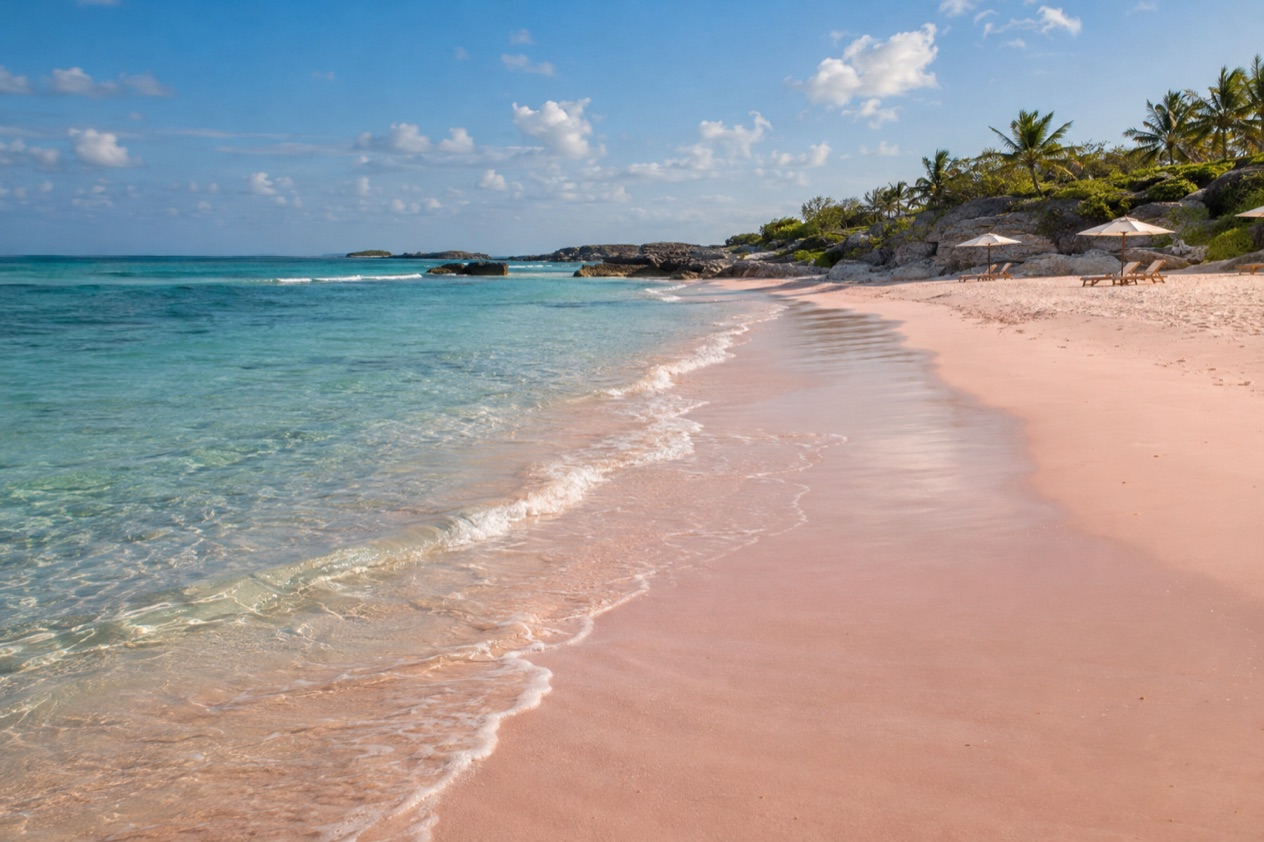
For the beach and the sea, look at late spring. The Pink Sand Beach runs along the Atlantic side of the island for more than three miles and is 50 to 100 feet wide, so even a busy week leaves room to spread out.
From May the sea turns bathwater warm, and by early summer it is the warmest of the year. Winter water is cooler but still gentle on the skin, and it suits people who like to walk the sand and wade rather than float for hours.
For sightseeing, winter and early spring are the comfortable months. Dunmore Town is a place to walk slowly. In summer that same stroll is better done early or late, with a long lunch in the shade in between.
For quiet and a lighter bill on the room, the autumn months and the weeks just before Christmas are the ones to look at. Families should know that spring break in March is loud.
Groups of college students and a packed calendar of parties give the beach bars a festival mood, and it is the wrong month for anyone hoping for a hushed shoreline with toddlers. Early April, after the crowds leave, suits families far better.
Harbour Island weather by month
The sea near Harbour Island swings from the upper 70s in winter to the high 80s in late summer, and the days stretch and shrink with the seasons.
| Month | Sea at Harbour Island (°F) | Daylight on the 15th |
|---|---|---|
| January | 77.7 | 10 h 46 min |
| February | 76.3 | 11 h 21 min |
| March | 76.7 | 12 h 03 min |
| April | 77.9 | 12 h 49 min |
| May | 80.8 | 13 h 26 min |
| June | 84.0 | 13 h 46 min |
| July | 86.7 | 13 h 37 min |
| August | 87.0 | 13 h 04 min |
| September | 86.4 | 12 h 20 min |
| October | 84.5 | 11 h 36 min |
| November | 80.9 | 10 h 56 min |
| December | 78.4 | 10 h 36 min |
The sea has two moods. From January to April it hovers at its coolest, with February the low point, and it is a refreshing change rather than a shock. From June to October it is at its warmest, with August the peak. November and May are the transition months, when the water changes quickly from one season to the other.
Daylight follows the same curve. Winter evenings arrive early, so dinner on the harbor starts in the dark, while June brings long light that stretches a beach day well into the evening.
In Nassau, highs reach about 91°F in August, a reminder of how much heavier the summer air feels than the mild winter afternoons. Summer brings thunderstorms and the hurricane season, while winter rain tends to come in short showers or with the passage of a cold front.
What is there to do in Harbour Island in each season?
Winter and early spring: the island at full tilt
From December to April, Harbour Island is a place of long beach walks, bicycle rides along the lanes and dinners that run late. The Pink Sand Beach is the star, a ribbon of blush-colored sand on the Atlantic side that glows most in the soft light of early morning and late afternoon. Its color comes from tiny pink shell fragments mixed into the sand, and it was named Best Sand Beach in a Travel Channel segment on the world’s best beaches.
Between beach hours, Dunmore Town fills the day. Wander the lanes past the pastel cottages, stop at a waterfront bar for a conch salad and a cold drink, and take a table at one of the harbor restaurants as the light fades.
Visitors with a day to spare can cross to Eleuthera, where the Glass Window Bridge, only 30 feet wide, shows the dark blue Atlantic meeting the bright turquoise of the Bight of Eleuthera. Nearby, Queen’s Bath is a natural tidal pool among rugged cliffs.
Summer and early autumn: hot days and a quiet island
From June to October, the sea is at its warmest and the island moves at a slow pace. Mornings are for the beach, midday for shade and a long lunch, and evenings for a harbor stroll when the heat finally lets go. Thunderstorms can build in the afternoon, so keep the afternoons flexible and plan indoor hours at a restaurant or a shop.
This is also the season of the hurricane watch, which runs from June 1 to November 30, with the peak in the second half of summer and early autumn. Travelers who come then follow the forecast and keep their plans loose. The reward is an island with long stretches of beach to yourself and a more local rhythm in the lanes of Dunmore Town.
The shoulder months: November and May
November is when the island exhales. The sea has cooled a little, the heat has eased and the first winter visitors arrive, with the full season just ahead. May is the mirror image, with the water already warm and the beaches less crowded than in March. Both months suit travelers who want a beach week without the peak-season buzz, and both come with a bit more rain than the middle of winter.
Leave the big social weeks, Christmas and New Year and the spring break fortnight in March, for people who want the party. If you prefer a book on the sand and an early dinner, aim for the shoulder weeks.
When is Harbour Island cheapest and least crowded?
The island is least crowded in the autumn months and in the quiet stretches of late spring, and it is busiest around the winter holidays, spring break and Easter. Harbour Island is small, so a busy week is felt quickly on the beach, in the restaurants and at the bars of Dunmore Town.
The peak weeks are Christmas and New Year, the March spring break stretch, Easter week and the school-holiday weeks of summer, when American families travel. Peak-season rates apply in those periods, and the best rooms go first. Between those peaks, mid-January and parts of February are calmer, though still part of the high season.
The quietest months are September and October, the heart of the hurricane season and the time when many visitors stay away. Rooms are easier to find, the beach is emptier and the lanes of Dunmore Town feel like a village again. It is also the time when some places slow down for a break, so a favorite restaurant may not be on its usual schedule.
A good compromise is the stretch from late April to early June. The spring break noise is behind, the sea is warming and the beaches have space. Travelers who like a calm island and can accept the possibility of a passing shower will find it a pleasant window.
Which months should you avoid in Harbour Island?
Avoid August through October if a settled beach week matters most, and March if you want a quiet shoreline. The Atlantic hurricane season runs from June 1 to November 30, and activity peaks around September 10, with most of it between mid-August and mid-October. The Bahamas Ministry of Tourism & Aviation watches the Atlantic for storms, and travelers are encouraged to follow its hurricane page for updates.
Even outside a named storm, summer brings heat and humidity, with thunderstorms that can sweep in during the afternoon. In Nassau, the rain days run to about two weeks in a typical August, and the same wet pattern shapes the season across the northern Bahamas. A trip then needs flexibility, a good book and a plan for the wet hours.
The winter months bring their own variations. Cold fronts can pass through and send in a gray day with wind and showers, and the Atlantic side of the island may look rougher after one. These spells are usually short, and the next morning often returns to clear skies.
March is the other month to think about, for a different reason. Spring break brings crowds and noise, and a beach house, a bar or a golf-cart lane feels busy. For many travelers it is the most social month of the year, and for others it is the one to skip.
November is outside the peak of the storm season, but it is still inside the official hurricane season, so the forecast deserves a look before a trip. December through April is outside it.
When can you swim in Harbour Island?
Water temperature rarely decides the question, because the sea near Harbour Island stays in the upper 70s even in the coolest months and reaches the high 80s in late summer. February is the coolest, and it feels refreshing, while July through September is the warmest, close to bathwater.
The seasons shape the beach more than the thermometer does. In winter and spring, the Atlantic side can be lively after a cold front, and the pink sand is prettiest in soft morning light. In summer, the water is warm and the days are long, but afternoon storms can interrupt a beach plan. In the fall, the sea stays warm into November, when the first winter visitors return.
The Pink Sand Beach lies on the eastern, Atlantic side of the island, and the sea there is open ocean. Pick your hour on the sand by the light, and treat the water as part of the scenery as well as the swim.
Festivals and events in Harbour Island through the year
Winter holidays and Junkanoo
The Bahamian year turns on Junkanoo, the street parade of cowbells, goatskin drums, whistles and elaborate paper costumes. It takes place on Boxing Day, December 26, and on New Year’s Day, January 1, and island communities across the Bahamas mark both dates. In Dunmore Town, the lanes fill with music and the sound carries well beyond the harbor.
Christmas on the island is a mix of white lights on the cottage porches, parties in the harbor restaurants and visitors who return year after year. The weeks around it are the busiest of the year, so the mood is festive, and the best tip is to arrive with a relaxed plan and a taste for company.
Easter, spring break and the summer vacation
Easter week is a public holiday time in the Bahamas, with Good Friday and Easter Monday observed. It moves every year, falling in March or April, and brings church services, family gatherings and visitors who pair the long weekend with a beach trip. The mood is warm and social, and the island feels full.
Spring break in March has a different energy, with young crowds and a party feel. In summer, Emancipation Day, observed on the first Monday of August, and Independence Day on July 10 are national holidays, marked with music, food and family gatherings. Local summer festivals and regattas across the northern Bahamas add to the calendar, with dates that change from year to year.
Nature seasons in the surrounding waters
The waters around Harbour Island follow their own calendar. In winter, humpback whales pass through Bahamian waters, and you may see one on a clear day from a boat or, with luck, from the shore. In the warm months, sea turtles come to the region, and you may spot one in the shallows. These are chances rather than promises, and they depend on the day and the weather.
The fall brings the sunsets, with long evenings over the harbor and the Bight of Eleuthera, and the warm sea makes the water inviting. It is the season to slow down, watch the sky and let the island set the pace.
Sources
- Open-Meteo Marine API, average 2015-2024, checked October 10, 2026
- sunrise-sunset.org, sunrise and sunset calculated for the 15th of the month, checked October 10, 2026
- NOAA NCEI, GHCN-Daily station BF000078073 (Nassau Airport), normals 1991-2020 computed from the daily record (https://www.ncei.noaa.gov/access/services/data/v1?dataset=daily-summaries&stations=BF000078073), checked October 10, 2026
- Wikipedia, Harbour Island, Bahamas (https://en.wikipedia.org/wiki/Harbour_Island,_Bahamas), checked October 10, 2026
- Wikivoyage, Harbour Island travel guide (https://en.wikivoyage.org/wiki/Harbour_Island), checked October 10, 2026
- Wikipedia, Dunmore Town (https://en.wikipedia.org/wiki/Dunmore_Town), checked October 10, 2026
- Bahamas Ministry of Tourism, Investments & Aviation (bahamas.com), Harbour Island Pink Sand Beach (https://www.bahamas.com/natural-wonders/harbour-island-pink-sand-beach), checked October 10, 2026
- Bahamas Ministry of Tourism, Investments & Aviation (bahamas.com), Sugar Beach (https://www.bahamas.com/natural-wonders/sugar-beach), checked October 10, 2026
- Bahamas Ministry of Tourism, Investments & Aviation (bahamas.com), travel blog, Eleuthera and Harbour Island (https://www.bahamas.com/blog/a-tale-of-two-islands-romance-reimagined-in-eleuthera-and-harbour-island), checked October 10, 2026
- Wikipedia, North Eleuthera Airport (https://en.wikipedia.org/wiki/North_Eleuthera_Airport), checked October 10, 2026
- Wikipedia, Geography of the Bahamas (https://en.wikipedia.org/wiki/Geography_of_the_Bahamas), checked October 10, 2026
- NOAA National Hurricane Center, Climatology (https://www.nhc.noaa.gov/climo/), checked October 10, 2026
- Bahamas Ministry of Tourism, Investments & Aviation (bahamas.com), Hurricane and storm information (https://www.bahamas.com/hurricane-storm-information), checked October 10, 2026
- U.S. Department of State, The Bahamas Travel Advisory, Level 2 (https://travel.state.gov/), checked October 10, 2026
To plan your stay
- Things to Do in Harbour Island: Pink Sand Beach, Dunmore Town and Eleuthera Day Trips
- Where to Stay in Harbour Island: Dunmore Town, Pink Sand Beach and Choosing a Hotel
- Harbour Island from Miami: Flights via Nassau, the Ferry and the Pink Sand Beach
- Know Before You Go to Harbour Island: Entry Rules, Money, Getting There and Island Etiquette