
Out past the bluff on the western side of North Bimini, the water turns a clear, pale blue over a pale seabed, and somewhere beneath the boat lies a long line of square stones that has kept people arguing for decades. Some call it a road laid by the builders of Atlantis, others see a curiosity of nature. Either way, the Bimini Road is a boat-and-dive outing, a place for travelers who like a good mystery with their island time.
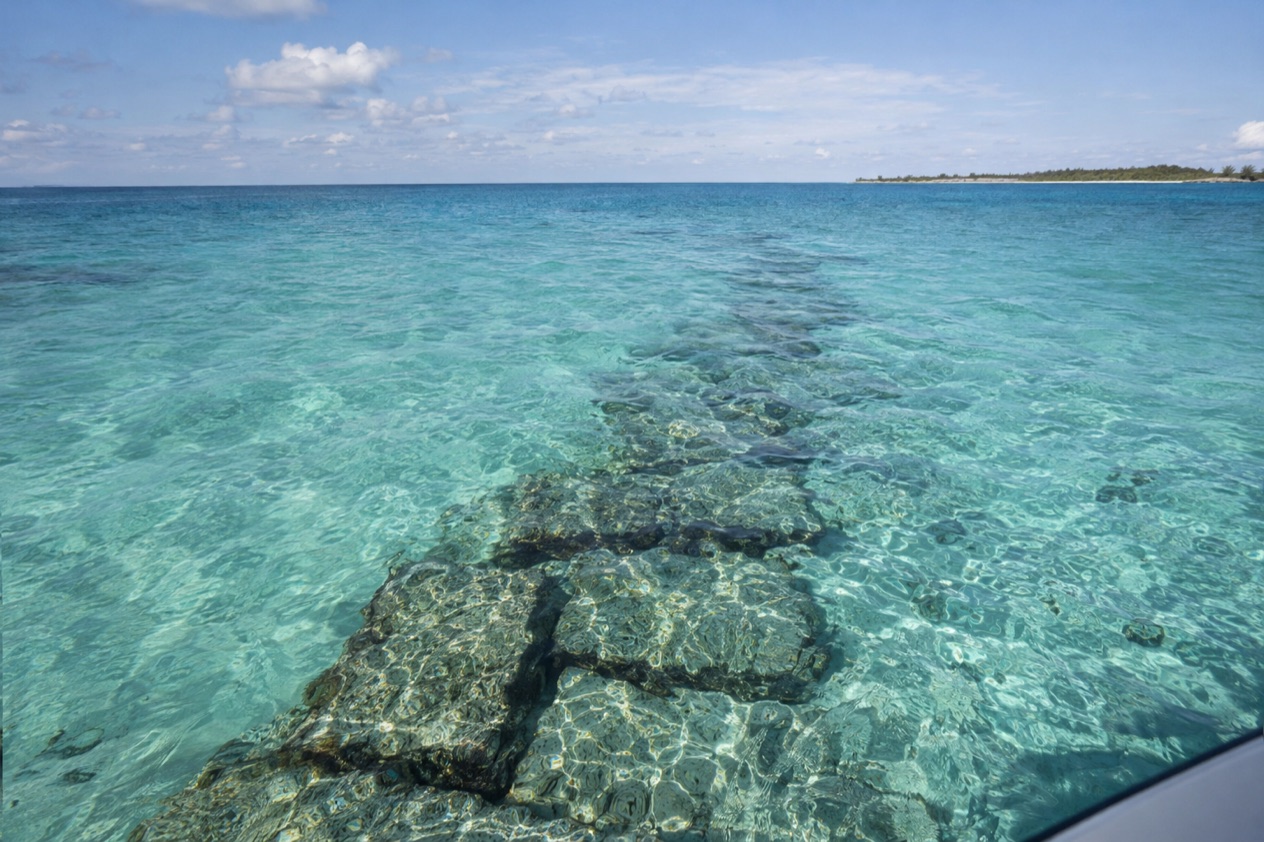
Is visiting the Bimini Road worth it?
Yes, if you are drawn to legends, to scuba diving or to the simple pleasure of being on a boat over a place with a story, and less so if you expect a monument you can walk up to and photograph from dry land. The Bimini Road is an underwater site, and it rewards curiosity more than spectacle.
What sets it apart from other sights around the Bahamas is the question it asks. Square blocks and straight alignments of stone lie in a long, orderly row, and believers say it was part of the road system of the Lost Continent of Atlantis. Some researchers go further and call its design identical to a harbor and installations submerged in the Mediterranean, built, they say, by the same seafaring people in the same period.
Skeptics, and most geologists, read the same stones as a natural formation of the seabed that split into blocks. You do not have to pick a side to enjoy the visit. Standing on a deck or hanging in the water above the stones, you can look at the pattern yourself and decide, and then go back to Alice Town for a conch salad and a cold drink with the debate still going.
What to see at the Bimini Road
The line of stones
The Bimini Road lies in the waters west of the bluff of North Bimini, and it stretches for 1,500 feet. What you look for is the regularity: large square blocks lying side by side in an orderly row, with straight alignments that seem too tidy for chance. The stones appear to be set like paving, which is exactly what gave the site its name.
Look at how the blocks meet, at the way edges run in long lines, and at the sea life that has settled over the stone. Photographers and divers often come away with different impressions depending on the light and the angle, so one pass rarely settles the question of whether the hand of nature or of people made it.
The Atlantis story and the Mediterranean comparison
The tale that made the road famous links Bimini to Atlantis. In the twentieth century an American psychic predicted that traces of the lost continent would turn up near these islands, and when divers found a road of squared stones off Bimini, the prediction seemed to come true for many people. The idea has been repeated in books and documentaries ever since.
Some researchers add a second argument: that the road matches in design a known harbor and installations sunk in the Mediterranean, which would point to a shared builder. It is a bold claim and it remains a claim. Think of it as part of the lore you carry out to sea, a reason to look harder at the stones.
The bluff and Alice Town, your landmark on shore
The road is measured from the bluff of North Bimini, so the island itself is your frame for the visit. North Bimini is a thin strip of land, about seven miles long and only about 700 feet wide, and its main settlement is Alice Town, a string of shops, restaurants and bars along a road called the King’s Highway.
Before or after the boat, a walk through Alice Town gives you the island’s mood: fishing boats, hand-painted signs and the talk of anglers. Ernest Hemingway lived here for a stretch of the 1930s and fished offshore from his boat Pilar, and that sporting-writer spirit still lingers over the docks.
The SS Sapona, a second wreck to pair with it
Divers who come for the road often look at the wreck of the SS Sapona too. The ship ran aground in 1926 during a hurricane, and today the top of the hull rises above the surface while the bottom half sits underwater. It is a well-known scuba diving and snorkeling site in Bimini.
Seen together, the two sites make a neat contrast: one a puzzle of stone that may or may not be ancient, the other a very real ship with a precise date and a storm behind it. Both are about the sea and what it leaves behind.
Hours, tickets and rules
The Bimini Road is not a fenced attraction with a gate, so there is no set of opening hours to print here. It lies in open water west of the North Bimini bluff, and you reach it only by boat. The visit is a trip on the water, and it is a popular scuba diving site.
What the visit looks like depends on how you go: aboard a boat that takes you out over the stones, or in the water as a diver. Either way, the stones are the whole attraction, and there is no building, museum or ticket booth attached to them in the way you might find at a land site.
For questions about the site, the Harbour Island Tourist Office can be reached at (242) 347-3529 or by email at [email protected]. That contact is the point of reference for visitors who want more information on the Bimini Road.
How to get to the Bimini Road
The Bimini Road can be reached by boat only, so the journey has two parts: getting to Bimini, then getting out on the water. The stones sit off the western side of North Bimini, close to the bluff, which makes Alice Town the natural base for the trip.
Reaching Bimini
From South Florida, Baleària runs an international passenger ferry between Port Everglades in Fort Lauderdale and Bimini, using the high-speed catamaran HSC Jaume II. For travelers who like to arrive by sea, it is a scenic way to reach the island before heading out to the stones.
Air arrivals land on South Bimini, which has a population of 182 and houses South Bimini Airport. Because Bimini is made of separate pieces of land, South Bimini and North Bimini are different places, and the Bimini Road lies off the northern one.
From the island to the stones
Once you are on North Bimini, the next step is a boat. The road lies in the waters west of the bluff, and no path leads to it from land. Divers treat it as a scuba site, and the same waters can be seen from a boat above.
Alice Town, with its shops, restaurants and bars along the King’s Highway, is where the island’s life gathers, and it is a sensible place to plan the outing from. A good plan is to keep the rest of the day open for a meal in town after you come back.
When to visit the Bimini Road
Choose a day when you can spend unhurried hours on the water, and plan for the morning if you want the light low and soft on the sea. Clear water and a high sun make the pale blocks easier to read from a boat, so the middle of a bright day often suits the stones, while the cooler early hours suit you.
The Atlantic hurricane season runs from June 1 to November 30, and the months from December through May fall outside the official hurricane season. Travelers who want the widest choice of calm boating days often look to those months, but a boat trip is always at the mercy of the weather, and the sea decides in the end.
Because the road is underwater, the season matters less for the stones themselves than for the trip out to them. Pick a stretch when you have slack in your schedule, so that a rough morning can slide to the next day without spoiling the rest of your stay.
If you enjoy fishing history, a visit during a quiet week lets you linger in Alice Town afterward and think about the anglers who made Bimini a name among sport fishermen in Hemingway’s time. The island’s pace is part of what you came for.
Tips for your visit
Bring a camera or a phone in a waterproof case, since the whole point is to look at stones under the surface. A hat and sun protection suit a morning on a boat, and a dry change of clothes is welcome if you plan to eat in town afterward. Divers will already know their own kit.
Plan the Bimini Road as a half-day outing at most, and then give yourself time on shore. A boat trip over a legend leaves you with an appetite, and Alice Town has shops, restaurants and bars along its single main road. Some travelers like to sketch the road in a notebook before they go, to compare it with what they see.
Combine it with other Bimini stops
Bimini packs a lot of history into a small space. The wreck of the SS Sapona is a natural pairing for anyone in the water. On land, the Bimini Bay Rod and Gun Club was built as a three-story hotel and casino by Thomas Peters, with the first casino in the Bahamas, and it was the largest hotel in the country in its day.
That hotel employed 50 people in high season and was destroyed by a hurricane in the same year the Sapona went aground. The Compleat Angler, built in 1935 by Helen and Henry Duncombe, hosted Hemingway, kept a room of his memorabilia and was lost to fire on January 13, 2006. These are stories to carry with you as you walk Alice Town.
Legends on South Bimini and the mangroves
South Bimini has a small freshwater well with a plaque commemorating the Fountain of Youth, on the road leading to the airport. Bimini is the purported site of the legendary spring that lured Ponce de León in the early 1500s, and the island still carries the name. It is a short, smiling stop for anyone who likes legends.
On North Bimini, a brackish mangrove swamp covers 3 1/2 miles of the shoreline, and the Healing Hole, a pool at the end of a network of winding tunnels, lies within it. Two bronze busts of Martin Luther King Jr. on the island honor his legacy, a quiet reminder that Bimini’s story reaches beyond fishing and myth.
Good to know before you go
The U.S. State Department rates the Bahamas Level 2, “Exercise increased caution”, and says most crime occurs in Nassau on New Providence and in Freeport on Grand Bahama.
The Bimini Road is a boat outing, so the weather and the sea shape the day more than any schedule. The Atlantic hurricane season runs from June 1 to November 30, and trips on the water follow what the conditions allow. Keep your plans loose, spend your Bahamian dollars on a good lunch in Alice Town, and leave the Atlantis debate open until you have seen the stones yourself.
Sources
- Bahamas Ministry of Tourism, Investments & Aviation (bahamas.com), Bimini Road (https://www.bahamas.com/natural-wonders/bimini-road), checked October 10, 2026
- Wikipedia, Bimini (https://en.wikipedia.org/wiki/Bimini), checked October 10, 2026
- Bahamas Ministry of Tourism, Investments & Aviation (bahamas.com), travel blog, Bimini landmarks (https://www.bahamas.com/blog/the-historical-landmarks-of-bimini), checked October 10, 2026
- U.S. Department of State, The Bahamas Travel Advisory, Level 2 (https://travel.state.gov/), checked October 10, 2026
- NOAA National Hurricane Center, Climatology (https://www.nhc.noaa.gov/climo/), checked October 10, 2026
To plan your stay
- Best Time to Visit Bimini: Weather by Month, Sea Temperatures, Festivals and Crowds
- Where to Stay in Bimini: Alice Town, the Resorts World Beachfront and South Bimini
- Bimini from Miami: Ferry from Port Everglades, Flights to South Bimini and a Day on North Bimini
- Know Before You Go to Bimini: Entry Rules, Money, Getting Around and Island Etiquette