
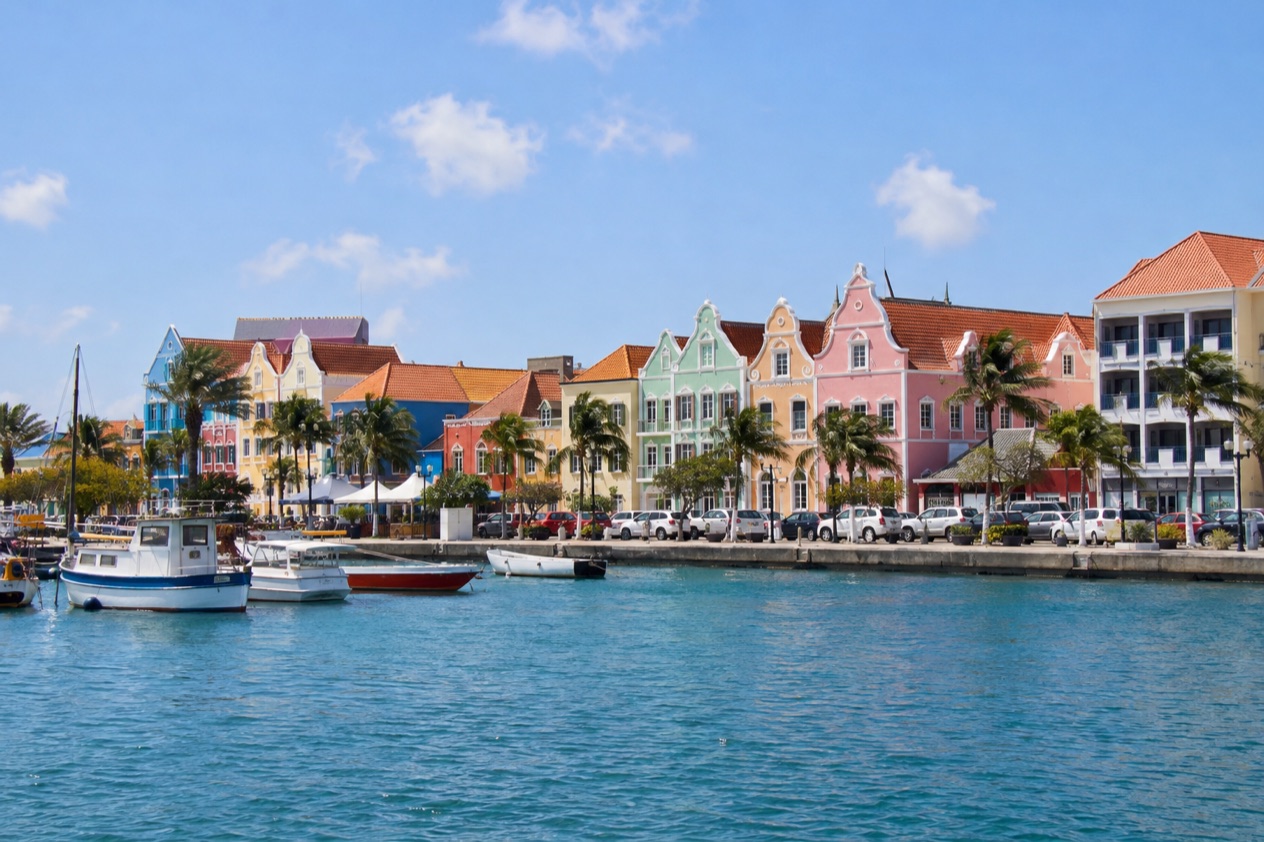
Early in the morning in Oranjestad, the pastel Dutch facades along the harbor catch the first sun, and the cruise ships at Paardenbaai are still quiet. A few hours later the Main Street mall is humming, while on the beaches to the northwest the first towels are already laid out on white sand. The capital makes you choose between a base in the city, a room on the beach strip, or something quieter in between, and each choice gives you a different Aruba.
What is the best area to stay in Oranjestad?
For a first visit built around the beach, Palm Beach is the usual answer, and Eagle Beach is the answer if you want the same sand with a lower-rise feel. For museums, shopping and the harbor, stay downtown. For a budget or a longer stay, a vacation rental or a hotel set back from the beach makes more sense, and for families the extra space of a rental or the resort setting of a beachfront property both work.
The areas differ less in distance than in daily rhythm. The island’s resort coast runs along the northwestern shore, and it is there that the hotels sit closest to white sand and blue water.
High-rise properties cluster at Palm Beach, in the Noord district, while low-rise resorts spread out near Eagle Beach. Downtown Oranjestad is a working harbor city with historic buildings, and a stay there means you wake to city sounds instead of surf.
Think about how you want your mornings to go. If you want to walk from your room to the sand with a coffee, the beach strip wins.
If you want to stroll to a bakery for pastechi (the fried, savory turnovers Aruba loves for breakfast and snacks), browse shops and still be near a harbor sunset, downtown is the better fit. Neither choice shuts you out of the other: the island is small enough that the beach and the capital are never a whole day apart.
Nightlife and dining follow the same split. The beach strip has hotel restaurants, casual bars and evening walks by the water, and it is built for people who want everything in one place.
Downtown has the harbor, the old streets and the feel of a town that lives there year round, with locals going about their evenings next to visitors. Aruban hospitality is known for its warmth, and you meet it in both places, from resort staff who are well trained and genuinely friendly to the owners of small rentals and the people behind the counter at a neighborhood snack stand.
Budget travelers have a real third option. Vacation rentals by owner are generally more budget-friendly than hotels, especially for longer stays, and Aruba was the first Caribbean island to form an official partnership with Airbnb. Hotels that are not directly on the beach offer a more residential style of lodging and a chance to mingle with locals. You trade the front-row sand for space, a kitchen and a different kind of neighborhood.
If you cannot decide, ask what you will miss more. Some travelers regret a room far from the water on their first trip, others regret paying for a beachfront room they barely used because they were out exploring the island. The sections below describe each area so you can picture the days you want.
The best areas to stay in Oranjestad
Palm Beach
Palm Beach is the island’s resort strip, in the Noord district northwest of the capital, and its high-rise properties sit among the closest to the white sand and blue water. Days here run on a beach schedule: breakfast on a terrace, a long morning by the water, a pool in the afternoon, and dinner a short stroll from the lobby. Large resorts and all-inclusive properties dominate, with the amenities, restaurants and organized activities that come with them.
It suits first-time visitors, couples, groups of friends and families who want everything within reach of the hotel. It is less about local life and more about convenience, so expect a polished, international resort atmosphere. Arubus buses are one way to reach Oranjestad and other parts of the island when you want a break from the resort.
A good tip is to decide before you book whether you want to eat all your meals at the resort. If you do, an all-inclusive makes sense. If you would rather wander out for dinner in the evening, pick a property whose surroundings and restaurants appeal to you.
Eagle Beach
Eagle Beach has the same coastline with a calmer skyline. Low-rise resorts are the signature here, spread out beside a wide stretch of sand where the leaning fofoti trees catch the eye. Boutique hotels and smaller properties sit alongside the larger resorts, so the feel is more relaxed and less towering than at Palm Beach.
It is a good choice for couples, families and anyone who wants beach time without the busier strip atmosphere. From the cruise port it is a ten-minute drive, and the practical way to reach it is by taxi or public bus, since walking would take some time. That drive also puts Oranjestad’s restaurants, museums and shops within easy reach for a day in town.
The tip here is to look closely at where a property sits in relation to the sand. Low-rise resorts near Eagle Beach offer the closest proximity to the beach, but not every room has the same outlook, so read the descriptions with that in mind.
Downtown Oranjestad
Downtown is the colorful harbor city itself, with streets and malls full of international luxury retailers, boutiques and jewelry stores. The Main Street pedestrian mall has been remodeled, and the downtown tram, a hop-on hop-off ride, runs through it and stops at monuments, museums and shopping areas. Fort Zoutman, the island’s oldest building, and the Willem III Tower stand beside the Historical Museum, so culture is a short walk from your door.
This is the area for travelers who like cities: history lovers, shoppers, cruise passengers extending their stay and anyone who prefers a sense of place over a resort bubble. Lodging tends toward city-style hotels and guesthouse-sized options rather than the sprawling resorts of the beach strip. The beach is not at your doorstep. Surfside Beach is the closest, about a 15-minute walk from the cruise port.
A useful tip: the Renaissance Marketplace can be reached on foot along Lloyd G. Smith Boulevard from the port, so a stay near the water gives you shopping and harbor views without needing transport.
Residential areas and vacation rentals
Away from the beachfront, Aruba has hotels and rentals that offer a more residential style of accommodation. Here the days look different: you shop for groceries, cook a few meals and nod to the neighbors. Owners often share insider tips about the island, which adds local knowledge you will not find in a lobby brochure.
Vacation rentals range from rustic cottages to high-end vacation homes, and they give you more space and privacy than a typical hotel room, which is perfect for families or groups. There are no strict hotel schedules, so you can explore at your own pace. They are also generally more budget-friendly than hotels, especially for longer stays.
The tip is to think about how you will get to the beach. Arubus buses and a rental car are the ways to move around, and renting a car at the cruise port is an option if you want to explore on your own schedule.
Oranjestad areas compared
| Area | Best for | Feel | Getting around |
|---|---|---|---|
| Palm Beach | Beach vacations, first visits, all-inclusive stays | High-rise resorts close to white sand and blue water | Arubus buses, every 15 minutes until 6 p.m. |
| Eagle Beach | Couples and families who want sand with a calmer skyline | Low-rise resorts and boutique hotels | Taxi or public bus |
| Downtown Oranjestad | Shopping, museums, harbor views, city lovers | Colorful harbor city with Dutch architecture | Walking and the downtown tram |
| Residential areas and rentals | Budget stays, longer trips, families and groups | Residential, with space and privacy | Arubus buses or a rental car |
The main trade-off is beach against local life. Palm Beach and Eagle Beach put you beside the sea, which is why many people come to Aruba at all, but they also place you inside the resort zone. Downtown and the residential areas let you see how the capital lives, with markets, bakeries and neighborhood streets, and you accept a short trip to reach the sand.
Quiet against nightlife is the second trade-off. The high-rise strip at Palm Beach has the most going on around its resorts, and the low-rise setting near Eagle Beach is a step softer. Downtown has a lively harbor and a busy shopping day, but the pedestrian streets are the star by daylight. A rental in a residential area is the quietest of all, since your evening is whatever you make of it.
Convenience against space is the third. A resort room puts everything in one building, and staff handle the details. A rental gives you a kitchen, a living area and the freedom to keep your own hours, but you also arrange more yourself. Neither is better, and plenty of travelers split a trip between the two: a few nights downtown or in a rental, then a few on the sand.
Distance to the airport is modest from the capital. Queen Beatrix International Airport lies 1.6 miles from the center of Oranjestad, so arrival day is never a long haul. That is a point in favor of any base on this list, and it lets you choose by atmosphere instead of by transfer time.
How to choose your hotel in Oranjestad
Start with the biggest question, all-inclusive or not. An all-inclusive resort suits travelers who want meals, drinks and activities folded into one stay and who plan to spend most of their time on the property. A hotel or rental without that package suits people who like to eat out, try different restaurants and wander, and it leaves more room in the day for downtown and the island beyond.
Next, decide how close to the water you really need to be. Beachfront resorts at Palm Beach and near Eagle Beach put the sand and the sea closest to your room. Hotels that are not directly on the beach offer a more residential style and a chance to mingle with locals. Aruba offers luxury beachfront resorts and boutique hotels, so your choice is as much about size and personality as about location.
Think about who is traveling. Families and groups often appreciate the extra space and privacy of a vacation rental, where children can spread out and meals do not have to happen on a restaurant schedule. Couples may prefer a boutique hotel with a quieter atmosphere. If anyone in your party has mobility needs, ask each property directly about access, since layouts and facilities vary from one building to another.
Timing matters too. Festivals, holidays and busy weeks can change what is available and how the neighborhood feels, so line up your dates with the kind of trip you want before you commit to a particular area. A quiet week suits a downtown stay full of strolling, while a lively week may suit a resort setting with plenty going on around it.
Consider how you will move around. The downtown tram makes six stops, linking the cruise terminal with the center of town via Main Street, and it is a handy way to see monuments, museums and shopping areas. From the port, the walk to Lloyd G.
Smith Boulevard takes five to ten minutes, depending on which of the four docks your ship uses, which tells you how compact the waterfront is. Arubus buses run until late, though less often after 6 p.m., when they come every 40 minutes until 11:30 p.m., so plan evening outings around that.
Last, think about the reputation of the place. Resort staff in Aruba are well trained and genuinely friendly, which contributes to a high level of service, and many guests return for that warmth alone.
When you read about a hotel, look for details about the setting, the room types and the layout of the property, then match them to your picture of the trip. A good fit comes from knowing what a normal day looks like for you on vacation, and choosing the base that makes that day easy.
Good to know before you go
The U.S. State Department rates Aruba Level 1, ‘Exercise normal precautions,’ and says Aruba is generally a safe destination for travelers, with petty crime the main concern in popular tourist areas.
Oranjestad is the capital of Aruba, on the southwestern coast, and Queen Beatrix International Airport connects to the city center, which makes the first ride to your hotel a short one. Whichever area you pick, the harbor, the shops and the beach strip are all part of the same small island, so you can change your mind during the trip and spend a day on the other side of the choice.
Sources
- Aruba Tourism Authority, Oranjestad region (https://www.aruba.com/us/our-island/regions/oranjestad), checked October 9, 2026
- Wikipedia, Oranjestad, Aruba (https://en.wikipedia.org/wiki/Oranjestad,_Aruba), checked October 9, 2026
- Wikivoyage, Oranjestad (Aruba) travel guide (https://en.wikivoyage.org/wiki/Oranjestad), checked October 9, 2026
- Aruba Tourism Authority, Hotels and resorts (https://www.aruba.com/us/plan-your-visit/hotels-and-resorts), checked October 9, 2026
- Aruba Tourism Authority, Cruise port (https://www.aruba.com/us/plan-your-visit/aruba-by-cruise/cruise-port), checked October 9, 2026
- Aruba Tourism Authority, Vacation rentals (https://www.aruba.com/us/plan-your-visit/vacation-rental), checked October 9, 2026
- Aruba Tourism Authority, Downtown trolley, Oranjestad (https://www.aruba.com/us/explore/downtown-trolley), checked October 9, 2026
- Aruba Airport Authority, By car (https://www.airportaruba.com/by-car), checked October 9, 2026
- Aruba Tourism Authority, Public transportation (https://www.aruba.com/us/plan-your-visit/getting-around-aruba/public-transportation), checked October 9, 2026
- U.S. Department of State, Aruba Travel Advisory, Level 1, issued August 19, 2026 (https://travel.state.gov/content/tsg_aem/us/en/home/international-travel/travel-advisories/destination.abw.html), checked October 9, 2026