
Early morning along the Costera, the first joggers pass beneath the hotel towers while the bay turns from pewter to turquoise. Across the water, the old town is already busy with fishermen and the smell of coffee near the zócalo. A few miles away, a lagoon waits for sunset. Where you sleep in Acapulco decides which of these Acapulcos you wake up in.
What is the best area to stay in Acapulco?
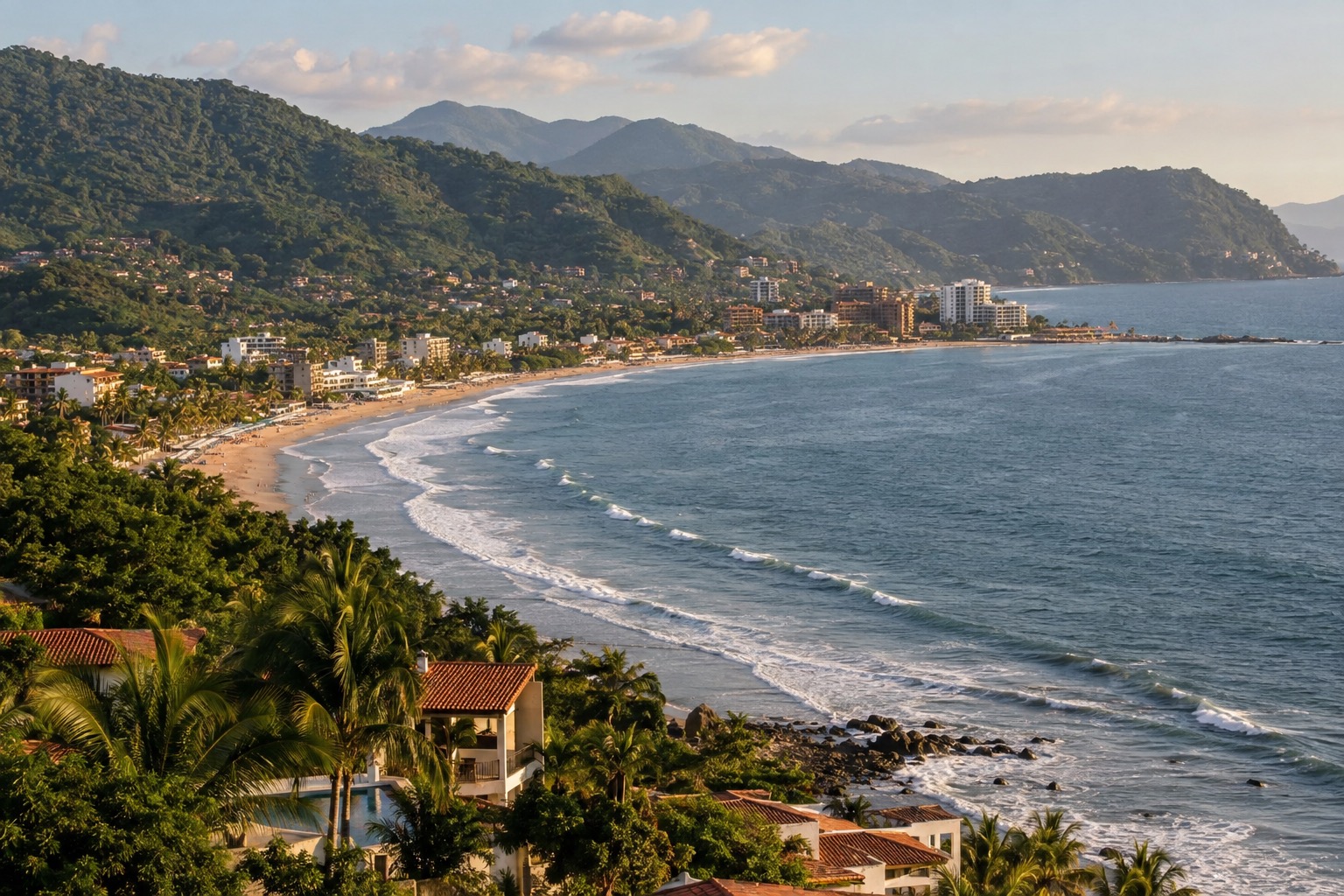
For a first visit, the Dorado is the easiest base, the old town suits budget travelers, Diamante fits resort and golf stays, and Pie de la Cuesta is the pick for quiet. Families and couples who want restaurants and nightlife at the door usually end up in the Dorado.
The four areas feel like different trips. The Dorado is a long, lively strip of towers and sand. The old town is lived-in and local, with guesthouses and a working waterfront. Diamante is modern and spread out. Pie de la Cuesta is rustic, with sunsets as its main event.
The best areas to stay in Acapulco
Acapulco Dorado
The Dorado is the Acapulco of postcards: a beachfront strip along Costera Miguel Alemán, with wide sandy beaches and a bay that is generally calm enough for swimming. Restaurants, shops and nightlife sit within a short stroll of most lobbies, so you can go from breakfast on the sand to late tacos without planning transport.
High-rise hotels and all-inclusive resorts dominate, with a few older condominium-style buildings mixed in. Couples and families who like having everything within easy reach will find it ideal. From the airport the drive normally takes 20 to 30 minutes, and the traditional center is about 5 to 15 minutes away.
Getting around is simple, since the Costera is served by frequent buses and combis, and taxis are easy to find. A tip: for short hops up and down the strip, ride the buses and keep taxis for late evenings, which saves a good amount over a week.
The traditional center, Caleta and La Quebrada
This is the older Acapulco, with a working waterfront, tangled neighborhoods and the small beaches of Caleta and Caletilla, where the water is generally calm and protected. It feels like a Mexican port town rather than a resort, which is exactly the appeal for backpackers, budget travelers and anyone who prefers local life.
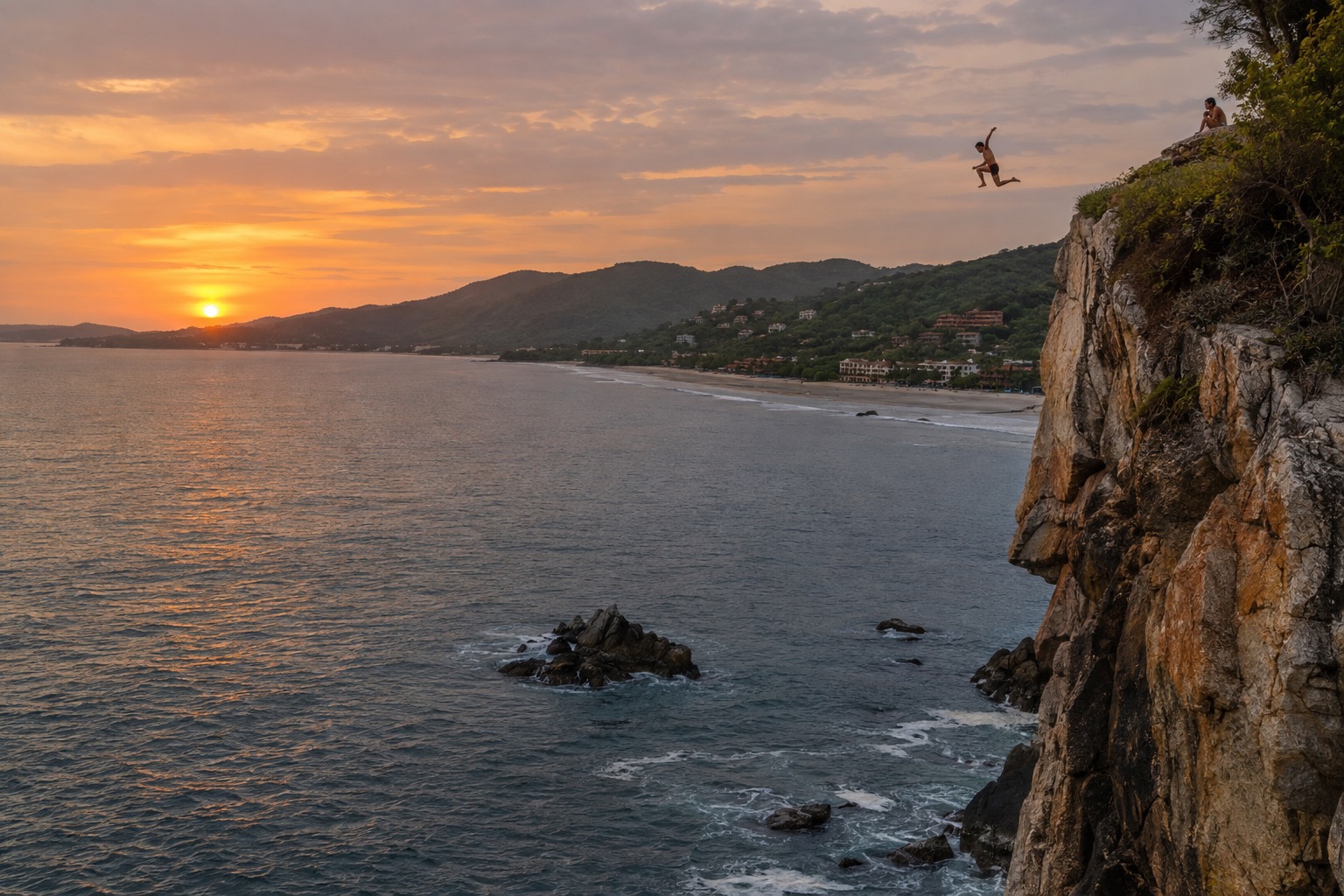
Lodging is mostly small guesthouses, older inns and budget hotels, not large all-inclusives. The airport is about 30 to 45 minutes away by car, while the zócalo and downtown are a short walk or a 5 to 10 minute ride. Local buses and combis link the area to the rest of the bay, and taxis are often open to negotiation. My evening advice: visit the cliffs at La Quebrada for the cliff diving show, and get there early so you can claim a good spot.
Diamante
Diamante is the modern, spacious side of the bay. Puerto Marqués, a sheltered spot, lies beside open-ocean beaches like Revolcadero, where the surf runs stronger and the beach flags are worth checking before anyone enters the water. Golf courses and big resorts give the area a quieter, more spread-out rhythm.
Expect large modern resorts and all-inclusive hotels, with few budget options. It suits visitors who want to settle into a resort. The airport is roughly 10 to 20 minutes away, the closest of any area here, while the old center and the Dorado are around 25 to 40 minutes depending on traffic.
Cars or taxis are the way to move, along the Scenic Highway or the Costera, because buses run less often than in the Dorado. A tip: consider renting a car or budgeting for taxis, since attractions and services are spread out.
Pie de la Cuesta
Pie de la Cuesta is where Acapulco slows down to the pace of hammocks. A thin strip of land separates the open Pacific from Laguna de Coyuca, and the evening ritual is watching the sun drop into the ocean with a cold drink in hand.
Small family-run hotels, cabanas and guesthouses are the norm, often with ocean or lagoon views. It suits couples, long stays and anyone after a rustic, peaceful escape. The drive from the airport is about 45 to 60 minutes, and downtown Acapulco is 30 to 40 minutes away, reached by a single road with local buses and taxis. A tip: on the ocean side the currents and undertow are strong, so the lagoon is the better place to get in the water.
Acapulco areas compared
| Area | Best for | Feel | Getting around | Airport by car |
|---|---|---|---|---|
| Dorado | Families, couples, first visit | Lively beachfront strip, towers and resorts | Buses, combis and taxis along the Costera | 20 to 30 minutes |
| Traditional center | Budget travelers, backpackers | Local, older neighborhoods, working waterfront | Walking, buses, combis, negotiable taxis | 30 to 45 minutes |
| Diamante | Resorts, golf, quiet | Modern and spread out | Car or taxi | 10 to 20 minutes |
| Pie de la Cuesta | Couples, long stays | Rustic, peaceful, sunsets | One road, local buses and taxis | 45 to 60 minutes |
The trade-off is mostly between convenience and character. The Dorado puts nightlife and dining at your feet but feels like a resort corridor, while the old town and Pie de la Cuesta give a slower, more local rhythm at the cost of more bus or taxi rides. Diamante is the calmest of the big-resort areas, though you will depend on a car or taxi for everything outside the hotel.
How to choose your hotel in Acapulco
An all-inclusive makes sense in Diamante and parts of the Dorado, where resorts are built around the pool and the buffet and you can stay put. In the old town and Pie de la Cuesta, guesthouses and small hotels work better, because the pleasure is eating at neighborhood spots and fish shacks.
Beachfront or lagoon side is a real choice at Pie de la Cuesta, where the ocean brings the sunsets and the lagoon brings a quieter setting. In the Dorado, the bay side gives you the sand at your door, while rooms facing the Costera hear more traffic and nightlife.
Book early for holiday weeks and long weekends, when the Dorado fills first. Families should look at beach access, pool size and how far the room is from the lobby, and anyone with limited mobility should ask about steps in older guesthouses and steep streets near the center.
Before booking, check the room’s distance from nightlife, the transfer time from the airport and whether the beach in front is a sheltered bay or open surf. The eastern Pacific hurricane season runs from May 15 to November 30, so travel in those months is worth planning with flexible booking terms.
Good to know before you go
The U.S. State Department’s Mexico travel advisory rates Guerrero at Level 4, ‘Do not travel’.
Juan N. Alvarez International Airport (ACA) is the gateway, and taxis and transfers take you to the bay in a short drive, shortest to Diamante. Lodging carries a state tax, which is added to your bill, so it is useful to know what shows up at checkout.
| Fee | Amount | Who pays |
|---|---|---|
| Lodging tax (Impuesto Sobre Hospedaje) | 4% in general | Guests, added to the room bill |
| Lodging tax on bookings through digital platforms | 5% | Guests booking through online platforms |
Sources
- U.S. Department of State, Mexico Travel Advisory (travel.state.gov), updated/issued on August 11, 2026, checked September 29, 2026
- El Contribuyente and J.A. del Rio, ISH tables by State 2026; Ley Numero 419 de Hacienda del Estado de Guerrero (Article 57, purpose of the tax), read on 29 September 2026
- NOAA National Hurricane Center, official Eastern Pacific season (nhc.noaa.gov), checked October 5, 2026