
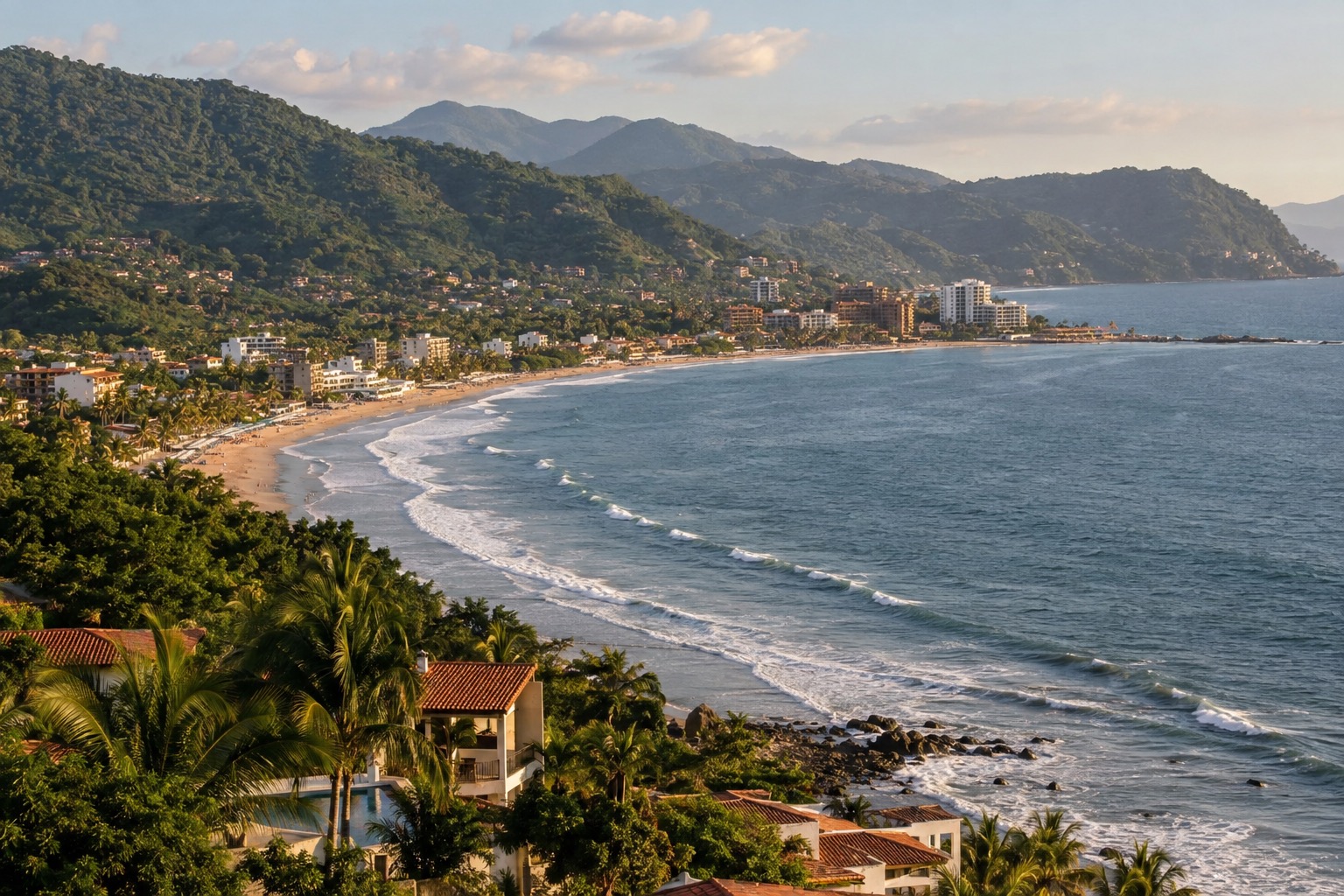
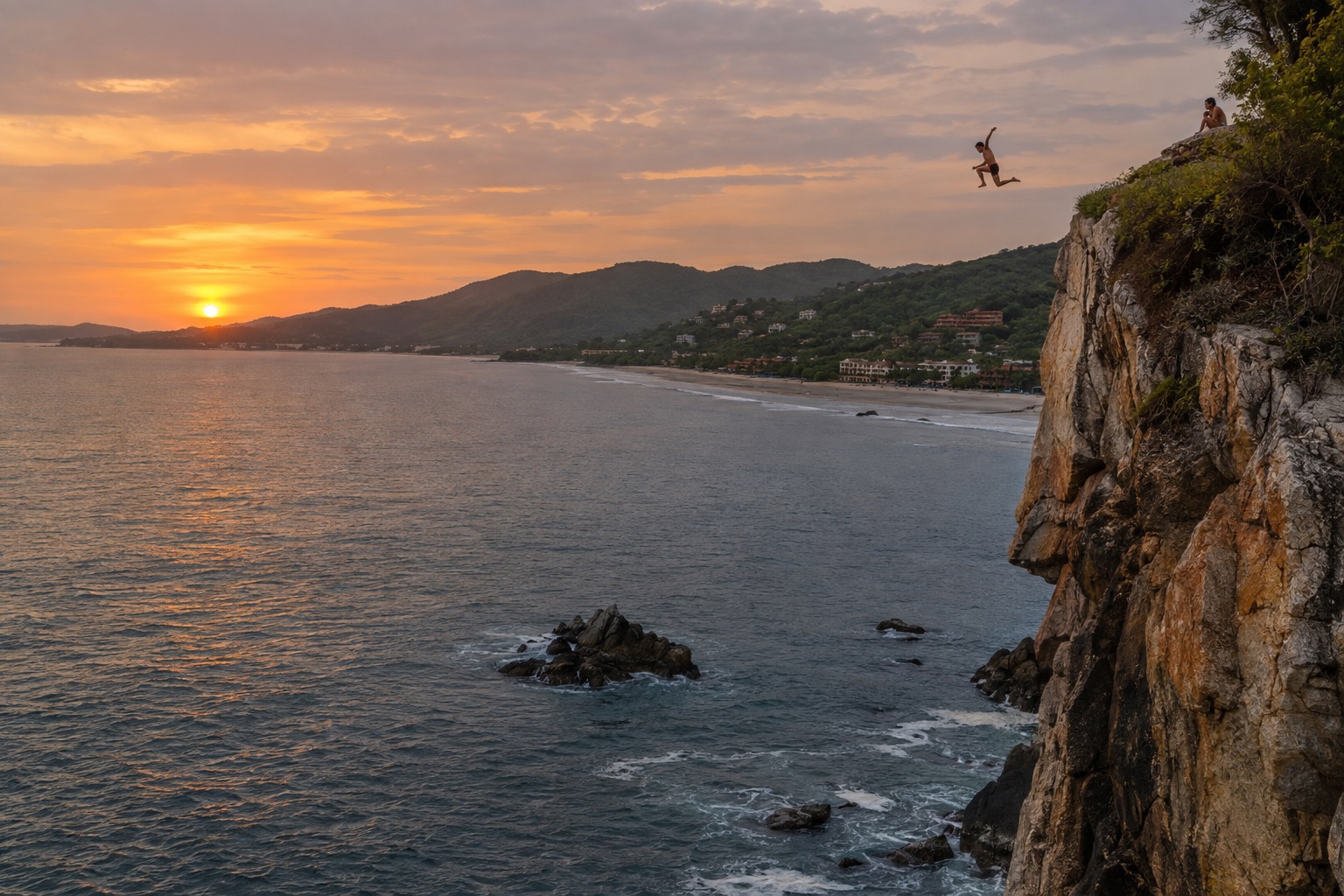
At dusk, a diver stands on a wet rock face above a narrow inlet in the old town, crosses himself at a small shrine, and drops into the surf as the crowd goes quiet. That scene still defines Acapulco for many people, along with the long curve of the bay and the lights coming on across the hills. This is a classic Pacific resort city for travelers who want sea, seafood and late nights, and who are comfortable with a place still rebuilding in parts.
What are the best things to do in Acapulco?
The best of Acapulco is the bay itself: its cliff divers, its beaches, its seafood and its long evenings along the Costera.
- Watch the cliff divers at La Quebrada, a show that has drawn crowds for decades.
- Walk through the Fuerte de San Diego, the colonial fort that now holds the city’s history museum.
- Spend a beach day on the calmer sand of the bay.
- Take a boat across the water for a change of scenery.
- Eat fresh ceviche and grilled fish at a beachfront palapa.
- Order pozole on a Thursday, as locals do.
- Go out along the Costera after dark for music and dancing.
- Stroll the zócalo in the old town for shade, coffee and people-watching.
Sights and landmarks in Acapulco
La Quebrada and the cliff divers
La Quebrada sits at the western end of the bay, in the old part of town, where the rock drops straight into a channel of open sea. The divers climb the face, pause at a small chapel, and time their leap to the incoming swell. A deep, slightly breathless silence falls on the viewing platforms just before each jump.
Shows run nightly, and the evening ones, with torches lit as the light fades, are the most dramatic. You can watch from the public platforms or from a terrace restaurant above the cove, which turns the dive into part of dinner. It is an easy outing for almost anyone, though the steps around the viewpoints are steep, so wear shoes with grip.
Fuerte de San Diego and the historical museum
The star-shaped fort on a hill above the zócalo was built to guard the port when Spanish galleons arrived from Manila loaded with silk and spices. Inside, the Museo Histórico de Acapulco walks through the city’s story, from the pre-Hispanic coast to the trans-Pacific trade and the independence years. The thick walls and ramparts also give wide views over the harbor.
It is a good morning stop, before the heat builds and while the stone is still cool. Pair it with a walk down to the zócalo afterward, where shaded benches and ice cream carts wait.
| Site | Open | Admission |
|---|---|---|
| Museo Histórico de Acapulco (Fuerte de San Diego) | Tuesday to Sunday, 9:00 a.m. to 5:00 p.m. | 85 pesos (Mexican visitors, general admission) |
The old town and the Costera
The old town around the zócalo feels like a Mexican port town of another era, with a cathedral, small shops, and street vendors selling fruit cups and paletas. The Costera, the long hotel strip curving east around the bay, is the modern face of the city, with towers, restaurants, and beach clubs lined up along the water.
Seeing both gives you the full picture of Acapulco, from the colonial harbor to the 20th-century resort. Rebuilding after Hurricane Otis is still under way in parts of the city, so you will see some construction and unfinished stretches alongside the busy ones.
Beaches and outdoor things to do in Acapulco
Acapulco’s beaches are the heart of a visit, and the wide bay, ringed by hills, gives you a choice between sheltered sand and open-sea surf.
Beaches inside the bay
The beaches along the inner bay, such as Caleta and Caletilla near the old town and Condesa along the Costera, tend to have gentler water and are the usual choice for families. Rows of umbrellas, palapa restaurants and vendors with fresh coconuts keep things easy. Condesa has a livelier, younger crowd with music drifting from the beach clubs.
Mornings are calmer and cooler, and afternoons fill with families, swimmers and volleyball games. Waves can still roll in on some stretches, so look for the flag cues posted at the sand.
Boats, snorkeling and the open water
Small boats leave from Caleta and the waterfront for rides across the bay, some with glass bottoms for peering at fish. Many make a stop at La Roqueta island, a short hop across the water, where there is a quiet beach and clear shallows for snorkeling.
Go in the morning, when the water is calmer and the light is good for seeing fish. Parasailing and banana boats are on offer along the Costera for anyone who wants more action.
Day trips from Acapulco
Day trips from Acapulco are fewer than in some resort areas, and the best ones are close to the water.
La Roqueta island
La Roqueta is the easiest escape, reached by a short boat ride from Caleta. The island has calm coves, snorkeling spots and a small lighthouse trail. A few beach shacks serve grilled fish and cold drinks.
It suits families and couples who want a slower day than the main beaches. Bring a hat and water shoes, as the shoreline can be rocky in places.
Laguna de Coyuca and Pie de la Cuesta
Northwest of town, a long sandy strip separates the open Pacific from a calm lagoon. Pie de la Cuesta is known for its sunsets, with hammocks, palapa restaurants and a wide, wave-pounded beach on the ocean side. On the lagoon side, boats glide across quiet water lined with palms.
Go late in the afternoon to catch the sunset over the sea. The ocean side has strong surf, so it is a place for watching waves rather than easy swimming.
What to eat in Acapulco
Eating in Acapulco means seafood, eaten with sand nearby and a cold drink in hand. Ceviche acapulqueño is the signature, with raw fish cured in lime, tomato and onion, often served with tostadas. Pescado a la talla is the other classic, a whole fish rubbed in red and green chile paste and grilled over coals. Shrimp, octopus and fried whole fish appear on nearly every beachside menu.
Pozole, the hominy stew, is tied to Guerrero, and many restaurants serve green pozole on Thursdays. Fresh coconut water, aguas frescas and a michelada round out the table. For a casual meal, the palapa restaurants on the sand are the places people choose.
Things to do in Acapulco at night
Acapulco has been a late-night city for generations, and evenings are the time when the bay looks its best. The cliff divers at La Quebrada give the night its first act, and dinner on a terrace above the cove makes a natural pairing. Afterward, the Costera fills with clubs and bars, some with live music, others with big dance floors that run until the early hours.
For something quieter, the zócalo in the old town comes alive after dark with families, musicians and ice cream sellers. A waterfront walk with the lights of the bay curving ahead is a calm way to end the evening.
Things to do in Acapulco with kids
Kids do best in Acapulco on the calm beaches and on the water. Caleta and Caletilla are the usual choices, with gentle water, shallow areas, and vendors selling snacks. Glass-bottom boats make a fun short outing, and a trip to La Roqueta adds a small adventure with snorkeling and fish to spot. The fort and its museum offer a quick history stop with cannons and ramparts that children tend to enjoy.
The sun is strong and the heat can wear small travelers out, so plan beach time for the morning and rest in the shade or pool in the afternoon. Keep a close eye on children in the water, as waves can build on open stretches.
Good to know before you go
The U.S. State Department’s Mexico travel advisory rates Guerrero at Level 4, ‘Do not travel’.
Acapulco is reached through Juan N. Álvarez International Airport, and the city is built around a wide bay with the old town and La Quebrada at the western end and the Costera hotel strip curving east. Rebuilding after Hurricane Otis, which struck as a Category 5 storm, is still under way in parts of the city, so check current conditions before planning a trip. Hurricane season on the Pacific coast is also worth keeping in mind when choosing dates. Air connections to the city have been expanding, a sign of tourism picking up again.
| Fee | Amount | Who pays |
|---|---|---|
| Lodging tax (Impuesto Sobre Hospedaje) | 4% in general, 5% for bookings through digital platforms | Guests staying in Guerrero |
Sources
- NOAA National Hurricane Center, Tropical Cyclone Report on Hurricane Otis, publie le 7 mars 2024, checked September 29, 2026
- The Weather Channel, « Cat. 5 Hurricane Otis Mexico's Record-Costliest », 7 mars 2024, checked September 29, 2026
- INAH, Lugares INAH, page for Museo Historico de Acapulco Fuerte de San Diego, checked September 29, 2026
- U.S. Department of State, Mexico Travel Advisory (travel.state.gov), updated/issued on August 11, 2026, checked September 29, 2026
- El Contribuyente and J.A. del Rio, ISH tables by State 2026; Ley Numero 419 de Hacienda del Estado de Guerrero (Article 57, purpose of the tax), read on 29 September 2026
- SECTUR, gob.mx blog, actualite « Acapulco amplia su conectividad aerea y fortalece su actividad turistica », 24 September 2026, checked September 29, 2026