
In June, the first big storms of the year roll over the Sierra Madre in the late afternoon, and the hills behind Puerto Vallarta go from straw brown to jungle green almost overnight. The air smells of wet earth and frying fish, and the evening sky over the bay turns orange after the clouds clear. This is Puerto Vallarta in its early rainy season, with warm water, thinner crowds and a slower, greener town.
What is the weather like in Puerto Vallarta in June?
June is hot, humid and increasingly wet, with sunny mornings that give way to heavy afternoon clouds and frequent rain on more days than not.
| Month | Average high (°F) | Average low (°F) | Rain (in) | Rain days | Sea (°F) | Daylight on the 15th |
|---|---|---|---|---|---|---|
| May | 85.3 | 64.8 | 0.53 | 5.7 | 81.2 | 13 hours 10 minutes |
| June | 86.5 | 70.9 | 9.58 | 16.6 | 84.5 | 13 hours 25 minutes |
| July | 88.0 | 70.9 | 15.46 | 22.2 | 86.9 | 13 hours 18 minutes |
The rain arrives in a pattern: a hot, bright morning, towers of cloud building over the mountains by midday, then a downpour or a thunderstorm that can last an hour or run into the evening. Some days stay gray and drizzly. Nights stay warm enough to eat outside in a T-shirt, though the humidity clings.
The bay has warmed up a lot since May, and the water is pleasant for long swims and snorkeling. Days are long, with light lasting well into the evening, so there is time for a beach session and a dinner after the rain passes.
What to do in Puerto Vallarta in June
June is a month for the sea, for green mountain scenery and for eating well while the town exhales between the winter crowds and the summer vacation rush. Plan the outdoors for the morning and keep the afternoon flexible.
Mornings on the bay
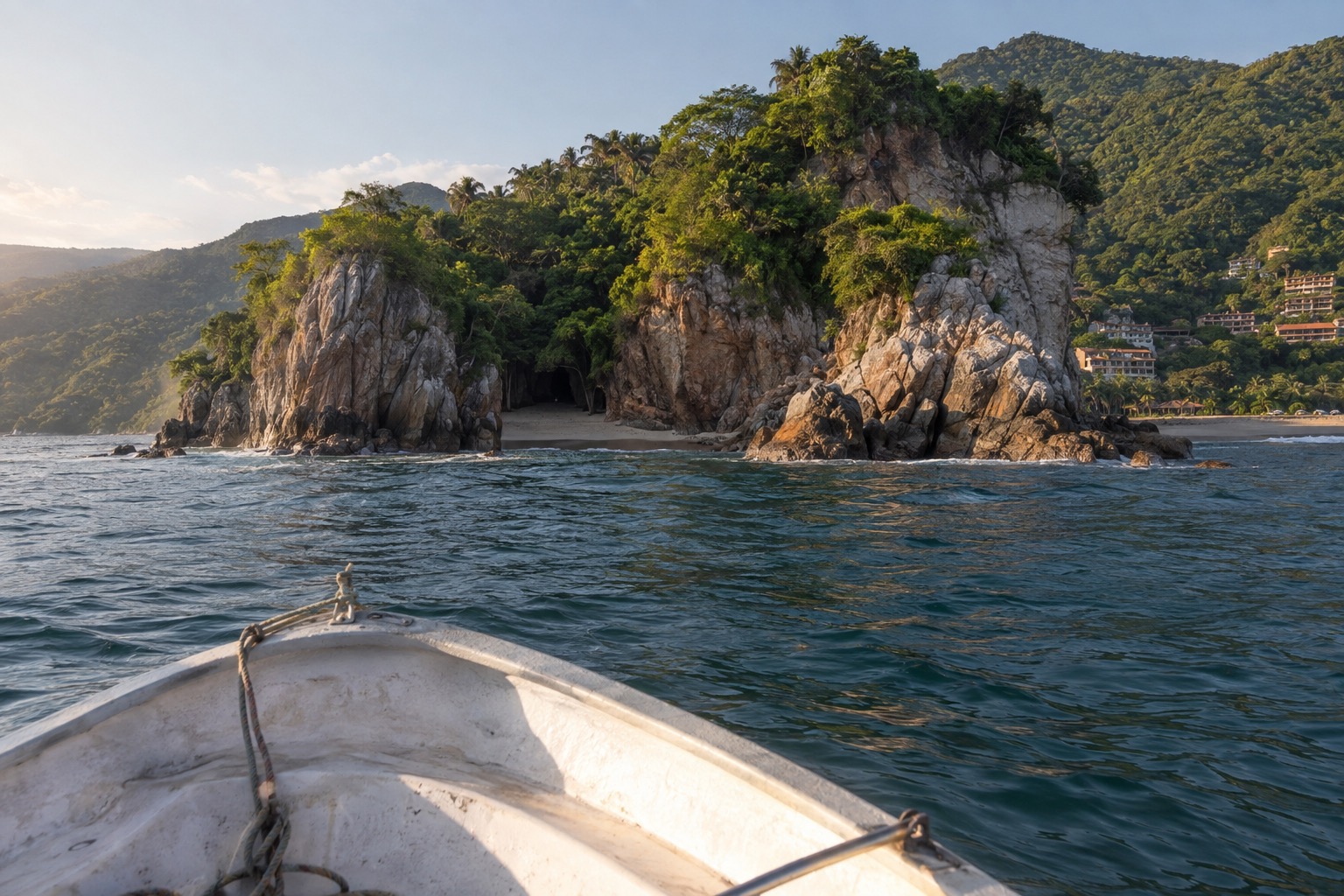
The water is at its calmest and clearest early, before the clouds build. Boat trips around Bahía de Banderas run out of town, Nuevo Vallarta and Punta Mita, and this is a good month for snorkeling and for spotting dolphins, rays and sea birds. The humpback whales have long since left the bay, which is only present from December through March, so June is about reefs and open water rather than whale watching.
Beaches such as Playa Las Gemelas, Los Muertos and Conchas Chinas are easy to enjoy before noon, with room to spread out. Head back to shade by early afternoon, when the sky usually starts to darken.
Green days in the mountains
The rains transform the Sierra Madre. Rivers fill, waterfalls run, and the jungle canopy above town thickens. Canopy tours and river hikes in the hills feel lush and cooler under the trees, and the old silver-mining town of San Sebastián del Oeste, set among pines and coffee farms, looks lovely under the new green. Go in the morning, since mountain roads and trails are best before the storms arrive.
Expect mud on trails and slick stones near water. Wear shoes that grip, and treat a dark sky as a signal to head back down.
Seafood, fruit and rainy-afternoon food
Seafood is the heart of eating here. Order pescado zarandeado, a split fish grilled over coals with chile and lime, or shrimp aguachile and fresh ceviche tostadas on a beach terrace. Mango and watermelon aguas frescas are everywhere, and street carts sell fruit cups dusted with chile and lime.
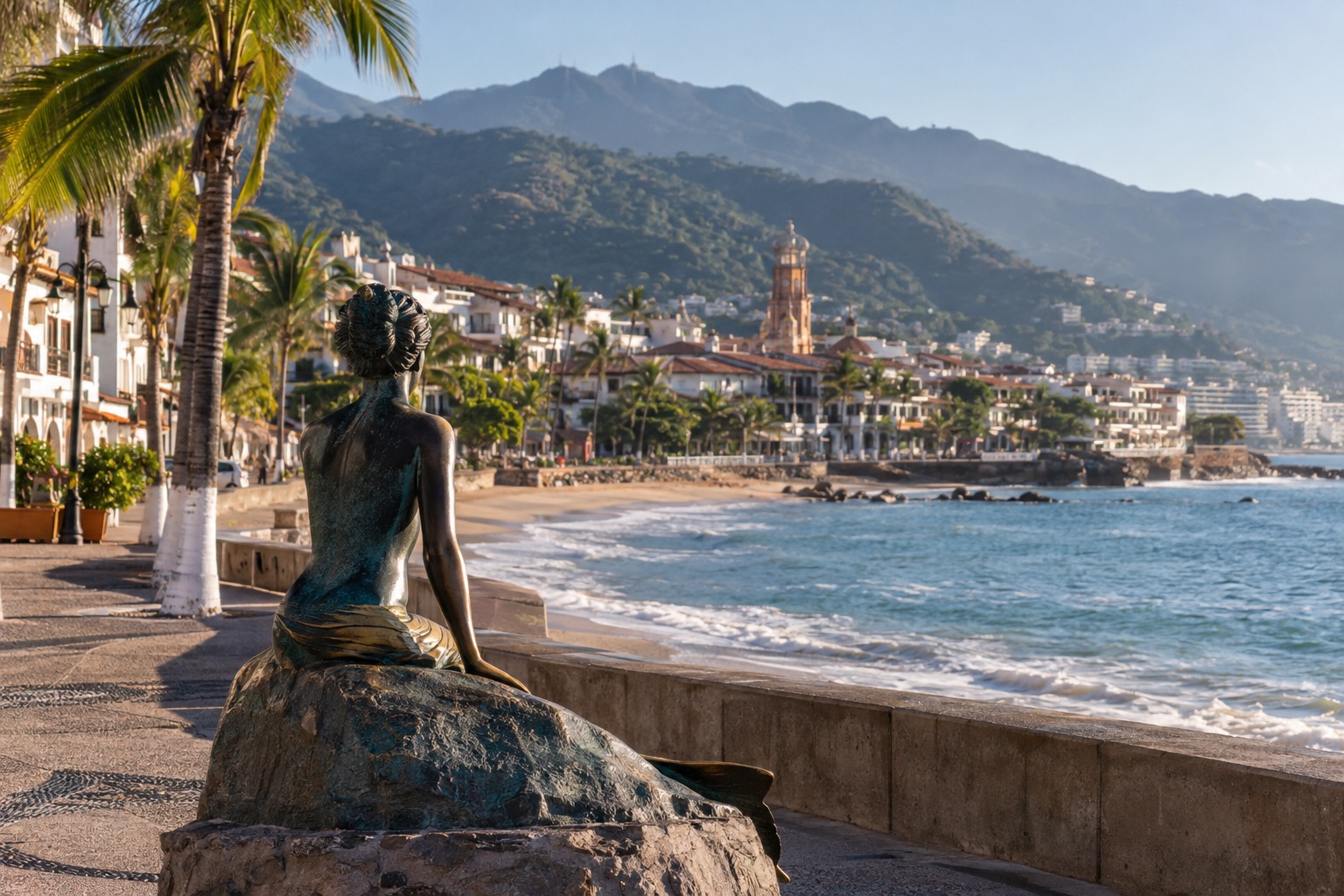
When a storm hits, do as locals do and duck into a café or a fonda for a bowl of pozole or a plate of birria and wait it out. Rain in the evening also lowers the temperature, and the Malecón fills again once the pavement dries, with street performers, sculptures and couples strolling toward the sunset.
Town life in the rainy season
The cobbled streets of the Centro and the Zona Romántica feel more local this month. Galleries, craft shops and the Río Cuale footbridges are good for the wet hours, and the cathedral with its crown-shaped tower is a short walk from the oceanfront. Fewer visitors mean quieter tables and easier conversation with the people running the shops and bars.
Is Puerto Vallarta busy in June?
No, June is one of the calmer months, sitting between the winter high season and the busier summer vacation weeks.
Snowbirds are long gone, and U.S. school calendars only begin to send families south toward the end of the month, so beaches and restaurants have breathing room. Mexican vacationers arrive mostly in July and August. While a number of smaller operations ease up or shut during stretches of the rainy season, the principal restaurants, hotels and tour operators remain open.
Rooms are generally easier to find, and you can often walk into a popular dinner spot without a long wait. Cruise ships still call at times, which can make the Malecón and the beaches near the port livelier on those days.
What to pack for Puerto Vallarta in June
Pack for heat, humidity and a daily shot at a storm, with clothes that dry quickly.
- Lightweight, breathable shirts and shorts, plus a spare set for after a soaking
- A packable rain shell or poncho rather than a heavy jacket
- Sandals or water shoes that grip wet stone and boat decks
- Mineral sunscreen and a brimmed hat for the bright mornings
- Insect repellent for evenings near the river and the hills
- A dry bag or zip bag to protect your phone and camera
Good to know before you go
The U.S. State Department’s Mexico travel advisory rates Jalisco at Level 3, ‘Reconsider travel’.
June falls in the early part of the Pacific hurricane season, so it is wise to follow the forecast, and know that storms are mostly local thunderstorms that pass through in the afternoon. Heavy rain can occasionally close beaches or delay boat departures.
| Fee | Amount | Who pays |
|---|---|---|
| Jalisco lodging tax (Impuesto Sobre Hospedaje) | 5% | Guests staying in lodging in Jalisco |
Is June a good time to visit Puerto Vallarta?
Yes, for travelers who like warm water, green scenery and uncrowded tables, and who can live with a rain shower most afternoons.
Compared with May, June is wetter and much more humid, though the sea is warmer and the hills are suddenly lush. July pushes both further, with rain on most days and an even warmer bay, so June is the gentler way to enjoy the green season. What June gives Puerto Vallarta is a look few visitors see: the mountains glowing green behind the bay, a sunset sky cleared by the rain, and a town that has the time to talk.
Sources
- Servicio Meteorologico Nacional (CONAGUA), normales climatologicas 1991-2020, estacion 14339 (El Cuale, Puerto Vallarta), checked September 29, 2026
- Open-Meteo Marine API, average 2015-2024, checked September 8, 2026
- sunrise-sunset.org, sunrise and sunset on the 15th of the month, checked September 8, 2026
- Congreso del Estado de Jalisco, Ley de Ingresos del Estado de Jalisco para 2026, article 12; El Informador, « Avalan Ley de Ingresos de Jalisco para 2026 », December 15, 2025, read on September 29, 2026
- U.S. Department of State, Mexico Travel Advisory (travel.state.gov), updated August 11, 2026, checked September 29, 2026
To plan your stay
- Things to Do in Puerto Vallarta: Malecón Walks, Los Arcos, Yelapa and Day Trips
- Where to Stay in Puerto Vallarta: Zona Romántica, Centro, Marina Vallarta and the Hotel Zone
- Puerto Vallarta Airport to City: Taxis, Buses and How Far Each Neighborhood Is
- Know Before You Go to Puerto Vallarta: Entry Costs, Money, Getting Around and Local Customs