
In the late afternoon, families from Mérida fan out on the Progreso seawall, with fried fish in paper cones and cold drinks, while pelicans settle on the water and the long pier dissolves into the haze. The town is the Yucatán capital’s own beach, a working port with a local, unhurried feel rather than a resort. It suits couples, families and anyone who likes to walk to the sand, a seafood lunch and a sunset without leaving the same few blocks.
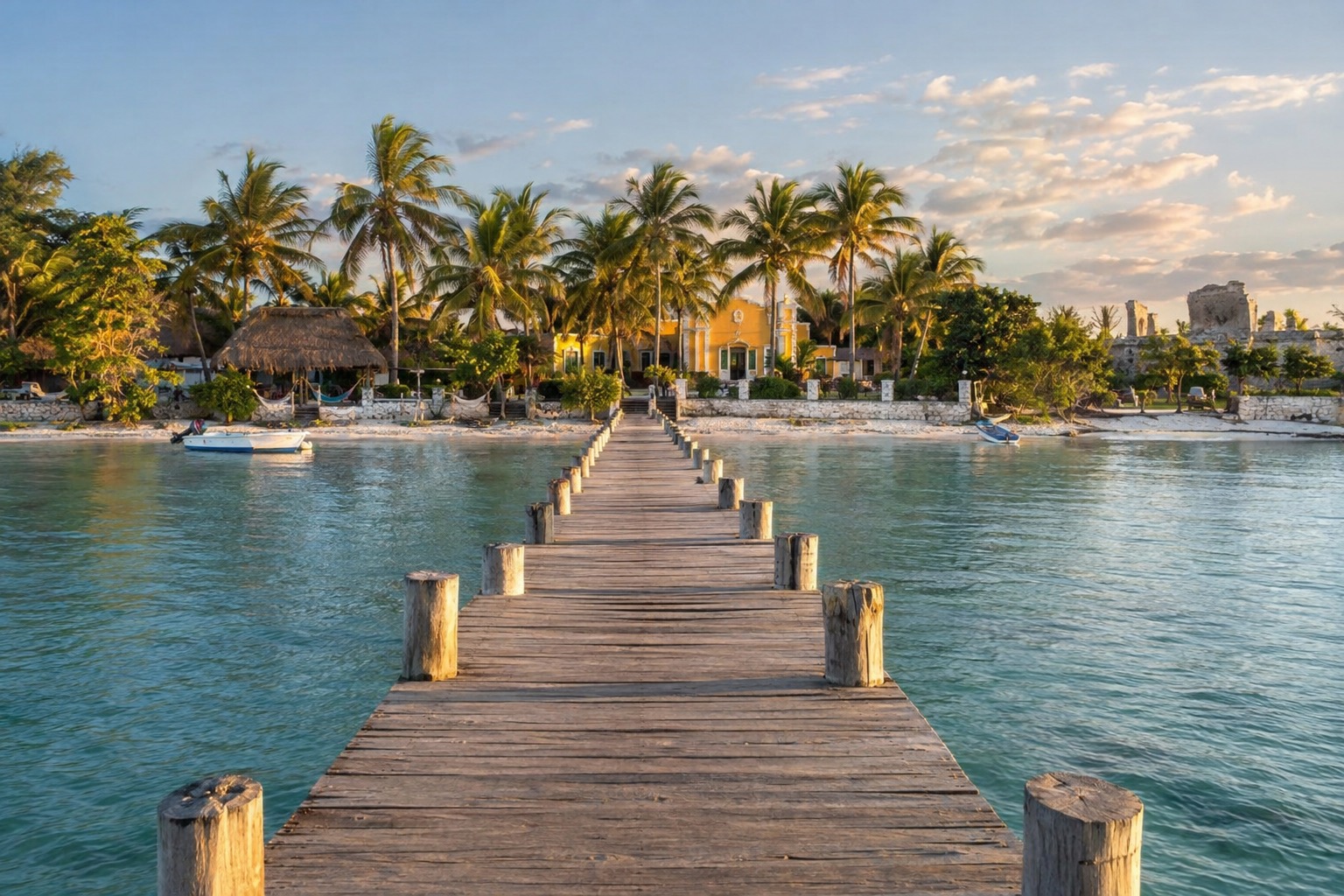
What are the best things to do in Progreso?
The best of Progreso is simple and seaside: stroll the Malecón, eat seafood within sight of the water, then add a morning among Maya ruins or a visit to the crater town next door.
- Walk the Malecón at sunset, when the promenade fills with local families.
- Spend a beach afternoon on the sandy Gulf-front shore.
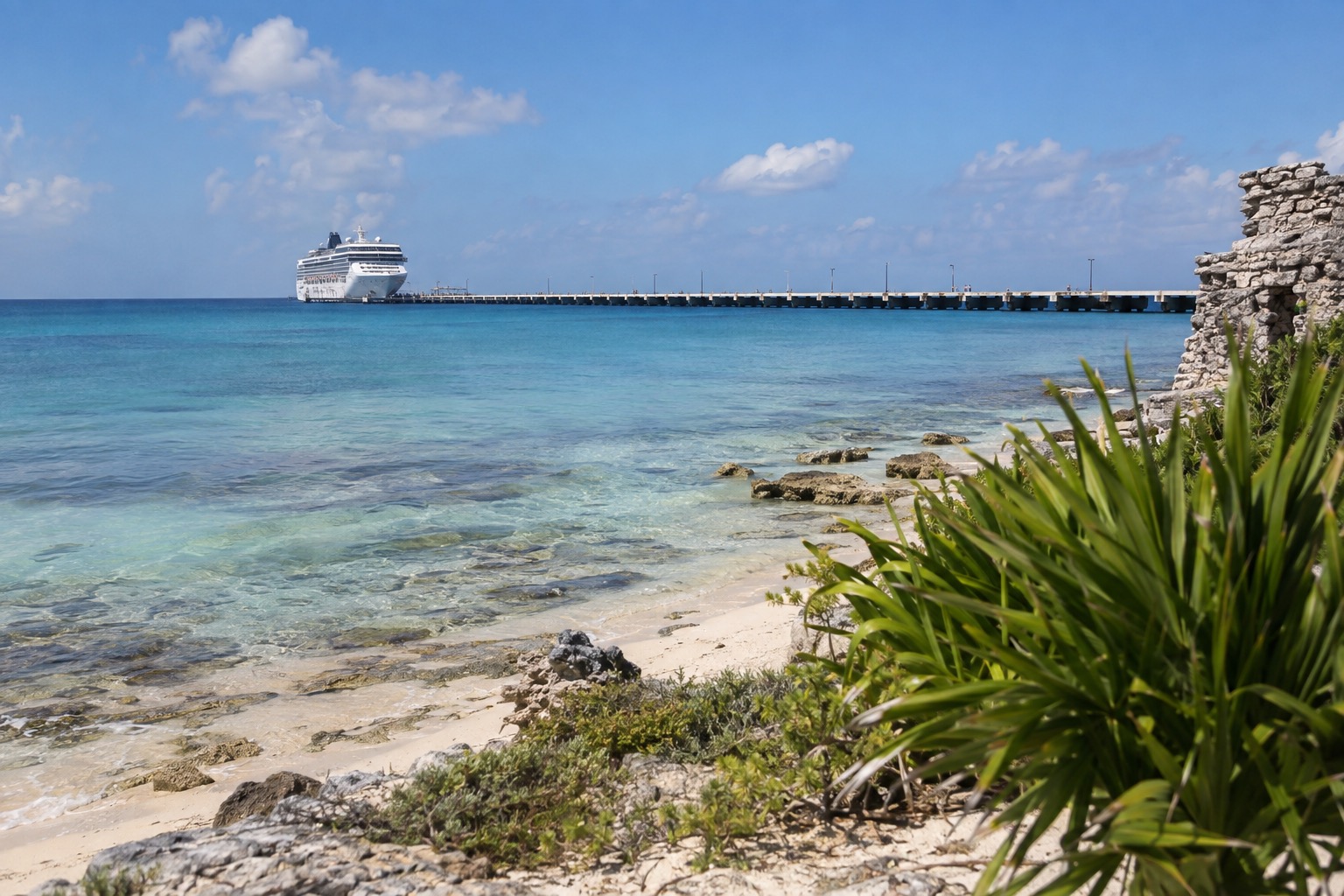
- Look out along the enormous pier that carries cruise ships far out to sea.
- Explore the ancient Maya city of Dzibilchaltún on the road to Mérida.
- Visit Chicxulub Puerto and its museum about the meteor impact.
- Eat ceviche, fried fish and fresh seafood at the beachfront restaurants.
- Take a day in Mérida, which is close enough to pair with the coast.
- Drift out to quiet beach villages like Chelem and Chuburná Puerto.
Sights and landmarks in Progreso
The Malecón
The Malecón is the town’s living room. It runs along the Gulf-front beach, the closest coastline to Mérida, and it is lined with seafood restaurants, bars, ice cream stands and souvenir shops. Everyone ends up here, from retirees on benches to teenagers on bicycles.
Go in the evening, when the heat lets go and the light turns orange over the water. On weekends it gets busy with visitors from Mérida, while weekdays are noticeably calmer. Between meals, you can step down onto the sand whenever you like, which is the whole charm of the place.
The long pier
Progreso is both a beach town and a cruise and cargo port, and its pier is the proof. The Terminal Remota stretches about four miles into the Gulf, because the shallow coastal shelf keeps large ships far from shore. Seen from the Malecón, it looks like a thin gray line vanishing into the horizon.
On days when a ship is in, the town gets a little livelier, with visitors drifting along the seafront and taxis lining up. The pier is mostly a thing to look at, a reminder that this was founded as a harbor to serve Mérida, not as a vacation spot.
Town streets and small corners
A few blocks back from the sea, Progreso is an ordinary Yucatecan town. You find the main plaza with its church, small bakeries, stalls selling fruit cups dusted with chile, and hardware stores beside hotel lobbies. The center is walkable, so a slow loop on foot is the easiest way to see it.
Lodging here is mostly small hotels, guesthouses and vacation apartments rather than big resorts, so the streets keep a neighborhood feel. It is a good place to notice how locals use the town: morning swims, long Sunday lunches, evenings out on plastic chairs.
Beaches and outdoor things to do in Progreso
The Malecón beach
The main beach is a broad stretch of pale sand in front of the promenade, with Gulf water that is usually calm and shallow. It is more a place to wade, float and linger than to surf. Waves can pick up after strong winds, so look at the beach flags before going in.
Families and couples both settle in here, many under rented umbrellas with a plate of seafood nearby. Because it sits right in town, you can slip off for a shower, a nap or a drink and return without any planning.
Quieter beach villages
Along the coast, the beach towns each have their own pace. Chelem, a short drive west, is a small fishing village with shallow water and a relaxed local mood, with modest guesthouses and a few camping spots. Bring cash there, since banking services are limited.
Farther west, Chuburná Puerto is quieter still, close to mangroves and natural areas, with calm shallow water and almost no nightlife. It suits nature lovers and couples who want silence, and shops are scarce, so stock up on supplies first. Taxis and local buses run along the coast road to the nearer villages.
Mangroves and birdlife
The coast here is bordered by mangroves and lagoons, which draw herons, pelicans, egrets and, in some areas, flamingos. The nature around Chuburná Puerto is the easiest way to get a taste of it, with early morning the best time for birds, before the sun gets strong.
There is no need for a plan. A slow walk at the edge of the village, binoculars if you have them, and a hat will do. Sun is strong all day on this coast, and shade is limited, so water and sunscreen matter more than any gear.
Day trips from Progreso
Dzibilchaltún
Dzibilchaltún is an ancient Maya city about nine miles from Mérida on the road toward Progreso, so it fits naturally into a day that links the capital and the coast. You walk sunlit paths through low ruins and scrubby forest, with a long causeway leading to the small Temple of the Seven Dolls at its heart.
Go early, before the heat builds, and bring a hat and water. The site’s Xlacah cenote and its Museum of the Maya People are currently closed, so plan around the ruins themselves and the long walks between structures. It suits history lovers and anyone happy with a quiet couple of hours outdoors.
| Site | Open | Admission |
|---|---|---|
| Dzibilchaltún archaeological site | Monday to Sunday, 8:00 a.m. to 4:00 p.m. | $105.00 pesos federal fee, plus a state tariff of $223.00 pesos for foreign visitors ($90.00 pesos for nationals) |
Mérida
The state capital is only about 30 minutes from Progreso by highway, which makes it the most natural day out. Its colonial center has a big shaded main plaza, a cathedral, grand mansions along Paseo de Montejo and a lively market district where you can eat cochinita pibil standing up.
Morning is the best time to wander before the heat, then lunch in a cool courtyard restaurant. Return to the coast for an evening swim or a seafront dinner. Mérida suits anyone wanting culture, shopping and architecture to balance the beach.
Chicxulub Puerto
About five miles east of Progreso, this small beach town is an easy half-day outing, and a strange one. It sits almost exactly at the center of the Chicxulub impact crater, where an asteroid struck around 66 million years ago and ended the age of the non-avian dinosaurs.
The town has opened a museum dedicated to the meteor impact, which is the reason to come. The rest is a quiet residential beach community with calm, shallow water and little nightlife. Progreso is only 10 to 15 minutes away by car or taxi, and a car or bicycle helps since services are limited.
Other outings
- Celestún, on the western coast, known for its flamingos and estuary boat rides.
- Sisal, the old port that Progreso replaced, now a sleepy fishing village.
- Uxmal and other Maya sites, for travelers who want a longer day inland. Celestún and Sisal each make an easy day out by car from Progreso, best started early, while Uxmal is a longer outing that suits a full day with a driver or a tour.
What to eat in Progreso
Seafood is the answer, and it comes straight off the boats. Along the Malecón, restaurants serve fried whole fish, shrimp in garlic, octopus cocktails and ceviche with lime and habanero on the side, usually with a basket of tortilla chips and a cold beer.
Regional dishes round out the table. Try cochinita pibil, pork slow-cooked in achiote and sour orange, papadzules, tortillas rolled around egg in pumpkin-seed sauce, and sopa de lima, a bright chicken broth with lime. Fruit cups with chile and lime, and fresh coconut water, are the classic seaside snacks.
Beyond the beachfront, small family places and market stalls in town serve cheaper, more local plates. Seafood restaurants fill on weekends with families from Mérida, so a late lunch is easier than an early one.
Things to do in Progreso at night
Evenings in Progreso center on the Malecón, where the promenade stays lively well after dark. Couples and families stroll, children chase each other, and restaurants and bars along the front keep music playing. It is more relaxed seaside atmosphere than party scene.
A good night is simple: sunset on the sand, a long seafood dinner, then ice cream and a walk with the lights reflecting on the water. Bars near the front offer cocktails and live music on weekends. Outside the center, the beach villages are very quiet at night, with almost no nightlife.
Things to do in Progreso with kids
Children usually do well here because the town is easy and the beach is right there. The Gulf water along the Malecón is shallow and often calm, and the sand is good for castles. Look at the beach flags before swimming, and keep an eye on them anyway, since conditions change.
Walking out to look at the long pier and the ships, eating ice cream on the promenade and watching pelicans keep them busy for hours. The Chicxulub impact museum in the nearby crater town gives older kids a dinosaur story to chew on.
The main thing to manage is the sun. Shade is limited on the sand, so umbrellas, hats, sunscreen and plenty of water matter, and midday is better spent in a restaurant or back at the hotel. Evenings are the best time for walking with young ones.
Good to know before you go
The U.S. State Department rates the state of Yucatan Level 1, ‘Exercise normal precautions’.
Progreso is close to Mérida International Airport, about 35 to 45 minutes by car or bus, and the center is walkable, with taxis and local buses linking the Malecón to nearby beach towns. Weekends and holidays fill the beachfront hotels with visitors from Mérida, so book lodging ahead for those dates.
Carry some cash, especially for the smaller villages, where ATMs are limited. The hurricane season runs from June through November, so it is worth keeping an eye on forecasts if you travel in those months.
Sources
- Wikipedia, "Progreso, Yucatan", en.wikipedia.org, checked September 29, 2026 (source secondaire)
- common knowledge
- Wikipedia, "Chicxulub crater", en.wikipedia.org, checked September 29, 2026 (source secondaire, citant Renne et al. 2013 et Schulte et al. 2010)
- Wikipedia, "Chicxulub Puerto", en.wikipedia.org, checked September 29, 2026 (source secondaire)
- INAH, official for the Dzibilchaltun archaeological zone, inah.gob.mx/zonas/zona-arqueologica-de-dzibilchaltun, checked September 29, 2026
- U.S. Department of State, Bureau of Consular Affairs, Mexico Travel Advisory, travel.state.gov, checked September 29, 2026
- NOAA National Hurricane Center, checked September 29, 2026