
In August, the afternoon sky over the Malecón turns the color of slate, thunder rolls down from the Sierra Madre, and the whole boardwalk empties for a few minutes of warm rain before filling right back up. The hills behind town are a deep jungle green, the bay is bathwater warm, and the evenings smell of wet earth and grilled seafood. This is Puerto Vallarta in its lush, slow, summer-storm mood, made for travelers who like a quiet town and don’t mind an umbrella.
What is the weather like in Puerto Vallarta in August?
August is hot, humid and wet: sunny mornings, steamy middays and rain on most days, usually as a downpour in the afternoon or evening rather than a gray all-day drizzle.
| Month | Average high (°F) | Average low (°F) | Rain (in) | Rain days | Sea (°F) | Daylight on the 15th |
|---|---|---|---|---|---|---|
| July | 88.0 | 70.9 | 15.46 | 22.2 | 86.9 | 13 hours 18 minutes |
| August | 88.7 | 70.9 | 16.82 | 24.0 | 88.9 | 12 hours 52 minutes |
| September | 88.2 | 70.9 | 17.24 | 23.4 | 89.3 | 12 hours 17 minutes |
Mornings are the best window for the beach, the boat or a walk along the river, when the sky is often bright and the heat is still bearable. By early afternoon the air gets heavy, clouds stack up over the mountains, and a storm often rolls in with thunder, sometimes with enough rain to flood the low corners of the streets for a while.
You can eat outdoors in a T-shirt because the evenings stay warm, and the ocean is like bathwater, so a dip after dark won’t come as a shock. Where waves matter, check the beach flags, because storm swells can make the surf livelier on some days.
What to do in Puerto Vallarta in August
August in Puerto Vallarta is for green scenery, warm water and unhurried days that bend around the rain. Plan the outdoor part before lunch and keep the afternoon for something under a roof.
Mornings on the water and the sand
The bay is at its warmest this month, so early swims, paddleboarding and snorkeling trips toward the southern coves or Marietas-side waters of Banderas Bay feel easy and pleasant. Boats typically leave in the morning, when the sea is usually at its calmest and the sky at its clearest. The humpback whales are not here yet, since they arrive roughly from December, so this is a month for the bay itself rather than whale watching.
Beaches such as Playa Los Muertos and the town beaches are livelier early, with fishermen pulling in nets and vendors setting up. By midday the sun is fierce, so shade, a cold coconut or a plate of fish tacos is the natural next move. Surf can run higher after a storm, so look at the flags before going in.
Rainy afternoons, Vallarta style
When the sky opens, the town simply shifts indoors. Café terraces under awnings, the galleries of the Romantic Zone, the cobbled streets of the old center and the little shops selling Huichol beadwork are all good places to wait out a storm. Many people settle in with a coffee from Jalisco or a cold agua fresca of tamarind or jamaica and watch the water run down the hill streets.
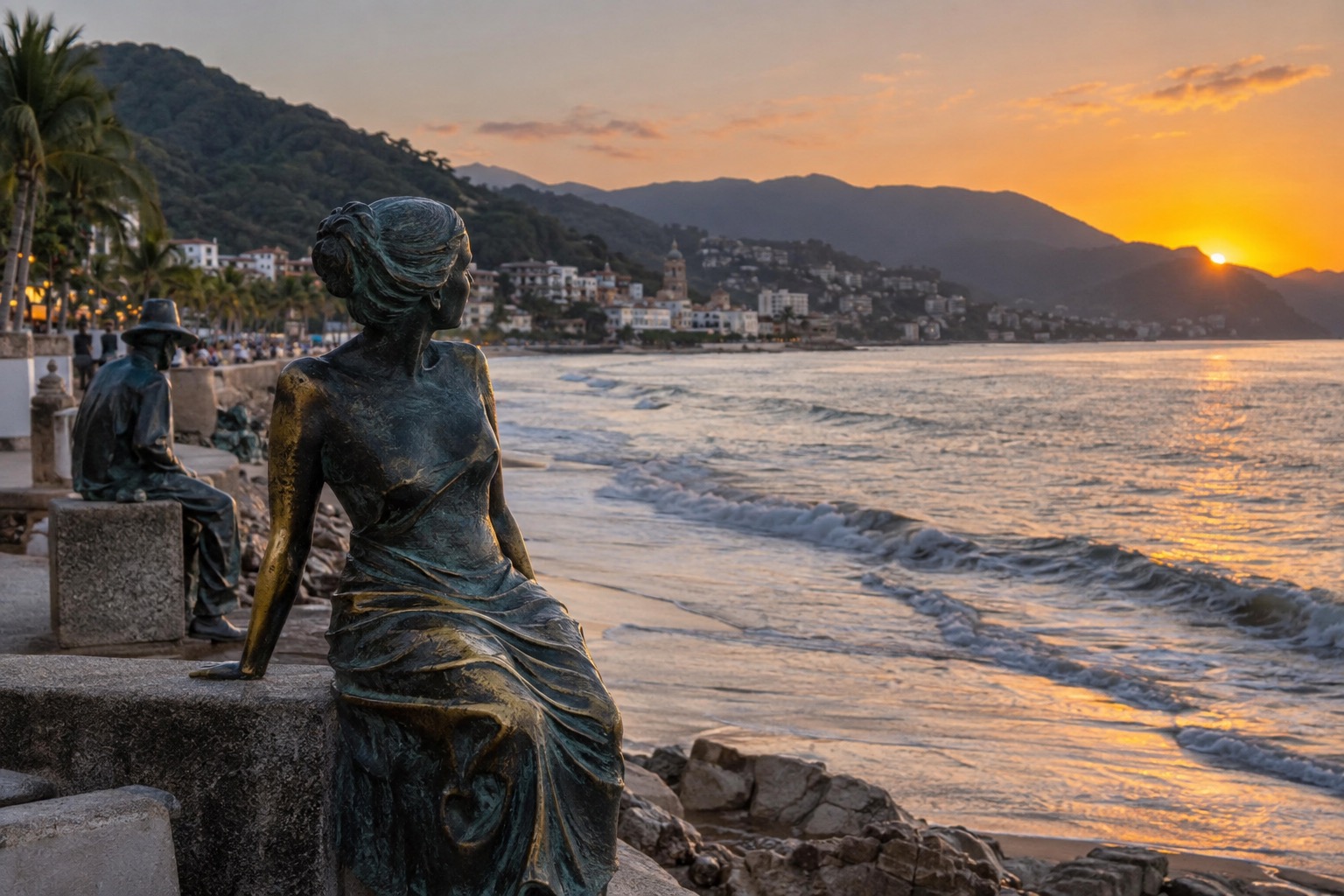
The Malecón is memorable just after the rain, when the air cools a little, the sculptures glisten and the sunset glows pink and orange behind the clouds. Locals and visitors drift back out to stroll, and the sidewalk vendors are back in business within minutes.
Eating in the rainy season
This is a good month for seafood and for things that feel right in the humidity. You’ll find ceviche, aguachile, shrimp a la diabla and fish grilled on the beach among the staples, while the local pescado zarandeado, split and grilled over coals, stands as a Pacific coast classic. Cold beer with lime, a michelada or fresh coconut water help with the heat.
Many restaurants in the Romantic Zone and downtown have covered patios, so a sudden shower rarely wrecks dinner. When the evening grows cool and wet, a plate of birria or a hot bowl of pozole likewise hits the spot in the hills and the villages close by.
Green hills, rivers and nearby villages
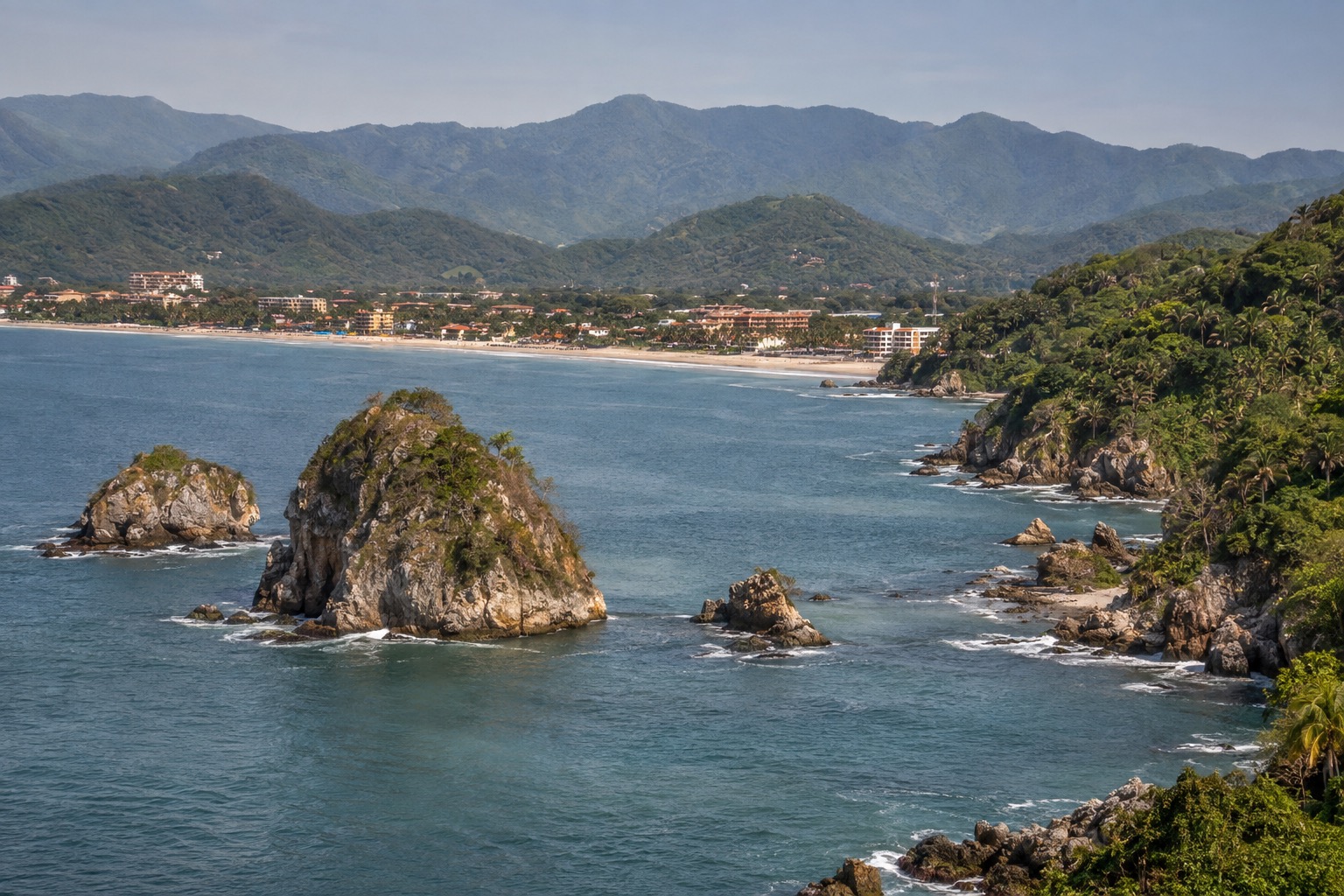
The rains transform the Sierra Madre foothills, so rides into the jungle, visits to small mountain villages and walks along the Cuale River feel especially lush. Waterfalls and streams run fuller, and the air is thick with the smell of leaves and flowers. Go in the morning, and keep an eye on the sky before you head far from town. Back in town, the Isla Cuale and the old center are easy to enjoy in short bursts between showers, with a market stall, a church plaza and a good coffee never far away.
Is Puerto Vallarta busy in August?
Not especially: August is a quieter month, though Mexican families on summer school break keep the beaches and the Malecón lively on weekends.
Visitors from the U.S. are fewer in the heat and rain, so restaurants are easier to get into and many hotels have rooms available without much trouble. Cruise ships are less common in the low season, so downtown can feel relaxed on many days. The mood is local, family-oriented and unhurried, with the busiest crowds around weekends and the evening paseo along the boardwalk.
What to pack for Puerto Vallarta in August
Think light, quick-drying and ready for sudden rain.
- A compact umbrella or light rain jacket for the afternoon downpours
- Breathable cotton or linen clothes that dry quickly
- A pair of water shoes, along with sandals that grip well on wet cobblestones
- For mornings that are bright, bring sunscreen that is safe for reefs, plus a hat and sunglasses.
- For evenings close to the river and hills, bug spray.
- A waterproof pouch or dry bag for your phone
Good to know before you go
The U.S. State Department’s Mexico travel advisory rates Jalisco at Level 3, ‘Reconsider travel’.
Since August lands within the eastern Pacific hurricane season, which officially stretches from May 15 through November 30, watch forecasts closely and keep your outdoor plans easy to adjust. Heavy storms can bring runoff, rough surf and the occasional disruption to boat trips.
| Fee | Amount | Who pays |
|---|---|---|
| Jalisco lodging tax (Impuesto Sobre Hospedaje) | 5% (up from 4%) | Guests staying in lodging |
Is August a good time to visit Puerto Vallarta?
Yes, for travelers who want warm water, green scenery and a calm town, and who accept that rain is part of the daily rhythm.
Compared with July, August is a touch hotter and a little wetter, with a sea that has warmed further. September is much the same in air temperature and rain, with a sea slightly warmer still, so the three months feel like one long, lush summer stretch.
What makes August memorable here is the contrast: a bright, steamy morning swim followed by a dramatic evening sky over the bay. The town slows down enough to let you enjoy both, with a plate of fresh fish, a table under an awning and the sound of rain on the roof as the Malecón lights come on.
Sources
- Servicio Meteorologico Nacional (CONAGUA), normales climatologicas 1991-2020, estacion 14339 (El Cuale, Puerto Vallarta), checked September 29, 2026
- Open-Meteo Marine API, average 2015-2024, checked September 8, 2026
- sunrise-sunset.org, sunrise and sunset on the 15th of the month, checked September 8, 2026
- Congreso del Estado de Jalisco, Ley de Ingresos del Estado de Jalisco para 2026, article 12; El Informador, « Avalan Ley de Ingresos de Jalisco para 2026 », December 15, 2025, read on September 29, 2026
- U.S. Department of State, Mexico Travel Advisory (travel.state.gov), updated August 11, 2026, checked September 29, 2026
- NOAA National Hurricane Center, official Eastern Pacific season (nhc.noaa.gov), checked October 5, 2026
To plan your stay
- Things to Do in Puerto Vallarta: Malecón Walks, Los Arcos, Yelapa and Day Trips
- Where to Stay in Puerto Vallarta: Zona Romántica, Centro, Marina Vallarta and the Hotel Zone
- Puerto Vallarta Airport to City: Taxis, Buses and How Far Each Neighborhood Is
- Know Before You Go to Puerto Vallarta: Entry Costs, Money, Getting Around and Local Customs