
As night falls in Zacatecas, a callejoneada winds up the narrow lanes behind a band of drums and brass, with a donkey carrying mezcal and a crowd of strangers singing along. Overhead, the pink-stone buildings glow under the streetlights. This is a colonial silver city high on Mexico’s central plateau, built for travelers who like to walk, taste and listen to old stories in a place that still feels lived in.
Where is Zacatecas and what is it like?
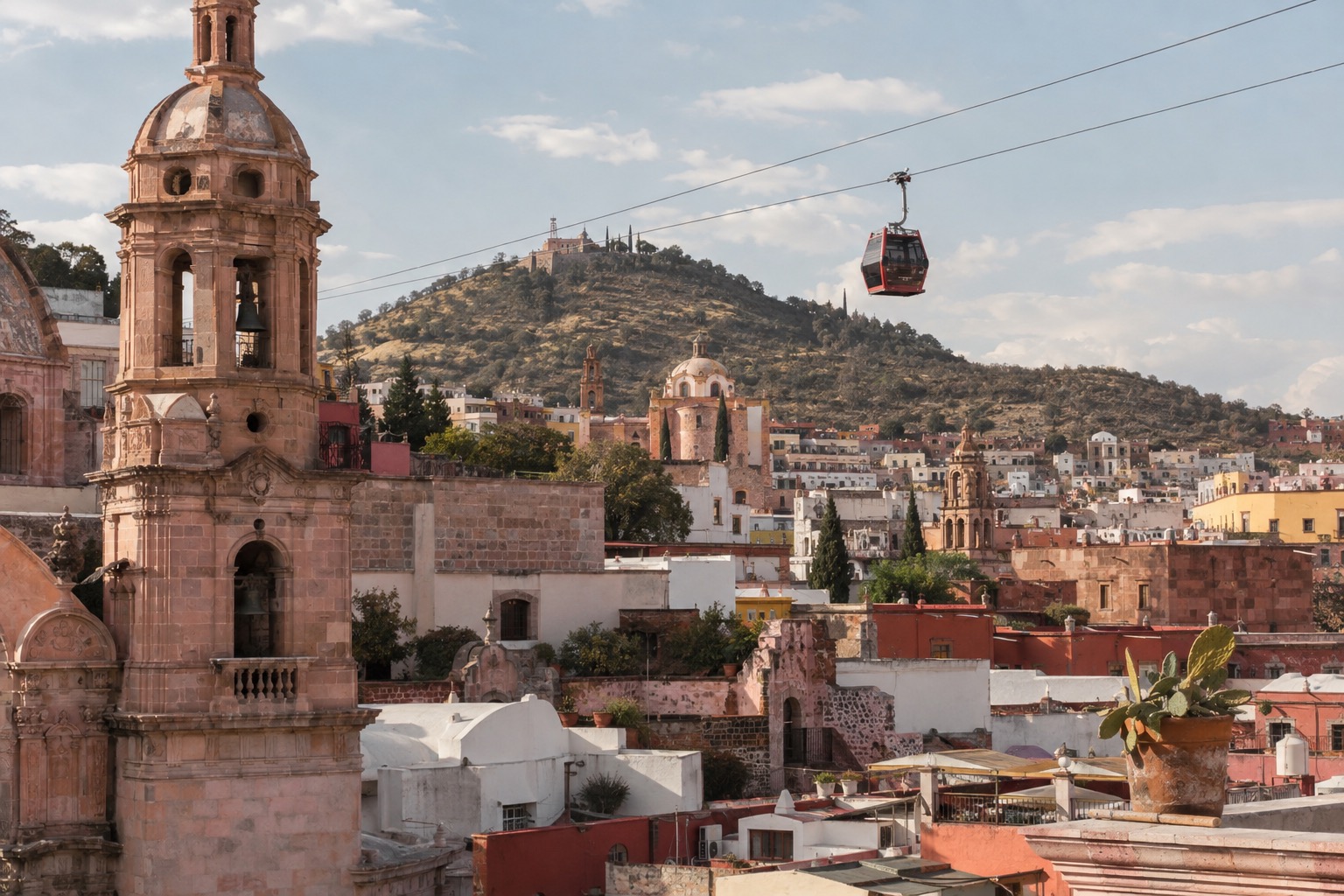
Zacatecas sits in north-central Mexico, on the high plateau between the Bajío cities to the south and the deserts of the north, and it is the capital of the state of the same name. It is a compact mining city of steep streets, stone plazas and church towers, set in a narrow valley between two hills.
The pace is unhurried and the mood is more cultural than resort. Mornings go to churches and museums, afternoons to long lunches, evenings to music and a glass of mezcal. Air this high is thin and dry, so the city rewards slow walking, and the hills make for a few good climbs.
It suits couples, history lovers and food-minded travelers. If you want a beach, nightlife on a grand scale or flat streets, you may find it less obvious. Compared with its neighbors, it feels less polished than some colonial towns and more raw, with silver wealth carved straight into its stone.
What is there to do in Zacatecas?
The big reasons to come are the pink-stone historic center, the old silver mine, the views from the cable car and an ancient hilltop ruin outside town. Together they make Zacatecas a city of colonial grandeur with a mining heart.
The historic center and the cathedral
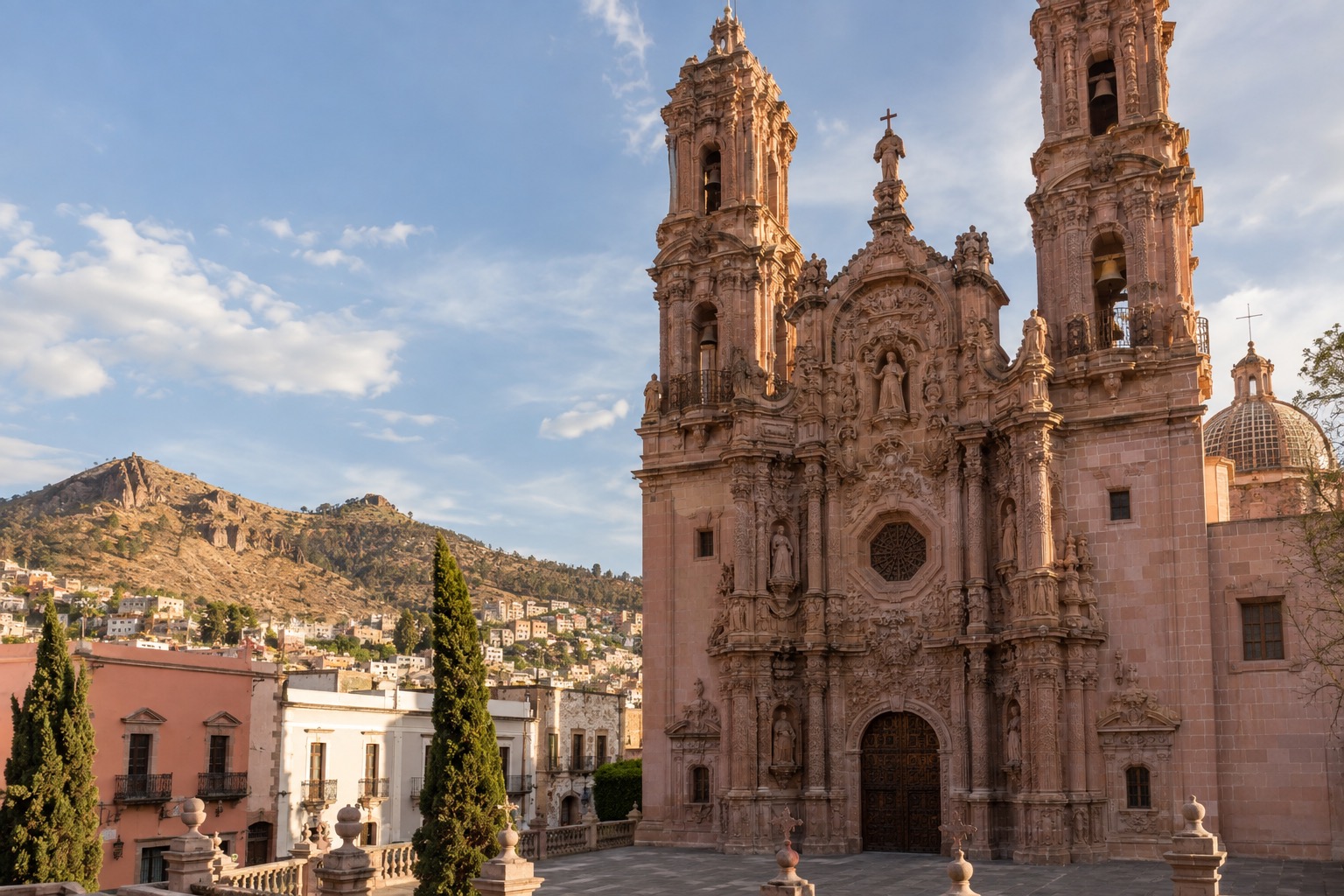
The cathedral faces the main plaza, and it is the place to start. Its baroque facade is carved so densely that saints, columns and flowers seem to spill across the rose-colored stone. Stand in the plaza in late afternoon, when the stone turns warmer and locals gather on the benches.
From there, the center unfolds on foot. Lanes climb past old mansions, small plazas, museums and cafés, and the whole district is easy to cover without a car. It suits everyone who likes to wander, though the slopes are steep and the altitude tires some visitors, so take it in stages.
Sit down for the local table too. Look for gorditas, asado de boda (pork in a chile sauce traditionally served at weddings) and the region’s mezcal. A tip: save the cathedral for a second visit at a different hour, because the facade looks entirely different in morning light.
Mina El Edén and the cable car
Mina El Edén is a former silver mine cut into the Cerro del Grillo. You reach it from inside the hill and tour it by tram, then walk through tunnels where miners once worked by lamplight. It is a good outing for curious travelers and for families with older children, although anyone uneasy in enclosed spaces may prefer to skip it.
The cable car (teleférico) links the same Cerro del Grillo to the Cerro de la Bufa across the city. The ride glides over the pink-stone rooftops, and the views of domes, towers and the valley are the best way to understand how the city is laid out. Go on a clear day, ideally late afternoon, when the light flatters the stone.
Many visitors link the two in a single outing, taking the mine in the morning and the cable car later. On the Bufa side you can walk around the hilltop, with its sanctuary and wide look back over the city.
La Quemada, the hilltop ruins
La Quemada is an ancient hilltop settlement of stone terraces, columns and walls on the open plateau. It lies south of the city off Federal Highway 54, so you need a car or a tour to reach it. The landscape of scrub and cacti makes it feel remote, and it is quiet compared with the better-known ruins of central Mexico.
Plan on a half day and go in the morning, before the sun gets strong on exposed ground. The site suits history lovers and photographers, and less so anyone expecting grand pyramids. Bring water and a hat, since there is little shade on the climb between terraces.
| Site | Open | Admission |
|---|---|---|
| La Quemada | Daily 9 a.m. to 6 p.m., last entry 5 p.m. | 155 pesos general; 85 pesos for Mexican nationals and foreign residents |
How many days do you need in Zacatecas?
A long weekend of two to three days covers the city well. That is enough for the cathedral and the center, the mine, the cable car and a couple of slow dinners, with an evening callejoneada if the timing works.
With more time, add day trips. La Quemada is the obvious one, and the nearby town of Guadalupe has a large former convent with a museum of colonial art. Jerez, a small colonial town, is another pleasant outing for a relaxed afternoon. A fourth or fifth day lets you slow down, linger over museums and spread the climbing out.
Where to stay in Zacatecas
The historic center is the natural base. Staying near the cathedral and the main plaza puts restaurants, museums and evening music at your door, and you can walk back after dinner. It suits first-time visitors and anyone who likes to be in the middle of things, though the steep lanes are tiring with heavy luggage.
Quieter options sit on the edges of the center and on the slopes toward the hills, with calmer streets and easy access by taxi. They suit travelers who want some peace in the evening and do not mind a short ride downtown. Guadalupe, outside the city, can work for those with a car.
How do you get to Zacatecas and get around?
Most visitors arrive by air at Zacatecas’ airport, by long-distance bus or by road from other cities of the central highlands. The roads in are part of the Federal Highway network, and La Quemada itself lies off Federal Highway 54.
Once in the city, walking is the best way to see the center, since sights sit close together. Taxis help with the hills and with getting to the edges of town, and the cable car is both transport and sightseeing. A rental car or a tour is the practical way to reach La Quemada.
When is the best time to visit Zacatecas?
Zacatecas works for most of the year, thanks to its high altitude. Days tend to be pleasant and the air dry, while nights turn cool and winter evenings can be properly cold, so bring a layer in any season. The rainy months fall in summer, usually with afternoon showers.
Spring and autumn are often the most comfortable for long days of walking. Zacatecas lies far inland, though summer storms can still bring heavy rain to the region.
Festivals shape the calendar. Holy Week brings processions and crowds, and the date moves every year. The city’s national fair, the Feria Nacional, usually fills the streets in September with concerts and a festive crowd. Expect busier plazas and fuller hotels around these weeks.
Good to know before you go
The U.S. State Department rates the state of Zacatecas at Level 4, Do Not Travel.
Pesos are the currency, and cards work in most hotels and restaurants, though smaller places may prefer cash. The altitude is real, so drink water and take the first day gently. Read the current State Department advisory for the state before you plan, and keep to the usual habits of looking after your belongings and moving about with care.
Sources
- INAH, Zona Arqueologica La Quemada (inah.gob.mx/zonas/112-zona-arqueologica-la-quemada), checked September 29, 2026
- US Department of State, Mexico Travel Advisory (travel.state.gov), advisory of May 29, 2026, checked September 29, 2026 (date issued May 29, 2026)