
Early in the morning in Puerto Morelos, pangas rock beside the pier, pelicans line up on the rails, and the smell of coffee and grilled fish drifts from the waterfront. A crooked old lighthouse leans on the sand while kids kick a ball around the plaza. This is a small fishing village on the Caribbean coast, easygoing and low-rise, for travelers who want a reef on the doorstep and a quiet evening after.
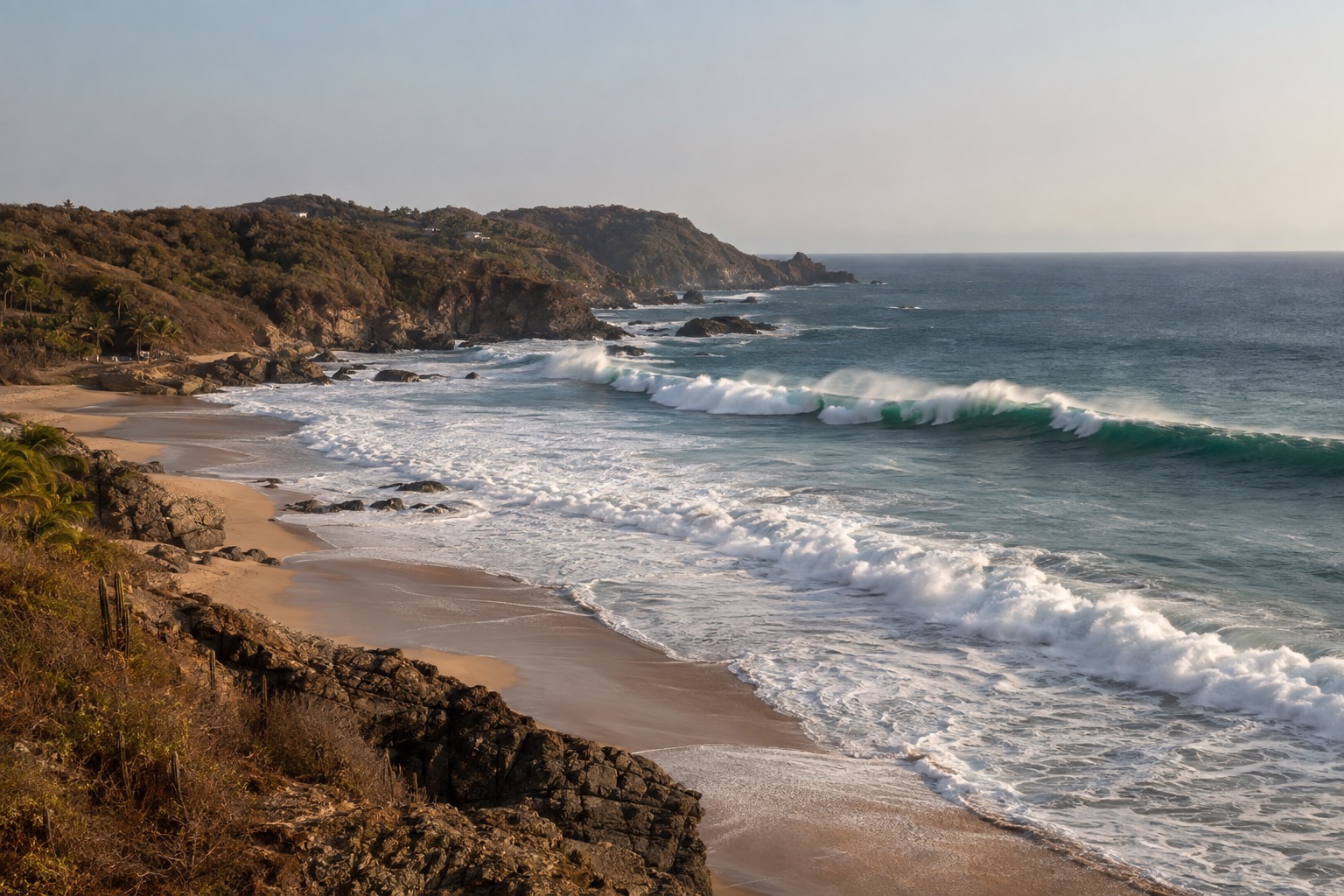
Where is Puerto Morelos and what is it like?
Puerto Morelos sits on the Caribbean coast of Quintana Roo, between Cancun to the north and Playa del Carmen to the south. It is a small fishing village, lower-rise and slower-paced than either of its bigger neighbors.
The center is a pretty square by the water, a short pier, and a handful of streets with seafood restaurants, small hotels, bakeries and taco stands. Nobody is in a hurry. You walk almost everywhere, you stop for a long breakfast, and by evening the plaza fills with families and the odd musician.
It suits couples, families and snorkelers who like a village feel and don’t need big nightlife or large resort complexes. If you want clubs, giant beach parties or a long list of shopping malls, Cancun and Playa del Carmen are close enough to visit and different enough to be worth the ride.
What is there to do in Puerto Morelos?
The big reasons to come are the reef, the village itself and a taste of the jungle behind the coast. What sets the town apart from its neighbors is how close everything is: you can have breakfast on the square and be over the reef soon after.
The reef
The protected reef lies close enough to shore that the boat ride out to snorkel or dive is short. That means less time bouncing on the water and more time looking at coral, parrotfish, rays and the occasional turtle drifting past.
Local operators leave from the pier and the beach near the square, and the trips suit beginners as well as people who dive often. Mornings tend to have the clearest light, and the visibility depends on recent weather, so a day after wind or a front can look milkier. Bring reef-safe sunscreen, or better, wear a rash guard, since the reef is protected and fragile.
The village, the pier and the leaning lighthouse
A lighthouse tilted by past storm damage still stands on the beach, beside the straight one that replaced it. It makes an easy photo stop on a stroll, and the sand around it is a pleasant place to watch the fishing boats come and go.
From there, walk the waterfront, browse the small craft stalls around the square and settle in for ceviche, grilled catch of the day or cochinita pibil. Late afternoon, when the heat eases and the light turns gold, is the best time for this loop. It is a gentle plan for families and anyone who likes a place with an everyday rhythm.
The botanical garden and the jungle side
A botanical garden near town preserves native plant life of the Yucatan Peninsula. Expect shaded paths, orchids, palms, and the sounds of birds and insects, a calm contrast to a day in the sun and salt.
It works well as a half-day outing, ideally in the cooler morning hours when the paths are shadiest. Bring bug repellent and walk slowly, because much of the pleasure is in noticing small things: a butterfly, a strangler fig, a lizard on a trunk.

How many days do you need in Puerto Morelos?
A long weekend is enough to enjoy Puerto Morelos, and a week lets you slow down to the pace the village invites.
With two or three days you can snorkel the reef, walk the waterfront, see the lighthouses and eat well at the square. That covers the essentials without rushing.
With more time, add the botanical garden, long beach mornings and easy day trips along the coast to Cancun or Playa del Carmen, or ferry-linked islands such as Cozumel from nearby ports. Because the town is calm, many visitors treat it as a base and simply stay put for several days.
Where to stay in Puerto Morelos
Most visitors choose between the village center and the beachfront stretches just outside it. The center suits people who want to walk to dinner, the pier and the square, with small hotels and rentals close to the action.
The quieter beach areas outside town suit those who prefer more space and sea views, with a short ride or longer walk into the village. Anyone staying in a short-term rental should know that Quintana Roo’s lodging tax is 5% of the billed value, or 6% when a host or booking platform collects payment.
How do you get to Puerto Morelos and get around?
Puerto Morelos lies on the coastal highway between Cancun and Playa del Carmen, so most visitors arrive by road from the Cancun side. Taxis, shuttles, buses and rental cars all use that same route.
Once you are in town, walking is the main way to get around the center. The highway slows to a crawl through the village at a line of speed bumps, so expect traffic to creep when you cross or drive through. Taxis and colectivos fill in for longer hops along the coast. The town also has a ferry and cargo pier, one of the ports the state port authority administers along the Quintana Roo coast.
When is the best time to visit Puerto Morelos?
The calmer, drier months of the winter and spring are the usual favorites, when days are pleasant for the reef, the beach and long walks. Those months also bring more visitors, so expect the village to feel busier around Christmas, New Year and Easter. Holy Week moves every year.
Summer and early fall are hotter and wetter, with showers and stormy afternoons, and the sea can be rougher after bad weather. The Atlantic hurricane season, which governs Puerto Morelos, runs from June 1 to November 30, so those months carry a higher chance of disrupted plans. Rooms are often easier to find then, and the village is quieter.
Good to know before you go
The U.S. State Department rates Quintana Roo Level 2, ‘Exercise increased caution’.
Bring some pesos for small restaurants, stalls and taxis, and use ordinary travel habits as you would in any busy coastal destination. Every foreign visitor entering Quintana Roo pays a state fee, and lodging carries a state tax.
| Fee | Amount | Who pays |
|---|---|---|
| Visitax | 2.50 UMA (about 293 pesos) | Every foreign visitor entering Quintana Roo |
| Lodging tax (Impuesto Sobre Hospedaje) | 5% of billed accommodation value (6% when a host or booking platform collects payment for a short-term rental) | Guests staying in paid accommodation |
Sources
- APIQROO, "Empresa" (apiqroo.com.mx), checked September 29, 2026
- Congreso del Estado de Quintana Roo, Ley del Impuesto al Hospedaje del Estado de Quintana Roo, art. 8, congresoqroo.gob.mx, checked September 29, 2026
- Ley de Derechos del Estado de Quintana Roo, art. 51-Octies, congresoqroo.gob.mx, checked September 29, 2026
- U.S. Department of State, travel.state.gov, checked September 29, 2026 (date issued May 29, 2026)
- NOAA National Hurricane Center, nhc.noaa.gov, checked September 29, 2026