
Late in the afternoon the arcades around Puebla’s Zócalo fill with families, the cathedral bells ring out over the square, and somewhere nearby a cook is ladling dark mole over chicken. Puebla is a colonial city of tiled facades, convent kitchens and cobblestone streets that you cover on foot. It suits travelers who want history, pottery and serious eating without a beach in sight.
Where is Puebla and what is it like?
Puebla sits in the highlands of central Mexico, inland and far from any coast, with the town of Cholula just next door. It is a walkable colonial city with a lively square, a strong craft tradition and a kitchen that Mexicans themselves travel for.
The historic center has colonial architecture, cobblestone streets and a busy Zócalo framed by arcades. The pace is unhurried but never sleepy, with cafés under the portals and workshops tucked into side streets. First-time visitors, couples and budget travelers who like to walk to the sights will feel at home. If you want a resort, a pool bar and a beach, this is the wrong address.
What is there to do in Puebla?
The historic center and its cathedral
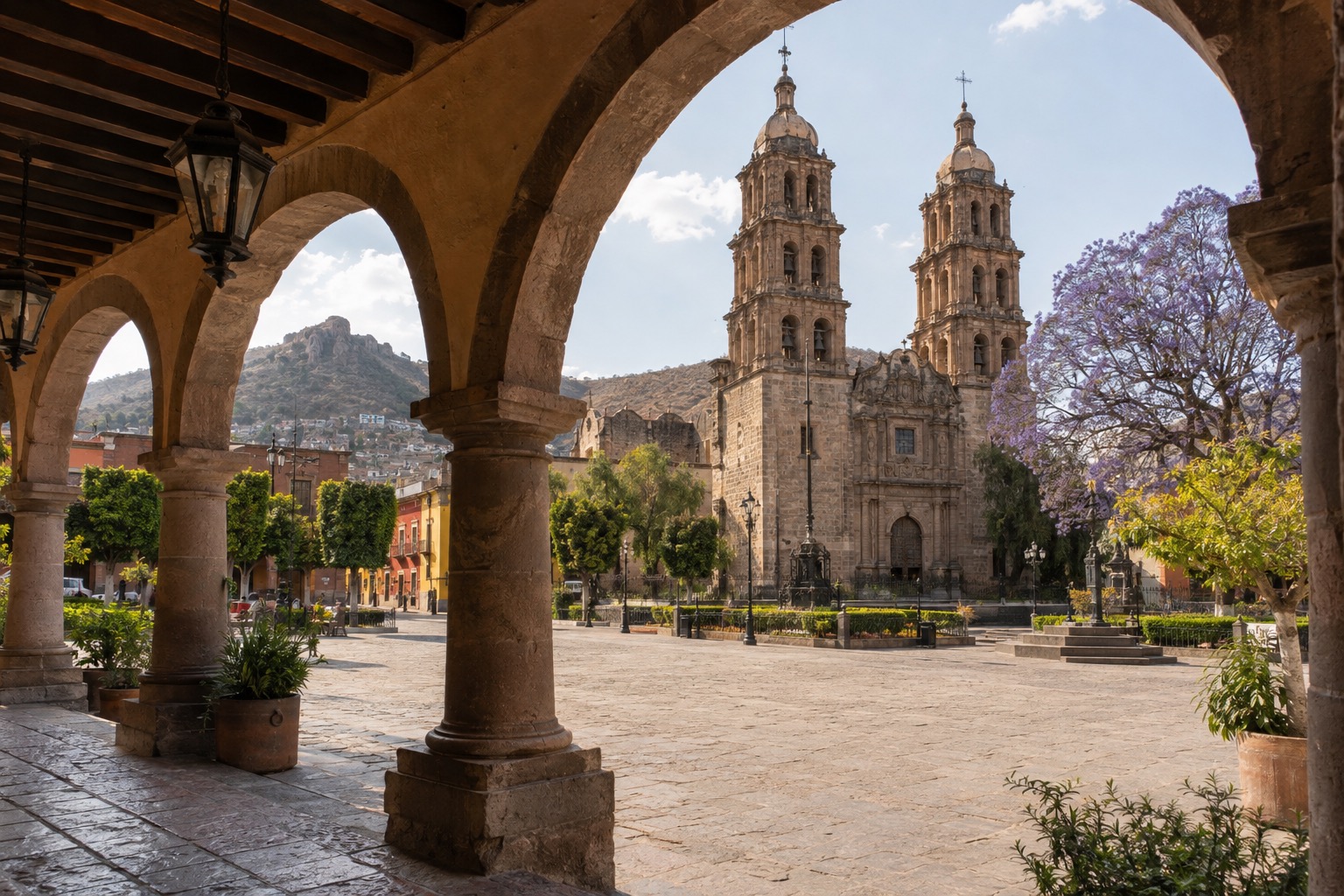
Everything starts at the Zócalo. The cathedral, with its two tall bell towers, faces the square across from the Casa de los Muñecos, and the arcades around it are made for slow coffee stops and people-watching. The Barrio del Artista is a short walk away, where painters and craftspeople work in small studios.
Everything is close enough to cover on foot, so wander without a plan. Evening is the nicest hour, when the light warms the old facades and the square fills with locals. It suits nearly everyone, and the cobblestones call for comfortable shoes.
Talavera pottery and the Museo Regional
Talavera is the blue-and-white hand-painted ceramic that decorates church domes and kitchen walls across the city. It is painted in workshops around the historic center, and watching a brush work through a pattern is a good way to understand why the pieces are so prized. Plates, tiles and bowls make easy souvenirs to carry home.
For the wider story of the region, the Museo Regional de Puebla covers the history of the state through its collections. It makes a good plan for a hot afternoon or a gray one.
| Site | Open | Admission |
|---|---|---|
| Museo Regional de Puebla | Tuesday to Sunday, 9 a.m. to 5 p.m. | 155 pesos general; 85 pesos for Mexican nationals and foreign residents; free on Sundays for Mexicans and accredited residents |
The Great Pyramid of Cholula
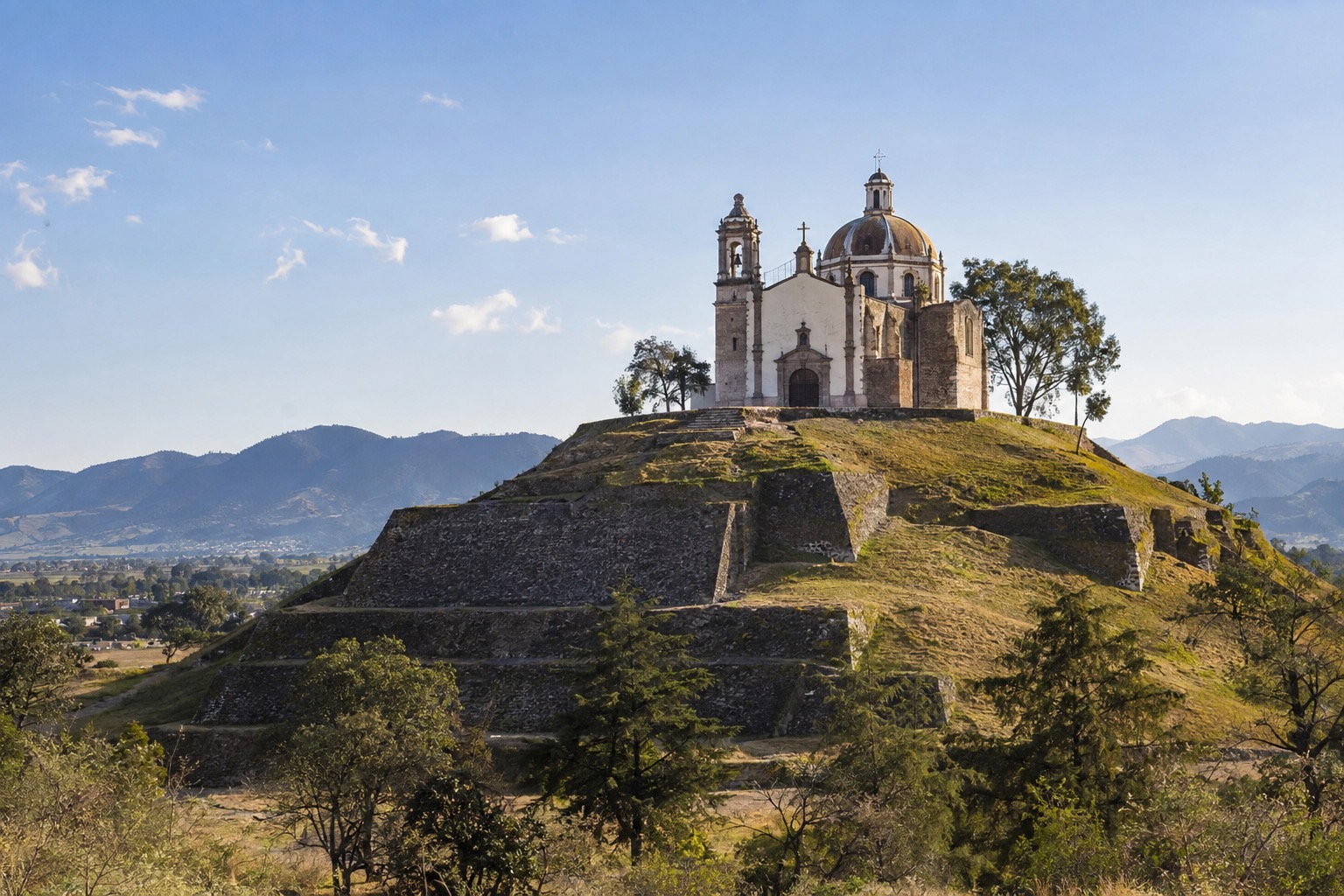
Cholula is a relaxed small town a short ride from Puebla, by car or bus in roughly 20 to 30 minutes. Its great pyramid is a vast mound, and a church, the Iglesia de Nuestra Señora de los Remedios, sits right on top of it, reached by a path around the base. That odd pairing of a Spanish church on a pre-Hispanic monument is the image of Cholula.
The site has an on-site museum with three exhibition halls and ceremonial patios on the south and west sides of the pyramid. The interior tunnel is currently closed to the public. Allow time afterward for the zócalo, whose restaurants and bars stay lively into the evening, and for the weekend market.
| Site | Open | Admission |
|---|---|---|
| Great Pyramid of Cholula | Wednesday to Sunday, 9 a.m. to 5 p.m., last entry 5 p.m. | 210 pesos general; 105 pesos for Mexican nationals and foreign residents |
How many days do you need in Puebla?
A long weekend is enough to get the best of Puebla. That gives you a day for the Zócalo, the cathedral and the Talavera workshops, a second for the museum and the Barrio del Artista, and a half day in Cholula for the pyramid.
With more time, the city rewards slower habits: longer lunches, a second visit to the workshops, an evening in Cholula’s zócalo rather than a rushed daytime trip. A few extra days also let you stay in a quieter neighborhood and see the city beyond the postcard center.
Where to stay in Puebla
The historic center is the natural base, with boutique hotels in converted colonial mansions, hostels and apartments, all within walking distance of the main sights. Cholula is the quieter alternative, with guesthouses and rentals that often look onto the pyramid or the volcanoes, and it suits couples, backpackers and long stays. Pick a place near the zócalo or the pyramid entrance for easy access to restaurants and the weekend market.
Angelópolis is the modern, upscale district of wide avenues and malls, with chain business hotels and serviced apartments. Families and business travelers like its newer rooms and easy highway access, though you will want a car or ride-hailing app there.
La Paz is a leafy residential neighborhood of small boutique hotels and bed and breakfasts in converted houses, good for a calm stay away from the crowds. If traffic noise bothers you, ask for a room on the interior courtyard or a side street.
How do you get to Puebla and get around?
From the airport, the historic center is about 30 to 45 minutes by car. Cholula is closer to the airport, around 20 to 30 minutes, while Angelópolis is about 25 to 40 minutes and La Paz about 35 to 50 minutes.
In the historic center you walk, with taxis and ride-hailing for longer trips. Frequent buses and colectivos link Cholula to Puebla’s center in about 20 to 30 minutes.
Angelópolis is spread out, so a car, taxi or ride-hailing app works best, and apps are the better choice after dark over public buses. La Paz is pleasant on foot within the neighborhood, with taxis, ride-hailing and a few bus routes to the center.
When is the best time to visit Puebla?
Puebla is a city for any season, since its pleasures are indoors and on the street rather than on the weather. The calendar matters more than the climate: the center fills up around Cinco de Mayo and the major religious festivals, so those are the weeks to plan around.
Holy Week moves every year, and processions and crowds follow it. Outside those dates the city is easier to move through, and rooms are simpler to find. Booking ahead is wise whenever a festival is near.
Good to know before you go
The U.S. State Department rates the state of Puebla at Level 2, Exercise Increased Caution, the same baseline level as most of the country.
Pesos are the currency for markets, workshops and small cafés, and the cobblestones are hard on thin soles. Use ride-hailing apps after dark in the car-oriented districts, and keep the usual city habits of watching your bag in crowds.
Sources
- INAH, Zona Arqueologica de Cholula (inah.gob.mx/zonas/zona-arqueologica-de-cholula), checked September 29, 2026
- INAH, meme page, checked September 29, 2026
- INAH, Museo Regional de Puebla (inah.gob.mx/museos/museo-regional-de-puebla), checked September 29, 2026
- US Department of State, Mexico Travel Advisory (travel.state.gov), advisory of May 29, 2026, checked September 29, 2026 (date issued May 29, 2026)