
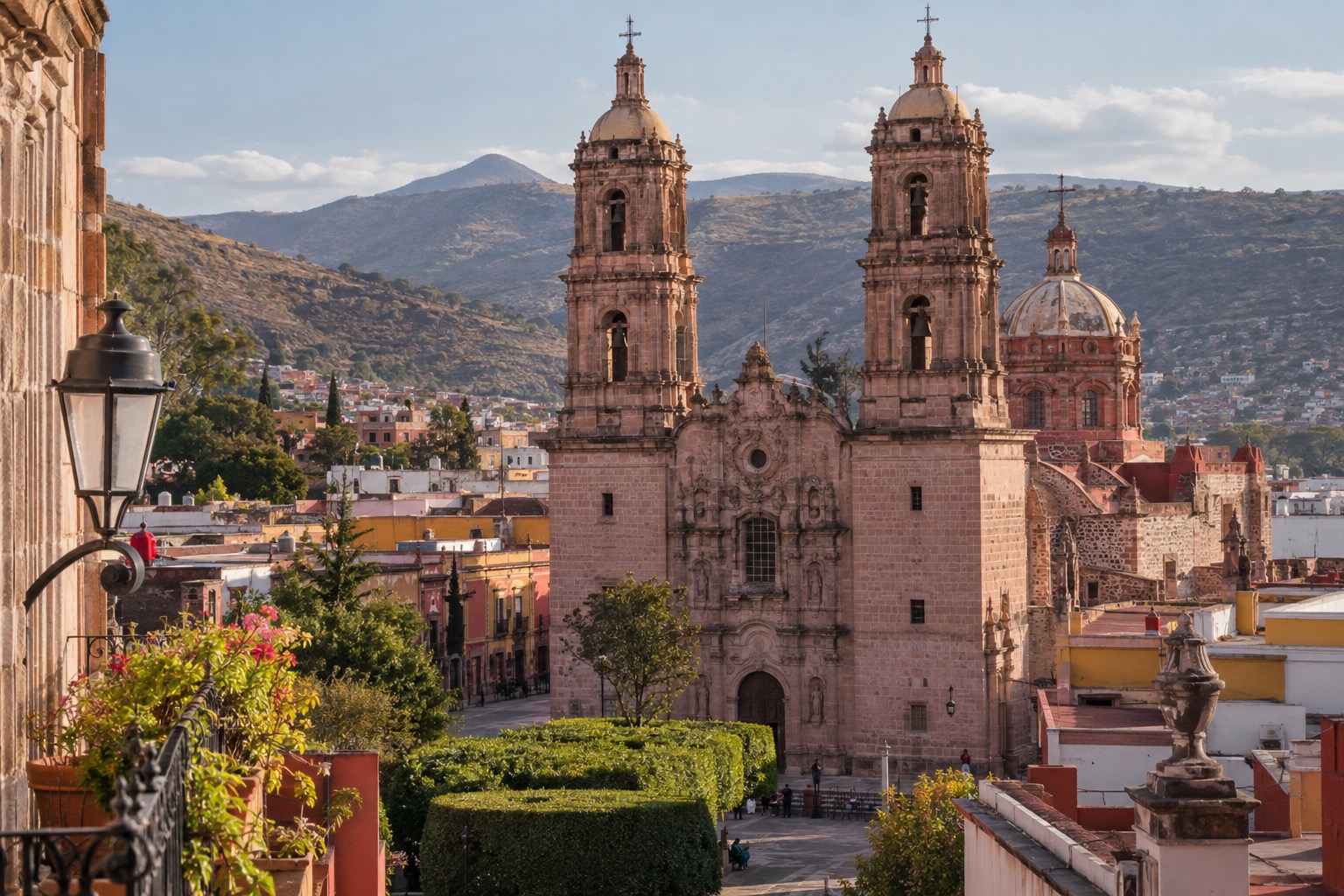
Late in the afternoon the pink stone of Morelia’s cathedral turns a deeper rose, and the plaza fills with families, students and vendors selling sweets from carts. Bells ring over the cobblestones while the arcades around the Plaza de Armas start to glow. This is a colonial city in the highlands of Michoacán, made for slow walking, museums and long meals, and it suits travelers who like their culture on foot.
Where is Morelia and what is it like?
Morelia is an inland city in the state of Michoacán, in Mexico’s western highlands, with no beach and no sea anywhere near it. Lake Pátzcuaro and the old Purépecha lands lie in the surrounding countryside, which makes the city a natural base for the region.
The pace is unhurried and a little academic. Stone facades, arcaded plazas and baroque churches line the historic center, and the city has a university-town energy in the evenings. It rewards couples, culture lovers and anyone who enjoys wandering from a cathedral to a museum to dinner. If you want resort comforts or a coastline, look elsewhere.
What is there to do in Morelia?
The cathedral and the Plaza de Armas
The pink-stone cathedral with its twin baroque towers anchors the Plaza de Armas, the heart of the historic center. Most visitors start here and simply circle the square, then drift into the portales for a coffee or a bite. Everything else in the center radiates from this spot, so it works as an orientation point.
Come back after dark, when the facade is lit and the plaza is at its liveliest. The square is a few steps from the museum and many restaurants, and you will not need a vehicle for any of it.
Museums and colonial streets
The Museo Regional de Michoacán sits in a baroque palace near the cathedral. It is one of Mexico’s oldest museums, restored to international conservation standards, and it tells the story of the region from its early peoples onward. Set aside a leisurely morning or afternoon at this museum, because the building is just as appealing as the collections.
| Site | Open | Admission |
|---|---|---|
| Museo Regional de Michoacán | Tuesday to Sunday, 9 a.m. to 5 p.m. | 145 pesos (80 pesos for Mexican nationals and foreign residents) |
| Tzintzuntzan archaeological site | Daily, 9 a.m. to 6 p.m., last entry 5 p.m. | 210 pesos (105 pesos for Mexican nationals and foreign residents) |
Between sights, the cobbled streets with their stone facades are the real attraction. Leave time to turn down side streets without a plan.
The aqueduct and Bosque Cuauhtémoc
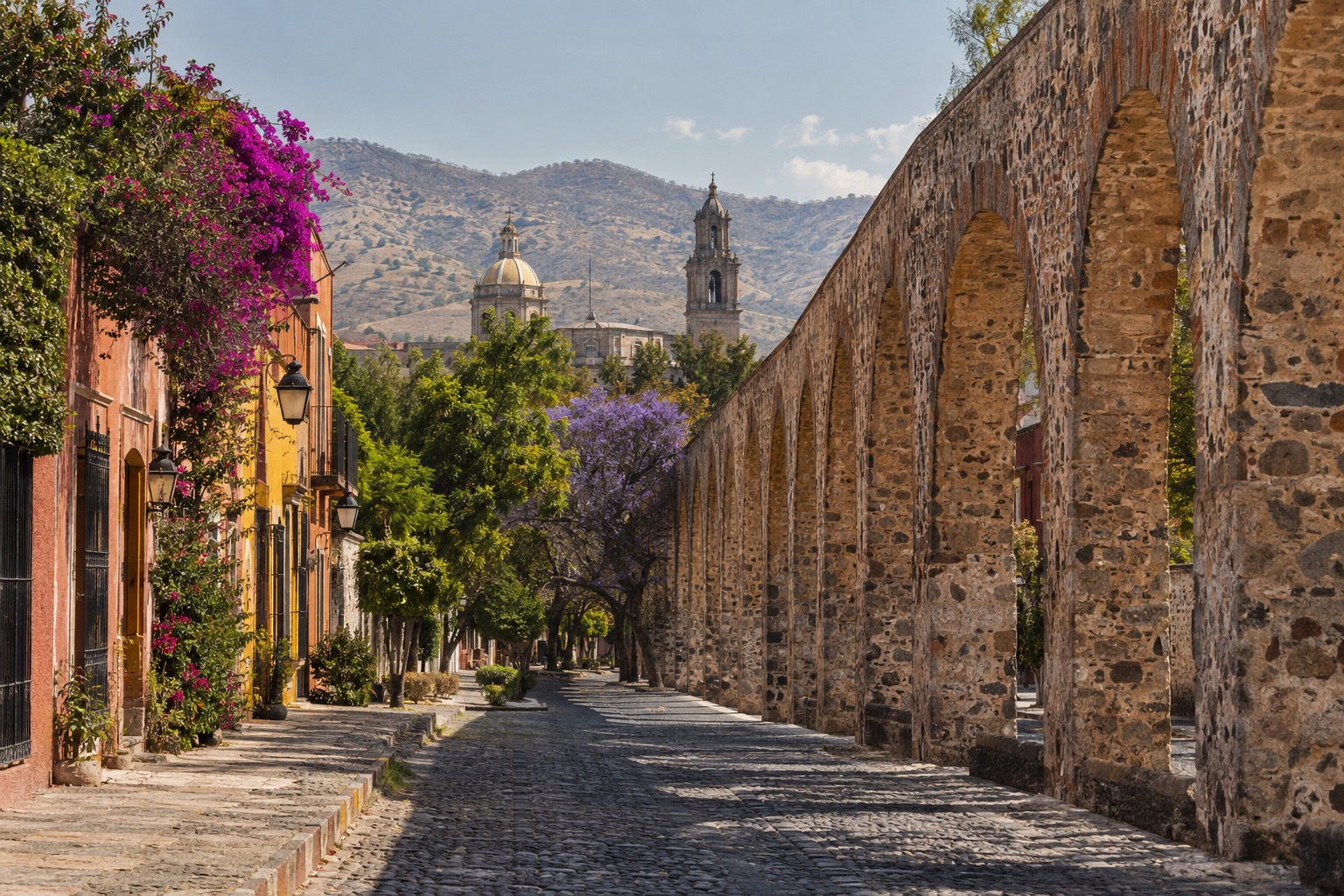
Along Avenida Acueducto, a stone aqueduct framed by arches heads toward the Fuente de las Tarascas. It is one of the city’s most photographed sights, especially when lit in the evening. Nearby, the tree-lined Bosque Cuauhtémoc gives you shade and a quiet break from the cobblestones.
This stroll suits a slow late afternoon, easily done on foot from the residential streets around the park. Take a taxi for longer trips back from the center at night.
Tzintzuntzan and Lake Pátzcuaro
Tzintzuntzan, the former Purépecha capital, stands on the shore of Lake Pátzcuaro. It is the main day trip from Morelia for anyone curious about the people who ruled this region before the Spanish arrived. The setting above the lake is as memorable as the stonework.
A rental car or a base on Avenida Camelinas makes this outing easier, since it puts you closer to the major roads out of town. Give it most of a day and pair it with a meal by the lake.
How many days do you need in Morelia?
A long weekend is enough to see the essential Morelia, and two full days cover the center well.
In a short stay you can take in the cathedral, the Plaza de Armas, the regional museum and the aqueduct, all at a walking pace, with dinner under the arcades. With more time, add a day at Tzintzuntzan and Lake Pátzcuaro, and keep an afternoon free for Bosque Cuauhtémoc and the quieter streets. A few extra days let you settle into the city’s rhythm rather than ticking off sights.
Where to stay in Morelia
The historic center is the natural choice for most visitors. Boutique hotels in restored colonial buildings, small guesthouses and self-catering apartments sit within a few steps to about 10 minutes on foot of the main landmarks, which suits culture-focused travelers, couples and short stays. Rooms fill quickly around Day of the Dead, so book several months ahead for that festival.
The area around Bosque Cuauhtémoc and the aqueduct is residential and quiet, with small hotels, guesthouses and short-term apartments. It fits families and longer stays, with the center roughly 10 to 15 minutes away by car or bus.
Avenida Camelinas is a busy commercial corridor of chain hotels with parking, better for business travelers and families with a car or for day trips. It has little colonial charm and is not pleasant on foot, so you will need a taxi, bus or car to reach the center, about 10 to 15 minutes away depending on traffic.
How do you get to Morelia and get around?
Most visitors arrive at Morelia International Airport, about 25 to 45 minutes by car or taxi from the main areas to stay, depending on where your hotel is. The historic center is the closest of the three, and the Bosque Cuauhtémoc area the farthest.
Once in the center, you can walk to nearly every sight. Taxis and local buses cover the longer moves, such as the aqueduct area or Camelinas. A rental car is useful if you plan day trips, particularly to Tzintzuntzan.
When is the best time to visit Morelia?
Day of the Dead, from October 31 to November 2, is the best-known moment of the year in Michoacán. The region is famous for its observances, and historic-center lodging fills early, so plan well ahead if you want to be here then.
Outside the festival, the city is a year-round destination, since its attractions are museums, churches and plazas that do not depend on the beach. Holy Week brings its own processions and crowds, with dates that shift each year depending on when Easter falls. Check the forecast before you go, because this is a highland city where evenings can feel cooler than the afternoons suggest.
Good to know before you go
The U.S. State Department rates the state of Michoacan at Level 4, Do Not Travel — the same level as Acapulco’s Guerrero.
Pesos are the currency to carry, especially for museum admissions and small purchases. Morelia is an inland highland city, so there is no hurricane season to plan around here. Take a taxi at night for longer trips back from the center, and keep to the well-lit historic streets after dark.
Sources
- INAH, Museo Regional de Michoacan (inah.gob.mx/museos/museo-regional-de-michoacan-dr-nicolas-leon-calderon), checked September 29, 2026
- INAH, meme page, checked September 29, 2026
- INAH, Zona Arqueologica de Tzintzuntzan (inah.gob.mx/zonas/zona-arqueologica-de-tzintzuntzan), checked September 29, 2026
- US Department of State, Mexico Travel Advisory (travel.state.gov), advisory of May 29, 2026, checked September 29, 2026 (date issued May 29, 2026)