
On a September morning in the early hours, cool, bright air holds the Cook pines of Lanai City motionless, and a pickup truck rolling past the old plantation cottages is the only traffic on Dole Park. The island moves slowly, and in this month it feels even slower, with the summer family crowds gone home and the trade winds softer. September on Lanai means warm, mostly dry days, a sea that is still summer-warm, and a quiet island made for exploring by four-wheel drive, on foot and on the water.
What is the weather like in Lanai in September?
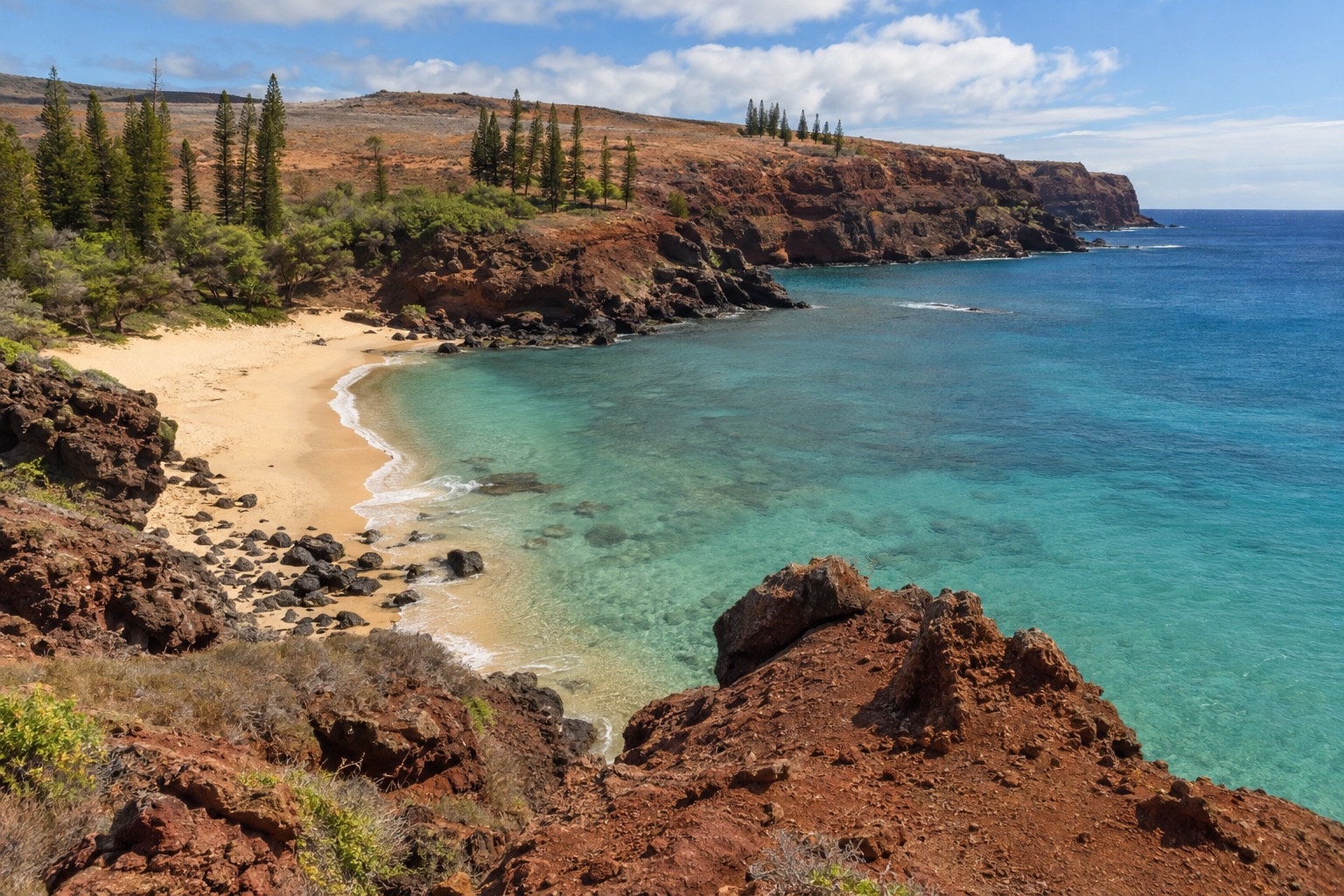
September in Lanai brings warmth, sunshine and little rain, while days stay comfortable and nights turn cool and pleasant across the central plateau that Lanai City calls home.
| Month | Average high (°F) | Average low (°F) | Rain days | Sea (°F) |
|---|---|---|---|---|
| August | 83.4 | 66.8 | 1.0 | 81.5 |
| September | 83.0 | 66.5 | 2.3 | 81.8 |
| October | 81.9 | 66.0 | 2.5 | 81.5 |
Mornings are fresh at the elevation of Lanai City, a good time for coffee on a porch and a light layer over your shoulders. Around noon the sunshine beats down and the air feels warm but not thick, which means a hat and sunscreen count for more than a jacket. Evenings cool off enough that a sweater feels good at an outdoor table, especially if the breeze picks up.
Rain is rare and usually brief. When a passing shower does come, it tends to be a short burst that moves on within the hour, and the dry, red-dirt landscape turns a deeper color and smells of damp earth afterward. Lying in the shelter of Maui and Molokai, Lanai stays much drier than the windward coasts of the other islands.
The light is a pleasure this month. Days are still long, with just over twelve hours of daylight at midmonth, so there is time for a full outing and a relaxed dinner. Late afternoon light turns the cliffs and the pines gold, and the sea around the island stays as warm as it was in summer.
Can you swim in Lanai in September?
Sure, you can swim for a long, comfortable stretch in that warm water, and a light rash guard matters more for sun protection than for chill.
September falls in the calmer part of the year for most of Lanai’s south and west-facing shores, which is where the best-known beach, Hulopoe Bay, sits. The water there is often gentle and clear, good for snorkeling along the rocky edges and for children playing in the shallows.
Tide pools at the edge of the bay are a favorite for families when the water is quiet. Still, the ocean shifts daily, so check the beach signs and hear out the lifeguards before you head in.
Shipwreck Beach and the north shore are a different story, a long wild stretch that is better for walking and beachcombing than for swimming, with wind and currents that can be strong. Bring reef-conscious habits: keep off the coral, do not touch turtles or other wildlife, and bring plenty of water and shade because facilities are limited away from the main beach. Spinner dolphins are often seen near Hulopoe in the early morning, and you may see them from shore or on a boat outing.
What to do in Lanai in September
Part of September’s charm on Lanai is that no huge festival takes over, which leaves the month free for the island itself, for its beaches, its trails and the rhythm of its small town. The pace is easy, restaurants and shops in Lanai City keep to a relaxed schedule, and you can stand at a lookout and have it to yourself. The dry weather suits long outings on dirt roads and coastal walks better than any other time of year.
Dole Park, the green heart of Lanai City, is where the day begins and ends. Small cafés, a bakery, a couple of galleries and a general store ring the square, and locals gather to talk on the benches. It is the best place to feel what the island is like when the visitors are few, and to ask someone where the road is passable this week.
Hulopoe Bay and the south shore
The island’s only true swimming beach is Hulopoe Bay, a pale sand crescent with lawn and kiawe trees behind it, at the foot of the hills descending from Lanai City. You get there by a short drive down from town, and it is where most visitors spend at least a morning. Mornings are best, when the water is clearest and the dolphins sometimes visit the bay.
Snorkeling along the rocky sides can show reef fish and sometimes turtles, and the tide pools at the east end suit small children. Bring your own mask and fins if you have them, plus water and snacks. Walk out to the point at the end of the day for a view across to Kahoolawe and Maui, where the sunset light is soft and pink.
A short trail rises from the bay to the old landing at Puupehe, the sea stack known as Sweetheart Rock. The path is exposed and can be hot by midday, so go early or late, and keep well back from the edge of the cliffs. The rock is a place of Hawaiian legend, so treat it quietly and do not climb on it.
Shipwreck Beach and the north coast
The north coast is the wild side, a long, windblown beach lined with driftwood, with a rusted freighter stuck on the reef offshore. Getting there means driving a rough dirt road, and most people do it in a four-wheel-drive vehicle. September’s dry weather helps, since the track is firmer than in the wet months.
This is a place for walking, not swimming, and for looking at the horizon, where Molokai rises on a clear day. A short walk along the coast leads to petroglyphs on the rocks, which are a part of Hawaiian history and should be looked at and left alone. Go with a full tank, water, and a plan to be back before dark.
The Garden of the Gods and the highlands
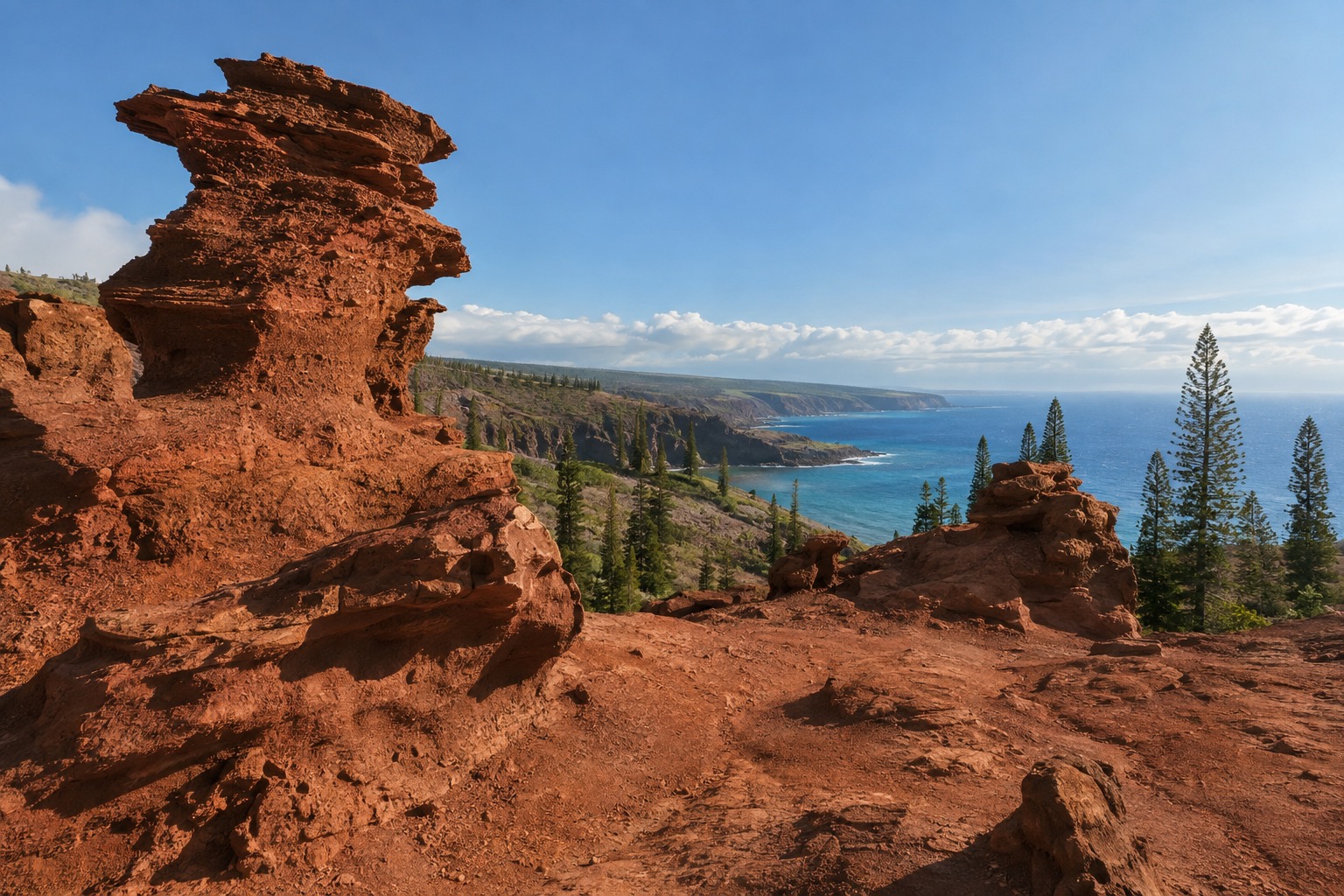
Across the arid northwest plateau, the Garden of the Gods, or Keahiakawelo, spreads out as a rugged sweep of red rock shapes and boulders. It is best at the end of the day, when the low sun makes the reds and oranges glow and the shadows stretch long. The ground is open and windy, so a layer helps once the sun drops.
The upland roads also pass through pine forest and open ranch country near Lanai City, where the air feels cooler and smells of resin. Paths here suit a slow walk or a drive with plenty of stops. Take your time, because the route is as much of the point as the destination.
Lanai keeps its food plain and rooted in the place: plate lunches, fresh fish, burgers and baked goods in town, plus a couple of more polished restaurants at the resorts. Fruit stands and market stalls turn up now and then. Plan on eating in town for lunch and picking a table for dinner ahead of time, since the choices are few.
A two-day itinerary for Lanai in September
Day 1 begins in Lanai City, where the air remains cool, with coffee and a bakery treat from Dole Park. Spend the morning wandering the square, the small galleries and the shops, then drive down to Hulopoe Bay before the sun is high. Take a dip and go snorkeling when the water is at its clearest, then enjoy a picnic or a plate lunch beneath the kiawe trees.
In the afternoon, when the heat peaks, rest in the shade or in the tide pools, then walk the trail toward Puupehe as the light softens. Sunset is early evening, so linger on the point, then return to town for dinner at a table you reserved earlier. If a shower comes, the galleries and cafés around the park make a good dry stop.
Day 2 is the four-wheel-drive day, so start early with a full tank, water and food. Head up and across the plateau to the north coast and walk the length of Shipwreck Beach, then look for the petroglyphs and the view toward Molokai. Midday is for shade and a long lunch, packed or in town, since there is little along the way.
Late in the day, drive to the Garden of the Gods to watch the rocks change color as the sun sinks, then come back by the highland road in the dusk. If rain or mud makes the dirt roads a bad idea, spend the day in town and at Hulopoe, and take a slow drive through the pines instead.
Is Lanai busy in September?
No, September is one of the quieter months on Lanai, after the summer family weeks and before the winter holidays.
With so little space and so few places to stay, Lanai can still draw a crowd in what is normally a slow month. The two resorts and a handful of other lodgings fill on weekends and during any event, and the rental vehicles, especially four-wheel-drive ones, are limited. Booking a room and a vehicle well ahead is the habit that works here, even in a slow month, while dinner tables are best reserved a few days ahead.
Day visitors arrive from Maui by ferry, so Hulopoe Bay and the town are busiest in the middle of the day and calm again by late afternoon. Early mornings and evenings belong to the people who are staying overnight. Trails and the north coast stay nearly empty, which is a large part of why September is pleasant here.
What to pack for Lanai in September
Pack for sun, dust and cool evenings, with a few things that suit the dirt roads and the beach.
- Bring mineral sunscreen and a hat, because there is hardly any shade along the coast and the sun is intense.
- For chilly town mornings and windy nights, bring a thin sweater or jacket.
- Sturdy closed shoes, for the dusty trails and rocky paths.
- Mask and snorkel, for Hulopoe Bay’s rocky edges.
- A refillable water bottle, since the outings are dry and exposed.
- Clothes you do not mind getting red with dirt, after a day on the plateau.
Good to know before you go
September falls inside the Central Pacific hurricane season, which runs from June 1 to November 30, so a flexible plan and travel coverage that suits your needs are sensible. The biggest practical concern is transportation: because the island is small and the top attractions sit on dirt roads, most people go with a four-wheel-drive vehicle, so book that first. Taxes on lodging apply as in the rest of the state.
| Fee | Amount | Who pays |
|---|---|---|
| State Transient Accommodations Tax | 11.00% | Guests, on lodging |
| Maui County surcharge on the General Excise Tax | 0.5% | Added to taxable sales in Maui County |
Lanai in September vs August and October
Moving the trip to August gives you almost identical weather, with a touch less rain and a sea just a shade cooler, but more families on the island during the last weeks of summer vacation. Rooms and rental vehicles are tighter, and Hulopoe Bay gets livelier. If you want the same conditions with a little more company, August is the choice.
October is slightly cooler and a bit wetter, with showers a little more likely and the evenings noticeably fresher. The sea stays warm, and the island is still quiet, though the first signs of the wetter season start to show. Later in the month the days are shorter, which trims the time for long outings on the dirt roads.
Choose September if you want the driest, most settled weather with the fewest people. Shift to August if school schedules require it, and to October if you want a touch more freshness and do not mind a passing shower.
Is September a good time to visit Lanai?
Yes, especially for travelers who want a quiet, sunny island with warm water and room to explore at their own pace.
It suits couples, hikers, anyone happy with a slow day in a small town, and families with older children who enjoy a bumpy ride to a lonely beach. It is less ideal for anyone who wants nightlife, big events or a long list of restaurants, since Lanai offers a handful of each. If big surf or lively beach scenes are what you want, another island will fit better.
On arrival, book your four-wheel-drive vehicle first if you have not, then get your bearings with a stroll around Dole Park and a swim at Hulopoe Bay. What is special about September here is the stillness: a warm sea, red earth under a clear sky, and a place where the loudest sound at the end of the day is the wind in the pines.
Sources
- NOAA NCEI, monthly normals 1991-2020, station USC00515275, checked September 8, 2026
- Open-Meteo Marine API, average 2015-2024, checked September 8, 2026
- sunrise-sunset.org, sunrise and sunset calculated for the 15th of the month, checked September 8, 2026
- Hawaii Department of Taxation, Tax Announcement No. 2025-03 (Transient Accommodations Tax Law Changes from 2025 Legislative Session), files.hawaii.gov/tax/news/announce/ann25-03.pdf, checked September 24, 2026
- Hawaii Department of Taxation, County Surcharge on General Excise and Use Tax page, tax.hawaii.gov/geninfo/countysurcharge/, checked September 25, 2026
- NWS Honolulu / Central Pacific Hurricane Center, « 2026 Central Pacific Hurricane Season Outlook », weather.gov/hfo/hurricaneOutlook2026, checked September 24, 2026