
On a July morning in Lanai City, the trade wind rustles the tall Cook pines around the park, the bakery line spills onto the sidewalk, and pickup trucks idle under porches while their drivers talk story. Down at the harbor the water is clear and already warm. This is the month when the island feels like a small town with a very long beach attached, and it suits travelers who want quiet days, red dirt roads and a warm sea.
What is the weather like in Lanai in July?
July in Lanai is warm, sunny and almost completely dry, with a steady trade wind that keeps the afternoons comfortable.
| Month | Average high (°F) | Average low (°F) | Rain days | Sea (°F) |
|---|---|---|---|---|
| June | 81.8 | 65.1 | 1.9 | 80.0 |
| July | 82.5 | 66.2 | 1.5 | 80.7 |
| August | 83.4 | 66.8 | 1.0 | 81.5 |
On the central plateau, home to Lanai City, mornings open gentle and bright, and you can get by in a light sweater until the sun rises higher. By midday the sun is strong and shade is thin on the open back roads, so the best hours for walking and driving are early and late. The south coast near Manele Bay is the sunniest and driest part of the island, and its afternoons feel warmer than the town.
Rain is a rumor more than a plan. A passing shower may cross the highlands now and then, usually brief, and it rarely gets in the way of a day. When it does, the red dirt turns slick for an hour or so, then dries to dust again.
Evenings are the real pleasure. The air cools gently once the sun drops, enough for a light layer on a porch or at an outdoor table, and daylight lasts about 13 hours and 18 minutes in mid-July, so dinner can still happen in soft light. The sea, warm for the whole month, gets a full section of its own next.
Can you swim in Lanai in July?
Yes, the water is warm enough that you can stay in as long as you like, without the shiver at the first step that you get in winter.
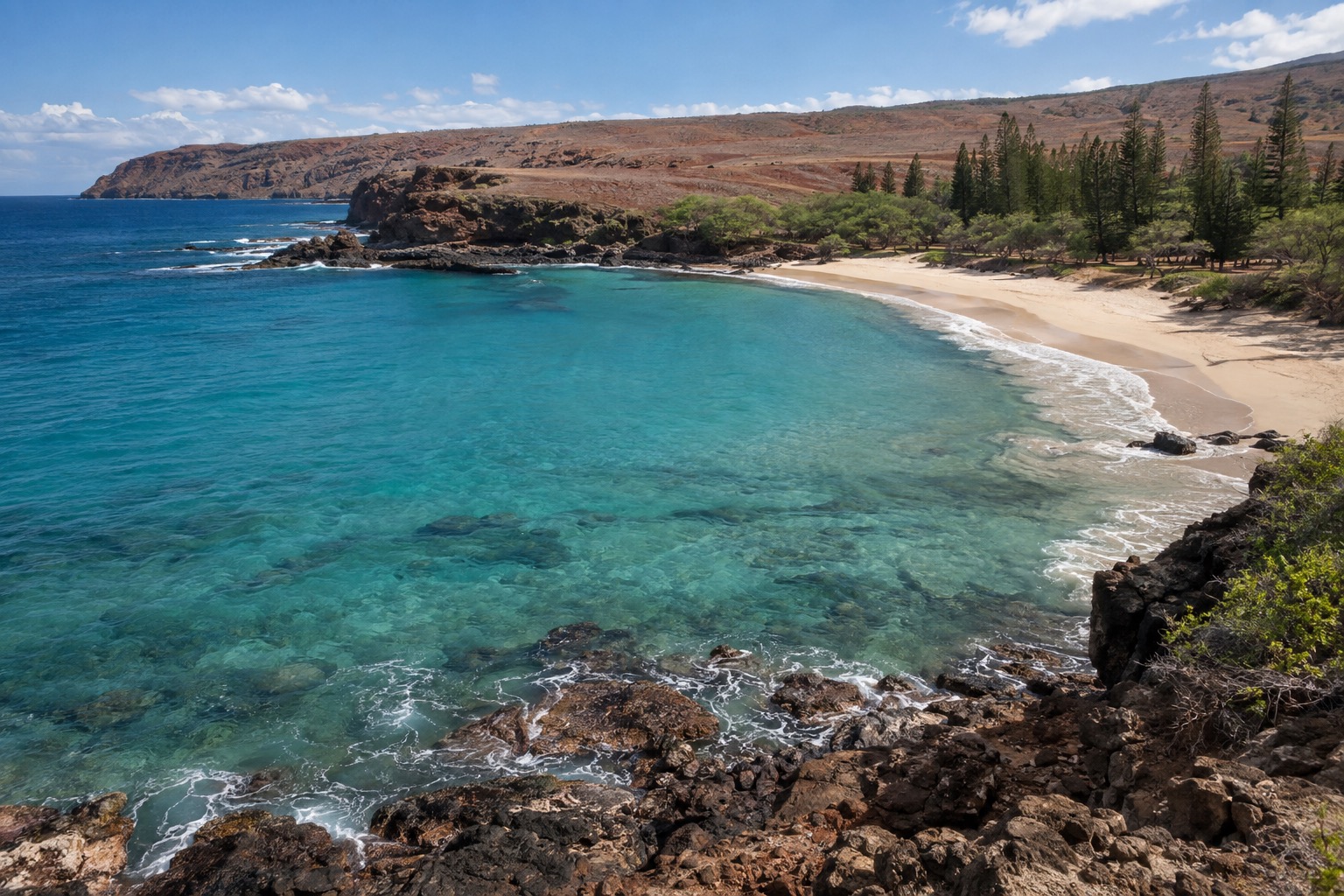
Summer is the gentler season for the south and west shores, the opposite of the big winter surf on the north shores of the state. Hulopoe Beach, the island’s main swimming beach, is usually a sheltered crescent of pale sand where families settle in for the day, and snorkelers drift along the rocky edges looking for reef fish. Conditions still change from day to day, so read the beach signs, follow the flags and listen to the lifeguard before going in.
The north and east sides are another story. Polihua and the long, windswept shoreline near the Shipwreck coast get steady wind and surf, better for beachcombing and long walks than for a dip. Bring a rash guard for the sun, a mask and snorkel if you have your own, and sandals you can rinse, because the access roads to the wilder beaches are dusty.
What to do in Lanai in July
July on Lanai is about slow, outdoor days: a morning in the water, a drive across the red plateau, and a long meal when the heat lets go. Around the Fourth of July, Lanai City gets festive in a small-town way, with families gathering in the park and neighbors greeting neighbors across the street. Summer also brings visiting families who come for the beach, so the mood is relaxed and a little more lively than in the quiet months.
Food on the island is simple and good: plate lunches, fresh fish, local-style burgers, fruit from the stands and coffee in town. After a day outside, shave ice is the sensible reward, and the town’s few restaurants set tables out under the trees. The pace suits the whole month, since almost nothing here is rushed.
Hulopoe Beach and Manele Bay
Hulopoe is the natural first stop in July, on the south coast beside Manele Harbor. The bay is a marine preserve, and in summer mornings spinner dolphins may pass through, and green sea turtles often feed near the rocks. Keep a respectful distance from any animal, as they are protected.
Go early, when the sand is empty and the light is soft, then return for a late-afternoon swim after the midday sun has eased. The rocky headland on one side is where snorkelers go, and the grassy lawn behind the beach is popular for picnics. Tide pools near the point are for looking only, a fine place for kids to peer at small crabs and fish from the edge.
The red plateau: Garden of the Gods and Polihua
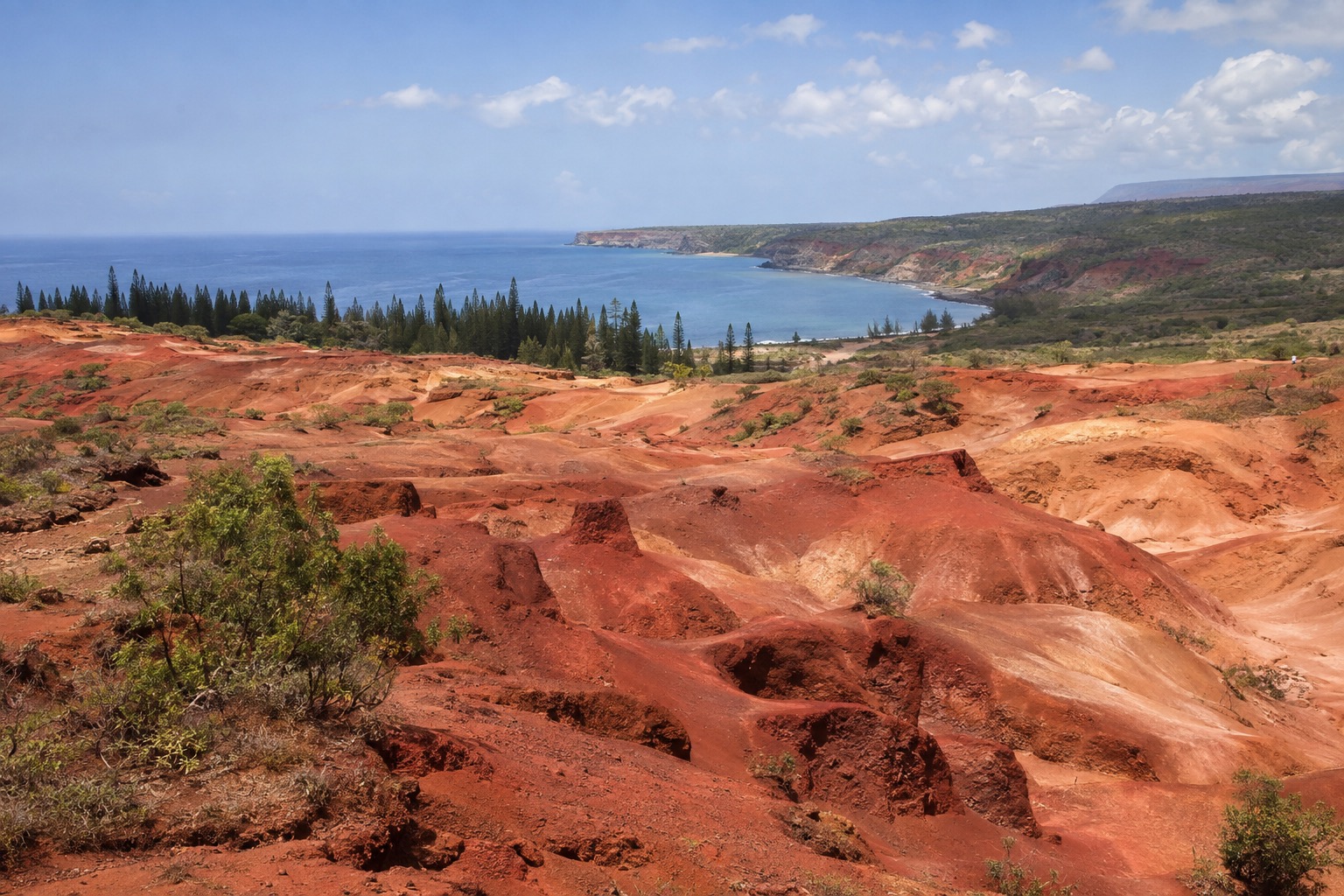
North of town, the road turns to red dirt and the landscape changes into a dry, wind-carved plateau scattered with boulders in rust and orange. Garden of the Gods is the famous stop here, and in July the best light comes just after dawn or in the hour before sunset, when the stones look deep and warm against the sky.
From there the track continues toward Polihua, a long, empty beach facing Molokai, where the wind pushes sand into shifting ridges. It is a place for walking, photographs and silence, not for swimming, and it feels remote even by Lanai standards. Allow time for dust and slow driving, and bring water and shade, because there is little of either along the way.
Lanai City and the highlands
The town is built around a green square, with low plantation-era cottages, a few shops, galleries and cafés that open at sensible hours. It is the easiest place to feel the island’s old pineapple history, and a slow loop on foot takes only a morning. The surrounding highlands are cooler and greener than the coast, with pine trees, quiet lanes and a good dose of fresh air.
On a hot afternoon this is the retreat. Browse the shops, sit on a bench with a cold drink and watch locals go by, or take a short drive among the pines. Evenings in town have a calm, neighborly feel, with the sky turning rose over the plateau before the stars come out.
A two-day itinerary for Lanai in July
Day 1 begins with the island’s best swimming. Reach Hulopoe Beach at first light, when the sand is nearly empty and the water is flat and clear, and snorkel along the rocks for an hour or two. Have breakfast in the harbor area or pick up pastries in town on the way, then retreat to shade when the sun gets high.
Spend midday in Lanai City, where the highlands are cooler and the cafés serve plate lunches and cold drinks. Wander the green square, step into a gallery or two, and rest during the hottest hours. Late in the afternoon return to the coast for a last swim, and finish with dinner at a restaurant with outdoor tables. If the weather turns, the town’s shops, galleries and cafés fill the hours easily.
Day 2 belongs to the plateau and the north. Leave right after breakfast, while the light is soft, and take the dirt road to Garden of the Gods for photographs before the sun flattens the colors. Continue toward Polihua for a long beach walk with views of Molokai, and keep the swimming for another day, since the shore there is windy and wild.
Return for a simple lunch in town, then ease into the afternoon with a nap or a slow drive among the pines. For a last evening, picnic or dine as the sun sets over the plateau. A rainy morning is a good moment to switch the order and linger in town first, since the red dirt dries quickly and the north side can wait.
Is Lanai busy in July?
Lanai is moderately busy in July, though it never feels crowded, since the island is small and its few places to stay fill up quickly.
Summer vacation brings families from the mainland and from other islands, and the weeks around the Fourth of July are the liveliest. Hulopoe has more towels on the sand, and restaurant tables in town are worth securing earlier than in the quiet season. Most of the island, including the plateau and the north, stays empty, so solitude is never far away.
Rooms, rental vehicles and dinner tables are limited on Lanai, so plan early for the holiday weeks and a little later for the calmer weeks that follow. Day visitors from Maui add to the harbor scene on some mornings, but they tend to leave by afternoon. For any outing that needs a reservation, check the official notice for it before you travel.
What to pack for Lanai in July
Pack for sun, wind, dust and water, with one warm layer for the cool evenings in the highlands.
- Sunglasses and a hat that stays on in the wind, for the open plateau
- Mineral sunscreen, plus a rash guard for long snorkeling hours
- Sandals for the beach and sturdy shoes for the dirt roads and the garden boulders
- A light sweater or jacket for cool evenings in town
- A refillable water bottle, since shade and shops are far apart on the back roads
- Clothes you do not mind getting dusty, because the red dirt clings
Good to know before you go
The Central Pacific hurricane season runs from June 1 to November 30, so July falls inside it, and it is wise to follow the forecast before and during the trip. Getting around the island takes planning, as the best sights are along unpaved roads, and rooms and vehicles are limited. Lodging carries the taxes below.
| Fee | Amount | Who pays |
|---|---|---|
| State Transient Accommodations Tax | 11.00% | Guests, on lodging |
| Maui County surcharge on the General Excise Tax | 0.5% | Charged on taxable sales in Maui County |
Lanai in July vs June and August
Moving the trip to June gives you a slightly cooler island, a little more chance of a passing shower and calmer, less family-heavy days once school vacations have not fully started. The sea is a touch cooler, but still pleasant, and the beaches have more space.
August is the hottest and driest of the three. The sea is at its warmest, the plateau is dustier and the sun is stronger, and the family crowds begin to thin as schools reopen on the mainland and the islands. It suits sun lovers who plan on spending hours in the water and who enjoy a quieter harbor.
Choose July if you want the fullest summer mood, with Fourth of July gatherings and long evenings. Shift to June for calmer beaches and easier bookings, and to August for the warmest water and the quietest end of summer.
Is July a good time to visit Lanai?
Absolutely, July is a wonderful month to be on Lanai, above all for people who love the beach, for families and for anyone hoping for dry weather and warm ocean water.
It will suit travelers who like slow, outdoor days, simple food and wide empty landscapes. Those who need nightlife, big shopping or shady forests, or who dislike dust and wind, may prefer another island or a cooler month. On arrival, start with the water, since Hulopoe at first light sets the tone, then save the plateau roads for the cooler hours.
What makes July here memorable is the pairing of long, warm evenings with a plateau cool enough for a porch dinner and a sky that fills with stars over the red hills. A swim at dawn and a drink under the pines at dusk are enough to define the month.
Sources
- NOAA NCEI, monthly normals 1991-2020, station USC00515275, checked September 8, 2026
- Open-Meteo Marine API, average 2015-2024, checked September 8, 2026
- sunrise-sunset.org, sunrise and sunset calculated for the 15th of the month, checked September 8, 2026
- Hawaii Department of Taxation, Tax Announcement No. 2025-03 (Transient Accommodations Tax Law Changes from 2025 Legislative Session), files.hawaii.gov/tax/news/announce/ann25-03.pdf, checked September 24, 2026
- Hawaii Department of Taxation, County Surcharge on General Excise and Use Tax page, tax.hawaii.gov/geninfo/countysurcharge/, checked September 25, 2026
- NWS Honolulu / Central Pacific Hurricane Center, « 2026 Central Pacific Hurricane Season Outlook », weather.gov/hfo/hurricaneOutlook2026, checked September 24, 2026