
An August morning starts quietly, with Lanai City’s Cook pines motionless in gentle, parched light, while just a pickup or two passes the old plantation cottages as the main square’s only traffic. By midday the red dirt of the highlands is warm and dusty, and the ocean below the cliffs turns a deep, clear blue. This is Lanai in August, a small island with a slow rhythm, made for travelers who want quiet beaches, rough backcountry roads and long, empty views.
What is the weather like in Lanai in August?
August is warm, dry and sunny on Lanai, with comfortable afternoons on the central plateau and almost no rain to plan around.
| Month | Average high (°F) | Average low (°F) | Rain days | Sea (°F) |
|---|---|---|---|---|
| July | 82.5 | 66.2 | 1.5 | 80.7 |
| August | 83.4 | 66.8 | 1.0 | 81.5 |
| September | 83.0 | 66.5 | 2.3 | 81.8 |
Lanai City sits on the plateau, so mornings feel fresh and clear, and afternoons climb into the low 80s without the muggy weight you find on the coast of bigger islands. Rain is a rare event this month, a passing shower at most, and it tends to come as a brief spatter over the hills rather than a gray, all-day affair. The leeward shores, where most of the beaches are, are drier still.
Evenings on the plateau cool off just enough that a light layer feels good on a porch or outside a restaurant after dinner. Days are long, with nearly thirteen hours of daylight, so there is room for a slow breakfast, a long afternoon outing and still a sunset on the coast.
Dress for sun first: light cotton, a hat and sturdy shoes for the dusty roads. The trade winds blow most days and keep the heat from feeling heavy, but the sun at this latitude is strong, so shade breaks matter on any long walk.
Can you swim in Lanai in August?
Count on water warm enough for a long, comfortable swim, and it stays that way through the whole month.
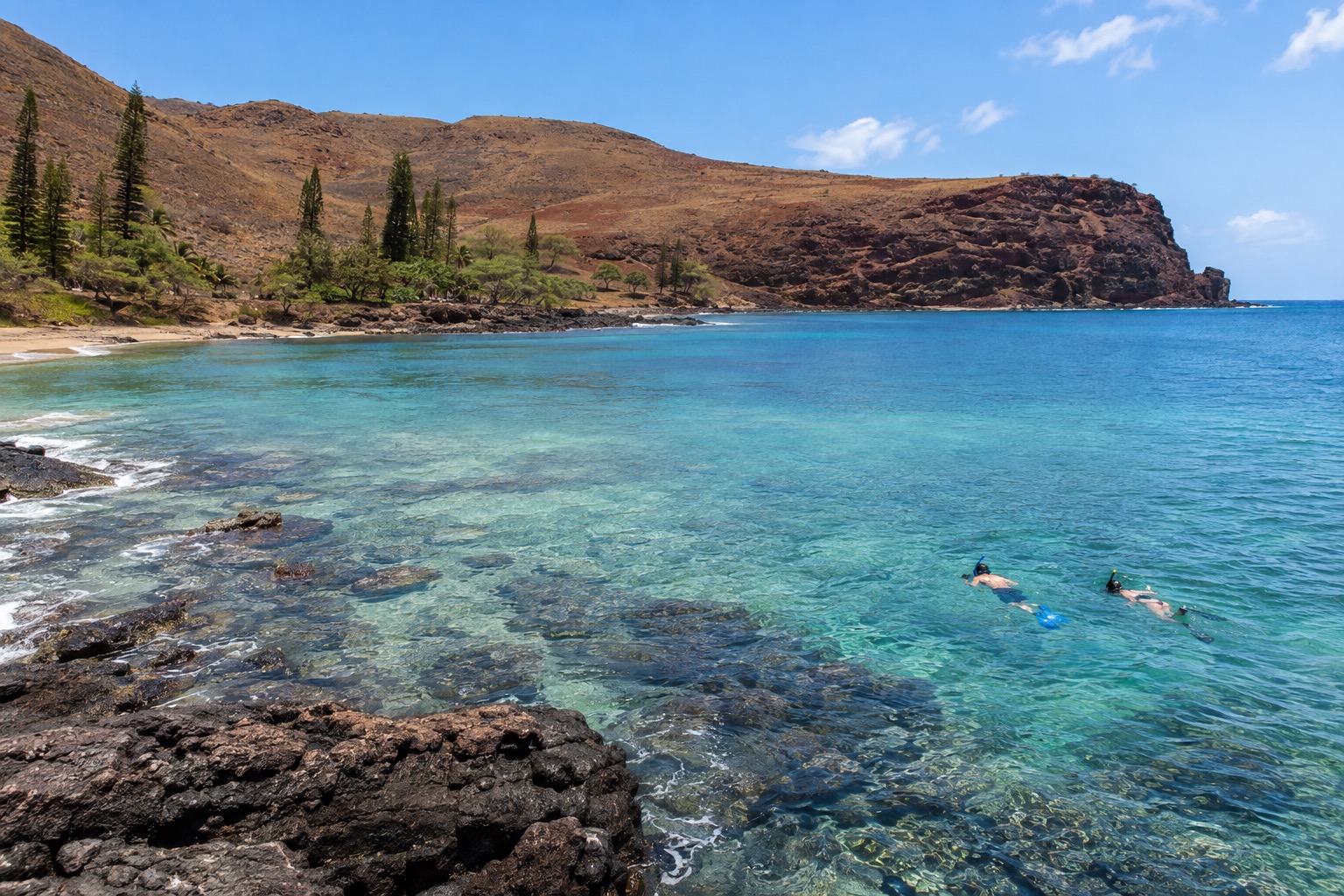
For Lanai’s most famous swimming areas, which lie along the south and west shores, summer tends to be the calmer season. The island’s classic family beach is Hulopoe Beach, which sits beside the resort on the south coast and features a broad crescent of sand plus a rocky point at one end where snorkelers commonly drift. Waves are often small in summer there, though that can change from day to day.
Spinner dolphins sometimes pass through the bay near Hulopoe in the morning, and the tide pools on the rocks are fun for children to peer into at low tide. Keep your distance from any dolphins, turtles or monk seals you see, since they are protected. The north and east shores can be rougher and are better admired from the shore.
Conditions are never guaranteed, so read the beach signs, follow the lifeguard where there is one, and ask before you swim somewhere unfamiliar. Pack a snorkel and mask, a rash guard for those long stretches in the water, and sunscreen with minerals.
What to do in Lanai in August
August on Lanai is not a month of big festivals. It is a month of dry roads, clear water and long daylight, and the best plans are outdoors: a beach morning, a rough-road adventure in the afternoon and a sunset somewhere high or far from town.
Lanai City itself is worth a slow stroll. A pineapple plantation once shaped the town, and its neat blocks of little cottages, the green square bordered by Cook pines and a few cafés, a general store and local galleries all lend it a mid-century character. Locals gather in the evening, and the pace is slow enough that a coffee on a bench can fill a morning.
Hulopoe Beach and the south shore
Hulopoe is the island’s easy beach day. A short drive down from Lanai City brings you to a sheltered bay with soft sand, shade trees on the edge and a marine preserve feel in the clear water. Reef fish are frequently spotted by snorkelers around the rocks along the bay’s edge, while kids can explore the tide pools.
Go in the morning, when the water tends to be clearest and the sun is gentler, and stay for a picnic under the trees. It suits families, first-time snorkelers and anyone who wants a simple day. Check the signs for the day’s conditions before getting in.
Nearby, a short walk on the trail along the point leads to Puu Pehe, the sea stack often called Sweetheart Rock, with sweeping views across the water. The path is exposed to sun, so bring a hat and water and treat the site with respect, as it holds meaning in Hawaiian tradition.
Shipwreck Beach and the north coast
A rough dirt road across the dry plateau leads to the north shore, where the rusting hull of a wartime vessel sits stuck on the reef offshore. It is a windswept, empty stretch of coast, best for beachcombing, big skies and views toward Molokai rather than swimming, since the water here is often rough.
Early morning or late afternoon is best, when the light is soft and the heat has eased. Go in a vehicle suited to unpaved roads, carry water and expect dust. It suits travelers who like solitude and photography, and less so anyone who wants a casual beach day.
The Garden of the Gods and the highlands
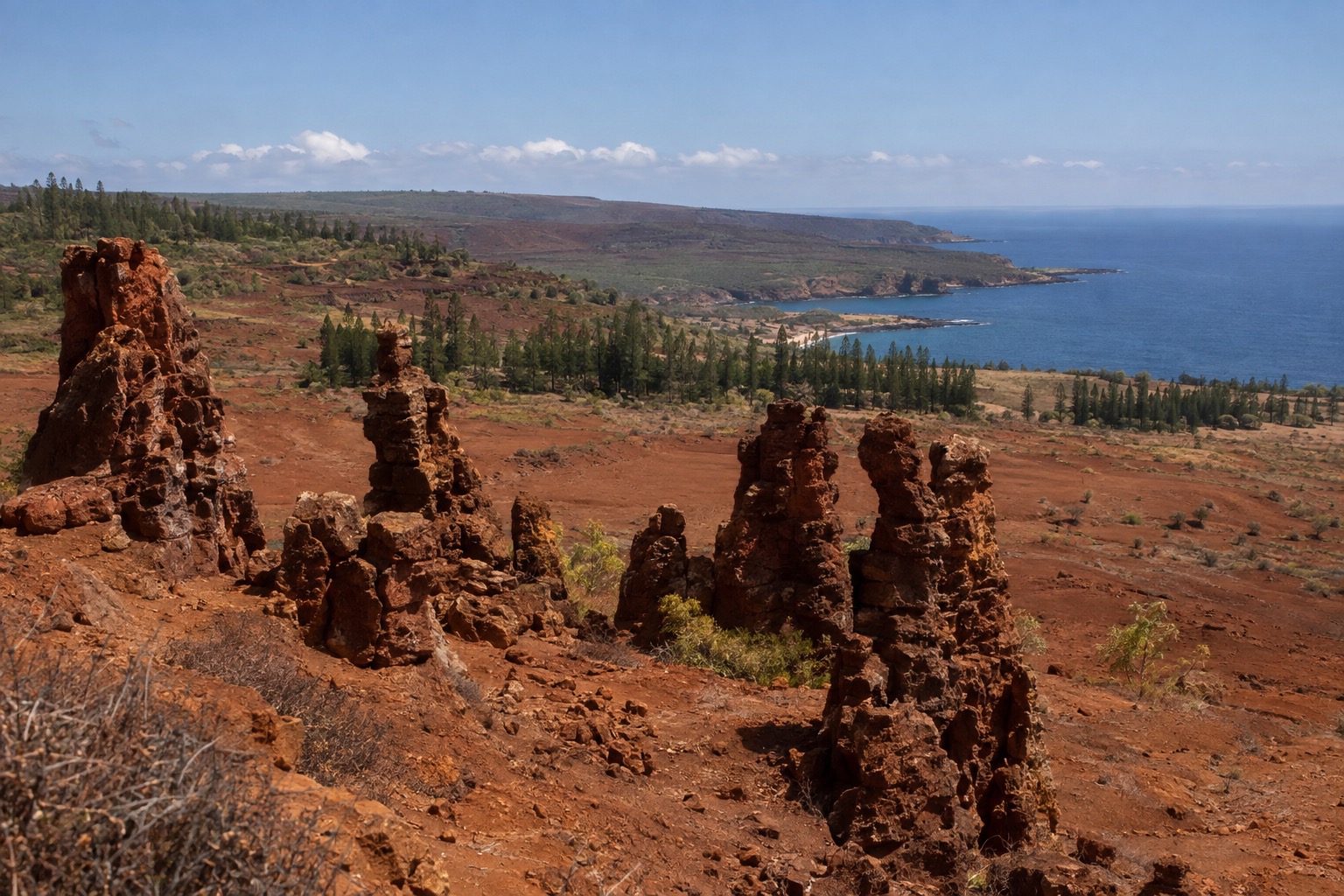
On the dry northwest plateau, the Garden of the Gods (Keahiakawelo) is a landscape of red and orange rock formations strewn across the ground, almost like another planet. The colors glow most at sunrise and sunset, and the August dryness keeps the red earth firm and the views crisp.
The road there is rough, so plan your outing around daylight and bring plenty of water, since there is no shade or services. Stay on the established tracks and avoid stacking rocks or moving them, out of respect for the place. It is a spot for a quiet half hour of looking, not a long hike.
For food, expect simple, local plates: plate lunches, fresh fish, burgers and poke from small cafés in town, plus a few more polished dinners at the resorts. Shave ice on a warm afternoon is a satisfying habit. Be ready for early closing times in a small town and for a limited choice of places.
If a rare shower or a hot day pushes you indoors, browse the small galleries and shops around the square, or spend the afternoon at the resort’s pools and spa. The island is small, so a change of plan rarely costs much.
A two-day itinerary for Lanai in August
Coffee and a pastry in Lanai City kick off Day 1 as bright morning sun wakes the plateau. Drive down to Hulopoe Beach while the water is calm and bright, snorkel along the rocks, and settle under the trees for a picnic lunch of plate-lunch takeout from town.
In the mid-afternoon, when the sun is strongest, walk the trail toward Puu Pehe for the view, then return for a last swim or a rest. Head back up to town for dinner at a casual local spot, and sit outside in the cool evening air. If a shower does arrive, spend the afternoon among the galleries and shops around the square.
Day 2 is for the backcountry, so start early with a full tank and plenty of water. Take the dirt road north to Shipwreck Beach in the morning light, walk the shore and look out toward Molokai, then continue along the coast with care, since the roads are rough and the sun climbs fast.
Head back into town to eat a late lunch and rest while the day is at its hottest. In the late afternoon, drive to the Garden of the Gods so you arrive before sunset, when the rocks turn deep red. Come back in the dusk for a simple dinner, keeping in mind that kitchens close early in a small town.
Is Lanai busy in August?
Lanai is quiet even in August, though summer vacation brings more families than in the spring, and the small number of rooms means the island can fill up quickly.
Most visitors come from the mainland or by the short ferry or flight from Maui, and many stay at the two resorts or in a small inn in town. Because there are so few beds, the supply of rooms, rental cars and restaurant tables runs short, and the handful of vehicles able to take on dirt roads gets claimed first. Book early for the weeks when school is still out, and a bit later for the quieter end of the month.
On the ground, the island never feels crowded. The beaches have room, the backcountry roads are nearly empty, and a restaurant in town may be the only place where you notice a wait. Plan dinners ahead, especially at the more upscale spots, and keep lunches flexible. There are no special park or trail reservations to plan around on Lanai in the information at hand, so the main task is securing a room and a suitable vehicle early.
What to pack for Lanai in August
Pack for sun, dust and water, with one light layer for the cool plateau evenings.
- Pack mineral sunscreen along with a wide-brimmed hat, because on the backcountry roads the sun beats down hard and there is little shade.
- Mask and snorkel, for the reef fish at Hulopoe.
- Sturdy closed shoes, for the rocky trail to Puu Pehe and the dusty tracks.
- A refillable water bottle, because the highlands have no services.
- A light sweater or jacket, for breezy evenings in town.
- For extended stretches in the sea minus repeated sunscreen applications, pack a rash guard.
Good to know before you go
The Central Pacific hurricane season runs from June 1 to November 30, so August falls within it, and it is wise to keep plans flexible and watch the forecast before you leave. Lanai has few services, so fill the tank, carry water and book your room and vehicle first. Taxes on lodging apply on top of the room rate.
| Fee | Amount | Who pays |
|---|---|---|
| State Transient Accommodations Tax | 11.00% | Guests, on the rental price of the room |
| Maui County surcharge on the General Excise Tax | 0.5% | Added to taxable sales, including many visitor purchases |
Lanai in August vs July and September
Moving a month earlier changes little. July is a touch cooler and a touch wetter, though still very dry, and the sea is a degree or so cooler. Summer crowds are similar, so July suits travelers who want almost the same trip with slightly softer heat.
September is a little more likely to bring showers, but the water is at its warmest, and the end of school vacations means the island empties out. Rooms and rental vehicles are easier to find, and the roads feel even more private. The hurricane season is still running, so flexibility matters.
Families tied to school calendars will do best in August, when the days are longest and the weather is reliable. Flexible travelers who want more quiet and a slightly warmer sea can shift to September, while July is a good fit for those who want the summer rhythm with a bit less heat.
Is August a good time to visit Lanai?
August works wonderfully for visitors seeking sunny, dry days, a warm ocean and a peaceful island, above all families and people who enjoy easy outdoor plans.
It is less ideal for anyone hoping for lush green scenery, big festivals or nightlife, since Lanai is dry and calm by nature. Those who want surf or a busier scene may prefer another island or another season.
On arrival, settle your vehicle and a beach morning first, because the water is at its clearest and the day is still cool. After that, the island unfolds at its own pace. What stays with you from August here is the combination of a bright sea at Hulopoe, red rocks glowing at dusk in the Garden of the Gods and a town square where the Cook pines hold the evening quiet.
Sources
- NOAA NCEI, monthly normals 1991-2020, station USC00515275, checked September 8, 2026
- Open-Meteo Marine API, average 2015-2024, checked September 8, 2026
- sunrise-sunset.org, sunrise and sunset calculated for the 15th of the month, checked September 8, 2026
- Hawaii Department of Taxation, Tax Announcement No. 2025-03 (Transient Accommodations Tax Law Changes from 2025 Legislative Session), files.hawaii.gov/tax/news/announce/ann25-03.pdf, checked September 24, 2026
- Hawaii Department of Taxation, County Surcharge on General Excise and Use Tax page, tax.hawaii.gov/geninfo/countysurcharge/, checked September 25, 2026
- NWS Honolulu / Central Pacific Hurricane Center, « 2026 Central Pacific Hurricane Season Outlook », weather.gov/hfo/hurricaneOutlook2026, checked September 24, 2026