
On a February morning in Lanai City, the air on the plateau is cool enough for a sweater, and the Cook pines along the edges of Dole Park drip with mist as the first trucks pull up to the bakery. Down at Hulopoe Bay the Pacific is bright and open, and humpback whales sometimes break the surface beyond the point. February is a quiet month on Lanai, the smallest of Hawaii’s visitor islands, for travelers who want slow days, wide red-dirt landscapes and a beach with few neighbors.
What is the weather like in Lanai in February?
February is mild and mostly dry on Lanai, with pleasant afternoons and cool nights up on the plateau, and only a few short showers. The island sits in the rain shadow of Maui and Molokai, so clouds often pass over without dropping much.
| Month | Average high (°F) | Average low (°F) | Rain days | Sea (°F) |
|---|---|---|---|---|
| January | 76.2 | 59.9 | 4.1 | 78.0 |
| February | 76.1 | 59.8 | 2.4 | 77.0 |
| March | 76.5 | 60.6 | 2.7 | 76.9 |
Mornings in Lanai City start crisp, so a light jacket feels right over coffee, and by midday the sun warms the red earth and you can switch to a T-shirt. Evenings cool off again, which makes a sweater useful for dinner outdoors. Up on the central plateau around the airport it feels a touch cooler, while down at Hulopoe the coast usually feels a little warmer and breezier than town.
Rain, when it comes, arrives as brief passing showers rather than all-day gray, and a full inch in one day is rare. A shower is often followed quickly by sun, and rainbows over the pineapple-colored hills are common. The light is soft and clear, with days a little longer than in January, and the sky over the ocean tends to be sharp for photographs.
The trade winds can blow hard across the open stretches of the island, especially on the coast and on the dirt roads of the east side. Bring a windbreaker, and keep a hat secured. The sea sits in the high 70s, which is comfortable for a swim of a good length once you are in.
Can you swim in Lanai in February?
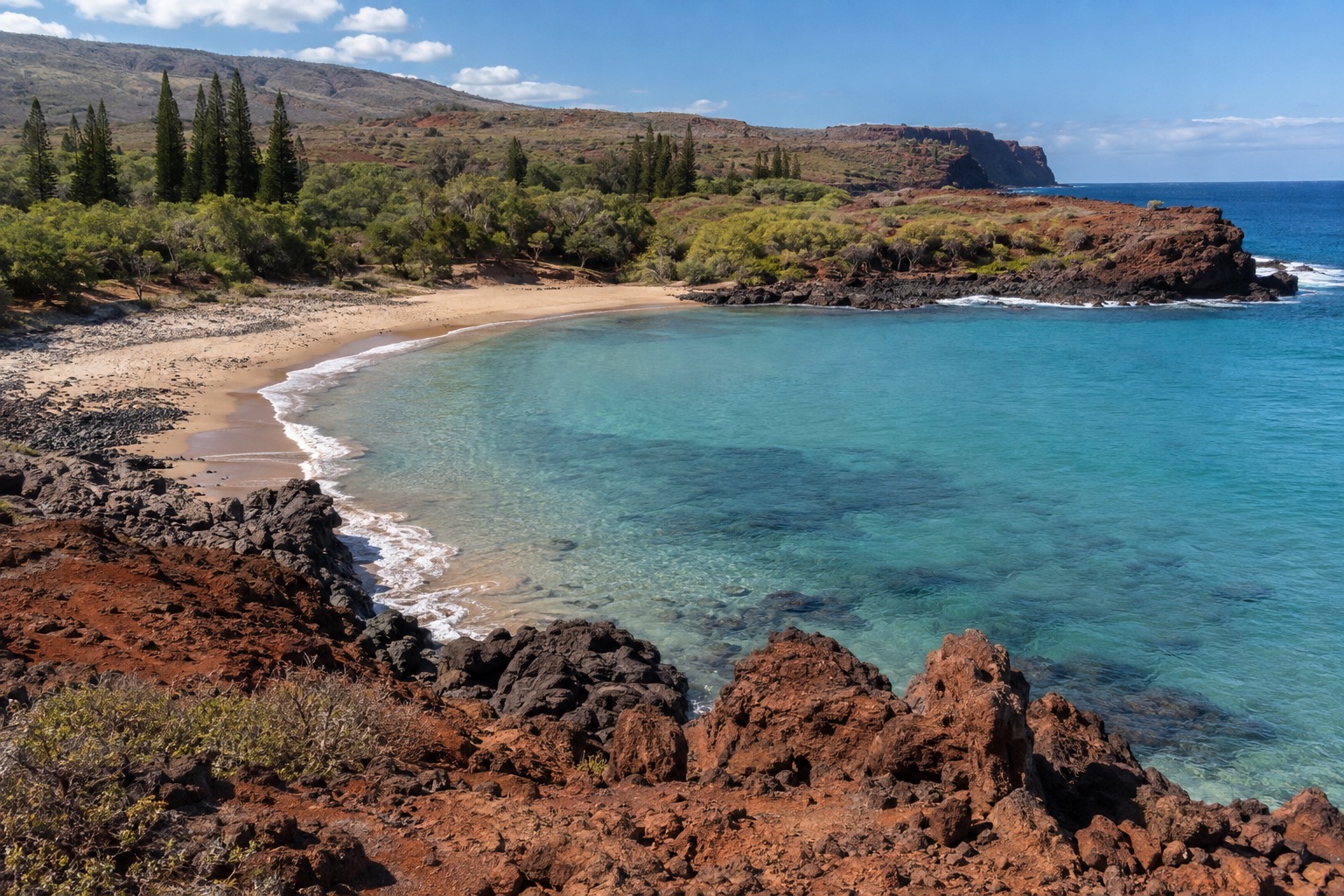
Yes, the water is warm enough for a proper swim or a long snorkel, though the first minute can feel brisk when the wind is up. The island’s classic beach is Hulopoe Bay on the south shore, a pale sand crescent with lawns and the resort above behind it. On many days it is gentle and clear, but swells from winter weather can arrive, so how it looks on the morning decides everything.
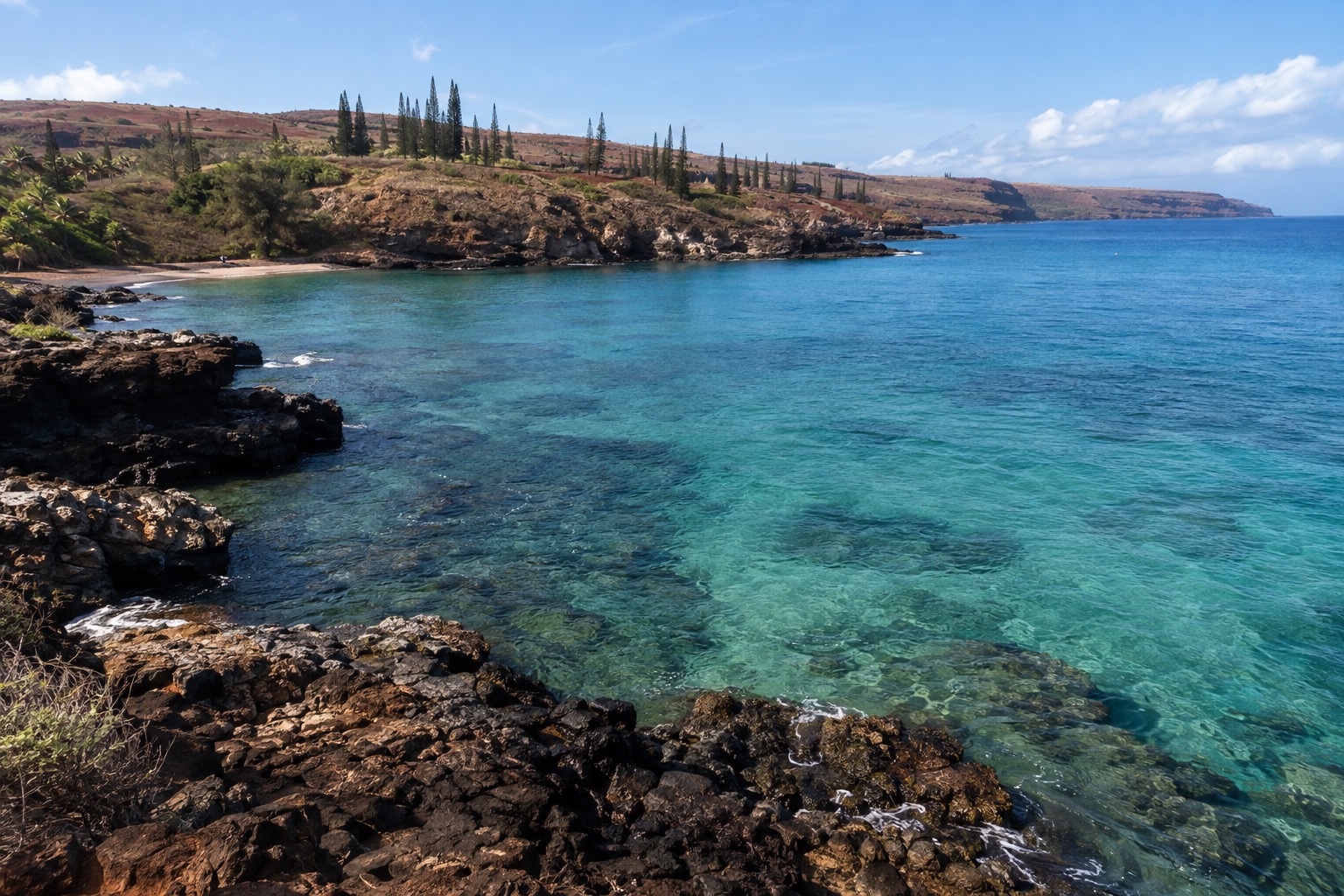
Snorkelers head to the rocky edges of the bay, where fish often gather around the reef and, with luck, spinner dolphins pass offshore. The tide pools at the eastern end are a favorite with children at low tide, and they are best explored with reef shoes. Keep off the live coral and give any turtle or monk seal plenty of room, since both are protected.
Shipwreck Beach on the north side is a place to walk and look, not to swim. The wind is strong and the water is exposed, and the rusting hull stuck on the reef is what draws people. Follow the posted beach signs and any lifeguard at Hulopoe, and bring a towel, water shoes and a mask if you have your own.
What to do in Lanai in February
February is humpback whale season in Hawaii, and Lanai’s position in the shallow channel toward Maui makes it a good place to watch. Spouts, tail slaps and the occasional breach can be spotted from Hulopoe’s shoreline, the cliffs by Manele and the south coast road. Early morning, before the wind builds, is when the surface tends to be calmest and easiest to read.
The mood in town is unhurried. Lanai City is a grid of plantation-era cottages around Dole Park, with a few cafés, a general store, small galleries and plate-lunch counters. A February stroll means a coffee, a look at the old buildings and a chat with locals who know everyone. Evenings are quiet, with dinner served early and the streets nearly empty after dark.
Hulopoe Bay and the Manele coast
This is the beach day. Hulopoe is a short drive downhill from town, and the shore below the resort is open to everyone. Spread out on the sand, snorkel along the rocks, then walk the path above the point to watch for whales, which are most likely in the cooler hours of the day.
Next door, Manele Small Boat Harbor is a good place to see fishing boats come and go and to look across the water toward Maui. Pack lunch or pick up something in town first, since food near the beach is limited. A visit suits families, snorkelers and anyone who wants a long, easy afternoon with the ocean in view.
The east side: Shipwreck Beach and Keomuku
The north and east coasts are wild, windswept and nearly empty. A rough road runs along Shipwreck Beach, where you can walk the sand, find driftwood and see the old wreck out on the reef. The views across to Molokai are especially clear on bright winter days.
Farther along, the abandoned settlement of Keomuku has a small weathered church and a quiet shoreline that feels far from everything. This is a day for a high-clearance four-wheel-drive vehicle, a full tank, water and patience, and it is best done in dry weather, since red mud turns slippery after rain. Treat the old sites with respect and leave stones and structures as you find them.
Garden of the Gods and the highlands
North of town, the Garden of the Gods is a field of strange red and orange boulders and rock towers scattered across a dry plateau. Late afternoon, when the sun drops low, turns the stones deep rust and pink. Come near sunset for the best color, and bring a jacket since the wind is steady.
In the cooler uplands you can also walk or drive through the Cook pine forests around Lanai City, where mist drifts through the trees on gray mornings. Lanai Culture and Heritage Center in town is a small place to learn about the island’s Native Hawaiian history and its pineapple years, a good stop when a shower passes.
Food is simple and local: plate lunches, fresh fish, burgers, poke and baked goods in town, plus more polished dinners at the island’s two resorts. For something to do beyond the beaches, ask about horseback riding, ATV or off-road tours, and the shooting and archery ranges, which are among the island’s better-known activities. Spirits are not tied to a single February festival here, so the month’s pleasure is the whales, the quiet and the soft light.
A two-day itinerary for Lanai in February
Day 1 begins in Lanai City with coffee and a pastry in the cool of early morning, then a slow walk around Dole Park and the cottage streets. Drive down to Hulopoe Bay by mid-morning, when the wind is often gentler and the water clear. Snorkel, swim and watch the horizon for whale spouts, then eat a picnic lunch on the lawn above the sand.
In the afternoon walk the point trail above the bay and stop at Manele harbor to see the boats. Head back up to town as the light softens, since the sun sets after the day’s warmth is gone.
Dinner is a casual early meal at a local grill or one of the resort restaurants, and in the evening the town goes still. If the weather turns, spend the time in the heritage center and the small galleries.
Day 2 is the rugged one, so start early in a four-wheel-drive vehicle and head north to Shipwreck Beach for the wreck, driftwood and views across the channel. Continue along the east side toward Keomuku while the sun is high and the road is dry, carrying water and lunch with you.
Return to the plateau in the afternoon and finish at the Garden of the Gods for the low, golden light on the rocks. Then take a hot shower, then a relaxed dinner in town. If rain makes the dirt roads slick, swap the east coast for a slower day of the highlands, the pine forests, a café lunch and a stop at the heritage center.
Is Lanai busy in February?
Lanai is quiet in February, even by its own calm standards. The island never gets crowds like Maui or Oahu, and winter whale season brings a steady but small flow of visitors, mostly couples and travelers on longer Hawaii trips. Day-trippers by ferry from Maui add some bustle at Hulopoe and in town around midday.
The one busy stretch is the Presidents Day weekend, when mainland families take a mid-winter break and rooms, rental vehicles and dinner tables tighten. Book early for that weekend. For the rest of the month, planning a few weeks ahead is usually enough, although the island has few rooms and a small fleet of rental vehicles, so booking ahead is a good habit year-round.
Restaurants are small and often close early, so a reservation for dinner at a resort restaurant is wise on weekends. Beaches rarely fill, and the east side can feel completely empty. No special park or trail reservations are needed for the places worth visiting on Lanai.
What to pack for Lanai in February
Pack for a day that runs from cool mornings to warm afternoons, with wind and the odd shower. Layers and sturdy shoes matter more than swimwear alone.
- A light jacket or windbreaker, for breezy coasts and cool plateau mornings
- A sweater for evenings in Lanai City
- Reef shoes, for tide pools and rocky snorkeling entries
- Closed-toe shoes for the dusty trails and rocks at the Garden of the Gods
- Mineral sunscreen and a hat that ties on, since the sun is strong even on windy days
- Binoculars, for whale watching from the shore
Good to know before you go
February falls outside the official hurricane season, which runs from June 1 to November 30. Getting around is easiest with a four-wheel-drive vehicle, since the best sights lie on unpaved tracks, and the island has only a handful of rental vehicles. Lodging is taxed at the state level and again by the county, so budget for those on top of your room rate.
| Fee | Amount | Who pays |
|---|---|---|
| Transient Accommodations Tax (state) | 11.00% | Guests on lodging |
| General Excise Tax county surcharge (Maui County) | 0.5% | Added on taxable sales |
Lanai in February vs January and March
Moving a month earlier brings more rain, with showers noticeably more frequent, and a sea a degree warmer. January is also deep in whale season and holds the busy New Year stretch, so rooms tighten early in the month. Late January can feel a bit grayer on the plateau, which suits cozy cottage stays more than long beach days.
A month later, March is similar in temperature but slightly warmer at night, with showers still short. Whales begin to thin out as the season winds down, and spring break travelers start to arrive, adding some life to the beaches and some pressure on rooms. The sea is about the same as in February.
If whales and the quietest island matter most, stay with February. If you want the driest odds, February and March are close, and March suits those who like a few more people around. Pick January mainly if your dates are fixed by the holidays.
Is February a good time to visit Lanai?
Yes, February is a very good time for travelers who want a peaceful island, mild days and a chance to see whales from shore. It suits couples, hikers, snorkelers and anyone who likes empty roads and big skies. It is less ideal for people who want nightlife, shopping or a long list of organized activities, since Lanai offers few of them.
On arrival, pick up your vehicle first and settle into town, then drive down to Hulopoe Bay for a first look at the water and the horizon. Save the rough east-side drive for a clear, dry day. What stays with you from February here is the combination of cool pine-scented mornings in town, a warm swim at the bay and the sight of a whale tail rising out of a bright blue channel.
Sources
- NOAA NCEI, monthly normals 1991-2020, station USC00515275, checked September 8, 2026
- Open-Meteo Marine API, average 2015-2024, checked September 8, 2026
- sunrise-sunset.org, sunrise and sunset calculated for the 15th of the month, checked September 8, 2026
- Hawaii Department of Taxation, Tax Announcement No. 2025-03 (Transient Accommodations Tax Law Changes from 2025 Legislative Session), files.hawaii.gov/tax/news/announce/ann25-03.pdf, checked September 24, 2026
- Hawaii Department of Taxation, County Surcharge on General Excise and Use Tax page, tax.hawaii.gov/geninfo/countysurcharge/, checked September 25, 2026
- NWS Honolulu / Central Pacific Hurricane Center, « 2026 Central Pacific Hurricane Season Outlook », weather.gov/hfo/hurricaneOutlook2026, checked September 24, 2026