
In Lanai City, a March morning brings the scent of cool earth and Norfolk pines, while the trade wind makes the tall needles rattle above Dole Park. Pickup trucks idle outside the bakery, a few residents stop to talk on the sidewalk, and down at Hulopoe Beach the sea is already glittering.
March on Lanai is mild, unhurried and easy on the eyes, with red-dirt roads, quiet shores and a plateau town that feels like a village. Lanai gives travelers who want a slow island week, or a day trip, real room to breathe.
What is the weather like in Lanai in March?
March is mild and mostly sunny on Lanai, with warm afternoons, cool evenings and only a few short showers.
| Month | Average high (°F) | Average low (°F) | Rain days | Sea (°F) |
|---|---|---|---|---|
| February | 76.1 | 59.8 | 2.4 | 77.0 |
| March | 76.5 | 60.6 | 2.7 | 76.9 |
| April | 78.4 | 61.0 | 2.1 | 77.9 |
The island sits in the lee of Maui and its neighbors, so it is one of the drier places in Hawaii. The airport on the central plateau gets only a modest amount of rain this month, and when it comes it is usually a passing shower carried in by the trade winds, gone before you finish a coffee.
A gray, steady day is rare. The heavier rain tends to fall on the higher ridges and the wet slopes above the town rather than down at the shore.
Mornings in Lanai City feel fresh because the town sits well above the sea, and a light layer is welcome until the sun climbs. By midday it is shorts and sunglasses weather, with a steady breeze that keeps it comfortable. Evenings turn cool enough for a sweater on the porch, especially on the plateau, while the resort coast at Manele stays a little gentler.
The light is the quiet star of the month. Days run just over twelve hours, the sun stays clear and bright over the Pacific, and late afternoon throws a golden wash across the red earth and the pines. Everything photographs well. The sea is pleasantly warm without being bathwater, and it is the same story outside of the official hurricane season, which falls later in the year.
Can you swim in Lanai in March?
Sure, you can swim and snorkel for a long time in that comfortably warm water, but a thin rash guard helps if you plan to stay in for an hour.
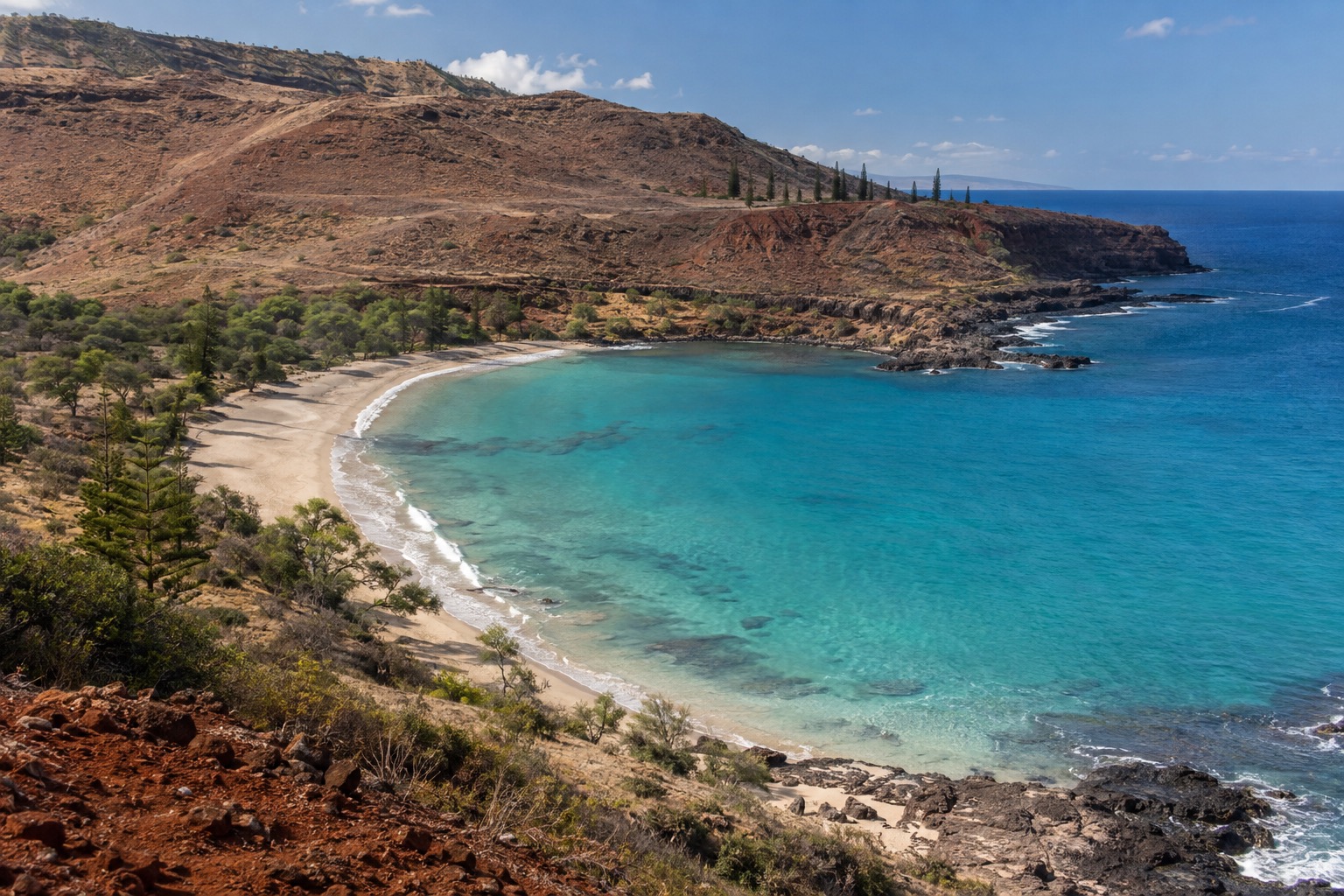
Hulopoe Beach, on the south shore below Manele Bay, is the island’s natural swimming spot. It is a wide crescent of pale sand with a protected marine preserve at its edge, and in March the water there is often gentle in the morning, with a little more movement as the day goes on.
Tide pools on the rocky side of the bay keep children busy for an hour. Spinner dolphins are sometimes seen in the bay early in the day, which is a chance, not a promise.
The north and west shores are another story. Winter swells can still roll in during March, and beaches like Shipwreck are for walking, not swimming, with strong currents and a rough bottom. Nervous swimmers and families should stay with Hulopoe. Bring a mask, reef shoes and mineral sunscreen, and follow the beach signs and any lifeguard on duty, because they know what the water is doing that day.
What to do in Lanai in March
The great pleasure of March on Lanai is the pace. There are no big festival crowds, just a calm island with whales offshore, cool mornings for hiking and long afternoons at the beach. Each winter, humpback whales live in the waters of Hawaii, and when spring comes early there are frequently still sightings offshore to the south, so while eating lunch, watch the horizon for spouts and the backs of breaching whales.
The calendar has a local touch. Prince Kuhio Day, on March 26, is a state holiday honoring Hawaii’s royal delegate to Congress, and it can mean a quiet day for some businesses and a family-focused one for residents. Spring break visitors from the mainland arrive in waves, and Easter, which moves every year, changes how busy the island feels.
Hulopoe Beach and Manele Bay
The south shore is where most visitors spend their beach days. Hulopoe has soft sand, shade under the kiawe trees at the back and a swimming area that is often calm but can be rough, since the sea changes from day to day and beach to beach, and the neighboring Manele Bay harbor is where boats come and go. A short walk along the headland leads to lava rock viewpoints and a view of Puu Pehe, the sea stack known as Sweetheart Rock, which is wrapped in an old Hawaiian love story.
Go in the morning for the clearest water and the calmest air, then retreat to the shade for lunch. March afternoons can bring a brisk wind, so a windbreak or a light shirt is useful. Families, snorkelers and anyone craving a long, lazy day with no reason to leave the sand will find the beach ideal, while the rocky shore at Puu Pehe is meant for looking and photographing, not for climbing down.
Lanai City and Dole Park
Lanai City is a plantation-era village built around a grassy square, Dole Park, ringed by small shops, galleries, cafés and plate-lunch counters. In March the Norfolk pines and the cool air make it an ideal place for a slow morning. The old pineapple past is everywhere, in the low wooden houses, the tidy streets and the quiet that settles in by early evening.
Spend an hour wandering the square, stop for coffee or a baked pastry, and browse the local art and crafts. For a taste of the island, look for fresh fish plates, poke and simple burgers, then add shave ice on a warm afternoon. The island’s story comes to life at a small heritage center, a fine place to wait out a passing shower, and rescued cats live at a sanctuary in town that delights plenty of visitors.
Shipwreck Beach and the Garden of the Gods
The north shore is wilder and emptier. A wide, windblown stretch of sand at Shipwreck Beach is dotted with driftwood, and beyond it a World War II ship’s rusting hull rests out on the reef. The view across the channel to Molokai is superb on a clear March day. It is a place for beachcombing and photography rather than swimming, since waves and currents can be strong.
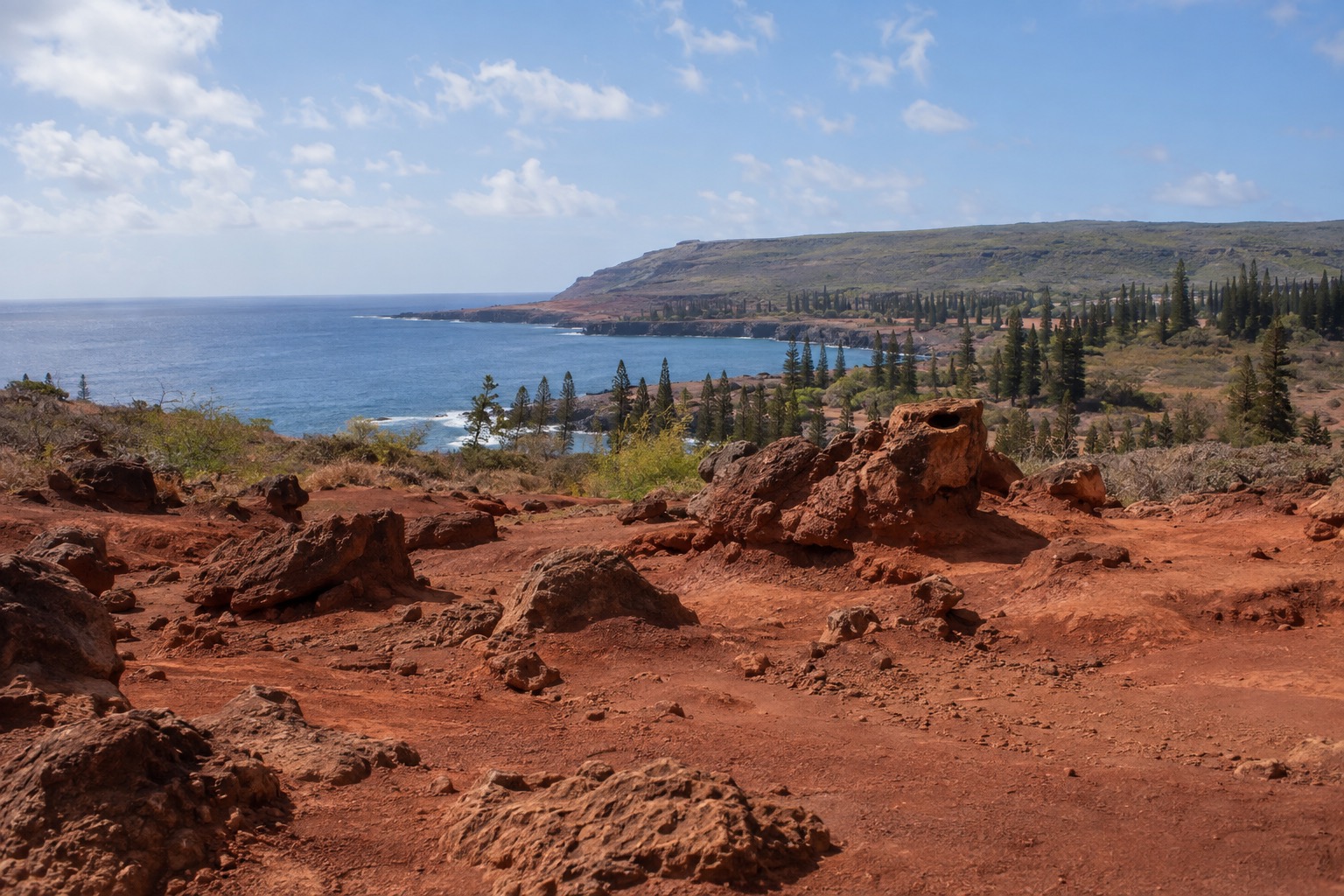
Close by, erosion has carved the Garden of the Gods into a stretch of odd red rocks and boulders, and it looks its finest at sunrise or in the day’s final light, when deep orange and violet come into the colors. The roads out here are rough red dirt, so allow time and take it slowly. Bring a hat, because there is little shade, and treat the rocks and the land with respect, since this is a sacred landscape to many.
The Munro Trail and the high country
A ridge route climbs above Lanai City through pines and native forest, and on a clear day it reveals views across several neighboring islands. March is a good month for it because the air is cool and the red earth is not too dry or too muddy. Clouds sometimes drift over the ridge, so the view is a chance, not a guarantee.
It suits hikers and anyone who likes quiet back roads, but the surface can be slippery after rain, so go carefully and stay on the track. Pair it with an early start, then come down for lunch in town. Bring water and a layer, since the ridge is breezy and noticeably cooler than the coast.
A two-day itinerary for Lanai in March
Day 1 begins in Lanai City, where mornings are cool and the park is peaceful. Have a slow breakfast, wander the square and pop into a gallery or two. Around midday, head down to the south shore for a plate lunch or a picnic, then spend the afternoon at Hulopoe, swimming and snorkeling while the sea is gentle. The hours between late morning and mid-afternoon are the best for being in the water.
Late in the afternoon, take the short walk toward Puu Pehe to watch the light turn gold. With just over twelve hours of daylight, the evening is unhurried. Dinner can be a casual local spot in town or a seaside table near Manele. If a shower comes through, the heritage center and the shops around the square make a good indoor fallback.
Day 2 is for the wild side of the island. Start early with a drive across the plateau to the Garden of the Gods, where the morning light is soft and the rocks glow. Continue to Shipwreck Beach for a long walk along the shoreline, with the wind at your back and Molokai on the horizon. Roads are rough, so give yourself plenty of time and keep an eye on the weather.
Return to town for a late lunch and a rest in the shade. In the afternoon, climb into the high country on the Munro Trail, when the air is warm and the ridge is open to views. End the day with an early supper in Lanai City and a quiet evening under the pines. If rain settles in, spend the afternoon with a coffee, a book and the local cat sanctuary.
Is Lanai busy in March?
Lanai is never crowded, but March brings a steady, gentle rise in visitors thanks to spring break and the end of the winter season.
The island is small, with a limited number of rooms, restaurants and rental vehicles, so a handful of extra travelers is noticeable. Families from the mainland arrive during school breaks, and Easter week, which moves from year to year, can fill rooms quickly. Outside those weeks, the island feels calm and uncrowded, and the beaches and trails often have plenty of space.
As a habit, book rooms and rental vehicles early if your trip lands on a holiday week, and a little later for quiet stretches. Restaurant tables in town are easy at lunch but can fill at dinner, especially at resort dining rooms, so reserve ahead for evenings you care about. Day-trippers on the boat from Maui bring a lively buzz to the harbor and the main square around midday, and the island settles again after they leave.
Beaches and trails rarely feel packed, but a sunny weekend can bring more cars to Hulopoe. Go early in the day and you will usually find a quiet spot of sand. The north shore and the high country remain peaceful nearly always.
What to pack for Lanai in March
Pack for sun, wind and cool evenings, with a few items for dusty trails and the sea.
- A light sweater or jacket, because evenings on the plateau are cool.
- Mineral sunscreen and a hat, since shade is scarce on the north shore.
- A rash guard and snorkel mask for Hulopoe, where the water is warm but you may stay in a while.
- Sturdy shoes for the red-dirt roads and the Munro Trail.
- A light rain shell for the quick showers.
- A reusable water bottle for long, breezy days outdoors.
Good to know before you go
March falls outside the official Central Pacific hurricane season, which runs from June 1 to November 30. The practical points this month are different: spring break and Easter weeks can tighten rooms and rental vehicles, Prince Kuhio Day may close some businesses, and the island’s rough roads call for slow, careful driving. Reserve the rooms, the vehicle and any boat crossing first, then fill in the rest. Lodging is subject to the taxes below.
| Fee | Amount | Who pays |
|---|---|---|
| State Transient Accommodations Tax | 11.00% | Guests staying in lodging |
| Maui County surcharge on the General Excise Tax | 0.5% | Businesses subject to the General Excise Tax |
Lanai in March vs February and April
Moving a month earlier brings you into the heart of the winter whale season, when sightings from the south shore are more frequent and the north shore swells can be larger. February is slightly cooler, with nights a touch chillier on the plateau, and the island is usually calm, apart from the Presidents’ Day weekend. The rain is similar, so the main change is the stronger whale and surf season.
A month later, April is a little warmer and drier, and the sea feels a bit softer for swimming. The whales thin out, the winter swells ease and the island settles into its spring rhythm. Easter and spring break can push visitor numbers up in some years, so rooms may be tighter if the holiday falls in that stretch.
Choose February if whales and dramatic winter seas are your priority, and April if you want warmer water and the driest, most settled days. March sits comfortably between them, with a bit of both, and it suits travelers who like mild weather, quiet trails and a flexible plan.
Is March a good time to visit Lanai?
March is indeed a great month for anyone seeking a peaceful, gentle island featuring warm seas, brisk mornings suited to hiking, and the possibility of whales just off the coast.
It suits couples, hikers, photographers and families who like beach days without the crowds, as well as anyone who enjoys a slow village rhythm. It is less ideal for travelers who want nightlife, big surf lessons or a lively resort scene, and anyone who needs guaranteed sunshine every hour of the day. Showers are brief, but they do come.
On arrival, settle in at Lanai City, then head to Hulopoe for a first swim while the sea is gentle, and save the rough roads of the north shore for a clear morning. What sets March apart here is the light and the stillness, with red rocks glowing at dusk, pine-scented air in town and a quiet shoreline where you may hear the wind more than the crowds.
Sources
- NOAA NCEI, monthly normals 1991-2020, station USC00515275, checked September 8, 2026
- Open-Meteo Marine API, average 2015-2024, checked September 8, 2026
- sunrise-sunset.org, sunrise and sunset calculated for the 15th of the month, checked September 8, 2026
- Hawaii Department of Taxation, Tax Announcement No. 2025-03 (Transient Accommodations Tax Law Changes from 2025 Legislative Session), files.hawaii.gov/tax/news/announce/ann25-03.pdf, checked September 24, 2026
- Hawaii Department of Taxation, County Surcharge on General Excise and Use Tax page, tax.hawaii.gov/geninfo/countysurcharge/, checked September 25, 2026
- NWS Honolulu / Central Pacific Hurricane Center, « 2026 Central Pacific Hurricane Season Outlook », weather.gov/hfo/hurricaneOutlook2026, checked September 24, 2026