
Before sunrise, a line of hikers already winds up the rim of Diamond Head while surfers paddle out below at Waikiki, waiting for the first set. Oahu is the island where Hawaii’s big city, its most famous beach and its great surf coast all sit within a morning’s drive. It suits travelers who want variety, from a plate lunch in Honolulu to a quiet lagoon on the leeward side.
Where is Oahu and what is it like?
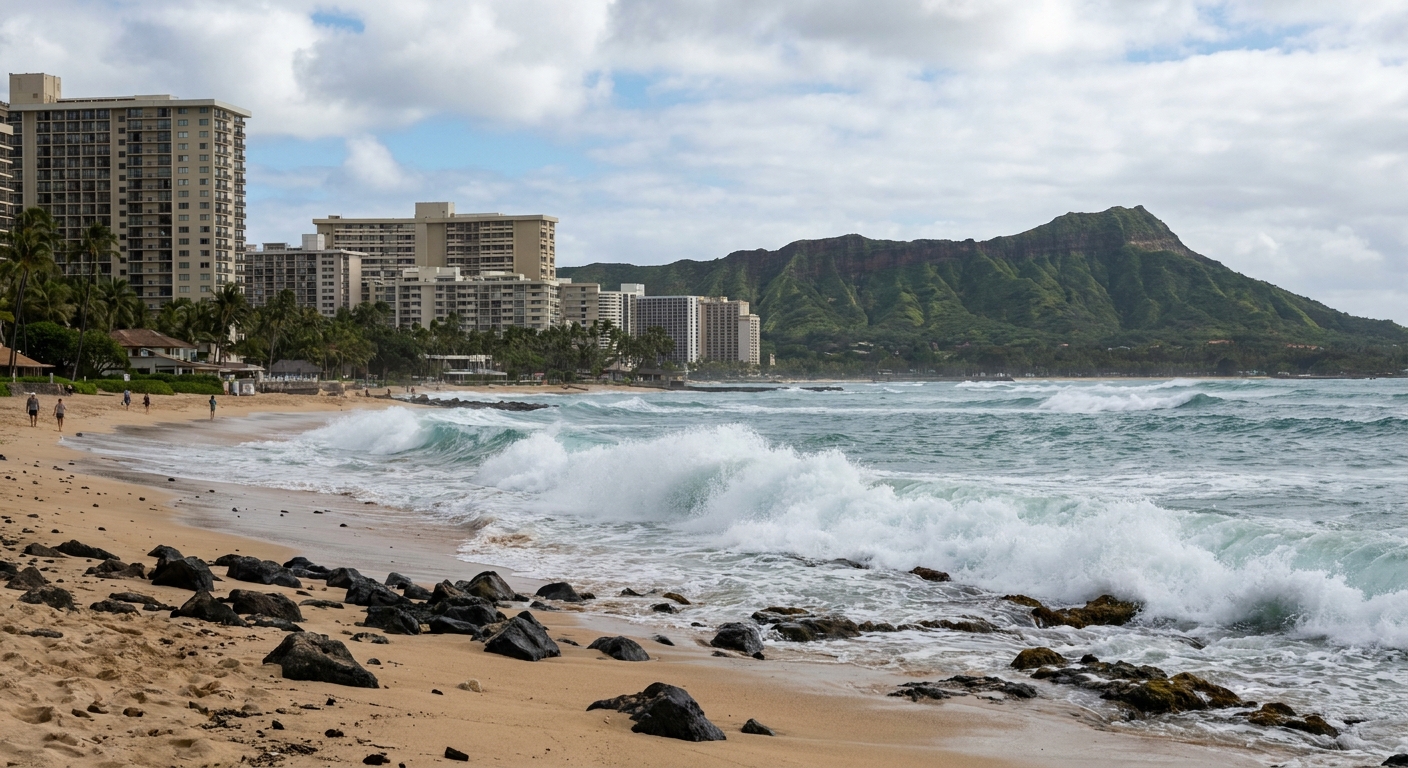
Oahu is the third-largest-feeling but most visited island of the Hawaiian chain, home to Honolulu, the state capital, and divided into distinct coasts that each have their own mood. Waikiki and Honolulu hold the south shore, the North Shore belongs to the surf towns, the windward side around Kailua and Kaneohe lies under the green Koolau cliffs, and the dry west coast is where Ko Olina sits.
The island is the busiest in Hawaii, and it feels like it. Waikiki is lively and walkable, with surf lessons at dawn and music drifting from open-air bars at dusk. Cross the island and the pace slows to roadside shrimp trucks, shave ice and fruit stands.
People who like a bit of city life with their beach will be happy here. Those who dream of empty roads and a single sleepy village may find the south shore too busy and will do better on the quieter coasts or another island.
What is there to do in Oahu?
Oahu gives you history, hiking, surf and lagoon beaches on one island, which is what sets it apart from its neighbors. Most of the visitors who come, more than any other island receives, add at least one other island to the trip.
Pearl Harbor and Honolulu
Pearl Harbor National Memorial is the island’s most moving stop. You take a boat out to the USS Arizona Memorial, where the quiet is broken only by the lap of water over the sunken ship. It is a solemn place, and the visitor center and the museum galleries ashore give the day its context.
It sits about half an hour from Waikiki by car, and Downtown Honolulu is even closer. Pair the harbor with a walk through the old downtown and a lunch in Chinatown, where the markets sell noodles, lei and tropical fruit. Bags are not allowed at the memorial, so travel light.
| Site | Open | Admission |
|---|---|---|
| Pearl Harbor National Memorial (USS Arizona programs) | 8 a.m. to last boat 3:30 p.m. | No entrance fee; $1 reservation fee on Recreation.gov; parking $7 a day |
| Diamond Head State Monument | 6 a.m. to 6 p.m. | $5 per person and $10 per vehicle, reserved in advance for non-residents |
| Hanauma Bay Nature Preserve | Wednesday to Sunday, entry 6:45 a.m. to 1:30 p.m. | $25 for non-residents 13 and over |
Diamond Head and Hanauma Bay
Diamond Head is the classic morning outing: a short but steady trail that climbs through old military tunnels to a summit with a sweeping view of Waikiki and the coastline. It takes roughly an hour and a half to two hours round trip, and the earlier you start, the cooler and quieter it is.
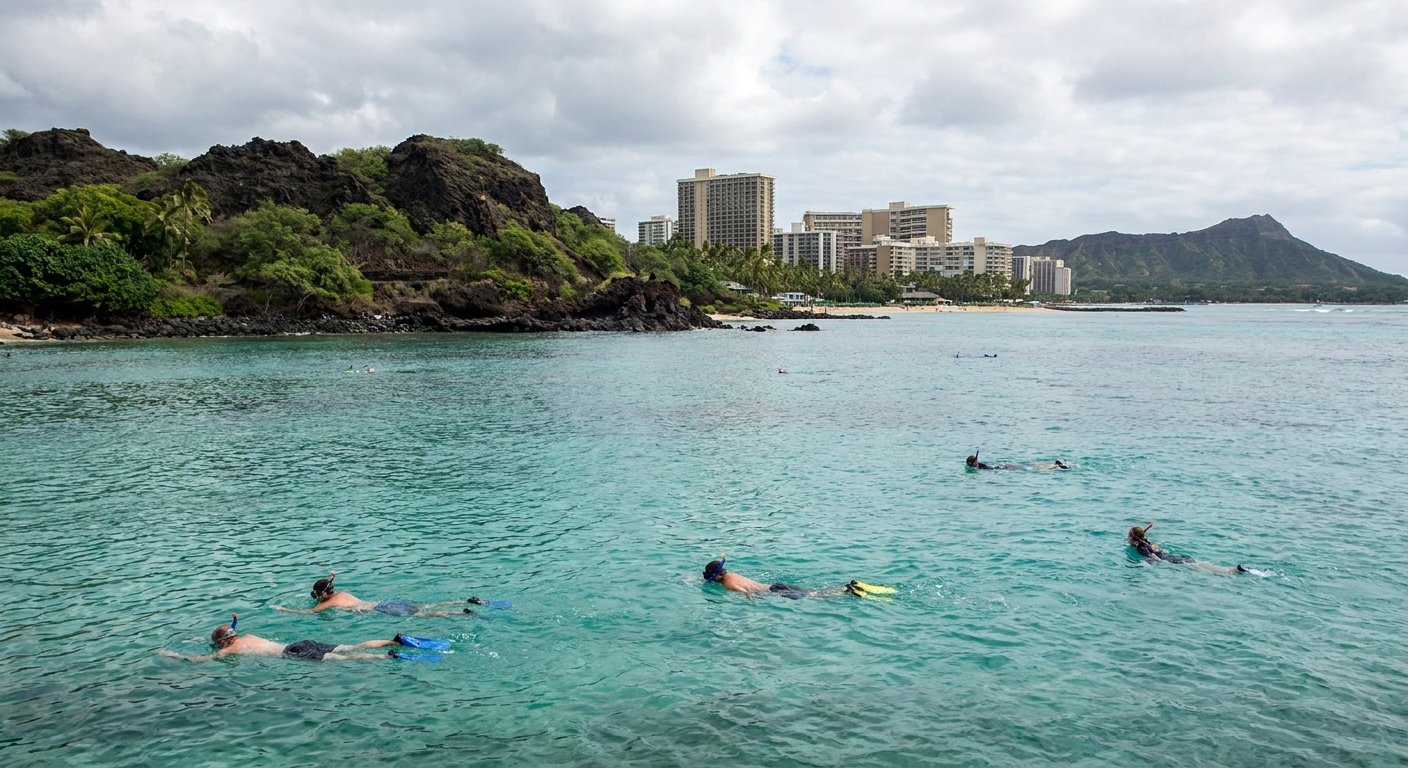
Hanauma Bay, a drowned volcanic crater with a protected reef, is the place for a first snorkel. Reservations open two days ahead, and the preserve is closed Mondays and Tuesdays. Both sites are about half an hour from Waikiki, so they pair well in one day, one early and one late.
The North Shore
The North Shore is surf country, with Haleiwa’s wooden storefronts, shrimp trucks and shave ice stands along the road. It lies about an hour from Waikiki, with Waimea Bay a bit farther. From November to February the waves here can reach thirty feet or more, and watching the surfers from the sand is the whole show. The Vans Triple Crown of Surfing runs in November and December.
Summer is a different story. The state says the water at Pupukea, with Waimea Bay, Three Tables and Sharks Cove, is generally calm from about May through October, and that in winter currents and waves become extremely dangerous. Whatever the season, read the posted warnings and the day’s surf before you swim. Keep your distance from sea turtles on the sand, at least 10 feet, and farther from monk seals.
Windward Oahu and Ko Olina
On the windward side, Kailua and Lanikai have soft sand and views of the two Mokulua islets, a seabird sanctuary. Visitors stay below the high-water mark, and the islets close from sunset to sunrise. Kualoa Ranch and the Nuuanu Pali Lookout are the scenic stops along the cliffs, with the Polynesian Cultural Center farther up the coast.
For the opposite mood, Ko Olina on the dry west coast offers four man-made lagoons strung along seaside paths, a resort setting that is easygoing for families. It is about 45 minutes from Waikiki, and mornings here are usually sunny, thanks to the leeward air.
How many days do you need in Oahu?
A long weekend covers the essentials, but a week lets Oahu show its different faces. In a short stay you can pair Waikiki with Pearl Harbor, a Diamond Head sunrise and one day on the North Shore.
With more days, add Hanauma Bay, a windward day around Kailua and Kualoa, and a slow afternoon in the lagoons of Ko Olina. Those with a full week can also take a short inter-island flight to a neighbor island, since the islands are linked by quick flights and no car ferry.
Where to stay in Oahu
Waikiki is the practical base for a first visit: beach in front, restaurants at the door, and the sights on the south shore within easy reach. Honolulu proper suits those who want a more local feel and fewer resort towers.
The North Shore suits surfers and travelers who like a rural, slower pace, with beach rentals and the Turtle Bay area. Kailua and Kaneohe have a residential, green setting on the windward side. Ko Olina, on the leeward coast, is a self-contained resort for families who want calm lagoons and sunshine. Hotel stays carry Hawaii’s state and city accommodations taxes.
How do you get to Oahu and get around?
Most visitors fly into Honolulu International Airport from the mainland, about half an hour by car from Waikiki. The TheBus W Line also runs from the airport via Downtown Honolulu, Kakaako and Ala Moana Center to Waikiki, every 10 minutes at weekday peaks, 15 off-peak and 30 after 7 p.m. Luggage is limited to one medium suitcase and one small carry-on that fit at your seat.
Within Waikiki and Honolulu you can walk or ride the bus. TheBus fare is $3.00 for an adult, with 2.5 hours of unlimited transfers, capped at $7.50 a day. A rental car makes sense for the North Shore, the windward coast and Ko Olina, where drives run from 45 minutes to about an hour and a quarter from Waikiki, depending on traffic.
When is the best time to visit Oahu?
May through October is the drier, hotter half of the year, and it is when the North Shore water is generally at its calmest, so summer suits beach days and snorkeling. Winter, from November to April, is cooler and wetter, especially on windward coasts, though Waikiki and the leeward side stay mostly sunny.
The big-wave season on the North Shore, from November to February, draws surf fans, with the Vans Triple Crown running in November and December. The Honolulu Marathon fills the city in December, and the winter holidays, summer family weeks and mainland spring break are the busiest stretches.
The Central Pacific hurricane season runs from June 1 to November 30. Humpback whales visit in winter, a reason to come in the cooler months.
Good to know before you go
Oahu is a U.S. state, so there is no passport or visa, and you pay in dollars. Lock your car and keep valuables out of sight at trailheads and beach parking lots. Respect the land, which is sacred to many Native Hawaiians, and stay off the reef.
| Fee | Amount | Who pays |
|---|---|---|
| State transient accommodations tax | 11% | Hotel guests |
| Oahu Transient Accommodations Tax | 3% | Hotel guests |
Sources
- DBEDT (Hawaii Department of Business, Economic Development & Tourism), press release « Visitor Spending Increased in December 2025 », dbedt.hawaii.gov/blog/26-04, checked September 24, 2026
- NWS Honolulu (HFO), Climate of Hawaii, checked September 24, 2026
- Hawaii Visitors and Convention Bureau, map Driving Times from Waikiki (gohawaii.com/sites/default/files/oahu_drive_map.pdf, edition 2010), checked September 25, 2026
- TheBus, TheBus Fares effective January 7, 2024 (thebus.org/Fare/TheBusFares20240701.asp), checked September 25, 2026
- Hawaii DOT Airports, HNL, The Bus and Skyline (airports.hawaii.gov/hnl/the-bus-and-skyline), checked September 25, 2026
- NPS, Pearl Harbor National Memorial, pages Fees & Passes and Basic Information, checked September 25, 2026
- Hawaii DLNR, Division of State Parks, Diamond Head State Monument, checked September 25, 2026
- City and County of Honolulu, DPR, Hanauma Bay Nature Preserve, checked September 25, 2026
- Hawaii DLNR, Division of Aquatic Resources, Oahu – Pupukea MLCD, checked September 25, 2026
- Hawaii Tourism Authority, Go Hawaii, North Shore Oahu (gohawaii.com/islands/oahu/regions/north-shore), checked September 25, 2026
- Ko Olina Resort, Lagoons (koolina.com/destination/lagoons) ; HVCB, map Driving Times from Waikiki, checked September 25, 2026
- Hawaii DLNR, Division of Forestry and Wildlife, Oahu Offshore Islet Seabird Sanctuaries, checked September 25, 2026
- Hawaii Department of Taxation, Announcement 2025-03 ; City and County of Honolulu, BFS, OTAT FAQ, checked September 25, 2026
- NOAA Fisheries, Viewing Marine Wildlife in Hawaii, checked September 25, 2026
- NWS Honolulu / Central Pacific Hurricane Center, « 2026 Central Pacific Hurricane Season Outlook », weather.gov/hfo/hurricaneOutlook2026, checked September 24, 2026
To plan your stay
- Best Time to Visit Hawaii: Seasons, Weather by Island, Whales and Crowds
- Where to Stay in Hawaii: Choosing an Island, Oahu to Kauai Bases and the Hotel Tax
- Getting Around Hawaii: Interisland Flights, TheBus and Skyline, Rental Cars and Taxi Fares
- Know Before You Go to Hawaii: Agriculture Form, Sunscreen Law, Reservations and Taxes