
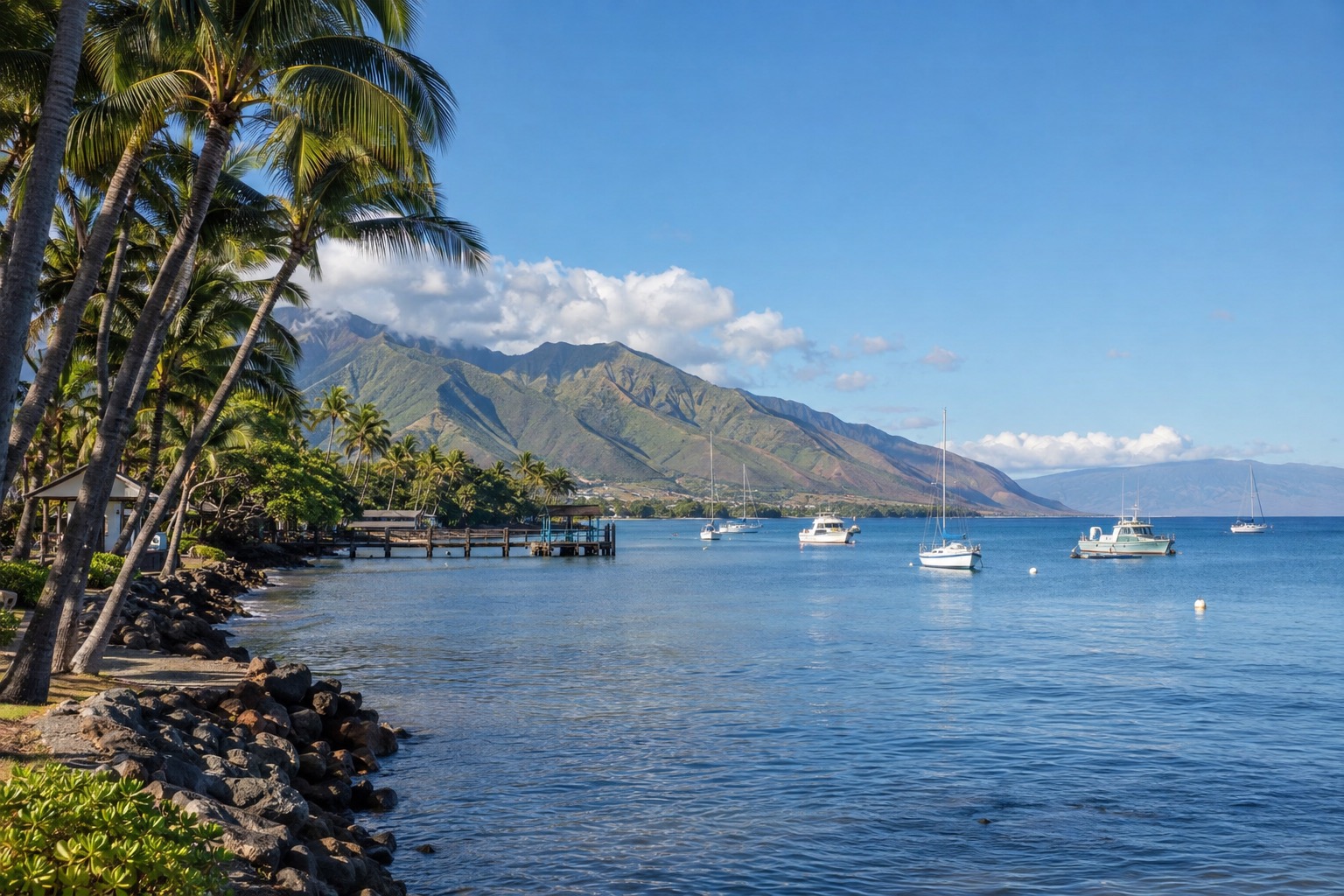
In Lahaina the afternoon light turns the sea toward Lanai a hammered gold, and from December on a humpback tail slaps the water offshore while diners at the harbor stop mid-bite to look. The year here has two moods: a long, dry, sunny stretch that runs through summer and into fall, and a softer winter with passing showers and whales. The west side of Maui sits in the rain shadow of the mountains, so this is the sunny side of the island, and the hot months are the ones that feel most like a classic beach vacation.
When is the best time to visit Lahaina?
The best time is May, June, September and October for most travelers, with December to March the pick for anyone who wants whales and does not mind a few showers. Those shoulder months bring sunshine, warm evenings and lighter crowds than the holiday weeks.
For beach and sea days, late spring through early fall is hard to beat: dry, hot afternoons and water warm enough to stay in for a long time. West-facing shores like Kaanapali and Napili tend to be gentler in summer, when the bigger surf is on south-facing shores. At the beach entrance, posted signs and the day’s surf and currents tell you where to swim, and swim near a lifeguard only where one is on duty.
For sightseeing, winter has its own pull. Humpback whales pass close to shore, the West Maui Mountains turn green after the rains, and mornings are cool enough for a long walk along Front Street or a drive up the coast. Showers tend to be short, and the sun usually returns within the hour.
Families should know that March is spring break season, and the beaches, restaurants and pools fill with mainland vacationers and a lot of noise. Summer is the other family peak, when school is out, so rooms and rental cars go early. Travelers after quiet and easier room hunting do best in late April, May, September and early November.
Lahaina weather by month
Lahaina is warm all year, and the real difference between months is how many afternoons bring a shower.
| Month | Average high (°F) | Average low (°F) | Rain (in) | Rain days | Sea (°F) |
|---|---|---|---|---|---|
| January | 79.0 | 65.7 | 3.51 | 5.6 | 77.9 |
| February | 79.0 | 65.8 | 2.43 | 5.3 | 76.8 |
| March | 79.4 | 66.1 | 3.92 | 7.3 | 77.0 |
| April | 81.0 | 67.5 | 2.22 | 5.7 | 77.7 |
| May | 83.0 | 68.8 | 1.49 | 4.2 | 79.1 |
| June | 85.0 | 70.4 | 1.07 | 3.7 | 79.9 |
| July | 85.8 | 71.5 | 1.58 | 4.5 | 80.5 |
| August | 86.2 | 72.1 | 1.37 | 3.5 | 81.1 |
| September | 86.6 | 72.0 | 1.22 | 2.9 | 81.6 |
| October | 85.1 | 71.4 | 2.23 | 3.9 | 81.2 |
| November | 82.0 | 69.7 | 2.88 | 6.1 | 80.1 |
| December | 79.8 | 67.6 | 3.85 | 7.5 | 78.8 |
The year divides into a hot, mostly dry half and a cooler, wetter one. From June to October, days are sunny and hot with only a few light showers.
From November to March, rain comes in short passing showers and the occasional gray day when a cold front moves through, with December and March the wettest of the lot. Even then, mornings are often clear, and the leeward coast stays far sunnier than the windward side of the island.
When is Lahaina cheapest and least crowded?
The quietest stretches are late April through May, and then September through mid-November, when school is in session on the mainland and the beaches have room to spare. Rooms are easier to find in those weeks, and restaurants rarely need a long wait.
The busiest weeks are Christmas and New Year, the weeks of spring break in March, Easter week and the school-vacation stretch of summer from about mid-June to early August. Long holiday weekends such as Presidents Day, Memorial Day and Thanksgiving also bring a rush. Peak-season rates and sold-out rooms are common in those weeks, and the busiest beaches fill up by late morning.
Which months should you avoid in Lahaina?
No month is truly one to skip, but a few have drawbacks worth knowing, depending on what you want from the trip.
The Central Pacific hurricane season runs from June 1 to November 30. Hawaii is rarely hit, and most days in those months are plain sunny, but it is the stretch when a distant storm can send swell or change flight plans. Outside it, from December to May, the risk shifts to wetter weather and bigger winter surf on north-facing shores.
December and March are the wettest months in the table, though the rain comes as short showers rather than all-day downpours. At the other end, August and September are the hottest, with afternoons that call for shade, a hat and long pauses in the water. If heat bothers you, the shoulder months are gentler.
When can you swim in Lahaina?
You can swim in Lahaina all year, since the sea stays in a warm range from winter through fall.
The water is at its coolest in February and warmest from August to October, but even the coolest month is comfortable for most people with a short dip. Summer usually means smoother conditions on the west-facing beaches, good for snorkeling in the morning before the wind picks up. Winter can bring bigger swell and stronger shore break, and conditions change from morning to afternoon, so read the posted warnings and the day’s surf and currents before you go in, and swim near a lifeguard only where one is on duty.
Festivals and events in Lahaina through the year
Whale season and the winter holidays
Humpback whales return to the warm waters off West Maui in winter, and the channel between Maui, Lanai and Molokai is one of the best places in Hawaii to see them. From shore you watch for blows and breaches, and whale-watching boats leave from the harbor in Lahaina and nearby. Mornings are often calmest on the water.
The season overlaps with Christmas and New Year, when hotels glow with lights, Front Street fills up with strollers and the sunset gets a festive crowd. It is the time of year for cool evenings, hot chocolate by the water and families on their longest vacation of the year. Reserve early, because this is the tightest stretch for rooms.
Spring and early summer traditions
May 1 is Lei Day across Hawaii, with lei-making, hula and flower garlands in parks and hotel lobbies. On June 11, Kamehameha Day brings parades, floral lei draped on statues and family picnics, a local public holiday that feels like a neighborhood celebration.
In between, spring break fills the beaches in March, and by Memorial Day the island settles into its summer routine of long days and lingering sunsets. It is a good time for luaus, sunset sails and slow evenings with music at the harbor.
Fall on the water
Fall brings some of the calmest, clearest days of the year, with the warmest sea and fewer visitors. Mornings are for snorkeling and paddling, afternoons for shade, shave ice and a long look at Lanai across the channel.
In October the Ironman World Championship takes place on the Big Island, and some travelers pair a Maui stay with a flight over to watch. Back in Lahaina, Halloween is a big night on Front Street, where costumed families and visitors stroll the lit-up block.
Sources
- NOAA NCEI, monthly normals 1991-2020, station USC00513317, checked September 8, 2026
- Open-Meteo Marine API, average 2015-2024, checked September 8, 2026
- sunrise-sunset.org, sunrise and sunset calculated for the 15th of the month, checked September 8, 2026
- NWS Honolulu / Central Pacific Hurricane Center, « 2026 Central Pacific Hurricane Season Outlook », weather.gov/hfo/hurricaneOutlook2026, checked September 24, 2026