
FLORIDA · SEPTEMBER · BIG CYPRESS NATIONAL PRESERVE
September finds Big Cypress National Preserve deep in its wet season. Cypress strands stand in water along the Tamiami Trail, and thunderheads usually build after lunch. Daylight still runs past 12 hours, and anyone on US 41 at sunrise gets the coolest hours of the day.
It is also the peak of the Atlantic hurricane season, which runs June 1 to November 30 and crests around September 10, as our Florida orientation sets out. Plan two days and one or two nights, book everything on cancellable terms, and fly into Miami (MIA) or Fort Lauderdale (FLL) from the east or Fort Myers (RSW) from the west. Our Florida flights guide sorts the airports.
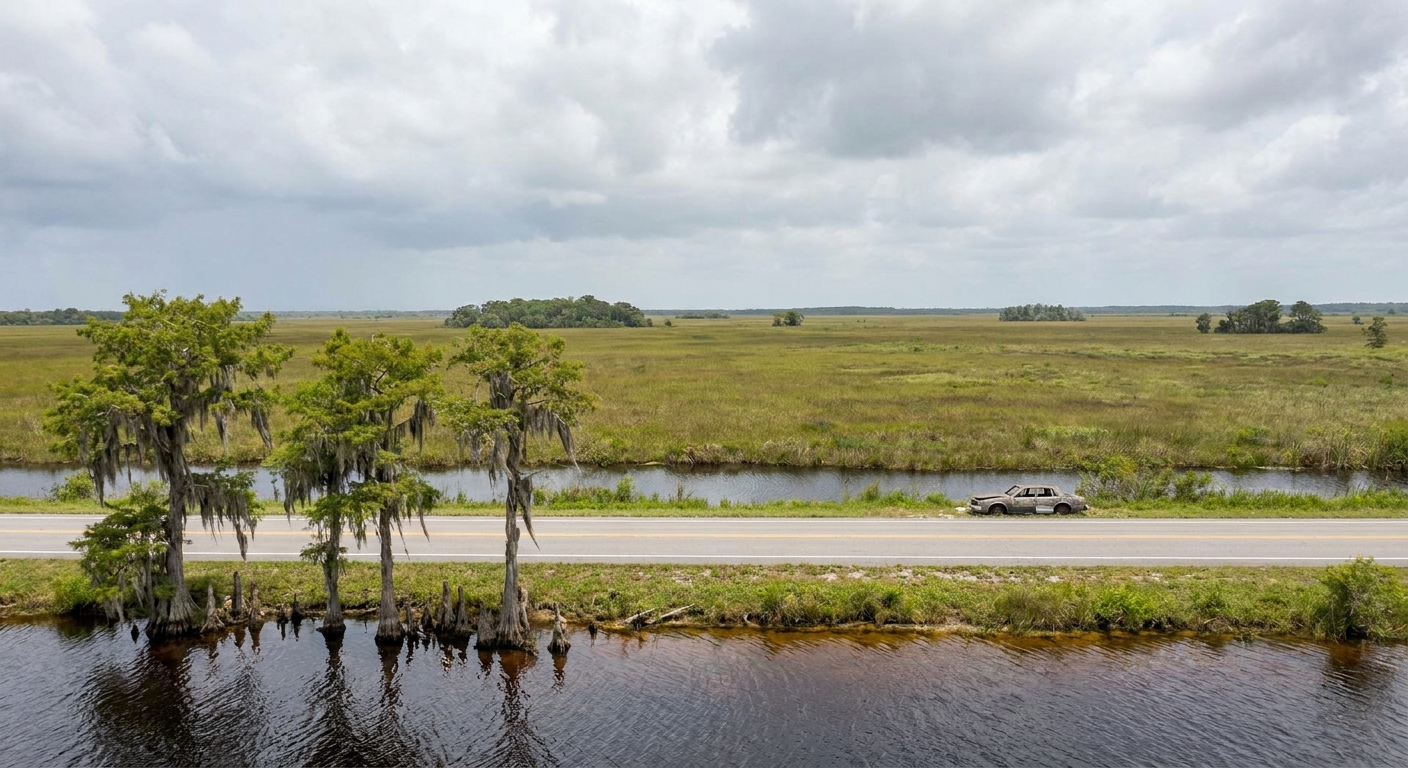
SEPTEMBER AT A GLANCE · BIG CYPRESS NATIONAL PRESERVE
Go in September for the preserve at its wettest, but book cancellable, drive in the mornings and keep the afternoons free for storms.
WET SEASON · HURRICANE PEAK AROUND SEPT 10 · MIAMI STATION NORMALS
Go for: a swamp in full wet-season condition, long days with a 7:25 pm sunset, and a Tamiami Trail drive built around morning boardwalks.
Think twice before: booking non-refundable in the hurricane season’s peak month, or planning long midday hikes when inland afternoons run hotter than the 89.0°F coastal normal.
Climate: NOAA NCEI 1991–2020, Miami station · Light: sunrise-sunset.org · Hurricanes: NOAA NHC via our Florida guide
On this page
- Big Cypress weather in September89.0°F highs, 13.1 rain days, a 7:25 pm sunset
- How hot is Big Cypress in September?A 12.1°F gap between day and night
- Crowds, prices and booking in SeptemberWet season, hurricane peak, refundable rates
- Things to do in Big Cypress in SeptemberOasis, Kirby Storter, Turner River Road and Loop Road
- A two-day Big Cypress itinerary for SeptemberTwo days planned around a 7:05 am sunrise
- Big Cypress in September vs August and OctoberOctober runs 3.1°F cooler with 4.1 fewer rain days
- Is September a good time to visit Big Cypress?Who should go, and who should wait for October
Every figure here, unless marked, is a 1991–2020 NOAA NCEI normal from station USW00012839 in Miami, an official thermometer on the coast. The preserve lies inland along the Tamiami Trail, where summer afternoons run hotter than the city’s. Expect the preserve’s afternoons to top the highs below.
Big Cypress National Preserve weather in September: average highs, lows and rain days
| September normal | Miami station, 1991–2020 |
|---|---|
| Average high | 89.0°F |
| Average low | 76.9°F |
| Precipitation | 10.22 in |
| Days with 0.10 in or more | 13.1 |
| Days with 1 in or more | 3.3 |
| Daylight, Sept 15 | 12 h 20 min |
| Sunrise / sunset, Sept 15 | 7:05 am / 7:25 pm EDT |
NOAA’s National Centers for Environmental Information put an average September at 89.0°F by day and 76.9°F at night, with 10.22 inches of rain, over the 1991–2020 period at the Miami station. These are station normals from a physical thermometer rather than a gridded reanalysis. Against the normals on our August page, highs drop 1.7°F and rainfall climbs by 0.64 inch.
Rain of at least 0.10 inch falls on 13.1 days of an average September, roughly three days in seven. Over a two-day visit, at least one rainy day is more likely than not. Florida’s wet season runs on afternoon thunderstorms, so schedule the boardwalks and the drives before lunch and keep the car close as shelter.
Nights at the Miami station average 76.9°F, so no evening calls for a sweater. Pack a light long-sleeved shirt and long pants against sun and mosquitoes, a rain shell that folds into a pocket, a hat and more water than feels necessary for a car day on the Tamiami Trail. Sandals that can get wet serve better than sneakers at a soggy roadside pull-off.
September 15 brings about 12 hours 20 minutes of daylight. Sunrise comes at 7:05 am and sunset at 7:25 pm Eastern Daylight Time (11:05 and 23:25 UTC). Use the first hour after dawn for walking, when temperatures sit near their daily low, and plan to leave the unpaved roads before the light fades after 7:25 pm.
How warm is Big Cypress National Preserve in September?
At the Miami station the month swings from a 76.9°F average low to an 89.0°F average high, a gap of 12.1°F. Inland afternoons at the preserve run hotter than that coastal high.
Mornings call for a breathable long-sleeved shirt, repellent and a hat from sunrise on. By afternoon, keep the same shirt, add a rain shell within reach and let the car’s air conditioning carry you between stops. Put any walk longer than a boardwalk loop before noon, and after lunch choose stops a few steps from where you park.
Our sources carry no count of freezing nights for September. With the average low at 76.9°F in Miami, frost plays no part in planning this month. The NOAA note on inland nights running colder than the city’s applies to winter.
How busy is Big Cypress National Preserve in September? Crowds and prices
Florida’s travel season runs November through April, the dry months our Florida timing guide centers on, and September falls in the wet season at the hurricane peak. We found no occupancy series or monthly room rates for the towns around the preserve, so we crown no month cheap or expensive.
Our Florida orientation lists a non-refundable September booking among first-timer mistakes, since the season’s statistical peak lands mid-month. Reserve rooms and the rental car on cancellable terms, and check the National Hurricane Center outlook before you fly.
We could not verify the tourist-development tax rate for the counties around the preserve, so we give no percentage. Ask for the all-in nightly total, taxes and any resort fee included, before you confirm.
Pay extra for a flexible rate, the one upgrade that changes a September trip. A refundable room or a car with free cancellation usually costs more at booking and lets you cancel without losing the money if a storm tracks toward south Florida. For the other budget lines, see our Florida trip-cost guide and where to stay in Florida.
Things to do in Big Cypress National Preserve in September
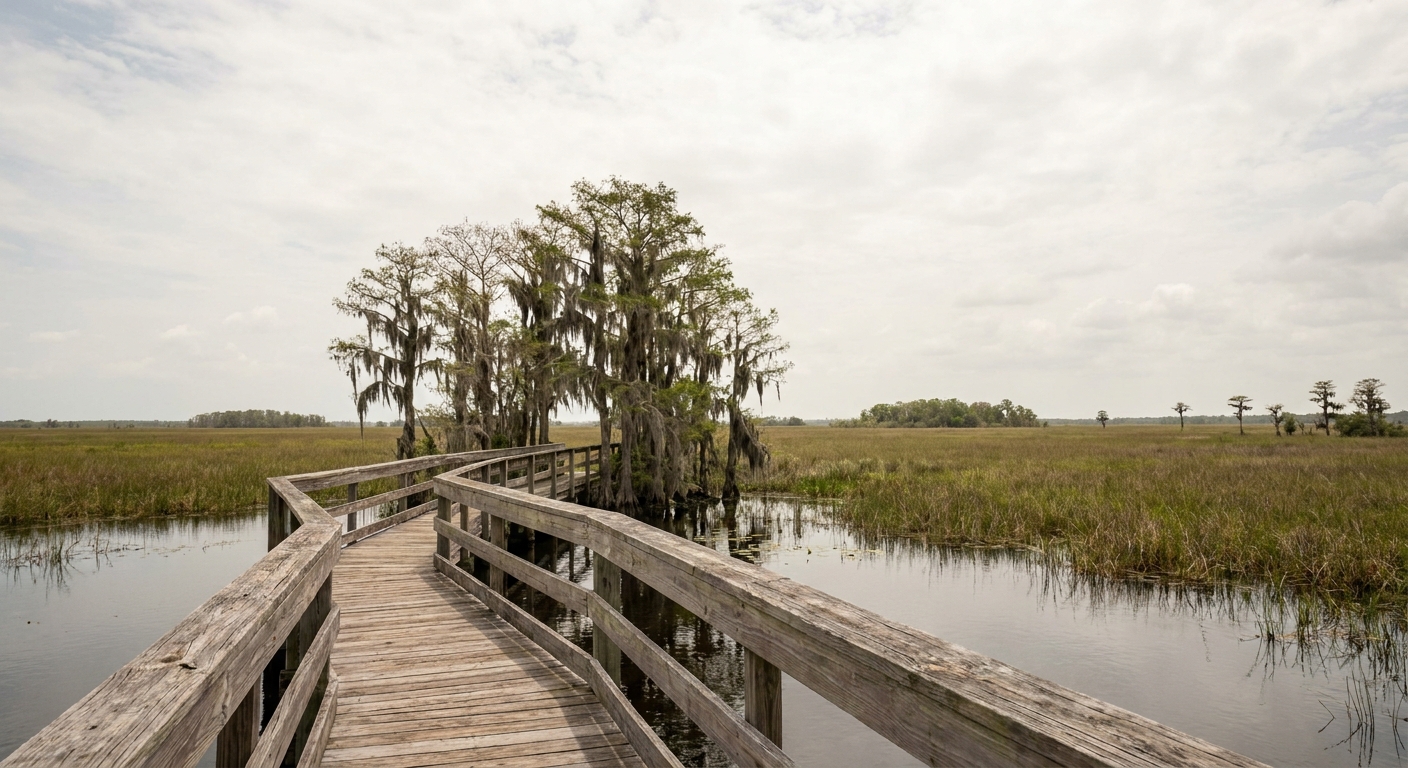
September brings the heaviest rain of the late-summer months, and the swamp looks it: water under the cypress, green growth everywhere. Animals behave differently, too. In the dry season they gather around shrinking water, as our Everglades guide explains, while in September the water and the wildlife spread across the swamp. Come for the wet-season landscape and count any alligator as a bonus.
Along the Tamiami Trail (US 41), the Big Cypress Swamp Welcome Center and the Oasis Visitor Center are the two visitor centers. Kirby Storter Roadside Park has a boardwalk into a cypress strand, and H.P. Williams Roadside Park sits at the start of Turner River Road. Loop Road leaves US 41 for a scenic drive through the southern preserve, much of it unpaved. Check the NPS Big Cypress site the week you go for September hours, boardwalk lengths and parking counts.
At 89.0°F on the coastal normal, and hotter inland, a boardwalk at 2 pm is a different outing from the same boardwalk at 8 am. Loop Road and Turner River Road can turn soft and puddled after a heavy afternoon storm. Drive them in the morning in a standard rental car, and turn back where standing water covers the road.
We could not confirm entrance or ranger-program fees for September, so we list nothing as free. The visitor centers on US 41 are the places to ask, and our Florida national parks guide places the preserve among the state’s federal sites.
Big Cypress National Preserve in September: a two-day itinerary
Day one. Be on US 41 for the 7:05 am sunrise. From 7:30 to 10 am, walk the Kirby Storter boardwalk, then stop at the Oasis Visitor Center once it opens (confirm hours with NPS). Late morning, drive Turner River Road from H.P. Williams Roadside Park while the surface is dry. Spend the hottest hours over lunch indoors, return to the roadside pull-offs once the afternoon storm passes, and stay out for the light before the 7:25 pm sunset.
Day two. Start Loop Road at first light and finish it by late morning, then head west to the Big Cypress Swamp Welcome Center. If the sky turns, swap the order: exhibits during the storm, the drive once it clears, and no unpaved roads after a downpour. If the National Hurricane Center issues a watch for south Florida, drop the day and head for your airport early. Our Florida road-trip guide links the preserve to the Everglades and the Gulf coast.
Big Cypress National Preserve in September vs August and October
| Miami station normal, 1991–2020 | August | September | October |
|---|---|---|---|
| Average high | 90.7°F | 89.0°F | 85.9°F |
| Average low | 77.7°F | 76.9°F | 74.2°F |
| Precipitation | 9.58 in | 10.22 in | 7.65 in |
| Days with 0.10 in or more | 13.3 | 13.1 | 9.0 |
| Day-night gap | 13.0°F | 12.1°F | 11.7°F |
At the Miami station, highs run 90.7°F in August, 89.0°F in September and 85.9°F in October, with lows of 77.7°F, 76.9°F and 74.2°F. The day-night gap narrows from 13.0°F to 12.1°F to 11.7°F. September is the wettest of the three at 10.22 inches, against 9.58 in August and 7.65 in October, while rain days barely move from August (13.3 against 13.1) before dropping to 9.0 in October.
Going four weeks earlier trades 0.64 inch less rain for 1.7°F more heat by day, inside the same hurricane season. Going four weeks later, to October, takes 3.1°F off the high, 2.57 inches off the rain and 4.1 days off the rain count. You give up some of the wet-season water, and October still sits inside the June 1 to November 30 hurricane window.
Is September a good time to visit Big Cypress National Preserve?
Yes, for travelers who can book refundable, start at dawn and enjoy a swamp in its wettest state: road-trippers crossing the Tamiami Trail and photographers chasing storm light. No, for anyone on fixed non-refundable dates, anyone who wilts on an 89.0°F afternoon, or a family whose goal is the most alligators per hour.
If the answer is no, pick October: 3.1°F cooler by day and 4.1 fewer rain days at the Miami station. For wildlife, wait for the December to April dry season that our Everglades guide recommends, and read our Florida safety guide before any storm-season trip.
Neither neighbor matches it for rain: at the Miami station, September out-rains both August and October.
The last word
Book September on cancellable terms and give the preserve its mornings. An inch or more of rain falls on 3.3 days of an average September at the Miami station, roughly one day in nine, so put Loop Road and the boardwalks right after the 7:05 am sunrise and keep the afternoons open.
Sources & data for this guide
- September, August and October normals (highs, lows, precipitation, rain days) · NOAA NCEI monthly normals 1991–2020, station USW00012839, Miami · checked Sep 24, 2026
- Inland caveat (hotter summer afternoons, colder winter nights than Miami) · NOAA NCEI, same station · checked Sep 24, 2026
- Daylight, sunrise and sunset on Sept 15 (UTC, converted to EDT) · sunrise-sunset.org · checked Sep 24, 2026
- Hurricane season dates and Sept 10 peak · NOAA National Hurricane Center, via our Florida orientation · checked Sep 24, 2026
- We found no sea-surface series, occupancy data, lodging-tax rate, or NPS hours and fees for September, so we give no figures for them. Our numbers come from a coastal station, and the preserve’s inland afternoons run hotter · check NPS before you go.
To plan your stay
- Best Time to Visit Big Cypress National Preserve: Dry Season Months, Summer Heat and Rainfall
- Big Cypress National Preserve in August: Weather, Rain Days, Crowds and a Two-Day Plan
- Big Cypress National Preserve in October: Weather, Rain Days and Crowds vs September and November
- Big Cypress National Preserve in July: Weather, Rain Days, Crowds and a Two-Day Itinerary