
FLORIDA · BIG CYPRESS NATIONAL PRESERVE · AUGUST
August is Big Cypress National Preserve at full summer strength. The NOAA normals below put the average afternoon at 90.7°F and the average night at 77.7°F, with 9.58 inches of rain across the month. Along the Tamiami Trail, the swamp looks the part: cypress trunks rising out of standing water, sawgrass green out to the horizon, thunderheads stacking up over the open prairie by early afternoon.
The month gives you that high-water landscape and long days. It takes away comfort after lunch, when Florida’s wet-season thunderstorms tend to build. A two-day trip fits August well: mornings on boardwalks and gravel drives, afternoons in the car or indoors, evenings back out for the light. Shifting the dates to July or September comes down to a couple of inches of rain and a couple of degrees, both compared below.
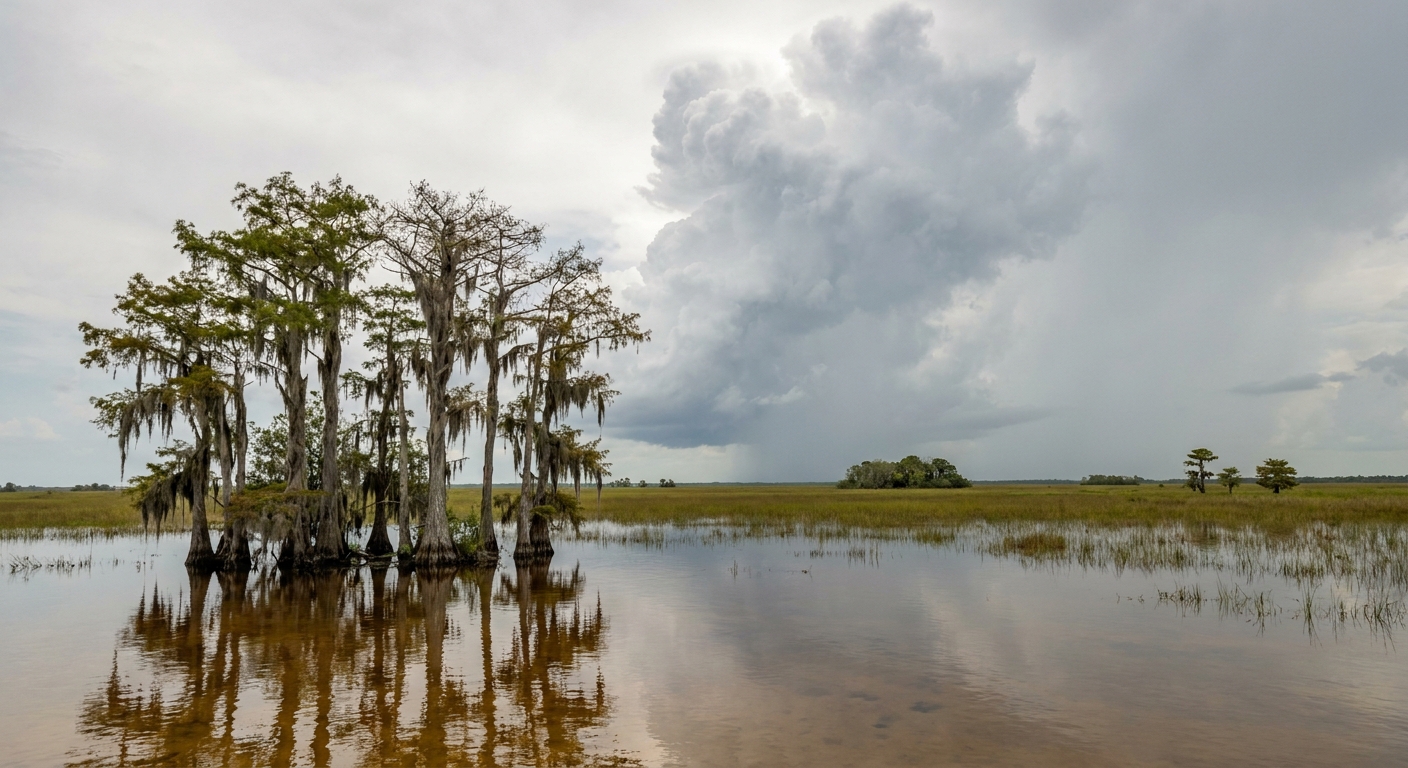
AUGUST AT A GLANCE · BIG CYPRESS NATIONAL PRESERVE
Go in August for the swamp in standing water and dawn starts, and skip it if midday hiking is the plan: 13.3 rain days and 90.7°F coastal highs set the schedule.
WET SEASON · NOAA MIAMI STATION NORMALS · 2 DAYS · CAR ESSENTIAL
Go for: the swamp in standing water, sunrise boardwalks, storm-watching along US 41 and 13 hours 04 minutes of daylight.
Think twice before: planning midday hikes or a wildlife-count trip. Expect 13.3 rain days, coastal highs of 90.7°F that run hotter inland, and hurricane season from June 1 to November 30.
Climate: NOAA NCEI 1991-2020, Miami station · Daylight: sunrise-sunset.org · full sources at the end
On this page
- Big Cypress weather in August90.7°F highs and 13.3 rain days
- How warm are August nights?Lows of 77.7°F at the Miami station
- Crowds and hotel prices in AugustWet season, hurricane season and refundable rates
- Things to do in AugustKirby Storter, Oasis and Loop Road
- A two-day August itinerarySunrise starts at 6:52 a.m.
- August vs July and September2.22 more inches of rain than July
- Is August a good time to visit?Yes for drivers and early risers
The preserve straddles US 41, the Tamiami Trail, between Miami and Naples, so you fly into one of their airports: our flights guide weighs MIA against RSW. You will need a car, and our getting-around guide covers rentals and electronic tolls. For a bed at either end of the drive, start with where to stay in Florida.
Big Cypress National Preserve weather in August: average highs, lows and rain days
| August normal | Value |
|---|---|
| Average high | 90.7°F |
| Average low | 77.7°F |
| Precipitation | 9.58 in |
| Days with 0.10 in or more | 13.3 |
| Daylight, August 15 | 13 h 04 min |
| Sunrise and sunset, August 15 | 6:52 a.m. and 7:57 p.m. EDT |
| Station | NOAA NCEI USW00012839, Miami (coastal) |
Every figure here comes from one thermometer: the NOAA NCEI 1991-2020 monthly normals for station USW00012839 in Miami. That is an official station reading from a real instrument, and it gives August an average high of 90.7°F, an average low of 77.7°F and 9.58 inches of precipitation. Miami, though, sits on the coast. The preserve lies inland on the Tamiami Trail, where summer afternoons run hotter than the city’s, so expect the boardwalk at 2 p.m. to feel warmer than 90.7°F.
In an average August, 13.3 days record at least 0.10 inch of rain, so measurable rain falls on about three days in seven. Few of those are washed-out days. South Florida’s wet season runs on the afternoon thunderstorm (our Florida overview sets out the two seasons), which is why the outdoor miles belong in the morning and the early afternoon is the time to be near the car.
Between the 77.7°F night and the 90.7°F afternoon, the swing is 13 degrees, and none of it calls for a sweater. Pack for sun, rain and bugs: a lightweight long-sleeved shirt and long pants against mosquitoes, a packable rain shell, a hat, and more drinking water than you would carry on the coast. Shoes that tolerate wet gravel suit Loop Road and Turner River Road better than sandals.
On August 15 the preserve gets about 13 hours 04 minutes of daylight. Converted from sunrise-sunset.org’s UTC figures to Eastern Daylight Time, the sun rises at 6:52 a.m. and sets at 7:57 p.m., so usable light holds until close to 8 p.m. For heat and storms, the best windows are the first hours after sunrise and the last hour before sunset.
How warm is Big Cypress National Preserve in August?
The average high of 90.7°F works out to 32.6°C, and the average low of 77.7°F to 25.4°C: a gap of 13.0°F between the warmest and coolest points of a normal August day at the Miami station. Inland on the preserve, the afternoon end of that range is the one to adjust upward.
In practice you wear the same outfit morning and afternoon, and a dry shirt waits in the trunk. Start at dawn in long sleeves for the mosquitoes, with a hat and a full bottle. By early afternoon the plan moves to the car’s air conditioning, a visitor center or the hotel pool, with the rain shell on the back seat.
We have no count of freezing nights for August, and with an average low of 77.7°F at the Miami station, frost does not come into August planning.
How busy is Big Cypress National Preserve in August? Crowds and prices
August falls in Florida’s wet season, outside the November-to-April dry season that built the state’s winter travel (our best-time guide covers both). We found no occupancy series and no monthly room-rate data for the Tamiami Trail corridor, so we crown no month cheapest and no month busiest.
We could not verify how far ahead August rooms fill in Naples or Miami, so we give no number of weeks. Hurricane season runs June 1 to November 30, as our Florida overview notes, and an August booking sits inside it. Book the room once your flights are set, and keep it cancellable.
We could not verify the lodging-tax rate for hotels at either end of the drive, so we give no percentage. Ask for the all-in nightly total when you book, taxes and any resort fee included. Our Florida trip-cost guide covers resort fees and parking.
The one line where paying more changes an August trip is flexibility: a refundable room and a rental car you can cancel. If a tropical system lines up with your dates, that booking lets you move the trip without losing the deposit. Our Florida safety guide covers what to watch before you leave.
Things to do in Big Cypress National Preserve in August
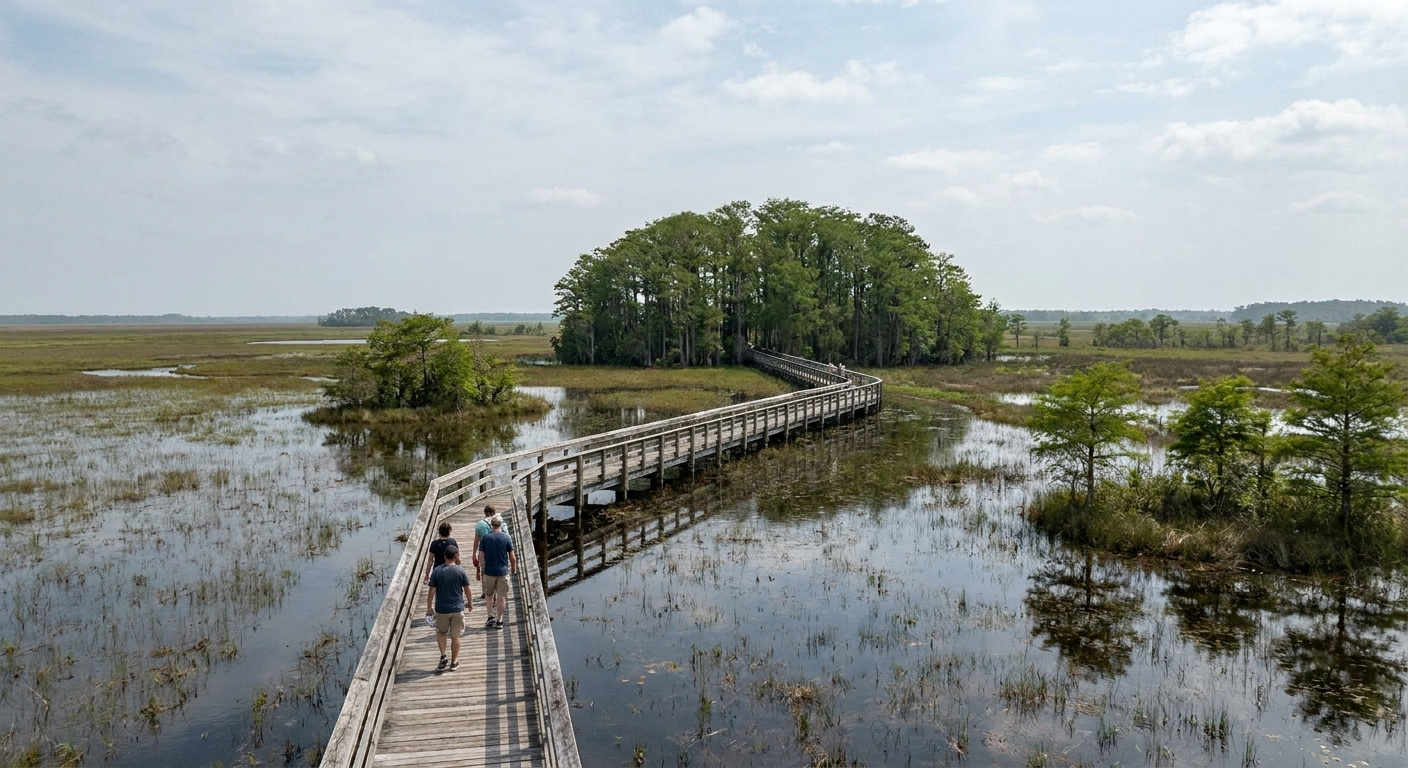
August lets you see Big Cypress under water. The cypress strands and prairies hold the summer’s rain, 9.58 inches of it in a normal month at the Miami station, and wet-season storms roll across the open sawgrass where you can watch them from the road. In the dry season, wildlife gathers at the remaining water, as our Everglades guide explains for the park next door, so an August visit trades animal counts for the flooded landscape.
Along US 41, build the day around the Big Cypress Swamp Welcome Center near Ochopee, the Oasis Visitor Center, the boardwalk at Kirby Storter Roadside Park into a cypress dome, and two gravel drives: Loop Road, south of the highway, and Turner River Road, north of it. Our sources carry no August hours, fees, parking counts or boardwalk lengths for any of them, so check the preserve’s National Park Service page before you drive.
We have no water-temperature reading for any of these stops, so the seasonal change is the air and the rain. With 90.7°F on a coastal afternoon and hotter inland, move a boardwalk walk you might take at noon in winter to the early morning. Gravel roads can hold standing water after a storm: drive Loop Road and Turner River Road slowly, and turn back where the surface disappears.
We could not verify August entry or program fees at the preserve, so we call nothing free with confidence. Watching a storm cross the sawgrass from a legal pull-off on US 41 costs you only fuel. For paid stops elsewhere in the state, our Florida things-to-do guide and the national parks guide list what we have checked.
Big Cypress National Preserve in August: a two-day itinerary
Day one: leave your base early enough to reach Kirby Storter Roadside Park for the 6:52 a.m. sunrise, and walk the boardwalk while the air sits near its daily low. Around 9 a.m., drive on to the Oasis Visitor Center, then the Big Cypress Swamp Welcome Center. Eat lunch indoors around noon and give the early afternoon to the car or the pool, when storms are most likely. Head back out around 6:30 p.m. for the last light, with sunset at 7:57 p.m.
Day two: take Loop Road at first light if yesterday’s storms were light, or the shorter Turner River Road, and be back on pavement by late morning. If the gravel is under water or thunder starts early, keep to the boardwalks and visitor centers, or drive east to Shark Valley in Everglades National Park, covered in our Everglades guide. A rainy afternoon also makes a good moment to start the drive to the airport.
Big Cypress National Preserve in August vs July and September
| Normal (1991-2020, Miami station) | July | August | September |
|---|---|---|---|
| Average high | 90.6°F | 90.7°F | 89.0°F |
| Average low | 77.5°F | 77.7°F | 76.9°F |
| Precipitation | 7.36 in | 9.58 in | 10.22 in |
| Days with 0.10 in or more | 11.1 | 13.3 | 13.1 |
On NOAA’s Miami normals, the three months run almost level on heat: August’s 90.7°F high sits 0.1°F above July’s 90.6°F and 1.7°F above September’s 89.0°F, and the lows move only from 77.5°F to 77.7°F to 76.9°F. Rainfall moves much more. August gets 9.58 inches, 2.22 more than July, and September adds another 0.64 inch to reach 10.22. Rain days climb from 11.1 in July to 13.3 in August, then hold at 13.1. We have no sea-temperature figure for any of the three months.
Going four weeks earlier, to July, buys 2.22 fewer inches of rain and 2.2 fewer rain days for heat within a tenth of a degree. Going four weeks later, to September, cools the afternoon by 1.7°F but keeps nearly every rain day and moves the trip toward the hurricane season’s statistical peak around September 10, as our Florida overview notes. Big Cypress in July covers the earlier date in full.
Is August a good time to visit Big Cypress National Preserve?
Yes, if you have a car, like early starts and want to see the swamp full of water: 90.7°F coastal highs and 13.3 rain days are manageable with a dawn start and an indoor afternoon. No, if the trip hinges on long midday walks or on wildlife gathered at dry-season water, or if heat and mosquitoes spoil a vacation for you.
If the answer is no, aim for the dry season, November through April, when our best-time guide places Florida’s reliable sun, lower humidity and the Everglades region’s wildlife concentrations. If summer is fixed, July is the drier neighbor, at 7.36 inches against August’s 9.58.
Of the three summer months we compared, August pairs the most rain days, 13.3, with the warmest average night, 77.7°F: the pick for travelers who want the swamp soaked and evenings warm enough to stay out past sunset.
The last word
Set the alarm before you set the dates. In August the best hours at Big Cypress run from the 6:52 a.m. sunrise to early afternoon, then again in the last hour before 7:57 p.m., and a trip built around them gets the flooded cypress at its most beautiful. One more figure to pack with the rain shell: at the Miami station, an average August brings 2.9 days with an inch or more of rain, roughly one every ten or eleven days. Keep the shell on the back seat.
Our sources and data
- August, July and September normals (average high, average low, precipitation, days at 0.10 inch or more, days at an inch or more) · NOAA NCEI monthly normals 1991-2020, station USW00012839, Miami · checked Sep 24, 2026
- Station scope: Miami is coastal and the preserve inland on the Tamiami Trail, where summer afternoons run hotter · NOAA NCEI station record · checked Sep 24, 2026
- Daylight, sunrise and sunset for August 15, given in UTC and converted to EDT (UTC minus 4 hours) · sunrise-sunset.org · checked Sep 24, 2026
- Hurricane season dates and September 10 peak · our Florida overview, from the NOAA National Hurricane Center · checked Sep 24, 2026
- We could not verify a sea temperature, room rates, booking lead times, the lodging-tax rate, or August hours and fees at the preserve’s visitor centers and roadside parks. Check the National Park Service page for Big Cypress before you drive.
To plan your stay
- Best Time to Visit Big Cypress National Preserve: Dry Season Months, Summer Heat and Rainfall
- Big Cypress National Preserve in July: Weather, Rain Days, Crowds and a Two-Day Itinerary
- Big Cypress National Preserve in September: Weather, Rain Days and Hurricane Timing
- Big Cypress National Preserve in June: Weather, Rain Days, Crowds and a Two-Day Itinerary