
BISCAYNE NATIONAL PARK · SEPTEMBER · SOUTH FLORIDA
Biscayne Bay’s water averages 87.8°F at its daily peak in September. That is within a degree and a bit of the 89.0°F the air reaches on an average afternoon at the NOAA station in Miami. For a park you mostly visit by boat, mask or kayak, that pairing is the headline of the month: you can stay in the water as long as your sunscreen holds.
The trade-off comes from the sky. September sits deep in Florida’s wet season and inside the Atlantic hurricane season, which runs June 1 to November 30 (our Florida orientation covers both). A September trip here works best with a refundable booking, mornings on the bay and a backup plan for the afternoon.
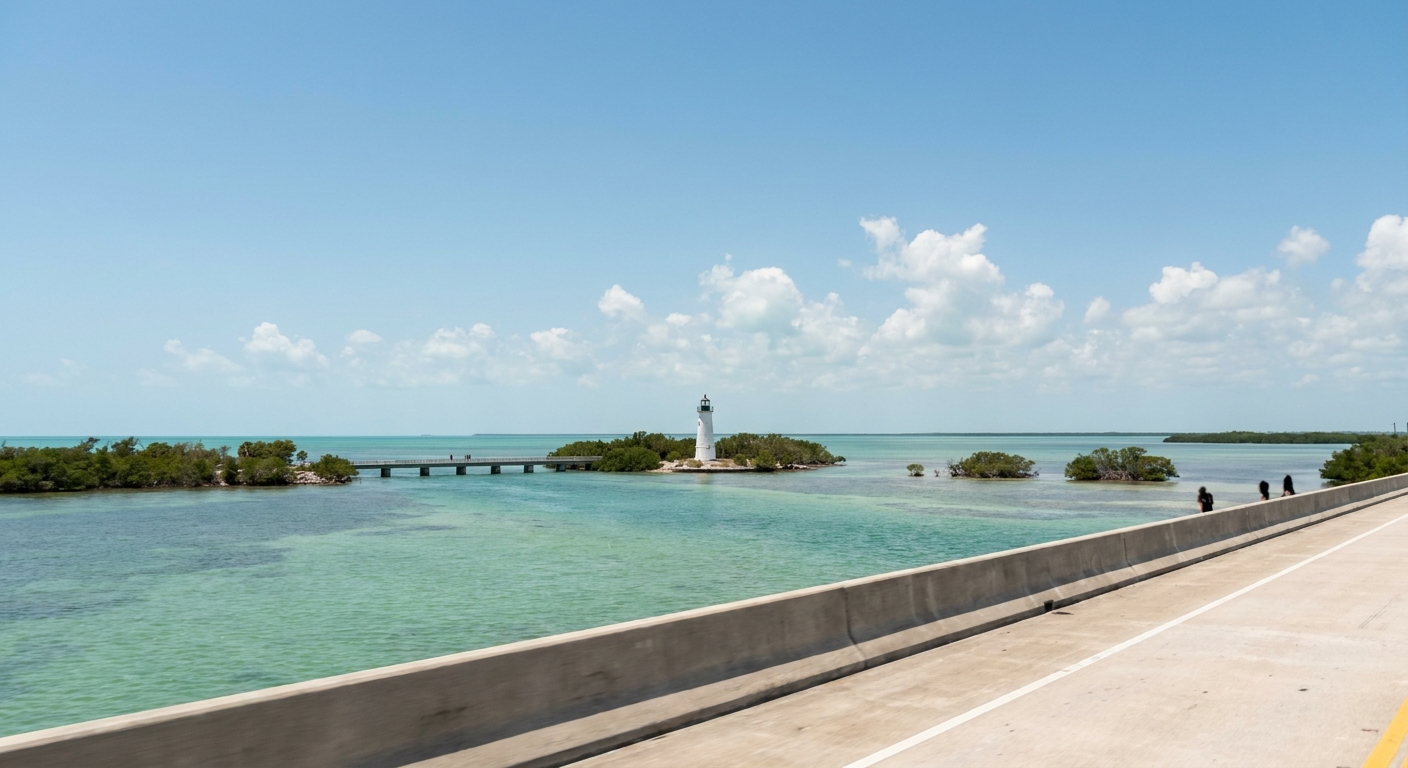
SEPTEMBER AT A GLANCE · BISCAYNE NATIONAL PARK
Go in September for 87.8°F water and long mornings on the bay, but book refundable and keep every boat day flexible.
WET SEASON · 13.1 RAIN DAYS · SEA 87.8°F AT DAILY PEAK
Go for: swimming and snorkeling in water barely cooler than the air, early light on the bay, and a trip you can shape around the weather day by day.
Think twice before: booking non-refundable, or pinning the whole trip on a single boat day with no fallback.
Climate: NOAA NCEI (Miami station) · Sea: Open-Meteo Marine · Light: sunrise-sunset.org · full sources at the end
On this page
- Biscayne weather in SeptemberHighs of 89.0°F, lows of 76.9°F, 13.1 rain days
- Can you swim at Biscayne in September?Sea at 87.8°F, measured as daily maxima
- Crowds, prices and booking in SeptemberRefundable rates and the lodging-tax question
- Things to do at Biscayne in SeptemberBoca Chita Key, Elliott Key, Stiltsville and the shipwreck trail
- Two days at Biscayne in SeptemberMornings on the water from Convoy Point
- September vs August and OctoberHow the three months compare on heat, rain and sea
- Is September a good time to visit?Who should go, and when October makes more sense
Everything that doesn’t change with the calendar lives elsewhere. The park itself, its islands and how to reach them are in our Biscayne National Park guide, flights into South Florida in our Florida flights guide, and the drive down from Miami in getting around Florida.
Biscayne National Park weather in September: average highs, lows and rain days
| September normal | Value |
|---|---|
| Average high | 89.0°F |
| Average low | 76.9°F |
| Precipitation | 10.22 in |
| Days with 0.10 in or more | 13.1 |
| Days with 1 in or more | 3.3 |
| Sea surface (mean of daily maxima) | 87.8°F |
| Daylight on September 15 | 12 h 20 min |
The air figures are NOAA NCEI’s official 1991-2020 normals from a real thermometer, station USW00012839 in Miami, just north of the park: an average high of 89.0°F, an average low of 76.9°F and 10.22 inches of rain. Keep the location in mind. Biscayne is almost entirely open water, and open water swings less than a city does in both directions, so afternoons out on the bay tend to run a touch milder than the normals below, and nights a touch less cool.
An average September logs 13.1 days with at least 0.10 inch of rain, so measurable rain falls on roughly four days in nine. Most of those days still have dry hours to work with. The bigger concern is the 3.3 days that bring an inch or more: about one day in nine, and those are the days a boat trip gets scrubbed. Build your itinerary so the one outing you care about most has a spare day behind it.
Between the 89.0°F high and the 76.9°F low sits a spread of just 12.1°F. You won’t want a sweater at dawn. Pack for sun and wet instead: a long-sleeve sun shirt, a brimmed hat, reef-safe sunscreen, a dry bag for phone and keys, and a light rain shell that folds into a pocket.
On September 15 the park gets about 12 hours 20 minutes of daylight. The sun rises at 7:05 a.m. and sets at 7:25 p.m. Eastern Daylight Time, converted from sunrise-sunset.org’s UTC figures. That leaves a full evening of usable light after a midday break.
Can you swim in Biscayne National Park in September? Sea temperature and what it feels like
Yes. The sea surface off the park averages 87.8°F in September, according to the Open-Meteo Marine API over 2015-2024. That figure is the mean of daily maxima, the warmest reading of each day, so it runs a shade warmer than a 24-hour average would. It also comes from a different source and period than the NOAA air normals, so treat the two as neighbors rather than a matched pair.
In practice, the water sits only 1.2°F below the average afternoon high. Wading in brings no cold shock at all, and you won’t need a wetsuit for warmth. The flip side is that a swim won’t cool you down much after a hot paddle, so carry more drinking water than feels necessary and wear a rash guard for long snorkels under a high sun.
Our sources carry no wind or swell figures for September, so we give none. Check the National Weather Service marine forecast for Biscayne Bay on the morning you go, and watch the tropical outlook through the whole week of your trip.
How busy is Biscayne National Park in September? Crowds and prices
On the calendar, September falls outside Florida’s November-to-April dry season, the stretch our Florida guide treats as the state’s main travel season. We found no visitation count or room-rate series for Biscayne, so we don’t rank September against other months on crowds or prices.
Booking advice follows from the weather: take refundable rooms and refundable boat tickets, as our Florida know-before-you-go guide recommends for the fall. We have no lead-time data, so we can’t tell you how many weeks ahead to book. Confirm the cancellation window for each reservation before you pay.
We could not verify the lodging-tax rate for Miami-Dade County stays, so we don’t quote a percentage. Look at the all-in total at checkout, not the nightly headline rate.
If there’s one place to spend more this month, it’s flexibility. A refundable rate costs a little extra up front, and in September it’s the difference between rescheduling a stormy weekend and losing it. Our Florida trip-cost guide lays out the rest of the budget.
Things to do in Biscayne National Park in September
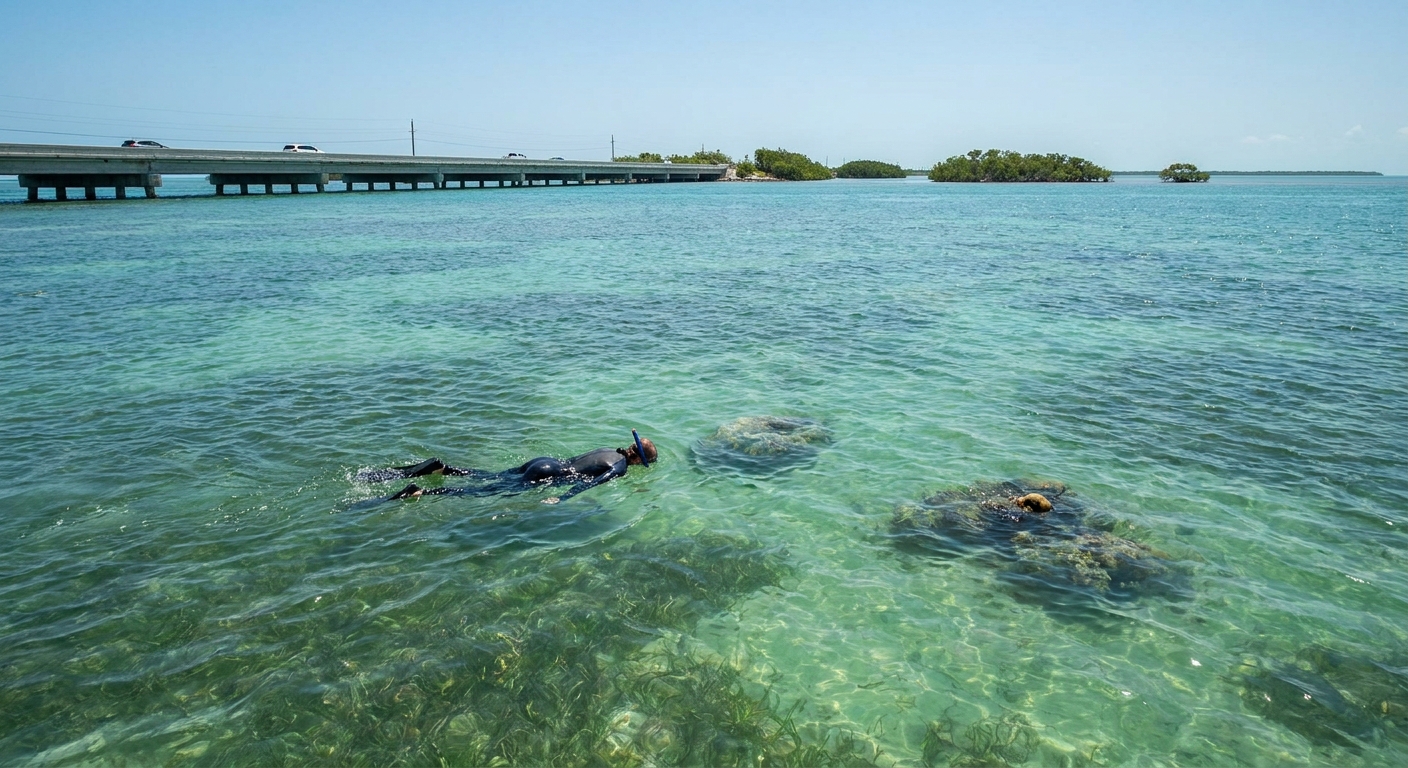
Long snorkels are what September does best. With the sea at 87.8°F against 84.5°F in October, the gap is 3.3°F: small on paper, noticeable after an hour face-down over the reef. You can stay in until your fingers wrinkle rather than until you start to shiver.
Trips start at the Dante Fascell Visitor Center at Convoy Point on the mainland. From there, boats head out to Boca Chita Key and its ornamental lighthouse, to Elliott Key, the largest island, and past the stilt houses of Stiltsville. Snorkelers and divers can follow the Maritime Heritage Trail of shipwrecks. We could not verify September 2026 hours, dock fees or tour prices for any of these, so we list none. The National Park Service site posts them.
The water hardly moves between August and September, dropping just 0.5°F from 88.3°F to 87.8°F, while average highs ease by 1.7°F, from 90.7°F to 89.0°F. By October the sea is 3.3°F cooler and highs are 3.1°F lower. September keeps late-summer water while the air starts to back off slightly.
We could not verify the park’s current fee and dock-fee schedule, so we don’t name anything as free this month. For other park days in South Florida, our Florida national parks guide covers the Everglades and Dry Tortugas too.
Biscayne National Park in September: a two-day itinerary
Day one. Reach Convoy Point close to the 7:05 a.m. sunrise and get on the water in the first cool hours, by kayak along the mangrove shoreline or aboard whatever boat trip you’ve reserved. Be back ashore by late morning, before the 89.0°F peak. Spend midday indoors, at the visitor center if its posted hours allow or over a long lunch in Homestead. Return for a slow walk along the shoreline once the heat breaks, and stay until sunset at 7:25 p.m.
Day two. Save this day for the islands or the shipwreck trail, with an early departure if the marine forecast is calm. If the weather turns, and one day in nine brings an inch of rain or more, swap in a mainland day: Miami is close by, and the Everglades works in a dry window. Push the boat trip to your spare morning rather than sailing into a storm.
Biscayne National Park in September vs August and October
| NOAA normals (Miami) · sea from Open-Meteo | August | September | October |
|---|---|---|---|
| Average high | 90.7°F | 89.0°F | 85.9°F |
| Average low | 77.7°F | 76.9°F | 74.2°F |
| Precipitation | 9.58 in | 10.22 in | 7.65 in |
| Days with 0.10 in or more | 13.3 | 13.1 | 9.0 |
| Sea surface (mean of daily maxima) | 88.3°F | 87.8°F | 84.5°F |
August and September are close cousins. September’s highs are 1.7°F lower and its rain days nearly identical (13.1 against 13.3), though it collects 0.64 inch more rain overall. October breaks away: highs of 85.9°F, 4.1 fewer rain days, 2.57 inches less rain, and a sea that drops to 84.5°F.
Going four weeks earlier gains you half a degree of sea warmth and costs you a hotter August afternoon. Going four weeks later swaps 3.3°F of water warmth for a drier, cooler trip that’s far easier to schedule, with 84.5°F water still comfortable to swim in.
Is September a good time to visit Biscayne National Park?
Yes, if you’re coming to swim, snorkel or paddle and can move a boat day around the weather. If you have one fixed date for a family trip, a nervous first-time boater in the group, or a non-refundable package, the answer is no.
If that’s you, pick October. Nine rain days instead of 13.1, highs of 85.9°F and 84.5°F water make it the easier month to plan around. Our best time to visit Florida guide shows how the rest of the year lines up.
September pairs 87.8°F water with 12 hours 20 minutes of mid-month daylight, a long, warm day on the bay for anyone who travels flexibly.
The last word
The decision that shapes a September trip is made at booking: take the refundable room, then give yourself two mornings for every boat trip you want. After that, the bay does the rest. Pack a dry shirt in the dry bag, too. The bay’s daily peak runs 10.9°F above the average 76.9°F night low, so a wet ride home at dusk will feel cooler than you expect.
Sources & data for this guide
- September, August and October air normals, precipitation and rain days · NOAA NCEI monthly normals 1991-2020, station USW00012839 (Miami) · checked Sep 24, 2026
- Station scope: the thermometer is in Miami, north of a park that is almost all water, so on-the-water conditions swing less than these figures · NOAA NCEI · checked Sep 24, 2026
- Sea surface temperature, mean of daily maxima, 2015-2024 · Open-Meteo Marine API · checked Sep 24, 2026
- Daylight, sunrise and sunset on September 15 (UTC converted to EDT) · sunrise-sunset.org · checked Sep 24, 2026
- We could not verify park hours, fees, dock fees, tour prices, wind or swell data, the lodging-tax rate, or any visitation or room-rate series, so none of these figures appear. Check the National Park Service and operators when you book.
To plan your stay
- Best Time to Visit Biscayne National Park: Month-by-Month Weather, Sea Temperature and the Month to Skip
- Biscayne National Park in August: Weather, Sea Temperature, Rain and Crowds
- Biscayne National Park in October: Weather, Sea Temperature and Rain Days vs September and November
- Biscayne National Park in July: Weather, Sea Temperature, Rain Days and Crowds