
BISCAYNE NATIONAL PARK · AUGUST · THE MONTH GUIDE
The water off Biscayne National Park reaches 88.3°F at its daily peak in an average August, and the mainland air tops out at 90.7°F. The park is almost all water, so an August trip here is a boat, paddle and snorkel trip with the day built around the morning. Get onto the bay early and the month hands you warm, calm hours and light until nearly 8 p.m.
August also brings 9.58 inches of rain on the Miami normals and sits squarely inside the Atlantic hurricane season. Most visitors fly into MIA or FLL, as our Florida flights guide sets out, and a refundable booking matters more this month than any upgrade.
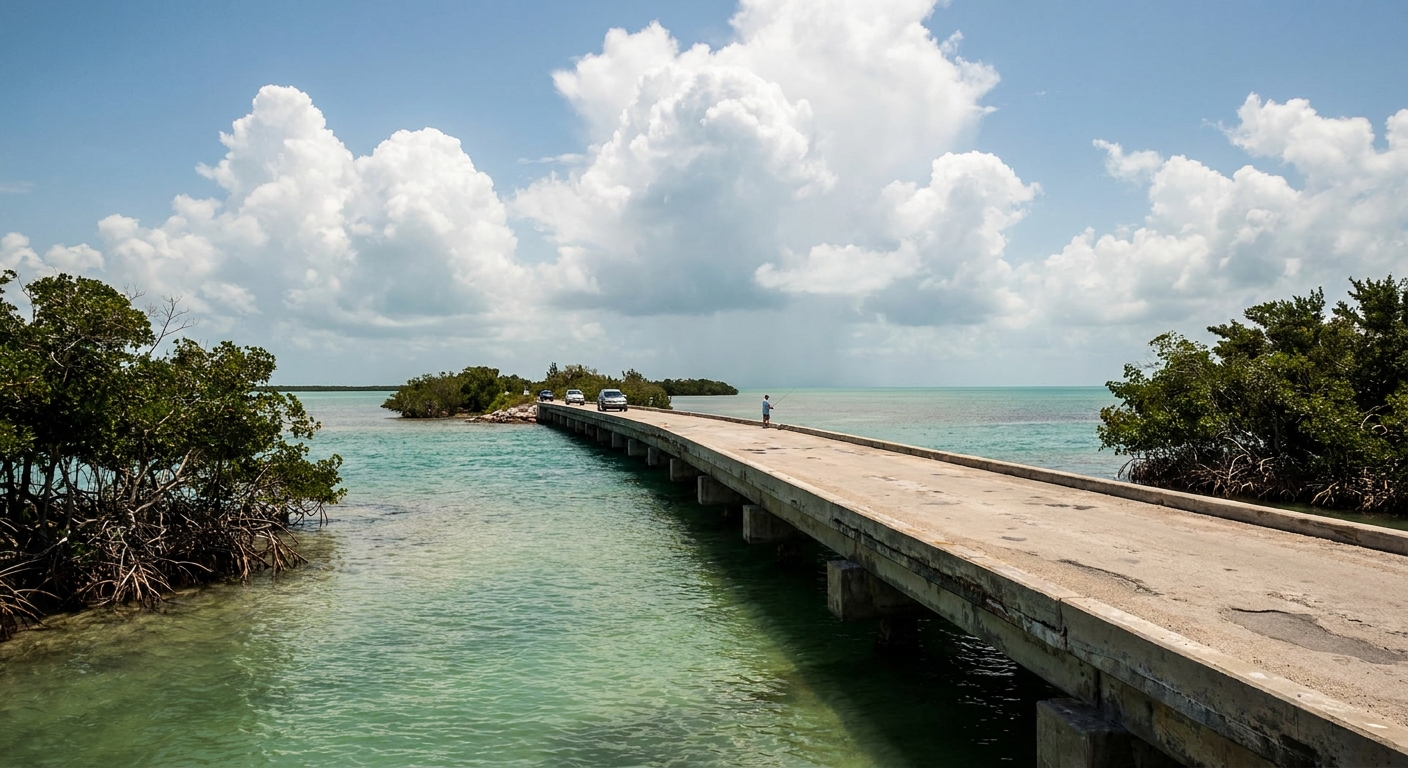
AUGUST AT A GLANCE · BISCAYNE NATIONAL PARK
Go for the 88.3°F water and long mornings on the bay, plan to be ashore when the afternoon storms arrive, and book refundable because August is hurricane season.
WET SEASON · HURRICANE SEASON · WATER MORNINGS, DRY AFTERNOONS INDOORS
Go for: swimming and snorkeling in the warmest water of the three summer months we compared, and daylight long enough for an early boat day plus a sunset.
Think twice before: planning long afternoons on open water, or locking in non-refundable dates during the hurricane season.
Air: NOAA NCEI 1991-2020, Miami station · Sea: Open-Meteo Marine 2015-2024 · Light: sunrise-sunset.org · full sources at the end
On this page
- Biscayne weather in AugustHighs of 90.7°F and 13.3 rain days
- Can you swim at Biscayne in August?Sea at 88.3°F, a daily-maximum figure
- Crowds, prices and booking in AugustHurricane-season booking, taxes and refunds
- Things to do at Biscayne in AugustConvoy Point and the islands by morning boat
- A two-day Biscayne itinerary for AugustFrom the 6:52 a.m. sunrise to the 7:57 p.m. sunset
- August vs July and September9.58 inches of rain against 7.36 and 10.22
- Is August a good time to visit?Yes for swimmers, and July for fewer rain days
For the park across the year, its fees and how it fits among the state’s other parks, start with our Florida national parks guide. The whole Florida calendar lives in the best time to visit Florida, and the month before gets its own read in Biscayne in July.
Biscayne National Park weather in August: average highs, lows and rain days
| August normal | Value |
|---|---|
| Average high (Miami station) | 90.7°F |
| Average low (Miami station) | 77.7°F |
| Precipitation | 9.58 in |
| Days with 0.10 in or more | 13.3 |
| Days with 1 in or more | 2.9 |
| Sea surface, mean of daily maxima (Open-Meteo) | 88.3°F |
| Daylight on August 15 | About 13 h 04 min |
| Sunrise / sunset, August 15 | 6:52 am / 7:57 pm EDT |
Every figure here for the air comes from NOAA NCEI’s 1991-2020 official normals for the Miami station, GHCN ID USW00012839, a real thermometer on the mainland immediately north of the park. We chose that station normal over a reanalysis grid estimate. An average August day there runs from 77.7°F to 90.7°F. The park itself is almost all water, and open water swings less than a city does in both directions, so out on the bay expect afternoons a little under that high and nights a little over that low. We have no measured figure for the gap.
Rain reaches at least a tenth of an inch on 13.3 days of an average August, or roughly three days in seven. Our Florida guide describes the wet season’s near-daily pattern of afternoon thunderstorms, and for a boat day that sets the schedule: be off the open water by early afternoon, when the clouds tend to build. A wet day rarely means a lost day. It usually means a lost afternoon.
Day and night sit just 13.0°F apart, and the night low of 77.7°F never brings real relief. Pack for heat and water at once: a long-sleeved sun shirt, a wide-brimmed hat that ties on, a light rain shell, a dry bag for the phone and car keys, and more drinking water than the day seems to need. A sweater stays home.
August 15 brings about 13 hours 04 minutes of daylight. The sun rises at 6:52 a.m. and sets at 7:57 p.m. Eastern Daylight Time, converted from the 10:52 and 23:57 UTC times our source publishes. That leaves room for a boat morning, a long midday break ashore and a sunset close to 8 p.m.
Can you swim in Biscayne National Park in August? Sea temperature
Yes. The sea surface off the park averages 88.3°F in August, according to the Open-Meteo Marine API over 2015 to 2024. That figure is the mean of daily maxima, the warmest reading of each day, so it runs a shade warmer than a 24-hour average would. It also comes from a different source and period than the NOAA air normals, and the two should not be read as one dataset.
In practice, the water sits only 2.4°F below the average afternoon air high and 10.6°F above the average night low. Stepping in feels easy, with no gasp and no need for a wetsuit to stay warm. The flip side is that the bay does little to cool you down. A thin rash guard helps more against sun than against cold, and drinking water between swims matters as much as sunscreen.
We found no wind or wave figures for August in our sources, so we give none. Check the National Weather Service Miami marine forecast on the morning of any boat or paddle day, and keep an eye on the tropics through the National Hurricane Center, since the season runs from June 1 to November 30.
How busy is Biscayne National Park in August? Crowds and prices
We found no visitor-count or room-rate series by month for the park or the hotels around it, so we rank no month as cheap or expensive. The calendar facts are firm, though: August falls inside Florida’s wet season, May to October, and inside a hurricane season that peaks around September 10, as our Florida guide sets out.
We could not verify how many weeks ahead boat tours or nearby rooms sell out in August, so we give no lead time. What holds for the whole state in these weeks is to book refundable and to check the tropics before you fly. Our Florida where-to-stay guide covers bases on the Miami side.
We could not verify the lodging-tax rate for the hotels nearest the park, so we give no percentage. Read the final line of any booking before you pay, and budget the rest of the trip with our Florida trip cost guide.
The one line where paying more changes August is flexibility: a refundable room, a changeable flight and a tour that lets you move your date. A tropical system in the forecast can cancel a boat day, and a cheaper locked rate leaves you with nothing to shift. Our Florida safety guide covers storm planning.
Things to do in Biscayne National Park in August
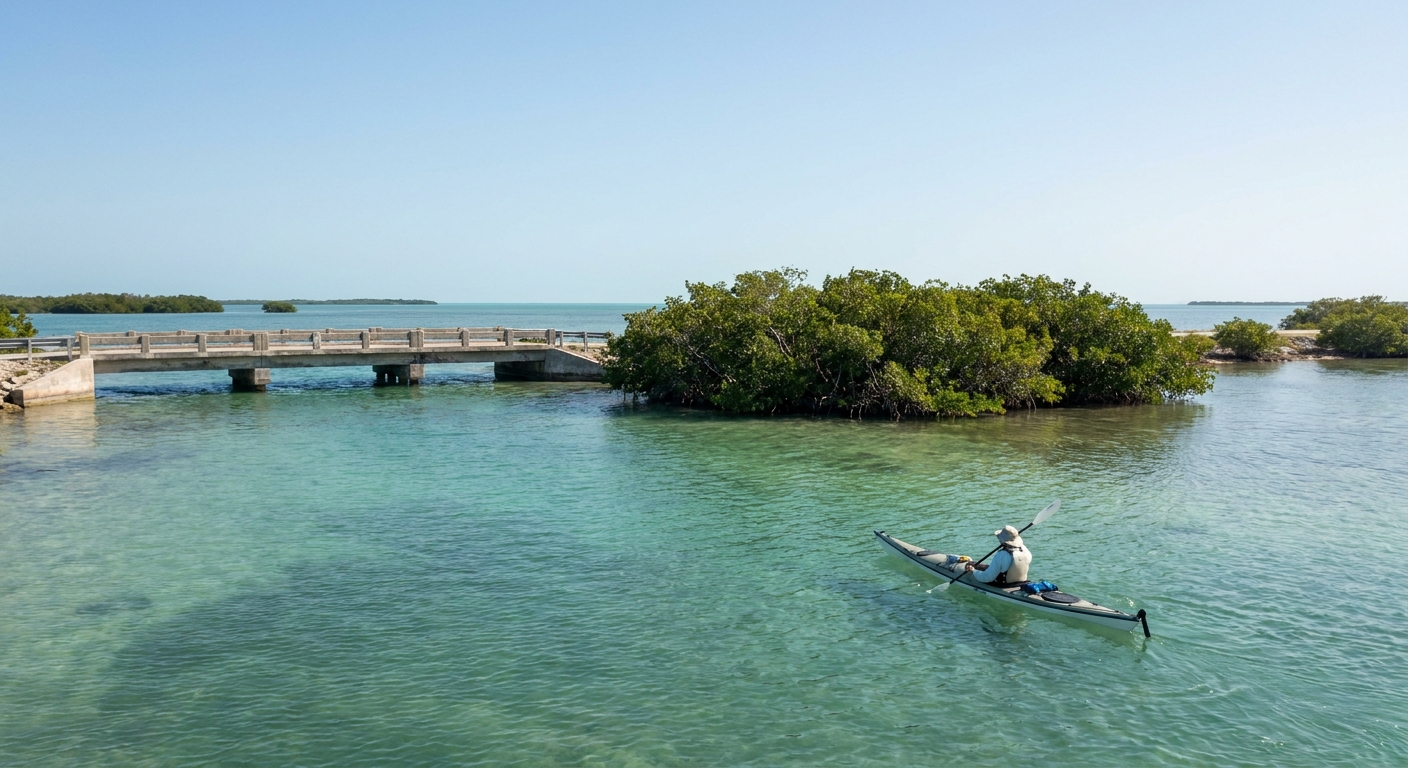
August is the month to be in the water. Of the three summer months we compared, it has the warmest sea at 88.3°F, and the 13-hour day leaves a full morning for snorkeling or paddling before the afternoon storms. Swimmers who find winter water bracing get none of that here.
The mainland door is Convoy Point, home to the Dante Fascell Visitor Center, where paddlers launch into the bay. Out on the water, Boca Chita Key with its small lighthouse and Elliott Key, the largest island, are the usual boat destinations. We could not verify August opening hours, boat-tour schedules or docking fees for any of them, so we give none. Confirm with the National Park Service before you drive down.
The places do not change with the calendar, but the air does. With the sea at 88.3°F and the afternoon high at 90.7°F, an island walk at 2 p.m. offers no cool escape, and the storm pattern adds lightning over open water. Morning is when the islands and the bay work best. Afternoon belongs to shade, air conditioning or the visitor center if it is open.
We found no August free-entry date or event for the park, and we list none. Our Florida national parks guide covers fees and passes. The sunset at 7:57 p.m. over the bay costs nothing, and the shoreline at Convoy Point faces the water for it.
Biscayne National Park in August: a two-day itinerary
Day one. Leave Miami before sunrise at 6:52 a.m. and be at Convoy Point soon after, with the marine forecast checked. Spend 8 a.m. to about noon on the water, on a booked boat trip or a paddle along the mangroves. Eat lunch ashore and keep 1 to 5 p.m. indoors while the thunderstorms pass. Come back to the shoreline for the 7:57 p.m. sunset, then drive to your bed for the night.
Day two. Repeat the morning with a different target, snorkeling if day one was a paddle, or a second island if the boats run. If a tropical system appears in the forecast or storms start early, move the day to the Miami side with our Miami guide, or reschedule the boat if your booking allows it. A longer loop south is in our 7-day Florida itinerary.
Biscayne National Park in August vs July and September
| Normal | July | August | September |
|---|---|---|---|
| Average high | 90.6°F | 90.7°F | 89.0°F |
| Average low | 77.5°F | 77.7°F | 76.9°F |
| Precipitation | 7.36 in | 9.58 in | 10.22 in |
| Days with 0.10 in or more | 11.1 | 13.3 | 13.1 |
| Sea surface, daily max (Open-Meteo) | 88.2°F | 88.3°F | 87.8°F |
On NOAA’s Miami normals, July and August are almost identical in temperature: 90.6°F against 90.7°F for the high, 77.5°F against 77.7°F for the low. The gap is rain. August adds 2.22 inches and 2.2 more wet days than July. September cools by 1.7°F at the high and 0.8°F at the low, yet brings the most rain of the three at 10.22 inches, on 13.1 days. Open-Meteo puts the sea at 88.2°F, 88.3°F and 87.8°F across the three months.
Moving four weeks earlier to July gains you fewer rain days and puts the trip further from the September 10 hurricane peak, for water only 0.1°F cooler. Moving four weeks later to September loses 0.5°F of sea and a little heat, and brings you to the peak of hurricane season. See Biscayne in July for that month in full.
Is August a good time to visit Biscayne National Park?
Yes, for swimmers, snorkelers and paddlers who can be on the water by 8 a.m. and ashore by early afternoon, and who book with refunds in mind. No, for travelers who want long dry afternoons outdoors, who struggle in heat that barely drops below 77.7°F at night, or whose dates cannot move if a storm shows up.
If August is a no, July keeps nearly the same heat and water with 2.22 fewer inches of rain. For drier air and no hurricane season at all, the November to April window in our Florida best-time guide is the better trip.
Among July, August and September, August is the one that pairs the warmest sea, at 88.3°F, with a sunset still close to 8 p.m.
The last word
The decision that shapes an August trip to Biscayne is the refundable booking, made before anything else. The rest follows from the morning: warm water, calm light, the bay nearly to yourself as the heat climbs. Keep the afternoons loose for good reason, because an average August brings 2.9 days with an inch of rain or more, and one of them may land on your boat day.
Sources & data for this guide
- August, July and September air normals, precipitation and rain days · NOAA NCEI monthly normals 1991-2020, Miami station USW00012839, immediately north of the park · checked Sep 24, 2026
- Station scope · the park is almost all water and open water swings less than the city station, so bay conditions will differ slightly; we have no measured gap · checked Sep 24, 2026
- Sea surface temperature, mean of daily maxima · Open-Meteo Marine API, 2015-2024 average · checked Sep 24, 2026
- Daylight, sunrise and sunset on August 15 · sunrise-sunset.org, converted from UTC to EDT · checked Sep 24, 2026
- Wet season, afternoon storm pattern, hurricane season and September 10 peak · our Florida guide, from NWS and NOAA NHC · checked Sep 24, 2026
- We could not verify August hours, boat schedules, fees, lodging tax or booking lead times; check the National Park Service and operators when you book.
To plan your stay
- Best Time to Visit Biscayne National Park: Month-by-Month Weather, Sea Temperature and the Month to Skip
- Biscayne National Park in July: Weather, Sea Temperature, Rain Days and Crowds
- Biscayne National Park in September: Weather, Sea Temperature, Rain Days and Crowds
- Biscayne National Park in June: Weather, Sea Temperature, Rain Days and Crowds