
BIG CYPRESS NATIONAL PRESERVE · JULY · TAMIAMI TRAIL
July on the Tamiami Trail starts early and ends late. The sun is up at 6:38 am, the sawgrass steams by nine, and by midafternoon the sky over the cypress domes turns into a slow, towering weather show. The official normal high sits at 90.6°F, and the preserve, inland from the thermometer that records it, usually runs warmer still.
Getting here is simple. Big Cypress lies along US 41 between Miami and Naples, so the flight lands at MIA or FLL on the Atlantic side or at RSW near Fort Myers on the Gulf side (our Florida flights guide compares all three), and a rental car covers the rest. A July visit rewards anyone who keeps the outdoor hours early and holds the afternoon loosely.
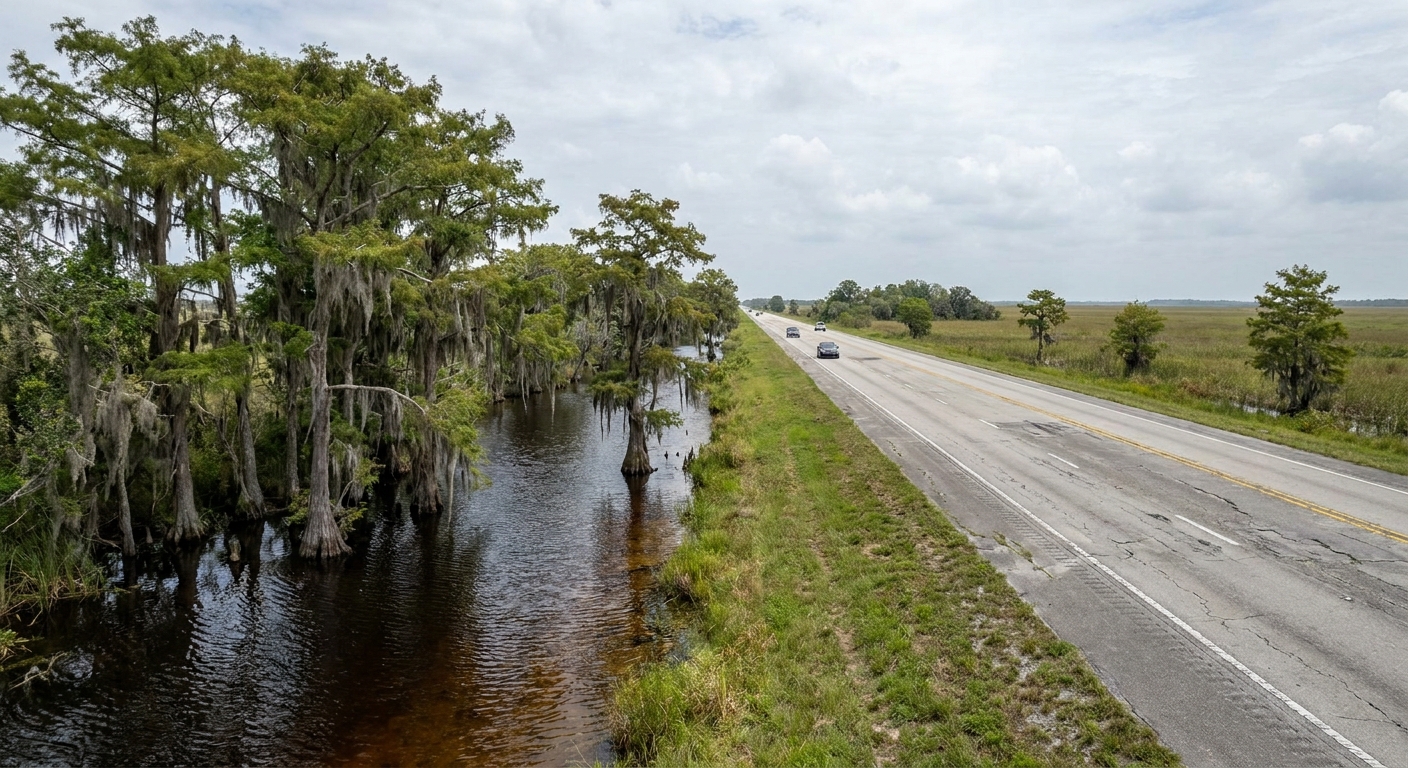
BIG CYPRESS IN JULY · FLORIDA
July works for a morning-heavy road trip along the Tamiami Trail, with long light to 8:15 pm and fewer rain days than June or August at the Miami station, but the heat rules out long midday hikes.
WET SEASON · MIAMI STATION NORMALS 1991–2020 · SUNSET 8:15 PM EDT
Go for: sunrise drives on US 41, big afternoon skies, evenings that stay light past eight, and fewer rain days than the months on either side.
Think twice before: planning a full day on foot or a night in a tent: lows average 77.5°F, so the night never cools.
Climate: NOAA NCEI, station USW00012839 · Light: sunrise-sunset.org · full sources at the end
On this page
- Big Cypress weather in July90.6°F highs and 11.1 rain days at the Miami station
- How hot does Big Cypress get in July?Highs, lows and what to wear morning and afternoon
- Big Cypress crowds and prices in JulyWet-season calendar, booking and lodging tax
- Things to do in Big Cypress in JulyOasis Visitor Center, Kirby Storter and Loop Road
- A two-day Big Cypress itinerary in JulyTwo days that start at the 6:38 am sunrise
- Big Cypress in July vs June and AugustRain from 10.51 to 7.36 to 9.58 inches
- Is July a good time to visit Big Cypress?Yes for drivers, no for long hikes and camping
Already leaning toward early summer? Big Cypress in June covers the month before, and our Everglades guide covers the national park that borders the preserve to the south.
Big Cypress National Preserve weather in July: average highs, lows and rain days
| July measure | Miami station, 1991–2020 |
|---|---|
| Average high | 90.6°F |
| Average low | 77.5°F |
| Precipitation | 7.36 in |
| Days with 0.10 in or more | 11.1 |
| Days with 1 in or more | 2.2 |
| Daylight on July 15 | 13 h 38 min |
| Sunrise · sunset, July 15 | 6:38 am · 8:15 pm EDT |
Every figure here comes from the NOAA National Centers for Environmental Information, which publishes official 1991–2020 monthly normals for station USW00012839 at Miami. That is a real thermometer, not a reanalysis grid cell, and it sits on the coast. The preserve lies inland on the Tamiami Trail, where summer afternoons run hotter than the city’s. Read the 90.6°F high and 77.5°F low as a floor for the swamp, and the 7.36 inches of rain as Miami’s total.
An average July at the station logs 11.1 days with at least 0.10 inch of rain, so measurable rain falls on roughly one day in three. Only 2.2 days bring an inch or more, about two genuine downpours a month. In practice, the Florida wet season stacks its storms into the afternoon (our Florida orientation explains the pattern), so a dry morning is the usual rule and a soaked 3 pm is the usual exception to plan around.
The gap between the average high and low is only 13.1°F. Dawn opens near 77.5°F with swamp humidity already in the air, so there is no cool hour to save a hike for. Pack a rain shell, a spare shirt kept dry in the car, a wide-brimmed hat and more water than the plan calls for. Light long sleeves and repellent handle the mosquitoes at dawn and dusk better than bare arms.
July 15 brings 13 hours 38 minutes of daylight. Converted from the UTC times published by sunrise-sunset.org to Eastern Daylight Time, the sun rises at 6:38 am and sets at 8:15 pm. The useful light for photography and wildlife runs from first light until about 8 am, then again from roughly 7 pm to sunset.
How warm is Big Cypress National Preserve in July?
At the Miami station, July averages a high of 90.6°F and a low of 77.5°F, a spread of 13.1°F. Inland along US 41 the afternoon number climbs above the coastal reading, so expect the low 90s on a clear day as the starting point, not the peak.
Mornings call for breathable long sleeves and closed shoes that can get wet, since boardwalk edges and trailheads hold standing water after rain. By early afternoon, dress for the air-conditioned car and the visitor center: shorts, a dry shirt, a cap. Keep the rain shell within reach, because storms here arrive fast once the clouds build.
Our sources carry no count of freezing nights for July, and with an average low of 77.5°F frost plays no part in a summer visit. Nor did we find a sea-temperature reading: the preserve is inland freshwater swamp, so for a swim the Gulf beaches near Naples are the nearest option, and our Florida things-to-do guide lists them.
How busy is Big Cypress National Preserve in July? Crowds and prices
July falls in Florida’s wet season, outside the November–April dry stretch that fills the state’s calendar (our month-by-month Florida guide sets out both seasons). We found no visitor or room-rate series for the preserve itself, so we rank no month cheap or expensive.
We have no booking-lead data for the area, so we give no week count. The date that shapes a July booking is the Atlantic hurricane season, officially June 1 to November 30: pick refundable rooms and a flexible car rental, and check the tropics before the flight.
We could not verify the lodging-tax rate for the towns closest to the preserve, so we give no percentage. Look at the final total on the booking screen rather than the nightly rate, and use our Florida trip-cost guide to budget the rest of the trip.
Air conditioning is the spend that changes July. With nights holding near 77.5°F, a well-cooled room turns the midday break into rest, and a rental car with strong AC doubles as the shelter between stops on the Tamiami Trail. Our Florida getting-around guide covers rentals and tolls.
Things to do in Big Cypress National Preserve in July
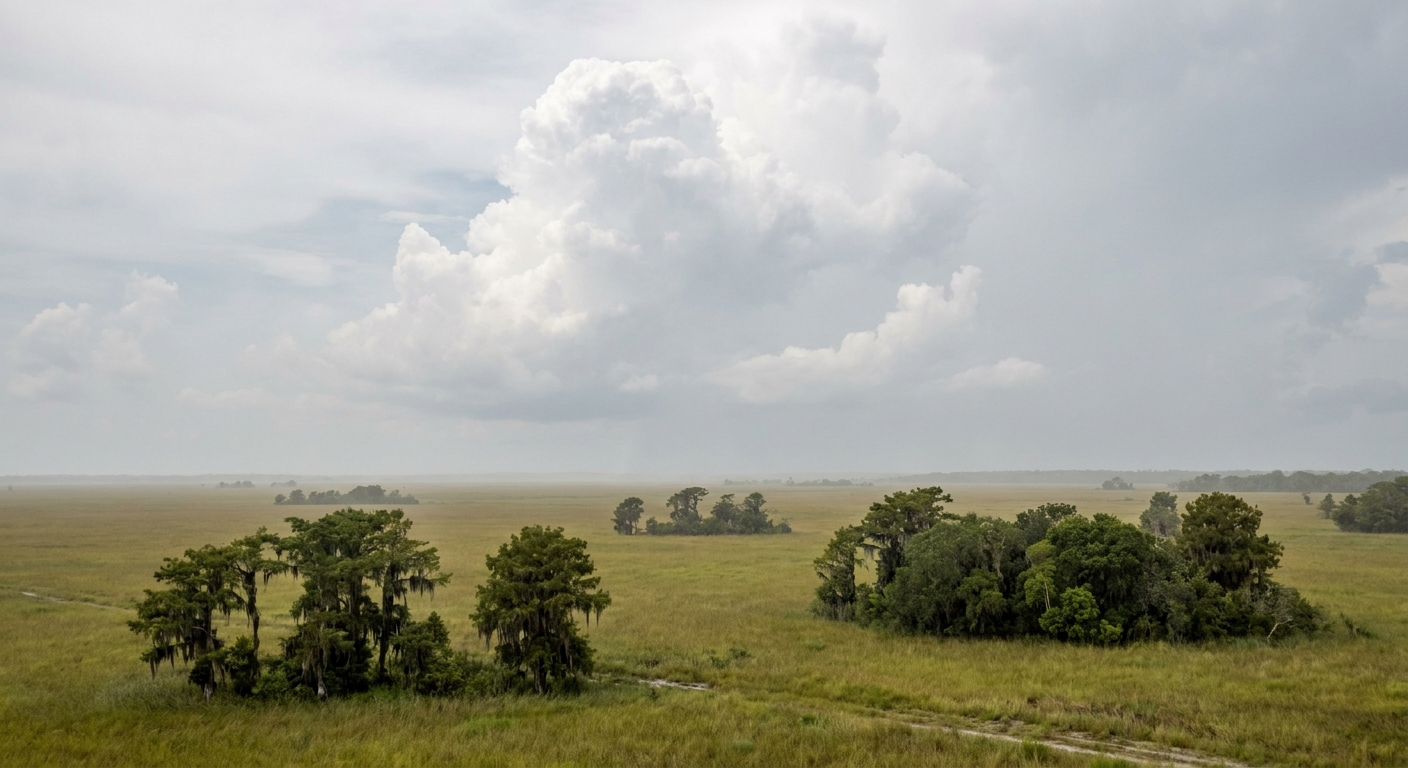
July hands a visitor the long day. With sunset at 8:15 pm, an evening drive along US 41 still has light after dinner, and the afternoon storms that build over the sawgrass make some of the biggest skies of the Florida year for anyone with a camera and a dry car to shoot from.
Three stops anchor a July visit. The Oasis Visitor Center on the Tamiami Trail is the natural first stop for maps and current conditions. The Kirby Storter boardwalk off US 41 leads into cypress without a muddy trail. Loop Road makes a slow scenic drive south of the highway. We could not verify July hours, fees or boardwalk lengths for any of the three, so check the National Park Service page before you drive.
The heat and the rain shape all three. At the Miami station July averages 90.6°F, 1.3°F above June, and the inland stops run hotter, so boardwalks belong to the first two hours after sunrise. After a downpour, unpaved sections such as Loop Road can hold deep water. Ask at the visitor center that morning about trail and road closures.
We could not confirm current entrance or program fees, so we list nothing as free. Pulling over at public waysides along US 41 to watch the sky or the canals costs only the fuel to get there.
Big Cypress National Preserve in July: a two-day itinerary
Day one. Leave the room before the 6:38 am sunrise and be on US 41 by 7. Walk the Kirby Storter boardwalk in the first cool-ish hour, then drive to the Oasis Visitor Center for maps and the day’s conditions. By 11 the heat is building toward the 90.6°F station average, so head for air conditioning and a long lunch. Around 3 pm, watch the storms from shelter. Head back out near 7 pm and drive west with the sun low for the 8:15 pm sunset.
Day two. Start with Loop Road at first light, driving slowly with windows down for birds. If one of July’s 2.2 inch-plus storm days arrives, skip the unpaved road and swap the morning for the visitor center and a run to the national park next door (our Everglades guide has its trails). Extending the trip? Our Florida road-trip guide continues toward Naples or Miami.
Big Cypress National Preserve in July vs June and August
| Miami station, 1991–2020 | June | July | August |
|---|---|---|---|
| Average high | 89.3°F | 90.6°F | 90.7°F |
| Average low | 76.3°F | 77.5°F | 77.7°F |
| Precipitation | 10.51 in | 7.36 in | 9.58 in |
| Days with 0.10 in or more | 12.6 | 11.1 | 13.3 |
| Sea temperature | No reading (inland) | No reading (inland) | No reading (inland) |
All three months come from the same NOAA station and period. July runs 1.3°F hotter than June by day and 1.2°F warmer by night, and sits within 0.2°F of August on both counts. Rain separates them: July’s 7.36 inches is 3.15 less than June and 2.22 less than August, with 1.5 fewer rain days than June and 2.2 fewer than August. We found no sea-temperature reading for an inland preserve in any of the three months.
Moving four weeks earlier, to June, buys slightly cooler nights at the cost of about three more inches of rain. Moving four weeks later, to August, keeps the same heat, adds 2.22 inches and 2.2 rain days, and edges closer to the hurricane season’s statistical peak around September 10.
Is July a good time to visit Big Cypress National Preserve?
Yes for travelers who want to see the preserve from the Tamiami Trail with short boardwalk walks, dawn wildlife and storm skies, and who can base themselves in air conditioning between outings. No for anyone planning long hikes, backcountry camping or a full day outdoors, since a 77.5°F average low leaves no cool hour to recover.
If July is a no, aim for a month inside the November–April dry season. Our Florida timing guide explains why the dry months bring lower humidity and fewer mosquitoes, and our Florida national parks guide helps pair Big Cypress with its neighbors.
Against June and August, July carries the fewest rain days at the Miami station, 11.1, and the lightest rain total, 7.36 inches.
The last word
The choice in July comes down to hours, not dates. At the Miami station about 20 days of an average July stay under a tenth of an inch of rain, and most of those mornings are yours if you are on US 41 by 7. Fly into MIA or RSW, book a refundable room with strong air conditioning, and keep one evening free for the drive west into the 8:15 pm sunset over the cypress.
Sources & data for this guide
- July normals (90.6°F high, 77.5°F low, 7.36 in, 11.1 and 2.2 rain days) · NOAA NCEI monthly normals 1991–2020, station USW00012839, Miami · checked Sep 24, 2026
- June and August normals · NOAA NCEI monthly normals 1991–2020, same station · checked Sep 24, 2026
- Station location caveat: coastal Miami thermometer, preserve inland on the Tamiami Trail · NOAA NCEI · checked Sep 24, 2026
- Daylight, sunrise and sunset on July 15 (UTC, converted to EDT) · sunrise-sunset.org · checked Sep 24, 2026
- Hurricane season dates and Sept 10 peak · NOAA National Hurricane Center, via our Florida orientation · checked Sep 24, 2026
- What we could not verify: a sea-temperature reading, room rates or occupancy, booking lead times, the lodging-tax rate, and July hours or fees at Oasis Visitor Center, Kirby Storter and Loop Road · check the National Park Service before you go.
To plan your stay
- Best Time to Visit Big Cypress National Preserve: Dry Season Months, Summer Heat and Rainfall
- Big Cypress National Preserve in June: Weather, Rain Days, Crowds and a Two-Day Itinerary
- Big Cypress National Preserve in August: Weather, Rain Days, Crowds and a Two-Day Plan
- Big Cypress National Preserve in May: Weather, Rain Days, Crowds and a Two-Day Itinerary