
JAMAICA · BLUE & JOHN CROW MOUNTAINS · UNESCO 2015
Jamaica’s eastern mountains run on a strange and rather wonderful arithmetic: 1,357 flowering plants, 87 of them growing nowhere else on Earth, and exactly one native land mammal that does not fly. The Blue and John Crow Mountains went onto the UNESCO World Heritage List in 2015 under criteria (iii), (vi) and (x), the first Jamaican site to be inscribed.
Nothing in that forest performs on cue. The parrots feed high and travel loudly, the hutia keeps to one range and keeps out of sight, and a morning in the cloud can hand you fifty feet of visibility and a great deal of birdsong. Nobody can promise you a sighting. What the mountains do offer is a place where living only here is the normal condition rather than the exception.
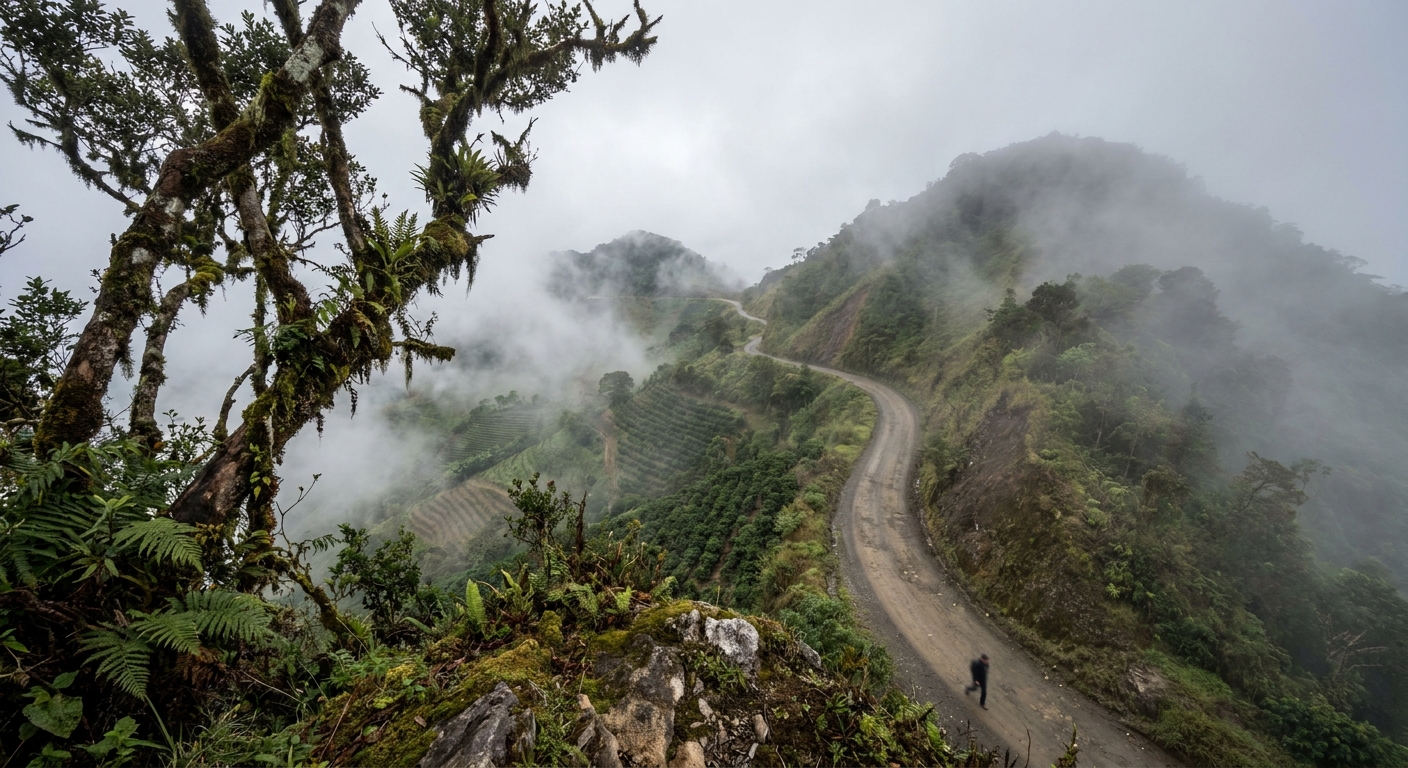
THE WILDLIFE AT A GLANCE · BLUE & JOHN CROW MOUNTAINS
Come for a forest where 87 flowering plants grow nowhere else and a single surviving land mammal holds on in the John Crow range, and come without a sighting list: the UNESCO file names the species, not the hours or the places to stand.
INSCRIBED 2015 · 850 TO 2,256 M (2,789 TO 7,402 FT) · NO FEES OR HOURS IN OUR SOURCE
Go for: the birds of the Jamaican Endemic Bird Area, elfin forest above 2,000 meters (6,562 feet), and a flora in which half the flowering species above 900 meters live only in Jamaica.
Think twice before: building a day around one animal: the hutia population is restricted to the John Crow Mountains, and no source we read publishes where or when it is seen.
Species, habitats, area and laws: UNESCO World Heritage Centre file 1356 · read Sep 22, 2026 · full sources at the end
On this page
- Where the wildlife lives, by elevation850 to 2,256 meters, and nine forest communities
- Which birds are hereJamaican Blackbird, two parrots, Bicknell’s Thrush
- Jamaica’s last land mammalThe hutia, in the John Crow Mountains
- Plants that grow nowhere else87 flowering species, 61 mosses, 11 lichens
- Park laws and pressures on the forestFour acts, from 1985 to 1996
The counts, elevations and laws quoted throughout come from one document: the UNESCO World Heritage Centre file 1356 for the property, read on September 22, 2026. UNESCO describes a property, it does not run visits, so that file publishes no entrance fee, no guide rate, no trail time and no program schedule, and we found no stable official page that does.
Where the wildlife is in the Blue Mountains
The property runs from 850 meters to 2,256 meters above sea level, 2,789 to 7,402 feet, and those 4,600 feet of vertical are why one protected area holds so many forests at once. Air cools and cloud thickens with every hundred meters gained, and the plants sort themselves into bands accordingly. UNESCO records nine ecological communities in the upper montane forest alone. Above 1,800 meters (5,906 feet) the vegetation is already stunted.
Together the Blue Mountains and the John Crow Mountains cover roughly 20 percent of Jamaica’s landmass. The World Heritage property is the protected core of that: 26,251.6 hectares of tropical montane rainforest, about 101 square miles, ringed by a buffer zone of 28,494 hectares. The two ranges are not interchangeable for wildlife. The John Crow Mountains, to the east, hold the property’s one land mammal, and that single line of the file decides where a mammal search would even begin.
Birds of the Blue and John Crow Mountains
Four threatened birds are named for the property. The Jamaican Blackbird opens the list. Then come the Yellow-billed Parrot and the Black-billed Parrot, two species most visitors will hear before they see, since parrots feed high in the canopy and announce every flight. Fourth on the list is Bicknell’s Thrush, and UNESCO flags it as a migrant rather than a resident.
That single word, migrant, does a lot of work. A bird that spends only part of its year in these mountains needs both ends of its journey intact, so the forest above 850 meters is one link in a chain that reaches well beyond the island. Protecting 26,251.6 hectares in eastern Jamaica is, for this one species, an act of conservation performed on behalf of somewhere else entirely.
The property is described as a key part of the Jamaican Endemic Bird Area. In plain terms, an endemic bird area is a patch of the world where a cluster of species lives and nowhere else does, so the ordinary birds along an ordinary track are the reason serious birders fly in. There is no rare-bird quest to organize here: the common birds are the prize.
What the file will not give you is the practical half. It names species and habitats and says nothing about where any of them is seen, at what hour, in which month, or how long the migrant stays. Any timetable you find quoted elsewhere deserves a check with the park authority before you build a dawn around one bird.
The hutia: what it is and where to see it
The hutia, Geocapromys brownii, is a native rodent and the only threatened land mammal recorded in the property. Its population is restricted to the John Crow Mountains, the eastern range, which makes half of a very large protected area irrelevant to anyone hoping for a glimpse. As for where to see it: the file gives no site, no season and no viewing program, and we found none published on an official page elsewhere.
By UNESCO’s count it is the only land mammal here that does not fly, and that phrasing says something about islands in general. Open ocean is easy for a bat and close to impossible for anything that walks, so island mammal lists start short and get shorter. Whatever once shared the forest floor with the hutia is gone, and what remains of Jamaica’s ground-level mammal fauna now depends on one range inside one property.
Endemic plants of the Blue Mountains: which species and where to see them
The file counts 1,357 species of flowering plant in the property. About 294 of those are Jamaican endemics, and 87 are found nowhere else at all. No species list comes with the total, so nobody can hand you names at a trailhead. What the number buys is the reasonable suspicion that the unremarkable shrub beside your boot exists only in these mountains.
The threshold that matters sits low enough to reach on foot. Above 900 to 1,000 meters, 2,953 to 3,281 feet, half the flowering plants in the property are endemic. The property’s own floor is 850 meters, so a few hundred feet of climbing is all it takes for the majority of what surrounds you to be Jamaican and nothing else.
Below the flowers the tally gets stranger. Sixty-one species of liverwort and moss live in the property, along with eleven species of lichen, and the file calls them endemic in a single closing phrase whose reach we cannot pin down: it plainly covers the lichens and may cover the mosses too. Either way, the green fuzz on the trunks is doing as much endemic work as the orchids, and nobody photographs it.
Isolation acts on a flora the way it acts on a language. Seeds cross an ocean rarely, by wind, by wing or on drifting wood, and the few that land then adapt for a very long stretch of time to a place with no mainland behind it. Mountains sharpen the effect, because each band of altitude behaves like its own island inside the island. The 87 are what that process leaves behind.
The top of the stack has a name of its own. Above 2,000 meters (6,562 feet) the forest is called Elfin Forest: trees gnarled and stunted, every trunk and branch heavily coated with epiphytes, meaning hanging mosses, ferns and tiny orchids growing on bark rather than in soil. The property tops out at 2,256 meters, 7,402 feet, so this band is thin, wet and very close to the ceiling.
Blue Mountains wildlife: conservation and threats
Four pieces of legislation stack over the same ground. The property lies inside the Blue and John Crow Mountains National Park and is protected by the Natural Resources (National Park) Act of 1993, the Forestry Act of 1996, the Natural Resources Conservation Authority Act of 1991 and the Jamaica National Heritage Trust Act of 1985. Culture is inscribed here alongside the biology: the Windward Maroons’ network of secret trails, settlements, look-outs and hiding places is now the Nanny Town Heritage Route, and the Maroon heritage of Moore Town joined UNESCO’s Intangible Heritage list in 2008.
The buffer zone covers 28,494 hectares, more than the 26,251.6-hectare core it wraps, and a buffer of that size is an admission that pressure on a montane forest arrives from its edges. On the specific pressures, our reading is limited. The description we worked from carries the laws, the habitats and the species counts, and we did not find in it a threat-by-threat account we could quote, so we will not name one. Ask the park authority directly if conservation status is shaping your plans.
A visitor moves the needle in both directions. Boots carry seeds and spores between watersheds, and a forest where eleven lichen species are endemic deserves clean soles arriving. Walking the Nanny Town Heritage Route and the existing tracks, rather than cutting new ones, keeps the traffic on ground that has carried it for centuries. Money spent with local guides and communities is how a protected area pays its way, even though no rate for that is published anywhere we could verify. Clean your boots, carry everything out, and hire locally.
Sources & data for this guide
- Inscription in 2015, criteria (iii)(vi)(x), 26,251.6 ha core and 28,494 ha buffer · UNESCO World Heritage Centre, file 1356 · checked Sep 24, 2026
- Elevation range 850–2,256 m and the two ranges covering about 20% of the island · UNESCO file 1356 · checked Sep 24, 2026
- Stunted growth above 1,800 m, Elfin Forest above 2,000 m, nine ecological communities in upper montane forest · UNESCO file 1356 · checked Sep 24, 2026
- Plant counts (1,357 / about 294 / 87) and the 900–1,000 m endemism threshold · UNESCO file 1356 · checked Sep 24, 2026
- 61 liverwort and moss species, 11 lichen species · UNESCO file 1356 · checked Sep 24, 2026 · the file’s closing phrase on endemism is ambiguous in its reach and we have said so rather than resolved it
- Hutia (Geocapromys brownii) restricted to the John Crow Mountains; Jamaican Blackbird, Yellow-billed Parrot, Black-billed Parrot and Bicknell’s Thrush · UNESCO file 1356 · checked Sep 24, 2026
- Protective legislation of 1985, 1991, 1993 and 1996; Nanny Town Heritage Route; Moore Town Maroon heritage inscribed 2008 · UNESCO file 1356 · checked Sep 24, 2026
- No entrance fee, guide rate, program schedule or trail time appears in our source, and we found no stable official page publishing them · editorial note, Sep 22, 2026
- Conversions from meters to feet, from hectares to square miles, are ours.
To plan your stay
- Best Time to Visit the Blue Mountains: Rainfall, Cool Nights and the Quiet Months
- The Blue Mountains in January: Weather at the Peak, Rain Days, Crowds and a Two-Day Plan
- The Blue Mountains in February: Weather, Summit Lows and Rain Days vs January and March
- The Blue Mountains in March: Weather on the Peak, Rain Days and Daylight