
THE BLUE MOUNTAINS · DECEMBER · 18.05° N
Pack for the Blue Mountains in December as if you were flying somewhere else. At Blue Mountain Peak, 2,256 meters (about 7,402 feet) above the Caribbean, the average December afternoon tops out at 57.6°F and the night settles near 50.6°F. The range runs far cooler than any stretch of Jamaican coast, so a bag packed from a Kingston forecast leaves you shivering at the top.
The month sits on a downward slope of rain. November averages 4.58 inches on the peak, December 3.49 and January 2.59, so each week you wait tips the odds a little further toward a dry summit morning. Two mountain nights slot neatly into a longer Jamaica vacation, and our seven-day itinerary helps you build the rest of the week around them.
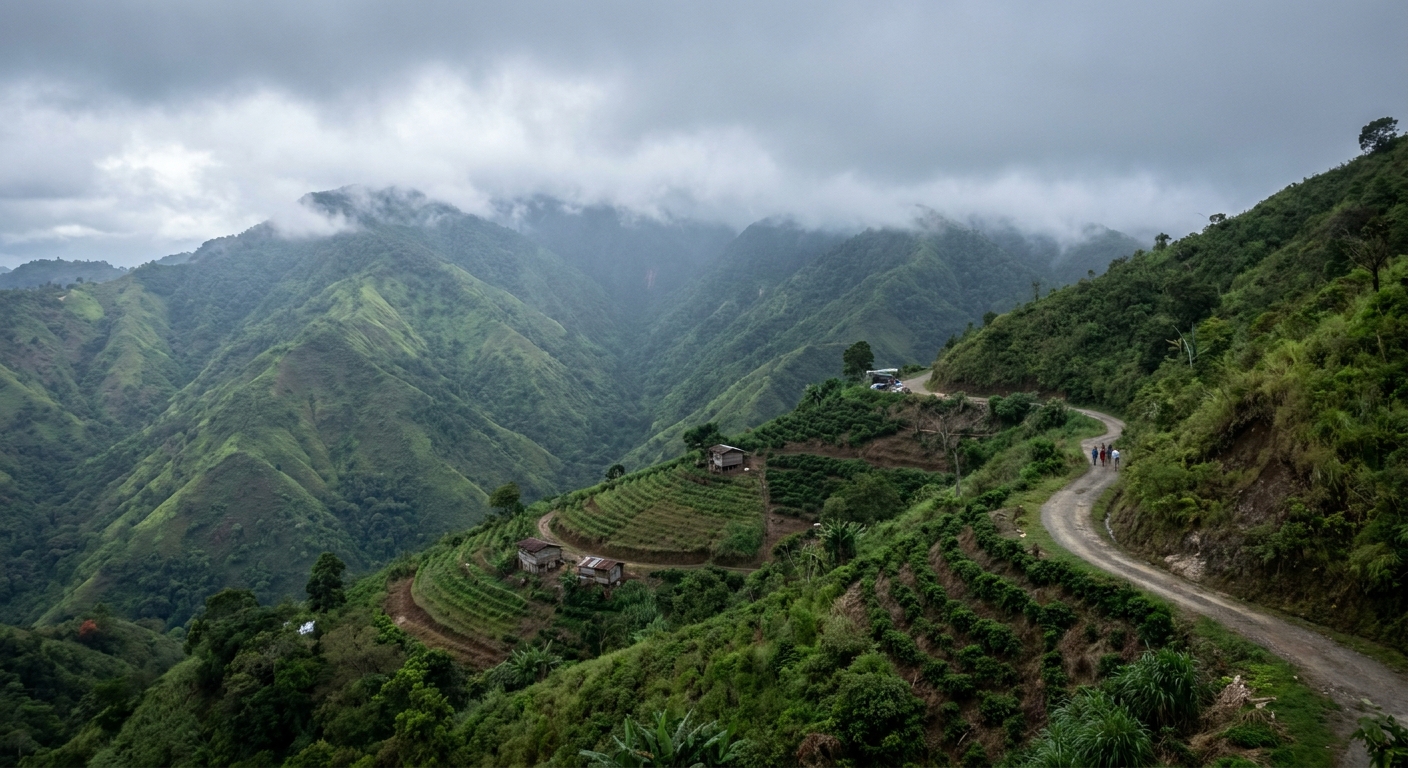
DECEMBER AT A GLANCE · THE BLUE MOUNTAINS
Go in December for cool cloud-forest hiking and wintering birds, pack for 50°F nights at the summit, and leave room in the plan for roughly one wet day in three.
57.6°F SUMMIT HIGHS · 9.8 RAIN DAYS · FLEECE REQUIRED
Go for: the Elfin Forest above 2,000 meters, endemic parrots and a wintering thrush, and cool mountain air after a hot beach week.
Think twice before: packing only beachwear, or booking the peak without a spare morning for weather.
Climate: Open-Meteo / ECMWF ERA5 reanalysis · Light: sunrise-sunset.org · Forest and wildlife: UNESCO · full sources at the end
On this page
- The Blue Mountains weather in December57.6°F highs, 9.8 rain days, sunset at 5:34 p.m.
- How cold the peak gets at night50.6°F lows and the layers to wear
- Booking, lodging tax and guides in DecemberHoliday dates, lodge booking and guide quotes
- Things to do in the Blue Mountains in DecemberElfin Forest, Bicknell’s Thrush, Nanny Town Heritage Route
- A two-day Blue Mountains itinerarySummit day and John Crow day, with a rain plan
- December vs November and JanuaryHighs, lows and rain across three months
- Is December a good time to visit?Who should go, and why January suits the rest
Blue Mountain Peak tops out at 2,256 meters, but the protected property starts as low as 850 meters, so several climates stack up on one slope. The December normals below describe the summit, the coldest end of that range. A guesthouse or coffee farm lower down will sit warmer, by an amount we could not verify. Most trips start from the capital: our Kingston guide covers the city at the foot of the range, flights from the US covers getting there, and getting around Jamaica covers the drive up.
The Blue Mountains weather in December: average highs, lows and rain days
| December normal, 1991–2020 | Blue Mountain Peak cell |
|---|---|
| Average high | 57.6°F (14.2°C) |
| Average low | 50.6°F (10.3°C) |
| Precipitation | 3.49 in |
| Days with 0.10 in or more | 9.8 |
| Days with 1 in or more | 0.4 |
| Daylight, Dec 15 | 11 h 06 min |
| Sunrise / sunset, Dec 15 | 6:28 a.m. / 5:34 p.m. |
Every figure here comes from a model. Open-Meteo computed 1991–2020 normals from ECMWF’s ERA5 reanalysis for the grid cell over Blue Mountain Peak (18.05°N, 76.58°W), an estimate for a patch of mountain rather than a thermometer at a weather station. On that basis, December averages a high of 57.6°F, a low of 50.6°F and 3.49 inches of rain.
Rain of at least a tenth of an inch falls on 9.8 days in an average December, close to one day in three. Most of it is light. Only 0.4 day a month brings an inch or more, so a proper downpour turns up in about two Decembers out of five. For a hike, plan the summit for your first clear morning and keep a lower-slope walk ready for the others.
Just 7.0°F separates the average afternoon from the average night. With so little swing, the bag stays the same from dawn to dusk: a warm fleece or light down jacket, a waterproof shell, long pants, a hat and spare socks in a dry bag. Our Jamaica packing list handles the beach half of the suitcase.
On December 15 the sun rises at 6:28 a.m. and sets at 5:34 p.m. Jamaica time, for 11 hours 06 minutes of daylight. Under forest canopy and cloud the trail dims before the official sunset, so start your descent with light in hand and carry a headlamp anyway.
How warm is the Blue Mountains in December?
In Celsius, the average high of 57.6°F comes to about 14.2°C and the average low of 50.6°F to about 10.3°C, a gap of 7.0°F between them. Those are averages for the summit cell. Individual days run above and below these averages.
At first light, around 6:28 a.m., the air sits close to the low, so set off in fleece and shell. By early afternoon, with the average high near 57.6°F, a long-sleeve base layer is usually enough while you keep moving, and the fleece goes back on at every stop. Seal a dry pair of socks and a spare base layer in a plastic bag for the walk down.
Our sources carry no count of frost nights, so we can’t tell you how often the summit touches freezing in December. The average low of 50.6°F sits 18.6°F above 32°F. We also found no sea-temperature reading to set beside these normals. The nearest swimming is on the coast, covered in our Port Antonio guide.
How busy is the Blue Mountains in December? Crowds and prices
Christmas and New Year both land in December. Beyond those dates, we found no occupancy series or monthly room rates for the mountain lodges, so we crown no month cheap or expensive. For the island-wide picture, see the best time to visit Jamaica and what a Jamaica trip costs.
We found no published booking window for the mountains, so we give no lead time in weeks. If your dates touch the holidays, secure the lodge and the ride up before you buy flights, and ask the lodge to line up a guide for the peak in the same email. Coming from Montego Bay or the north coast? Check airport transfers and driving in Jamaica first.
We could not verify a lodging-tax rate for stays in the Blue Mountains, so we give no percentage. Ask for the total with taxes included when you book, and compare it with the nightly rate on your confirmation.
Extra money changes a December trip in one place: a local guide who knows the trails, paired with a driver and a four-wheel-drive vehicle for the climb from Kingston. With 9.8 wet days in the month, local knowledge decides whether a cloudy morning means turning back or switching to a sheltered route. We found no published guide rate, so budget by quote. Before you book, read Jamaica after Hurricane Melissa for the state of roads and trails.
Things to do in the Blue Mountains in December
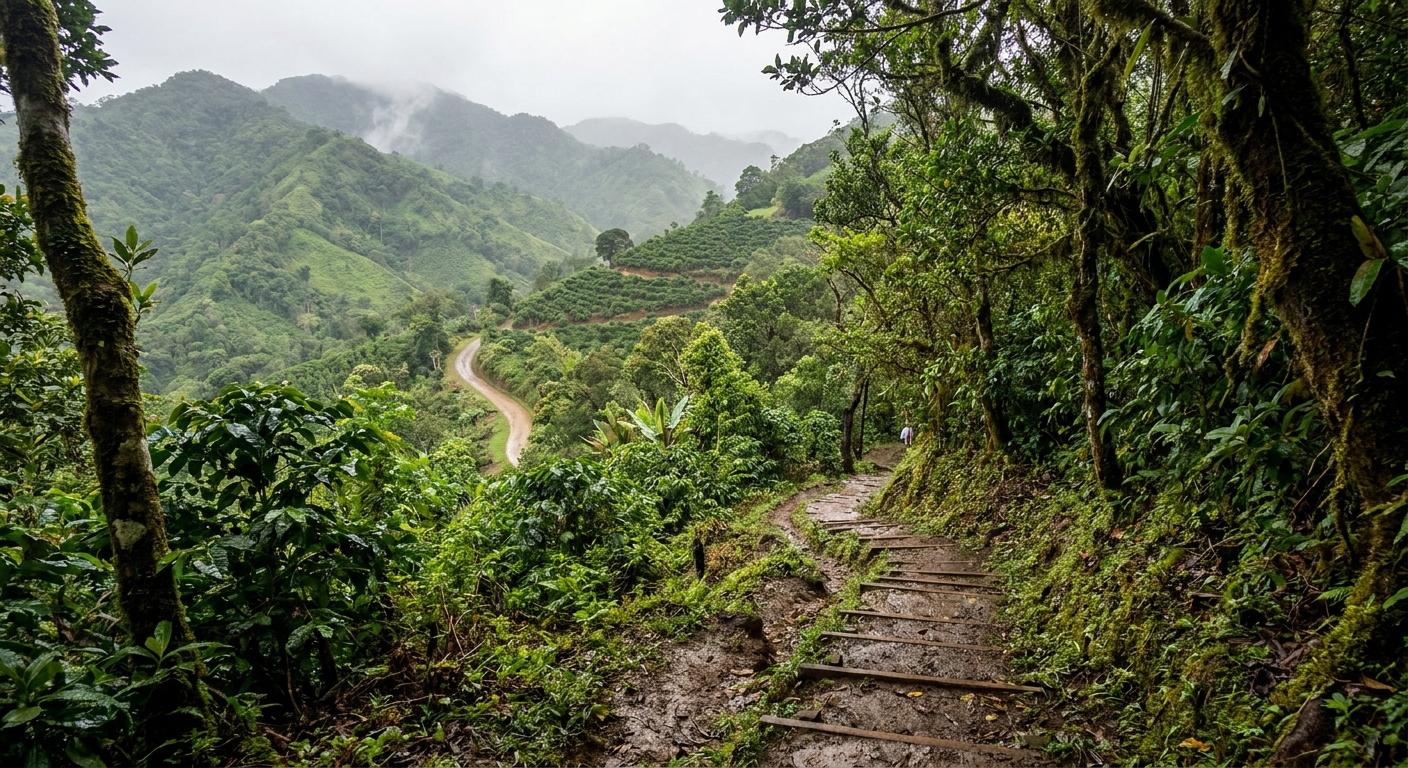
December puts a North American migrant back in the forest. Bicknell’s Thrush, one of the threatened species UNESCO lists for the property, breeds in the mountains of the northeastern US and Canada and winters in the Greater Antilles, so a December walk can turn up a bird absent in the northern summer. It shares the list with Jamaican residents: the Jamaican Blackbird, the Yellow-billed Parrot and the Black-billed Parrot.
The Blue and John Crow Mountains National Park protects a UNESCO property of 26,251.6 hectares of tropical montane rainforest inside a 28,494-hectare buffer zone. Above 1,800 meters the trees grow stunted, and above 2,000 meters, on the way to Blue Mountain Peak, the Elfin Forest begins: gnarled trunks under hanging mosses, ferns and tiny orchids. UNESCO counts 1,357 flowering plant species, about 294 of them Jamaican endemics and 87 found nowhere else. We found no stable official page publishing trail times, entrance fees or guide rates, so we print none.
Rain on 9.8 December days keeps the epiphytes soaked. UNESCO records 61 species of liverwort and moss in the property and 11 species of lichen, all of them endemic, and the mosses look fullest when wet. The same cloud that feeds them can shut the view from the peak, so give a grey morning to the forest floor and keep the summit panorama for the first clear dawn.
We could not verify an entrance fee or a free-admission day, so we name nothing as free. The human story needs no fee to read up on: the Windward Maroons used these mountains for a network of secret trails, settlements, look-outs and hiding places now called the Nanny Town Heritage Route, and the Maroon heritage of Moore Town joined UNESCO’s Intangible Heritage list in 2008. The threatened hutia, the property’s only land mammal that cannot fly, lives only in the John Crow Mountains.
The Blue Mountains in December: a two-day itinerary
Day one belongs to the summit. Drive up from your lodge or from Kingston in the dark and be walking by the 6:28 a.m. sunrise, dressed for the 50.6°F average low. Aim for the stunted forest above 1,800 meters by mid-morning and the Elfin Forest above 2,000 meters after that, with a hot drink and lunch in the pack. Turn around in good time to be off the upper trail well before the 5:34 p.m. sunset, then spend the evening back at your lodge on the lower slopes.
Day two heads east to the John Crow side for Moore Town and the Nanny Town Heritage Route, then down to Port Antonio for the night if you are continuing along the coast. If the weather turns on day one, swap the order: keep to lower forest with a guide and push the peak to the second or a third morning. An inch-plus downpour comes on 0.4 day in an average December, so one spare dawn usually covers it. Our 10-day itinerary helps you fit the mountains into a longer trip.
The Blue Mountains in December vs November and January
| Blue Mountain Peak cell, 1991–2020 | November | December | January |
|---|---|---|---|
| Average high | 59.1°F | 57.6°F | 56.9°F |
| Average low | 52.0°F | 50.6°F | 49.3°F |
| Precipitation | 4.58 in | 3.49 in | 2.59 in |
| Days with 0.10 in or more | 12.3 | 9.8 | 8.7 |
| Day-night gap | 7.1°F | 7.0°F | 7.6°F |
Across the three months the summit cools and dries. Highs slide from 59.1°F in November to 57.6°F in December and 56.9°F in January, and lows from 52.0°F to 50.6°F to 49.3°F. Rain thins out faster: 4.58 inches over 12.3 wet days in November, 3.49 inches over 9.8 days in December, 2.59 inches over 8.7 days in January. The day-night gap barely moves, at 7.1°F, 7.0°F and 7.6°F.
Shifting four weeks later to January gets you 1.1 fewer wet days and 0.90 inch less rain, for nights about 1.3°F colder. Shifting four weeks earlier to November gives highs 1.5°F warmer, along with 2.5 more wet days and 1.09 inches more rain. If a dry summit morning is the goal, go later. If warmth ranks above dry trails, November costs you mostly in rain.
Is December a good time to visit the Blue Mountains?
Yes, for hikers, birders and anyone who wants cool air and cloud forest in the middle of a Jamaica beach vacation, provided they pack for 50°F nights. No, if you picture tropical warmth at the top: a 57.6°F afternoon at 2,256 meters calls for a jacket, and rain on about one day in three can wreck a trip with a single shot at the summit.
If December doesn’t suit you, pick January. It runs drier, with 2.59 inches of rain against 3.49 and 8.7 wet days against 9.8, and Bicknell’s Thrush is still wintering in the forest. You pay for it in cold, with an average low of 49.3°F.
December gives you the wintering thrush, 2.5 fewer rain days than November, and nights that still average above 50°F, which January’s 49.3°F does not.
The last word
The decision that matters is two mountain nights instead of one, so a cloudy dawn on the peak gets a second chance before your flight home. Book the lodge before the beach hotel. When the clear morning comes and you climb into the Elfin Forest, you are walking through Jamaica’s first World Heritage site, inscribed by UNESCO in 2015, on two ranges that together cover about 20% of the island.
Sources & data for the Blue Mountains in December
- December, November and January normals (highs, lows, precipitation, rain days) · Open-Meteo / ECMWF ERA5 reanalysis, 1991–2020, grid cell 18.0465°N, 76.5788°W over Blue Mountain Peak · a model estimate, not a station reading · checked Sep 24, 2026
- Sunrise, sunset and daylight on December 15 · sunrise-sunset.org, converted from UTC to Jamaica time (UTC−5) · checked Sep 24, 2026
- Property size, buffer zone, elevations, forest zones, plants, mosses, birds, hutia, Maroon heritage and protecting laws · UNESCO World Heritage Centre, Blue and John Crow Mountains · checked Sep 24, 2026
- Bicknell’s Thrush breeding and wintering range · general ornithological knowledge, no count or date attached
- Trail times, entrance fees and guide rates · we found no stable official page publishing them · checked Sep 24, 2026
- Room rates, occupancy and lodging tax · we could not verify them, so we give no figures · lower-slope temperatures differ from the summit cell by an amount we could not measure.
To plan your stay
- Things to Do in the Blue Mountains: Coffee Farms, the Peak Hike, Bike Descents and Short Trails
- Blue Mountains Wildlife: The Birds, the Hutia and What Lives Only Here
- Best Time to Visit the Blue Mountains: Rainfall, Cool Nights and the Quiet Months
- The Blue Mountains in January: Weather at the Peak, Rain Days, Crowds and a Two-Day Plan