
JAMAICA · THE BLUE MOUNTAINS IN JANUARY · 18.05° N
Jamaica’s first World Heritage site starts where the beach resorts stop. The Blue and John Crow Mountains, inscribed by UNESCO in 2015, climb from 850 m to 2,256 m (roughly 2,790 to 7,400 ft) and together cover about a fifth of the island. Up there the forest grows stunted and moss-hung, the old trails once hid the Windward Maroons, and January mornings are fleece weather.
By the model’s count, January falls between a wetter December and a drier February, with temperatures that barely move across the three. Most mountain trips start from a city base: our Kingston guide and Port Antonio guide cover the two sides of the range, flights from the US covers getting to the island, and our Hurricane Melissa update tracks what has reopened. Book the mountain nights once the flight is fixed.
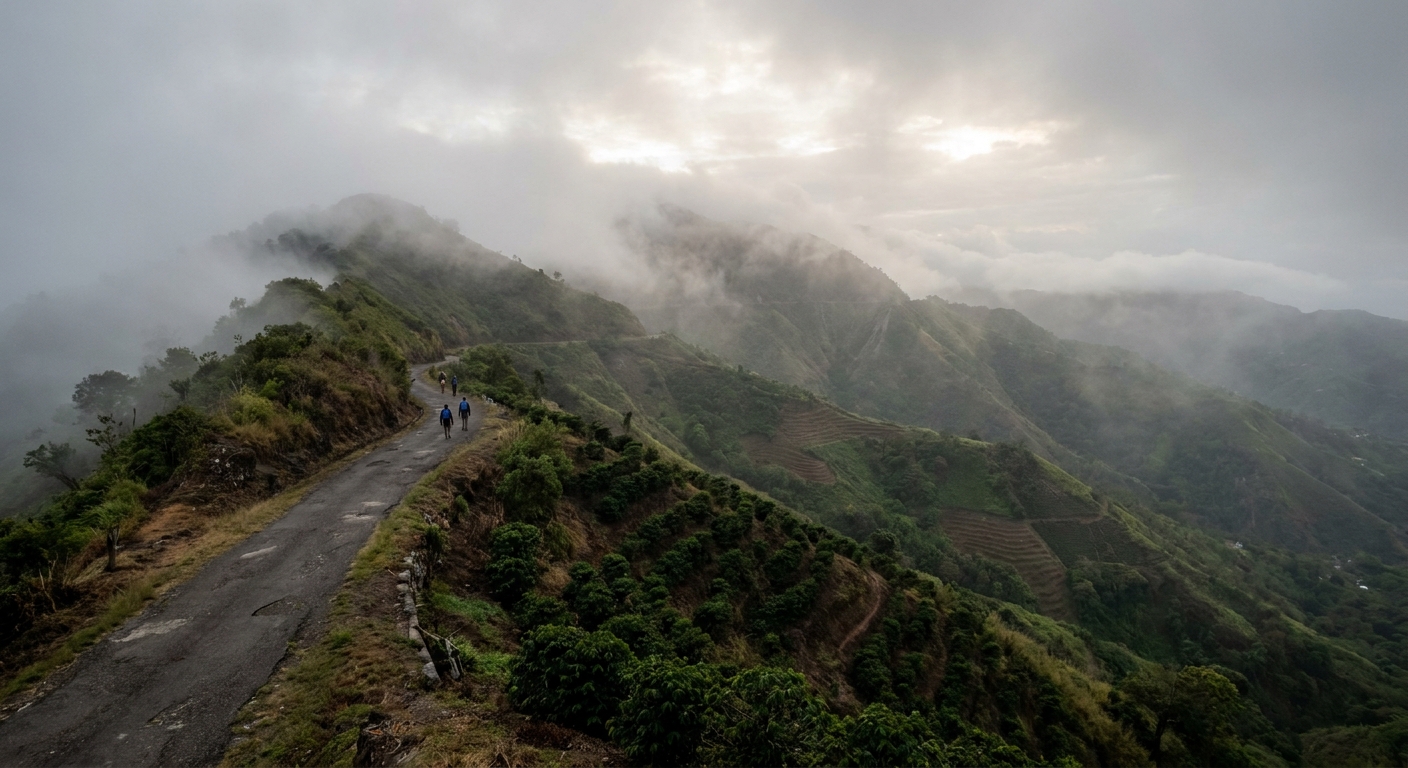
THE MONTH AT A GLANCE · THE BLUE MOUNTAINS IN JANUARY
January at Blue Mountain Peak is cool and moderately wet: go for the upper-forest walks with a fleece and a shell, and pick February if fewer rain days matter more than the date.
PEAK CELL AT 2,256 M · 8.7 RAIN DAYS · PACK FOR 49°F NIGHTS
Go for: cool summit walking at a 56.9°F average high, the Elfin Forest above 2,000 m, threatened endemic birds, and the Maroon trails around Moore Town.
Think twice before: packing from a Kingston forecast. The peak cell averages 49.3°F at night, and more than one January day in four is wet.
Climate: Open-Meteo / ECMWF ERA5 reanalysis · Light: sunrise-sunset.org · Heritage: UNESCO · full sources at the end
On this page
- Blue Mountains weather in JanuaryHighs of 56.9°F, lows of 49.3°F, 8.7 rain days
- How cold it gets at the peak in JanuaryThe 7.6°F day-night spread and what to wear
- Crowds, prices and booking in JanuaryPrice season, booking order and lodging tax
- Things to do in the Blue Mountains in JanuaryBlue Mountain Peak, the Elfin Forest and Moore Town
- A two-day Blue Mountains itineraryTwo days set by a 6:39 a.m. sunrise and a 5:51 p.m. sunset
- January vs December and FebruaryRain from 3.49 to 1.93 inches across three months
- Is January a good time to visit?Who January suits, and the February alternative
Every figure here comes from one place: the Open-Meteo grid cell at 18.0465° N, 76.5788° W, which sits over Blue Mountain Peak itself. That is the top of the range, 2,256 m up, and the coldest ground a hiker reaches. Trailheads and lodges lower on the slopes run warmer by an amount we did not measure, and the coast warmer again. Pack from a Kingston forecast and you will be cold at the summit.
The Blue Mountains weather in January: average highs, lows and rain days
| January at the peak cell (1991-2020) | Value |
|---|---|
| Average high | 56.9°F (13.8°C) |
| Average low | 49.3°F (9.6°C) |
| Precipitation | 2.59 in |
| Days with 0.10 in or more | 8.7 |
| Days with 1 in or more | 0.1 |
| Daylight on Jan 15 | 11 h 12 min |
| Sunrise and sunset, Jan 15 | 6:39 a.m. · 5:51 p.m. |
Averaged over 1991-2020, January at the peak cell runs a high of 56.9°F (13.8°C) and a low of 49.3°F (9.6°C), with 2.59 inches of precipitation. The source is the ECMWF ERA5 reanalysis served by Open-Meteo, a weather model reconstructed over a grid cell. No thermometer stands behind these numbers the way one does at an airport station, so read them as a close guide to the summit and expect any single day to stray from them.
Rain shows up on 8.7 days in an average January, counting any day with at least 0.10 inch: a little more than one day in four. Downpours are rare. Days with an inch or more average 0.1, so about one January in ten brings a single soaking day. Spread the month’s 2.59 inches over those 8.7 wet days and a typical wet day leaves about 0.3 inch, enough to slick a trail and soak through a cotton shirt.
Day and night sit only 7.6°F apart at the summit, from 56.9°F down to 49.3°F. In the bag: a fleece or light down layer, a waterproof shell for the wet days, something warm to sleep in, and a spare pair of dry socks for every trail day. Our Jamaica packing list covers the beach half of the trip.
On January 15 the sun rises at 6:39 a.m. and sets at 5:51 p.m. Jamaica time (UTC-5), for 11 hours 12 minutes of daylight. Tropical dusk is short. Plan to be off exposed trail by about 5:30 p.m., and carry a headlamp anyway.
How warm is the Blue Mountains in January?
Not very, by Jamaican standards. The peak’s January range runs from an average afternoon of 56.9°F to an average night of 49.3°F, a spread of 7.6°F. December’s spread is slightly narrower at 7.0°F, February’s slightly wider at 8.2°F. In Celsius, the January band sits between 9.6°C and 13.8°C.
A morning start near 49°F means a fleece, a hat and a shell over long sleeves. By early afternoon, with the air near 57°F and the trail climbing, most walkers strip to a long-sleeved base layer and keep the shell within reach. Long trousers stay on all day, because the Elfin Forest above 2,000 m is dense, gnarled and coated in mosses and ferns.
Our source gives no count of frost nights, and we could not read a record low for the cell, so we cannot say whether the summit freezes in January. The average low of 49.3°F sits 17.3°F above freezing. An average smooths out the coldest night of the month, so treat 49°F as typical and pack a layer for colder.
How busy is the Blue Mountains in January? Crowds and prices
We found no occupancy series and no monthly room rates for the mountain lodges, so we crown no month cheap or expensive. The island-wide calendar, with its busy and quiet stretches, is set out in our best time to visit Jamaica guide, and Jamaica trip cost prices flights, beds and meals for the rest of the trip.
We cannot give a booking lead time in weeks either, because we found no data on how fast mountain rooms fill. Our order is flight first, bed second, transport third: the roads into the range are steep and winding, and our driving in Jamaica and airport transfers guides help you decide between driving and being driven. Recheck the hurricane recovery status in the week you book.
We could not verify Jamaica’s lodging-tax rate, so we give no percentage. Ask the lodge whether its quoted rate includes tax and service before you send a deposit.
Spend extra on a guide. With more than one wet day in four and dusk at 5:51 p.m., someone who knows the trails keeps a short winter day safe. On the Nanny Town Heritage Route, the Maroon network of trails, settlements and look-outs, a guide from the Moore Town community adds the history as well: UNESCO inscribed Moore Town’s Maroon heritage on its Intangible Heritage list in 2008. We found no published guide rate, so agree the fee before you set out.
Things to do in the Blue Mountains in January
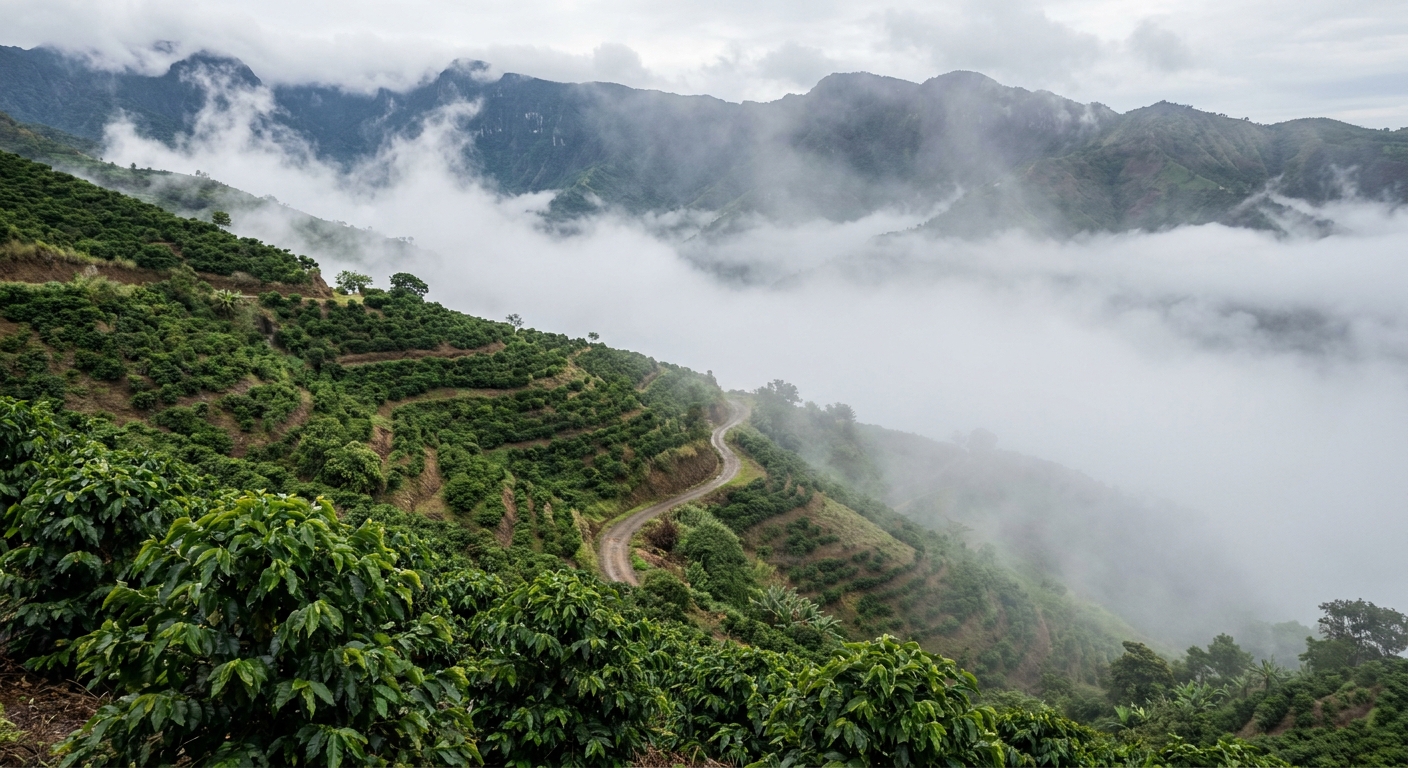
January is cool walking weather at the top of the range. Of the three winter months we compare, it has the lowest average high at the peak cell, 56.9°F, and it runs drier than December. Birders have a reason too: UNESCO lists Bicknell’s Thrush, a threatened migrant, among the property’s birds. We did not verify its arrival and departure dates, so confirm with a local birding guide before building a trip around it.
Blue Mountain Peak, at 2,256 m, is the high point of the World Heritage property. Above 1,800 m the trees grow stunted, and above 2,000 m UNESCO calls it Elfin Forest: gnarled trunks hung with mosses, ferns and tiny orchids, part of nine ecological communities in the upper montane forest. The property covers 26,251.6 hectares, with a 28,494-hectare buffer zone. Look for the threatened Jamaican Blackbird and the Yellow-billed and Black-billed Parrots. In the John Crow Mountains lives the threatened Hutia, the property’s only land mammal that does not fly, whose population is restricted to that range.
Above 900 to 1,000 m, half the flowering plants are Jamaican endemics, and across the property UNESCO reports 1,357 flowering species, about 294 of them endemic to Jamaica and 87 found nowhere else. Those plants stand in any month. January changes the conditions around them: a 49.3°F average night at the summit, 8.7 wet days, and 11 hours 12 minutes of light to walk in.
We cannot tell you what is free. We found no stable official page publishing an entrance fee, a trail time or a guide rate for the national park, and UNESCO describes the property without running visits. Ask your lodge for current park fees and trail conditions when you book.
The Blue Mountains in January: a two-day itinerary
Day one, the high forest. Be walking at sunrise, 6:39 a.m., when the air sits near its 49°F average low, and climb into the stunted forest above 1,800 m as the day warms. Eat lunch high, around the warmest part of a 57°F afternoon. Start down by about 2:30 p.m., reach your lodge well before the 5:51 p.m. sunset, and spend the evening drying boots and layers for the next morning.
Day two, Maroon country. Head east for Moore Town and a section of the Nanny Town Heritage Route with a community guide, leaving after breakfast. If the day turns wet, as 8.7 January days do, keep to lower trails or swap the walk for the coast: our Port Antonio and Kingston guides both work as rain-day bases, and our 7-day itinerary shows how the mountains fit a longer Jamaica trip.
The Blue Mountains in January vs December and February
| Peak cell, 1991-2020 | December | January | February |
|---|---|---|---|
| Average high | 57.6°F | 56.9°F | 57.2°F |
| Average low | 50.6°F | 49.3°F | 49.0°F |
| Day-night spread | 7.0°F | 7.6°F | 8.2°F |
| Precipitation | 3.49 in | 2.59 in | 1.93 in |
| Days with 0.10 in or more | 9.8 | 8.7 | 6.2 |
Across the three months the temperature barely moves: average highs run 57.6°F, 56.9°F and 57.2°F from December to February, and average lows 50.6°F, 49.3°F and 49.0°F. Rainfall moves a lot more. Precipitation drops from 3.49 inches in December to 2.59 in January and 1.93 in February, and wet days from 9.8 to 8.7 to 6.2.
Shifting four weeks later, to February, buys 2.5 fewer wet days and 0.66 inch less rain, with highs 0.3°F warmer and nights 0.3°F colder. Going earlier, into December, adds 1.1 wet days and 0.90 inch of rain, in exchange for nights 1.3°F milder and highs 0.7°F warmer.
Is January a good time to visit the Blue Mountains?
Yes, if you are coming to walk. Hikers and birders get cool days in the upper forest, fewer wet days than in December, and 11 hours 12 minutes of daylight. No, if the trip is about warmth: nights near 49°F at the summit and a wet day more than one day in four make January a poor fit for anyone packed only for the coast. Travelers with young children can read Jamaica with kids before committing to the high trails.
If rain is the worry, pick February. It averages 6.2 wet days and 1.93 inches against January’s 8.7 and 2.59, at almost the same temperatures, and our February guide lays out that month.
Of December, January and February, January brings the coolest average afternoon to Blue Mountain Peak: 56.9°F.
The last word
Choose the date by the rain, then pack for the summit rather than the coast. If 8.7 wet days sound acceptable, January puts you in the Elfin Forest at walking temperature, and once you are there, look closely at the trunks: UNESCO counts 61 species of liverwort and moss and 11 of lichen in the property, all of them endemic. Bring a hand lens alongside the fleece.
Sources & data for this guide
- January, December and February normals (highs, lows, precipitation, wet days) · Open-Meteo / ECMWF ERA5, 1991-2020, grid cell 18.0465° N, 76.5788° W over Blue Mountain Peak (2,256 m) · model reanalysis, not a station reading · checked Sep 24, 2026
- Daylight, sunrise and sunset on January 15 · sunrise-sunset.org, converted from UTC to Jamaica time (UTC-5) · checked Sep 24, 2026
- Inscription, area, elevations, forest zones, plants, mosses, birds, Hutia, Maroon heritage and protection laws · UNESCO World Heritage Centre, Blue and John Crow Mountains (1356) · checked Sep 24, 2026
- Trail times, entrance fees and guide rates · we found no stable official page publishing them · checked Sep 24, 2026
- We found no sea-temperature reading for the peak cell, no frost-night count, no record low, no lodge occupancy series and no verified lodging-tax rate, so none of these carries a number. Conversions to °C and feet, the day-night spreads and the month-to-month differences are our own arithmetic from the figures above.
To plan your stay
- Things to Do in the Blue Mountains: Coffee Farms, the Peak Hike, Bike Descents and Short Trails
- Blue Mountains Wildlife: The Birds, the Hutia and What Lives Only Here
- Best Time to Visit the Blue Mountains: Rainfall, Cool Nights and the Quiet Months
- The Blue Mountains in February: Weather, Summit Lows and Rain Days vs January and March