
EVERGLADES NATIONAL PARK · FLORIDA · 25.29° N
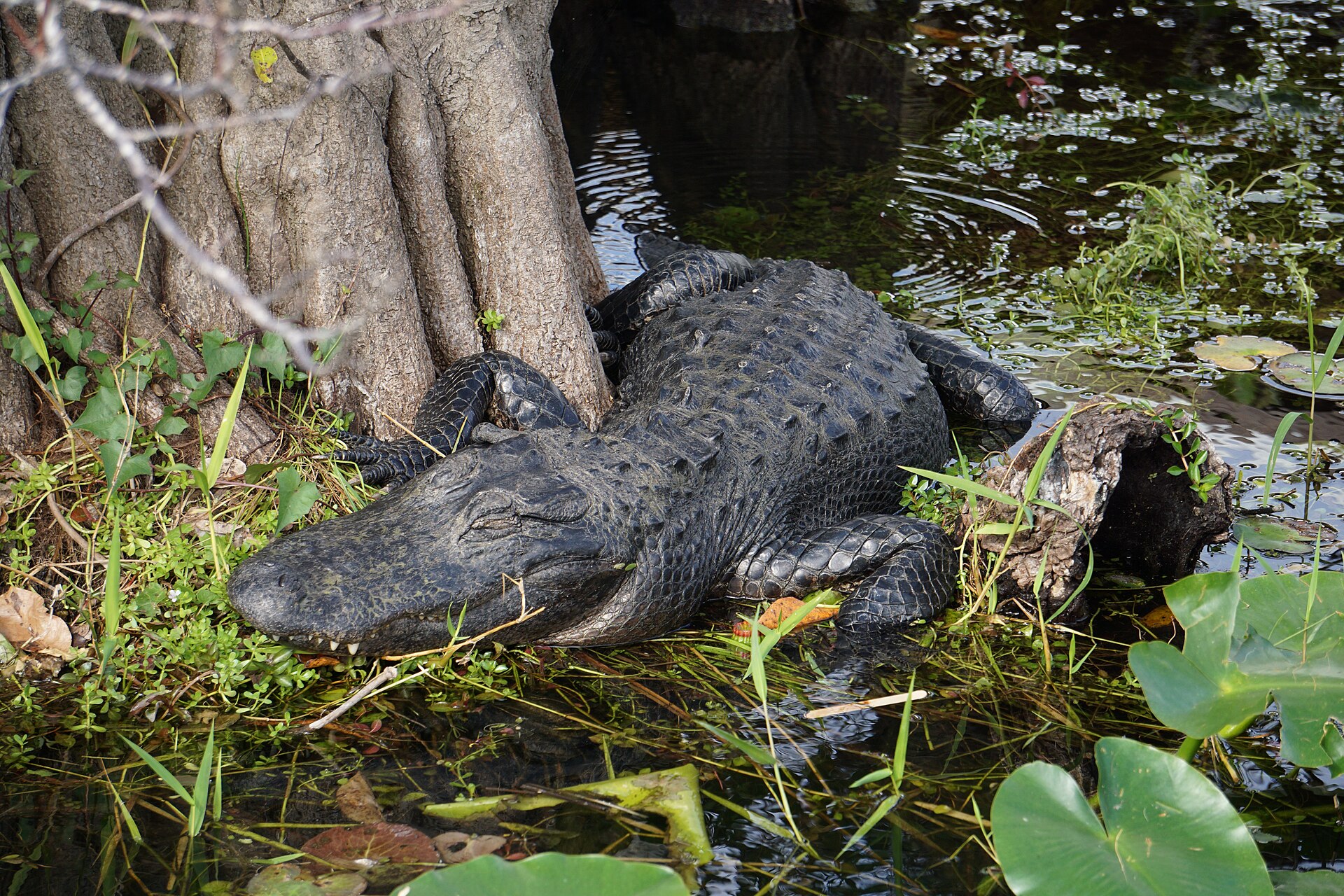
Come in the right season, and the Everglades feels almost generous. On a December morning along the Anhinga Trail, the air is cool enough for a light jacket, the sawgrass glows amber against a low sun, and the wildlife you flew here to see — alligators sunning on the banks, herons frozen mid-stalk, anhingas drying their wings like laundry — is gathered around the remaining water, close enough that you’ll put the zoom lens away. Come in the wrong season, and the same trail is a sauna with a heat index over 100°F, daily thunderstorms, and mosquitoes the National Park Service itself describes as “profuse.”
Few places on Earth swing this hard between two versions of themselves. Here is when to go — and exactly why.
THE YEAR AT A GLANCE · EVERGLADES
December through April is the Everglades at its best: dry, mild, busy with birds — and with people. If you can only pick one window, aim for December or January, before the spring-break crowds peak.
BEST: DECEMBER–APRIL · QUIETEST: OCTOBER · TOUGHEST: JUNE–SEPTEMBER
Go for: wildlife photography, birding, ranger walks, and comfortable hiking — all of it concentrated in the winter dry season.
Think twice if: your only window is July or August. The park stays open, but heat, daily storms and insects will shape every hour of your visit.
Hurricane season runs June 1 to November 30, with its climatological peak on September 10 — the quiet-season bargain carries real weather risk.
Seasons & climate: National Park Service · Crowds: NPS visitor statistics · Hurricanes: NOAA — full sources at the end of this guide
A park with two seasons, not four
The Everglades doesn’t do spring and fall. It does wet and dry, and the difference is the whole trip.
The dry season runs from December to mid-May. The park service pegs winter days in the “low 50s to upper 70s °F,” with low humidity and only about a quarter of the year’s rain. This is the Everglades of the postcards: clear mornings, walkable trails, and ranger programs running at full schedule across Royal Palm, Flamingo, Shark Valley and Gulf Coast.
The wet season, from mid-May through November, is a different country. Average highs sit around 90°F with humidity above 90 percent, the heat index regularly clears 100°F, and afternoon thunderstorms roll through almost daily. Nearly 60 inches of rain — the vast majority of the annual total — falls in these months. The landscape turns lush and dramatic, and photographers who can stand the conditions get skies nobody sees in January. But it is a commitment, not a stroll.
The wildlife follows the water
Winter isn’t just more comfortable — it’s when the park’s animals make themselves visible. As the land dries out, wading birds, alligators and turtles concentrate around the remaining water holes. The park’s own dry-season page lists “abundance of wildlife” alongside the cooler temperatures as the reason winter is high season.
The single best expression of this is the Anhinga Trail at Royal Palm, four miles past the main entrance: a 0.8-mile boardwalk loop that the NPS calls one of the park’s most popular trails “because of its abundance of wildlife,” especially in winter. In the wet season, the equation flips — “as water levels rise, animals disperse, making wildlife viewing more challenging,” in the park service’s own words.
Month by month
December–February is the sweet spot: full dry-season conditions, wildlife at maximum concentration, and — in December especially — crowds that haven’t yet peaked. March is glorious but the busiest month of the year (99,017 visits in March 2025, the annual record), thanks to spring break. April and November bookend the season nicely: reliable weather, thinner crowds. May and October are transition months — a gamble that can pay off in quiet trails. June through September is for the committed only: heat, storms, insects, and hurricane watch. The park stays open year-round, including holidays; it never closes so much as it changes character.
What there is to actually do — and when each shines
Anhinga Trail (Royal Palm). The park’s headline walk, and the winter concentration effect at its purest: an 0.8-mile boardwalk where alligators, herons, egrets and the trail’s namesake anhingas gather within feet of you. Go at opening time in the dry season; it’s the best free wildlife show in Florida.
Shark Valley. On the Miami side, a 15-mile paved loop through the heart of the sawgrass — ride it by rental bike or take the tram to the observation tower for the only elevated view of the “river of grass.” Winter mornings stack alligators along the canal like parked cars.
Flamingo. The end of the main road, 38 miles in, where the Everglades meets Florida Bay: boat tours into the backcountry, kayak trails through the mangroves, and the park’s oddest double bill — this is where you can see alligators and crocodiles in the same day, plus manatees idling around the marina in the cooler months.
Gulf Coast (Everglades City). The paddler’s entrance: launch point for the Ten Thousand Islands, a mangrove labyrinth best explored by guided kayak or boat tour. Calm winter water makes it the season for it.
Ranger programs. The park’s guided walks — including the famous wet-hike “slough slogs” into a cypress dome — run at full schedule in the dry season and thin out sharply in summer. If your dates land December through April, build one in; it’s the cheapest expertise you’ll ever hire.
The mosquito question, answered honestly
Yes, they’re real. The park service says mosquitoes are “plentiful especially at certain times of the year,” most active “on overcast days and at dusk and dawn, especially during the summer,” and its wet-season page warns that mosquitoes and biting flies “can be profuse in some areas.” The dry-season page, in turn, lists the “lessening of mosquitoes” as one of the reasons winter is peak season. Translation: in January you’ll want repellent in your bag; in August you’ll want it on your skin, reapplied, and you’ll still donate blood.
Crowds, fees and the fine print
The crowd curve is steep. March 2025 drew 99,017 visits; October 2025, the quietest month, drew 19,008 — roughly a five-to-one swing. If solitude matters more to you than perfect weather, late October and November offer a real trade: fewer people, drying trails, and the first winter birds arriving.
The practicalities: entry is $35 per private vehicle (valid 7 days), $30 per motorcycle, $20 per pedestrian or cyclist age 16+. The park is now cashless — digital passes or cards only. And a significant change for international visitors: non-US residents without an annual pass pay a $100-per-person surcharge (age 16+). The main Homestead entrance (Ernest Coe, leading to Royal Palm and Flamingo) and the Gulf Coast entrance are open 24 hours; Shark Valley, on the Miami side, runs 8:30am–6pm.
The hurricane caveat
The Atlantic hurricane season — June 1 through November 30, peaking around September 10 — overlaps almost exactly with the park’s wet season. An average season (1991–2020) produces 14 named storms, 7 hurricanes and 3 major hurricanes. That doesn’t make a September trip reckless; it makes it conditional. Check the park’s current conditions page and the National Hurricane Center before you commit, and favor refundable bookings from August through October.
Sources & data for this guide
- NPS — Everglades weather & seasons, dry season, wet season — checked Aug 31, 2026
- NPS — fees and operating hours — checked Aug 31, 2026
- NPS Visitor Use Statistics, monthly recreation visits 2025 (via the NPS STATS portal) — checked Aug 31, 2026
- NOAA National Hurricane Center — Atlantic climatology 1991–2020 — checked Aug 31, 2026
- NPS — Anhinga Trail and safety guidance — checked Aug 31, 2026