
Start with an evening at Naoussa's harbor, then add the hill village of Lefkes, a boat trip or ferry to Antiparos and one big beach day. Give Parikia a morning on your way in or out, and save one night for a long dinner in the lanes behind the Naoussa waterfront.
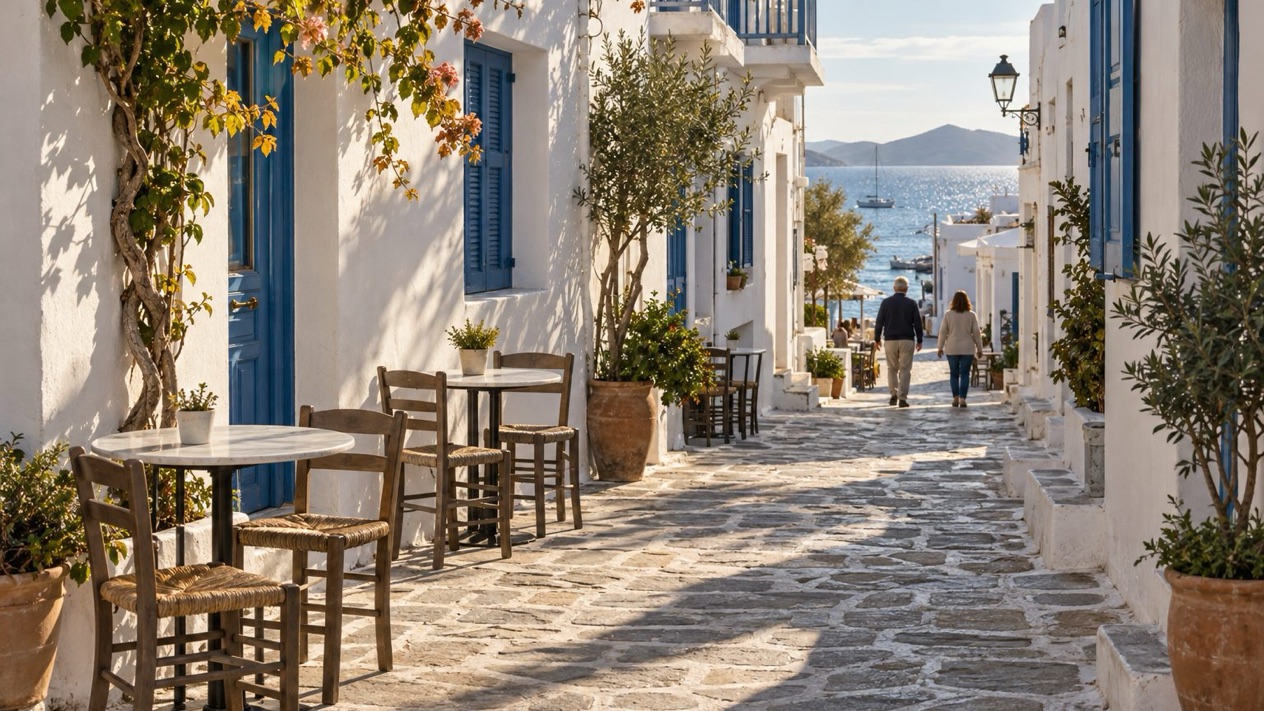
What should you do first on Paros?
Watch golden hour at Naoussa harbor
Naoussa is a fishing village on the north side of the island, and it still works like one. Around an hour before sunset, grab a drink along the harbor and just sit. The light turns the whole harbor golden, the fishing boats bob in the port, and the tables along the water fill up.
Afterward, wander the cobbled lanes behind the harbor, where independent boutiques sell locally made ceramics, jewelry and linen clothes. Plan at least one dinner here, a few streets back from the water. The harbor-front restaurants tend to cost more and taste less special than the small places where a few tables spill onto the cobbles. Matina & Stavros is exactly that kind of taverna: unpretentious, warm and cooked with care.
Naoussa's small Venetian fortress by the water started life as a watchtower against pirates. Look for the rock staircase and climb to the top for the view, or admire it from a shoreside taverna with a cocktail. On 23 August, the Night of the Corsairs celebrates the town's victory over the pirates.
Get lost in Lefkes
Lefkes, the island's former capital, sits in the hills at the center of Paros. It has marble-paved lanes, stone houses, flower-filled alleys and bougainvillea, with very few people around. Give it an hour or two with no plan, then have a coffee on the main square, where locals play cards. The Church of Agia Triada, built on the site of three earlier churches, stands over the village.
The Byzantine Way begins right in the village, a marble-paved path that leads to Prodromos and runs 2.4 miles (3.9 kilometers). It's shaded in parts, has just enough climb to feel like an achievement, and the views over the island are lovely. Lefkes also hosts the Festival of Karavolas at the end of August.
Buses run from Parikia, roughly hourly in shoulder season. With a car, pair Lefkes with Marpissa, a quiet inland village 10 minutes' drive away, with whitewashed houses, windmills and a monastery with 360-degree views of the island.
Which beaches are worth the trip?
Paros has around 60 beaches. These are the ones to plan a day around, from family coves to a beach where you coat yourself in clay.
Kolymbithres
Sculpted granite formations create little coves and natural swimming pools here, unlike anything else in the Cyclades. The beach is family-friendly, with sandy areas and rocky pools that are lovely for snorkeling, and the water stays fairly calm. Peak season can bring crowds, so arrive early in the morning, before the boat trips from Parikia pull in, and you may find it nearly empty. Tavernas sit above the sand, and sunbed prices have crept up toward those of the glitzier islands.
Golden Beach
Big and sandy, with clear water and several tavernas for lunch or drinks. It consistently catches strong winds, which makes it the island's wind sports beach, and the beach clubs are lively to match. Sunbeds are pricey but worth it for a full day, while an hour or two on the sand works fine without one. It's roughly 12 miles (20 km) from Parikia, so a rental car is a handy way to get there.
Faragas, Santa Maria and Piperi
Faragas on the south coast is quieter, with a beach bar and loungers, and its south-facing cove is protected from the summer wind, which makes it good for small children. Santa Maria, near Naoussa, has calm, shallow water and is the easy family pick. Piperi sits in Naoussa itself, a short walk for anyone staying in town and handy if your hotel has no pool.
Kalogeros, the clay beach
Scrape clay from the rocks, mix it with seawater, rub it on your skin and rinse off in the sea, like a natural spa day. The beach is signposted, and a car is the way to get there. It's rockier and less protected than the others, and there's no food nearby, so bring a towel, water and snacks. Keep an eye on the water too, since the wake from passing ferries can knock you off your feet.
Is a boat trip or a day on Antiparos worth it?
Yes. Antiparos is a small, peaceful island a few minutes away, and either a boat trip or a ferry hop makes a lovely day out.
Take a boat trip
Styles range from full days and lively party boats to half days and private hire. Many of these trips include swimming stops, and some also serve lunch and drinks as part of the ticket. A boat that isn't filled to capacity makes the swim stops far more relaxing, so it can be worth paying a little more. Some trips from the port of Pounta visit sea caves and offer cliff jumping. That boat can be packed and shade runs short, so arrive early to grab a spot. Back in Aliki, the harbor tavernas are made for a lazy seafood lunch.
Or just take the ferry
The crossing is short, usually just a few minutes. Foot passengers leave from Parikia, and cars go from Pounta. Boats run often, especially in summer. A car is the easiest way to see the island once you're there. The beaches here are small and peaceful, from little coves like Faneromeni to larger ones like Soros. For lunch, Captain Pipinos has oceanfront views and Zombos sets its tables right on the sand. There's also a cave you can visit, so check its opening times before you go, since it can be closed in the afternoon. One day is enough: there's not much to do, but the day trip is well worth it.
What should you see in Parikia?
Parikia gets written off as the ferry port. Spend a morning here anyway.
Walk the old town
Tucked behind the waterfront, the lanes are lined with whitewashed houses and bougainvillea spilling over the walls, and the crowds from the port feel far away. It feels quieter and more local than Naoussa. Start with coffee at an outdoor table, then wander. Two small churches greet you at the port: Agios Konstantinos, which watches over the harbor, and the chapel of Agios Nikolaos, just to the left as you step off the ferry.
The Church of 100 Doors
Panagia Ekatontapyliani is one of Greece's most significant Byzantine monuments and sits in the middle of town. Visit in the morning. Legend says the church has 99 doors that you can see, and that the hundredth will open when Constantinople becomes Greek again. It's smaller than you might expect and doesn't take long. The Byzantine Museum of Paros, with rare icons, is in the same complex.
The Archaeological Museum
In antiquity, Paros grew rich on its fine, almost translucent white marble, and Praxiteles' Hermes and the Venus de Milo were both carved from it. The Archaeological Museum in Parikia holds Parian sculpture and pottery, inscriptions from excavations on Paros, Antiparos and Despotiko, and the "Fat Lady" from 5000 BC, found on the islet of Saliagos, the oldest Neolithic settlement in the Cyclades.
2026 prices: entry is €5, reduced €3. The museum is open 8:30 a.m. to 3:30 p.m. all year, with last entry 20 minutes before closing. It's closed on Tuesdays and on January 1, March 25, Orthodox Easter Sunday, May 1, and December 25 and 26. The majority of museums and collections on the island close on Tuesdays, so plan around that. Smaller museums are in Naoussa, Marpissa and Lefkes, including the Historical Folklore Museum next to Naoussa's main square and the Nikos Perantinos Sculpture Museum on the hill of Marpissa.
Where do you eat and drink on Paros?
Mouragio Tavern does an excellent fish platter. Before dinner, Evinos is a rooftop cocktail bar among the palm trees, so arrive early for a seat with a clear view. When you want something simple, Stavros Kebabtzifiko near the ferry terminal serves gyros.
In Naoussa, look beyond the waterfront for garden restaurants, which are easy to miss. Open Garden serves traditional food with a modern take and fills up even in late September, so arrive early. Sante sprawls onto the street under a huge tree and serves its cocktails with a side of popcorn.
For a lively night, Barbarossa on the Naoussa waterfront is home to the napkin party, where diners wave white napkins and dance on the tables. Book the restaurant if you want in, and come for the atmosphere, since the food gets mixed reviews.
For wine, the Moraitis winery, just outside Naoussa near Aghioi Anargyri Beach, has tastings, a small museum on the family's history and a vine-shaded courtyard. The family has made wine here since 1910 from indigenous grapes. Local cheese platters come with the wine, and bottles are reasonably priced, so leave space in your suitcase.
How do you get around Paros?
Buses are reliable and affordable, with Parikia port as the hub for Naoussa, Lefkes, Aliki, the Pounta ferry point for Antiparos and some beaches. Timetables shift as the season moves along, so look at the KTEL Paros website for current times before you head out.
A rental car opens up inland villages and quieter beaches, and it's a big help for shade and storage if you're traveling with kids. If you arrive by ferry, pick one up from a rental office near the Parikia port. Many visitors find parking easy in the back streets of the towns. Scooters and ATVs suit short beach-hopping trips around Naoussa. Taxis are pricey and hard to find, which makes your choice of base matter.
How many days do you need in Paros, and where should you stay?
Three days is the minimum: enough for Naoussa, a few beaches, a morning in Parikia and a boat trip. Four is the sweet spot, with time for Naoussa, Parikia, Lefkes, Antiparos and a couple of dedicated beach days. Stay longer if you can.
Naoussa is a lovely base, with restaurants and nightlife right on your doorstep. For quieter nights, stay a 10-minute walk from the center, since the partying runs late. Parikia, the island's main port, is the practical choice for ferry connections, and accommodation there tends to cost less.
When should you go to Paros?
June, especially its first two weeks, is a great time to visit: the sea is warm enough for a swim, the sunshine is dependable, and Naoussa feels lively without being overrun. September is a close second, with noticeably lower prices and a quieter island. In July and August, the Meltemi wind blows. It cools the heat but can disrupt ferries and make exposed beaches unpleasant, and it can still cause ferry trouble in early September, so build slack into any connections.
In peak season, book a rental car in advance, since good vehicles go quickly. Check ferry and bus timetables close to your dates. Cards work in many places, but it's wise to carry some cash for the Antiparos ferry, taxis and small tavernas.
Sources
- thetravelpsychologist.co.uk (https://thetravelpsychologist.co.uk/10-things-to-do-in-paros-greece/), checked October 18, 2026
- postcardsbyhannah.com (https://postcardsbyhannah.com/things-to-do-in-paros/), checked October 18, 2026
- finduslost.com (https://finduslost.com/the-complete-paros-greece-travel-guide/), checked October 18, 2026
- gypsysols.com (https://www.gypsysols.com/5-things-to-do-in-paros/), checked October 18, 2026
- wherestherooftop.com (https://wherestherooftop.com/2024/07/04/paros-island-what-to-do-and-where-to-stay/), checked October 18, 2026
- Visit Greece (GNTO) (https://www.visitgreece.gr/en/islands/cyclades/paros), checked October 15, 2026
- archaeologicalmuseums.gr (https://archaeologicalmuseums.gr/en/museum/5df34af3deca5e2d79e8c198), checked October 15, 2026
- imagine.paros.gr (https://imagine.paros.gr/en/what-to-do/shmeia-endiaferontos/museums.html), checked October 15, 2026
- Visit Greece (GNTO) (https://www.visitgreece.gr/islands/cyclades/antiparos/), checked October 15, 2026
- cyclades.culture.gov.gr (https://cyclades.culture.gov.gr/en/hours-prices/), checked October 15, 2026
- hellenicseaways.gr (https://www.hellenicseaways.gr/en-gb/highspeed-3/ferry-tickets-to-paros), checked October 15, 2026