
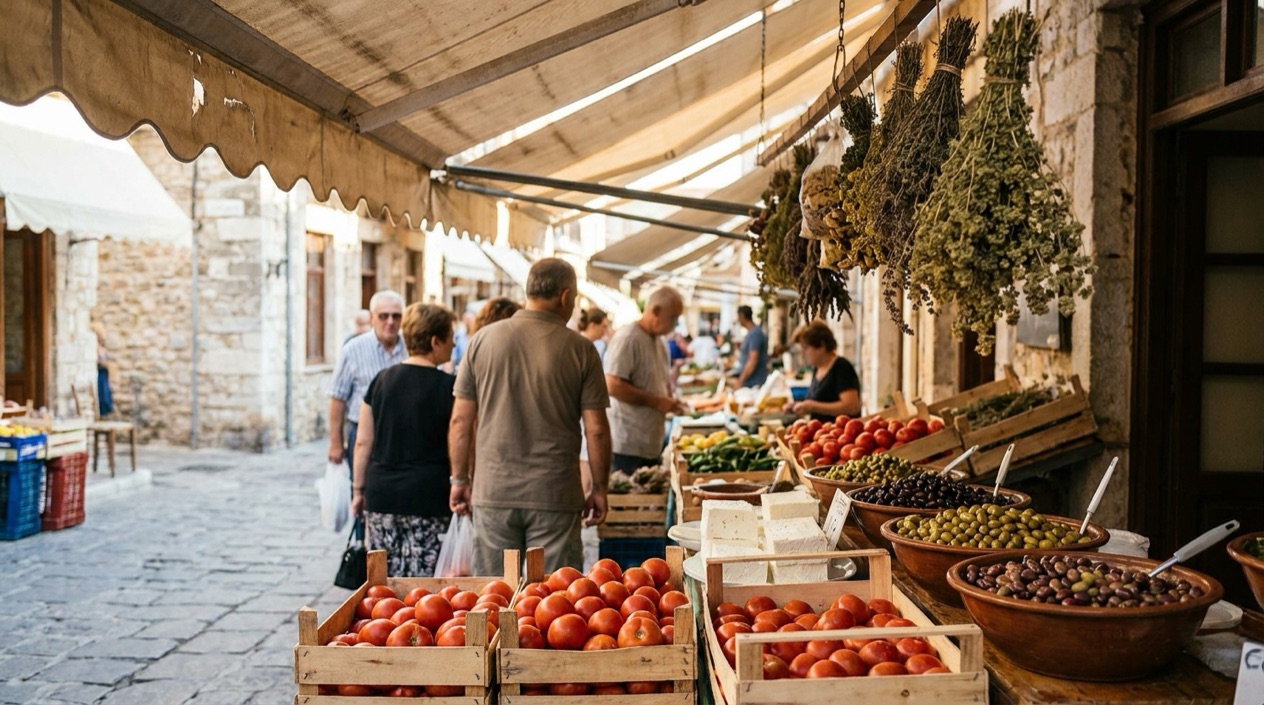
Eat moussaka, souvlaki, spanakopita, and plenty of feta, and look for the local specialties on the islands you visit. Plan on long, shared meals that start with small plates, and on a coffee or two each day. Greek cooking is simple and fresh, built on olive oil, herbs, tomatoes, and cheese, and it changes from one island to the next.
How do meals work in Greece?
Meals out are slow and social. A taverna dinner can stretch for hours over lively conversation, so settle in and enjoy the relaxed pace. It usually opens with mezedes, small plates shared around the table and paired with ouzo, wine, or raki. Order a few to start, then add mains once you see how hungry the group is.
Servers are glad to help, so ask what they recommend, especially when the menu runs long.
Knowing the names of a few places helps. A psarotaverna is a seafood restaurant, and a souvlagisika serves mostly souvlaki. For breakfast, bakeries and coffee shops sell pies, and Greeks often start the day with one. Grab a slice on your way to the beach.
What are the best starters and dips?
Tzatziki
The taste and texture vary from one restaurant to the next: some versions are saucier, some creamier, some heavy on garlic. Scoop it up with warm pita, or spoon it onto grilled meat and anything fried.
Other dips
Melitzanosalata is a smoky roasted eggplant dip. Tyrokafteri is a spicy spread of feta and hot peppers. Fava is a silky purée made from yellow split peas, typically finished with chopped onions, olive oil, and capers. Some restaurants offer a sampler of several dips, an easy way to try them all with a basket of pita.
Fritters
Zucchini fritters (kolokithokeftedes) should be crispy outside and soft inside, with salty feta and a little fresh mint. Tomato fritters are made with fresh tomatoes, sweet onion, and mint or oregano. Dip either one in tzatziki.
Saganaki
Saganaki is a block of firm Greek cheese such as kefalotyri or kasseri, pan-fried and sometimes flambéed with brandy or ouzo. It arrives sizzling, often in a small skillet, with crusty bread alongside to mop up the sauce. The shrimp version comes in a garlicky tomato sauce topped with crumbled feta.
Dolmades and keftedes
Dolmades, also called dolmadakia, are grape leaves wrapped around rice and herbs, sometimes with ground meat, served warm or cold with lemon. Keftedes are Greek meatballs, fried until golden and served with tzatziki or tomato sauce.
Greek salad
Horiatiki skips the lettuce entirely. It is a chunky mix of ripe tomatoes, crisp cucumbers, red onion, and Kalamata olives, crowned with a thick slab of feta and finished with olive oil and oregano. The name comes from the Greek word for village, yet you will find it everywhere, Athens and Thessaloniki included. It is usually served at room temperature, with bread to soak up the juices left in the bowl.
What are the main dishes to order?
Moussaka
Eggplant, potatoes, and spiced ground meat are layered in a baking dish under a creamy béchamel. Greeks think of it as comfort food, and you will find it in almost all tavernas. It often comes in an individual portion straight from the oven, so give it a minute to cool.
Pastitsio
Often called Greek lasagna, pastitsio layers tubular pasta, ground beef in a cinnamon-spiced tomato sauce, and a cap of béchamel. It is rich and filling.
Souvlaki and gyros
Souvlaki is marinated chunks of pork, chicken, or lamb grilled on a skewer. Eat it off the stick with a squeeze of lemon, or fold it into pita with tomato, onion, and tzatziki. Gyros, pronounced yee-ros, is meat sliced from a vertical rotisserie and wrapped in pita with tzatziki, onions, and often a few fries tucked inside. Both are cheap, quick street food, ideal between beach swims or sightseeing stops.
Fish, octopus, and calamari
Fresh fish is the star at coastal tavernas, and many invite you to look over the daily catch before you order. It usually comes grilled with olive oil, lemon, and herbs, and it is served whole, head and eyes included. Octopus is usually grilled and often comes with fava on the side. Calamari often arrives lightly fried, the way many American menus serve it, but it is also worth trying grilled. Small fried fish are another classic, best with ouzo, raki, or a cold beer.
Vegetarian options
Meatless eating is easy in Greece. Gemista is tomatoes and peppers stuffed with rice and herbs, though some versions add meat, so ask. Gigantes plaki is a filling vegan dish of large white runner beans that cook up creamy inside and keep their shape. Fasolakia, green beans slow-cooked with potatoes until silky, is vegan too. Roasted lemon potatoes are good enough to make a meal with olives, feta, and bread.
What pies, pastries, and sweets should you try in Greece?
Spanakopita and tiropita
Spanakopita is flaky phyllo filled with spinach, feta, and herbs. Tiropita swaps the greens for cheese.
Bougatsa
Bougatsa is a lightly sweet pastry of phyllo and semolina custard, dusted with powdered sugar and cinnamon. Some regions make savory versions with cheese or meat. It is a fine way to start the day, early, with a coffee.
Galaktoboureko and baklava
Galaktoboureko is semolina custard between layers of crisp phyllo, soaked in syrup. Baklava layers phyllo with nuts, usually walnuts or pistachios, and syrup or honey. Each bakery prepares it a little differently, so sample around.
Loukoumades and spoon sweets
Loukoumades, often called Greek donuts, are fried dough balls topped with honey, cinnamon, and nuts or sesame. Some tavernas bring a plate to the table after dinner, on the house, as a thank-you. Spoon sweets preserve fruit, nuts, or even vegetables in syrup, and hosts often offer a small portion on a spoon with cold water as a gesture of hospitality.
Yogurt and feta in phyllo
Thick Greek yogurt with honey and nuts works as breakfast or dessert. Feta wrapped in phyllo, baked, and drizzled with honey and sesame seeds is a sweet and salty treat that turns up as a starter, a main, or dessert.
Does the food change from island to island?
Greek food does change from island to island, and tasting the differences is half the fun. Santorini is famous for its tomatoes, so tomato fritters are the dish to order there, along with fava, the island's best-known dip. Naxos, a couple of hours away by ferry, is known for its potatoes and cheese. On Milos, look for ladenia, a flatbread topped with tomatoes, onion, and oregano; bakeries sell it by the piece, and it travels well in a beach bag. Skopelos makes a spiral-shaped pie filled with local cheese, wild herbs, and spinach. Sifnos is famous for revithada, a chickpea stew cooked in clay pots. On Crete, order artichokes with fava beans at places that cater to locals, since tourist spots seldom serve it.
What should you drink in Greece?
Ouzo is a strong, anise-flavored aperitif that turns cloudy when you add water or ice. Sip it slowly over ice with something salty, ideally with a sea view; tossing it back as a shot misses the point. On Crete, raki, also called tsikoudia, is the local spirit. It is stronger than ouzo and poured in tiny glasses, often as a welcome or after a meal. Naxos makes kitron, a citron liqueur served chilled in three styles: green (sweet), yellow (strong), and clear (dry).
For wine, Assyrtiko from Santorini is a crisp white grown in volcanic soil. Greece's most popular beer is a light lager, sold everywhere from beachfront cafés to ferry snack bars.
Greek coffee is heated slowly in a briki and poured into small cups, grounds and all, so let it settle for a few minutes before sipping. On hot afternoons, go cold. A frappé is instant coffee, water, sugar, and milk, blended until frothy and served over ice. A freddo espresso is a shot of espresso shaken with ice, and a freddo cappuccino adds a cap of cold frothed milk. Snack stands also sell fresh-squeezed orange juice.
What should American travelers know before eating their way around Greece?
Greece is a generally safe destination, but petty crime is common in tourist areas. Pickpocketing and purse-snatching happen at popular sites and on public transportation, especially the Athens metro, so keep a close eye on your bag at crowded spots.
If you rent a car to chase island specialties, bring your U.S. driver's license and an international driver's permit, which Greek law requires even when the rental company does not ask for it. Thieves in Greece break into rental cars to steal passports, valuables, and luggage, so keep that in mind while you linger over lunch. Driving under the influence is illegal and police run random alcohol tests, so save the ouzo and raki for after you park for the night.
Most care providers in Greece expect payment in cash, and private hospitals usually ask for proof of adequate insurance or cash before admitting a patient. Strikes and demonstrations can halt ferries, taxis, and airports with little notice, so leave slack in your schedule. Carry your passport or another photo ID at all times, including when you head out to dinner.
Sources
- onegirlwholeworld.com (https://onegirlwholeworld.com/europe/best-greek-foods-to-try-in-greece/), checked October 18, 2026
- miakouppa.com (https://miakouppa.com/foods-you-must-try-in-greece/), checked October 18, 2026
- rtwin30days.com (https://rtwin30days.com/best-food-in-greece/), checked October 18, 2026
- generalitravelinsurance.com (https://www.generalitravelinsurance.com/travel-resources/food-in-greece.html), checked October 18, 2026
- theunknownenthusiast.com (https://theunknownenthusiast.com/foods-to-eat-in-greece/), checked October 18, 2026
- U.S. Department of State (https://travel.state.gov/content/travel/en/international-travel/International-Travel-Country-Information-Pages/Greece.html), checked October 15, 2026
- U.S. Department of State (https://travel.state.gov/content/tsg_aem/us/en/home/international-travel/travel-advisories/destination.grc.html), checked October 15, 2026
To plan your stay
- Best Time to Visit Greece: September and Late May to Early June
- Arachova: Parnassus Mountain Town, Formaela Cheese, Ski Season and Saint George's Day
- American Airlines Flights to Greece: U.S. Cities, Athens Arrivals and Onward Island Flights
- Greece on a Budget: Cash Machines, Cards, Beaches and Ferries