
FORT LAUDERDALE · JANUARY · BROWARD COUNTY
An average January afternoon in Fort Lauderdale reaches 75.6°F, and the water offshore reads 77.6°F, warmer than the air above it. Measurable rain shows up on 3.8 days in a typical month. The Atlantic hurricane season closed on November 30, so nothing in the winter forecast is a storm track. The charge for all of that is light: on January 15 the sun rises at 7:08 a.m. and is gone by 5:51 p.m., which leaves 10 hours 43 minutes to spend.
December’s water is warmer, at 79.3°F, and February’s afternoons run 1.8 degrees above January’s, so this is not the automatic winner of its own season. What January holds among the three is a sea near 78°F next to nights at 60.9°F, cool enough to walk a trail at noon. Anyone still choosing a month rather than a city should start with the twelve-month view of Florida.
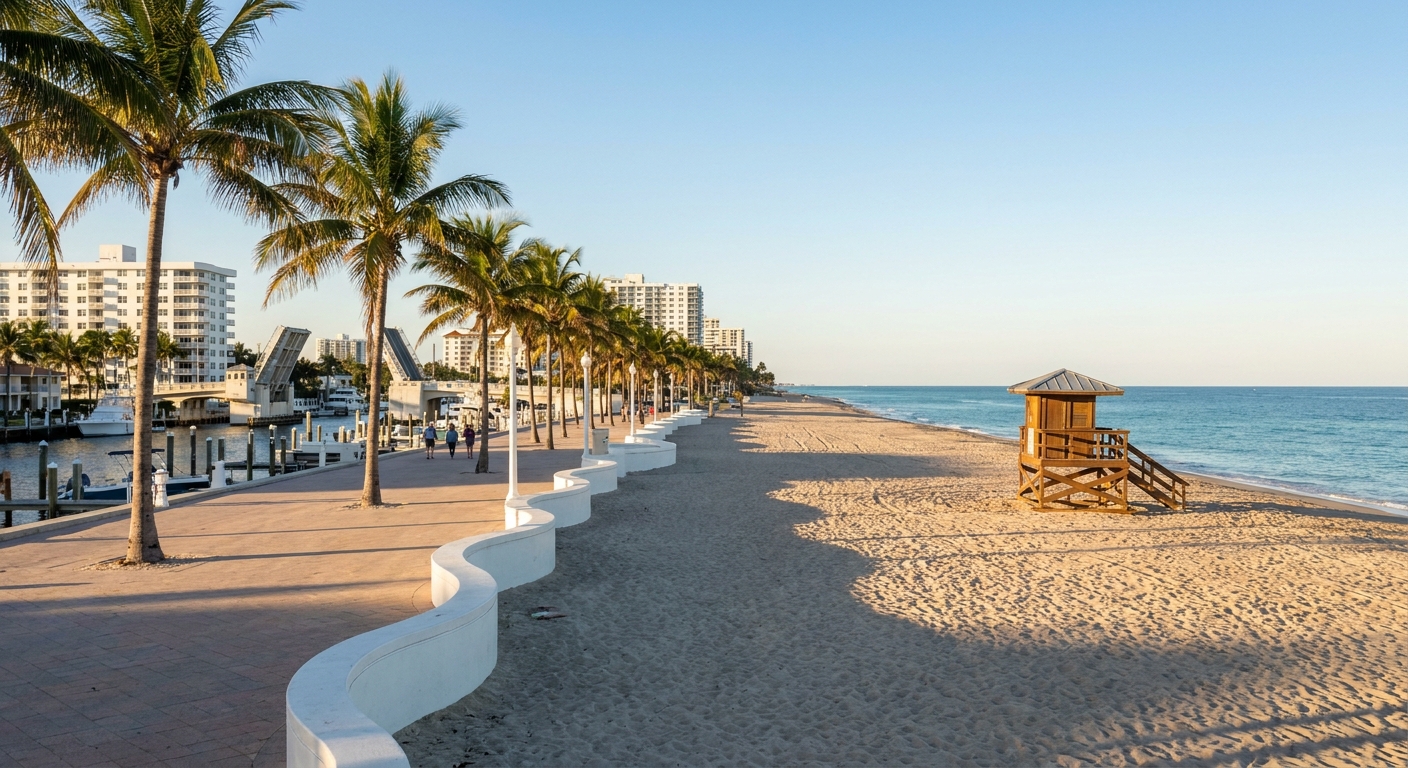
THE MONTH AT A GLANCE · FORT LAUDERDALE · JANUARY
January buys 75.6°F afternoons, a sea at 77.6°F and a calendar entirely outside hurricane season, and charges for it in cool nights and a 5:51 p.m. sunset.
DRY SEASON · 3.8 RAIN DAYS · 10H 43M OF DAYLIGHT ON THE 15TH
Go for: swimming in water warmer than the air, 2.6 miles of state-park trail walkable at noon, and a month with no hurricane season attached to it.
Think twice before: planning long evenings outdoors: the light ends at 5:51 p.m. in mid-January and the air heads for 60.9°F overnight.
Air normals: NOAA NCEI station USW00012849 · Sea: Open-Meteo Marine API · full sources at the end
On this page
- Fort Lauderdale weather in JanuaryHighs of 75.6°F and 3.8 rain days
- Can you swim in January?The sea at 77.6°F
- Crowds, lodging tax and bookingDry season and Broward’s 6% rental tax
- Things to do in JanuaryMizell-Johnson, Hugh Taylor Birch, Oleta River
- A two-day plan around a 5:51 p.m. sunsetTwo days, hour by hour
- January, December or February?How the three months compare
- Is January a good month to visit?Who it suits, who should shift
Air figures here come from one thermometer: NOAA station USW00012849, listed as FT LAUDERDALE HOLLYWOOD AP, a gauge sitting about three miles inland from the sand rather than a modeled grid cell. Sea figures come from somewhere else entirely, the Open-Meteo Marine API averaged over 2015 to 2024. The two share neither method nor period, so every number below travels with its source attached.
Fort Lauderdale weather in January: average highs, lows and rain days
| Measure | January | Where it comes from |
|---|---|---|
| Average high | 75.6°F | NOAA NCEI 1991-2020, station USW00012849 |
| Average low | 60.9°F | NOAA NCEI 1991-2020, station USW00012849 |
| Precipitation | 2.90 in | NOAA NCEI 1991-2020, station USW00012849 |
| Days with 0.10 in or more | 3.8 | NOAA NCEI 1991-2020, station USW00012849 |
| Days with 1 in or more | 0.5 | NOAA NCEI 1991-2020, station USW00012849 |
| Sea surface (mean of daily maxima) | 77.6°F | Open-Meteo Marine API, 2015-2024 |
| Daylight, January 15 | 10h 43m | sunrise-sunset.org |
75.6°F is the 1991-2020 average high published by NOAA NCEI for station USW00012849, and the station matters as much as the figure: a station normal and a modeled grid cell are not the same measurement. This gauge sits at Fort Lauderdale-Hollywood International, roughly three miles back from the beach, where the sea breeze arrives later than it does on the sand. The month’s average low is 60.9°F, with 2.90 inches of precipitation across the 31 days.
Those 2.90 inches arrive concentrated. Rain of 0.10 inch or more falls on 3.8 days, about one day in eight, and an inch or more falls on 0.5 day, working out to one real soaking roughly every second January. On the ground that reads as a gray band passing through an otherwise usable week. Florida’s rainy half of the year runs May through October, as the state calendar lays out.
Afternoon and dawn sit 14.7 degrees apart in January, 75.6°F against 60.9°F. That spread does the packing for you: sun cover for the middle of the day, plus one long-sleeve layer for anything running past sunset, which in mid-January means anything after 5:51 p.m. A light wind shell is worth the suitcase space. Two layers cover the whole month.
Daylight on January 15 runs 10 hours 43 minutes, from 7:08 a.m. to 5:51 p.m. Eastern, converted from the 12:08 and 22:51 UTC times computed by sunrise-sunset.org. The consequence lands in the afternoon: beach light is finished well before dinner, and a 4 p.m. arrival at a park gate buys under two hours of it. Load the outdoor half of each day into the morning.
Can you swim in Fort Lauderdale in January? Sea temperature and what it feels like
The sea off Fort Lauderdale averages 77.6°F in January in the Open-Meteo Marine record, taken as the mean of daily maxima across 2015 to 2024. That last part is the caveat most tables drop: a mean of daily peaks reads a shade warmer than a 24-hour average, so treat 77.6 as the top of the day’s range rather than the day’s whole story. A cooler January figure in another table can be the same water measured a different way.
Two degrees separate the water at 77.6°F from the average January afternoon at 75.6°F, and the gap runs in the swimmer’s favor: the ocean is the warm part of the day. Getting out is the cold part, especially late, with the air heading toward 60.9°F overnight; a towel and something with sleeves waiting at the car is the entire adaptation. Swimming here in January is ordinary, not an endurance sport.
No wind or wave series for this stretch of coast could be read in our sources, so nothing here describes January’s surf. What the sources do carry is the calendar: the Atlantic hurricane season runs June 1 to November 30 and peaks on September 10, which puts the whole month outside it.
How busy is Fort Lauderdale in January? Crowds, prices and the demand peak
January sits in the middle of Florida’s dry season, November through April, the half-year the state’s winter traffic is built around. No monthly occupancy figure and no room-rate series for Broward County could be read in our sources, so no claim appears here about January being cheaper or dearer than October. The documented part is calendar position: the month opens the long dry stretch that runs to April, with the holiday weeks just behind it.
Flights are the one piece of this with a published volume. FLL boarded 17,096,131 passengers in calendar year 2024, a large hub in FAA terms. No booking-window data for January stays sits in our sources, so a number like “reserve eleven weeks ahead” would be invented. The lever that does exist is date flexibility, with December and February four weeks away in either direction.
Broward County levies a 6.0% transient rental tax on short stays, filed and paid alongside the 6% state sales tax, per Florida Department of Revenue form DR-15TDT. Together they come to 12% of the quoted room rate, before resort fees or parking, neither of which is a tax and neither of which our sources price. Treat the 12% as part of the nightly number; the Florida cost guide handles the rest of the ledger.
With 10 hours 43 minutes of daylight and the sun gone at 5:51 p.m., an hour spent driving to a beach lot costs close to a tenth of the usable day. That makes distance to the sand the upgrade that changes January specifically. Parking counts vary sharply too: 1,410 spaces at Dr. Von D. Mizell-Eula Johnson State Park against 275 at Hugh Taylor Birch, both counted in the state’s 2024 facilities inventory. A bed within walking distance of the water skips the question.
Things to do in Fort Lauderdale in January
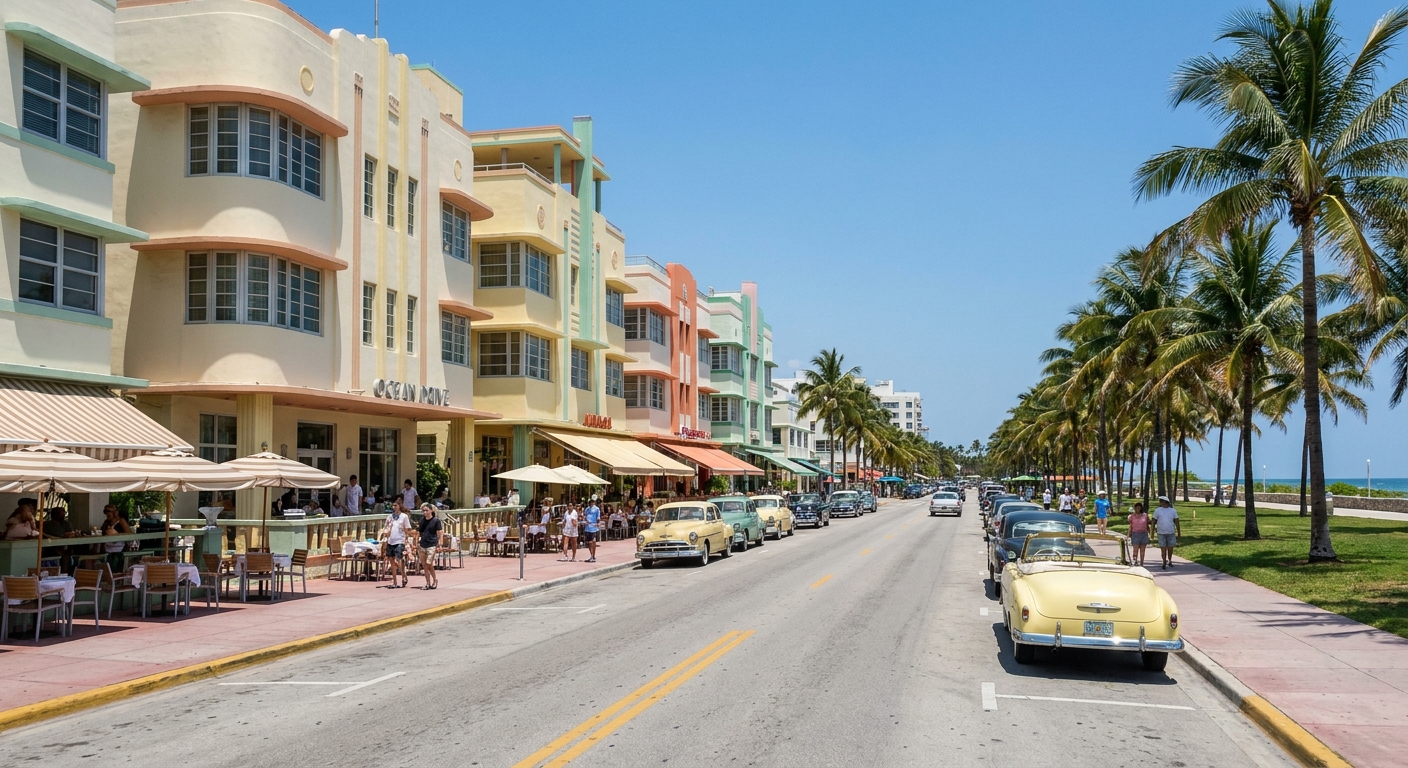
Midday is usable in January, and that is the month’s specific gift: at a 75.6°F average high, the 2.6 miles of hiking trail inside Dr. Von D. Mizell-Eula Johnson State Park can be walked at noon instead of at first light. Measurable rain lands on 3.8 days, so a fixed outdoor plan survives most weeks intact. And the storm season that shapes the fall calendar ended on November 30.
Florida’s own inventory puts numbers on all three parks. Mizell-Johnson holds 2.2 miles of beach, 4,531 feet of boardwalk, 2.6 miles of trail, one designated swimming area and 1,410 parking spaces. Hugh Taylor Birch State Park is the pocket version: 275 spaces, 0.1 mile of beach, 0.3 mile of trail, 60 feet of boardwalk and one canoe, kayak and tube launch. Oleta River State Park, on the bay side, adds 925 spaces, two launches, 0.3 mile of beach and 14 cabins.
Across the three months around it, the water moves less than the night air: 79.3°F in December, 77.6 in January, 77.5 in February, against overnight lows of 64.7, 60.9 and 63.3. A paddle from Hugh Taylor Birch’s single launch at 1 p.m. and the same paddle at 5 p.m. are two different trips this month, the second one finishing in air heading toward 60.9°F. Put the water half of the day before 2 p.m.
Nothing on entrance fees can be reported. The state inventory counts spaces, boardwalk and launches, not tickets, and the operators’ own pages returned no readable fares or hours when we tried them on September 11, 2026. No January event date sits in our sources either, so none is named here. Call the park you intend to visit the day before, and check its gate hour against a 7:08 a.m. sunrise.
Fort Lauderdale in January: a two-day itinerary
Open day one at Hugh Taylor Birch: sunrise is 7:08 a.m., the trail is 0.3 mile, and the launch gets you on the water in cool air. Move to Mizell-Johnson for the middle of the day, where the beach runs 2.2 miles and the swimming area faces water at 77.6°F while the air holds 75.6. Be out by 4:30 p.m. Sunset is 5:51, and dinner takes the dark half.
Day two goes to the bay side. Oleta River’s two launches and 0.3 mile of beach make a half-day of flat water, with 925 spaces to absorb a weekend crowd. If one of the month’s 3.8 wet days lands on you, trade the water for a city afternoon: Brightline connects Fort Lauderdale with Miami and West Palm Beach, though no fare could be read in our sources, and Miami absorbs rain without complaint.
Fort Lauderdale in January vs December and February
| Measure | December | January | February |
|---|---|---|---|
| Average high | 77.7°F | 75.6°F | 77.4°F |
| Average low | 64.7°F | 60.9°F | 63.3°F |
| Precipitation | 2.78 in | 2.90 in | 2.38 in |
| Days with 0.10 in or more | 4.2 | 3.8 | 3.4 |
| Sea surface (daily maxima) | 79.3°F | 77.6°F | 77.5°F |
Set side by side, January comes out the coolest at both ends: 75.6°F by day and 60.9°F at night, against December’s 77.7 and 64.7 and February’s 77.4 and 63.3. It also takes the most rain by volume, 2.90 inches, but not by frequency, since 3.8 wet days falls between December’s 4.2 and February’s 3.4. December wins the water outright at 79.3°F, with January at 77.6 and February a tenth of a degree behind at 77.5.
Shifting four weeks forward to February gains 1.8 degrees on the afternoon, 2.4 on the night and 0.52 inch less rain, and costs nothing in the sea, which holds at 77.5°F. Shifting four weeks back to December gains the warmest water of the three and the mildest nights, and costs 0.4 of a rain day plus the holiday weeks. Both have their own dated page: December and February.
Is January a good time to visit Fort Lauderdale?
Yes for anyone whose trip runs on the ocean and the outdoors: 77.6°F water, 75.6°F afternoons, 3.8 rain days and a month wholly outside hurricane season is a strong hand for a winter week. No for anyone who wants long evenings outside or warm nights, because 60.9°F after dark and a 5:51 p.m. sunset shorten what an evening can hold, and Broward’s 12% goes on top of whatever the room costs.
February is the month to prefer if that second description fits: 77.4°F days, 63.3°F nights, 2.38 inches of rain over 3.4 days, and water within a tenth of a degree of January’s. Every one of those differences points the same direction, for a sea temperature that does not change.
Of the three months in this window, only January pairs a sea near 78°F with nights at 60.9°F, which is the combination that lets a noon hike and a late-afternoon swim share one day.
The last word
Book close to the sand, swim in the middle of the day, eat after 5:51 p.m., and the 10 hours 43 minutes go further than the number suggests. One bed sits outside that logic entirely: Oleta River State Park keeps 14 cabins on the bay side, inside a state park without leaving the metro area, though our sources carry no nightly rate for them and no gate hour. Ask by phone before you drive out.
Sources & data for this guide
- January normals: high 75.6°F, low 60.9°F, 2.90 in, 3.8 days at 0.10 in, 0.5 day at 1 in · NOAA NCEI monthly normals 1991-2020, station USW00012849 (Fort Lauderdale-Hollywood International) · checked Sep 14, 2026
- Station identity and inland siting about three miles from the sand · NOAA NCEI Search service · checked Sep 14, 2026
- Sea surface 77.6°F, mean of daily maxima 2015-2024 · Open-Meteo Marine API · checked Sep 14, 2026
- Daylight 10h 43m on January 15, sunrise 7:08 a.m. and sunset 5:51 p.m. Eastern, converted from 12:08 and 22:51 UTC · sunrise-sunset.org · checked Sep 14, 2026
- Hurricane season June 1 to November 30, September 10 peak · NOAA National Hurricane Center · checked Sep 14, 2026
- December and February air normals (NOAA NCEI 1991-2020, same station) and their sea readings (Open-Meteo Marine, 2015-2024) · checked Sep 14, 2026
- Broward County 6.0% transient rental tax, filed with the 6% state sales tax · Florida Department of Revenue form DR-15TDT · checked Sep 14, 2026
- Park counts for Mizell-Johnson, Hugh Taylor Birch and Oleta River (parking, beach, boardwalk, trails, launches, cabins) · Florida Department of Environmental Protection, Recreational Facilities Inventory, 2024 annual report · checked Sep 14, 2026
- FLL boardings of 17,096,131 in calendar year 2024, large hub class · Federal Aviation Administration passenger boardings · checked Sep 14, 2026
- Editorial admission: no bus or train fare, no park entrance fee and no park opening hour could be read on September 11, 2026 (gohart.org returned 404, broward.org/BCT renders client-side only), and no January event date is carried in our sources. Nothing was estimated in their place · hours and fees change, check operators when you book.