
A plate of stamnagathi, the bitter wild greens of the island, arrives with a glug of olive oil and a wedge of lemon, and the table fills with small dishes before anyone has decided what to order. Red wine comes alongside, and often a small glass of tsikoudia once the plates are cleared. This is the food of Crete, a cuisine built on plants, olive oil and the seasons, and it rewards anyone who eats slowly.
What is Cretan food?
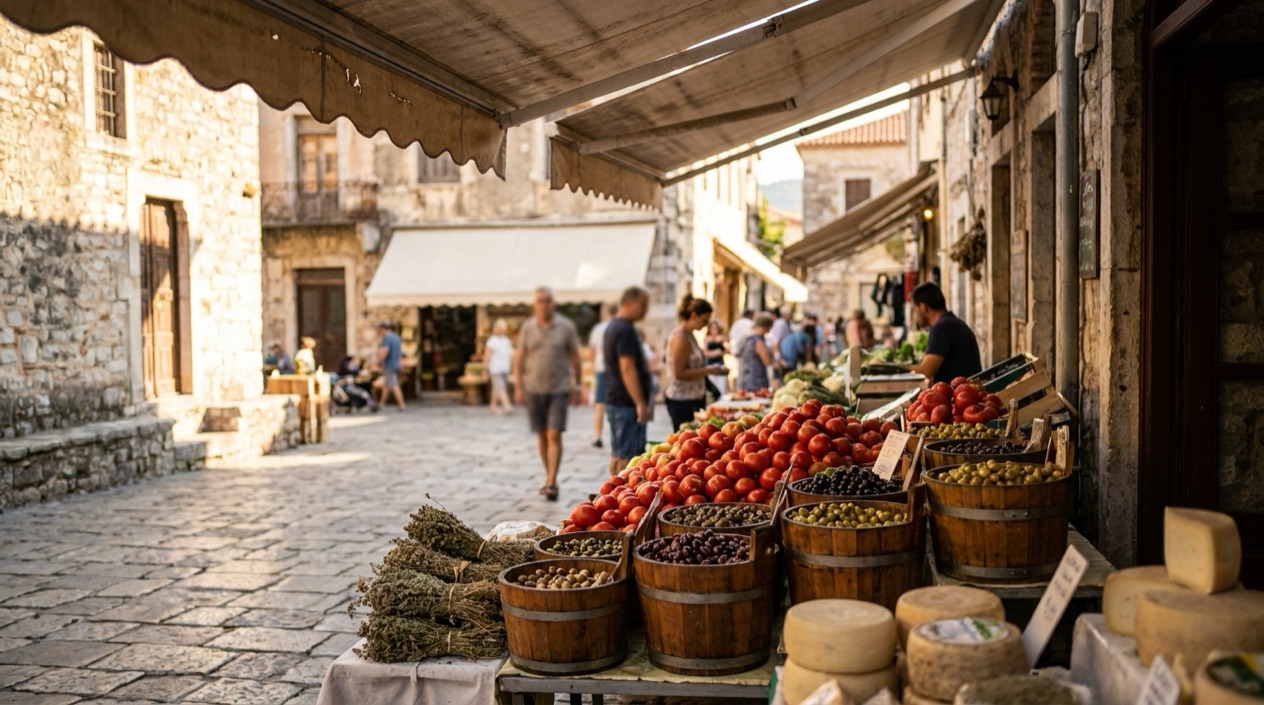
Cretan food is the traditional cuisine of the Greek island of Crete, and at its core it is plant food: vegetables, wild greens, pulses, grains and fruit, with meat and dairy in supporting roles. Olive oil runs through all of it. It dresses the salads, but it is also the fat the cooking is done in, which gives even simple dishes a rounded, fruity depth.
The second idea behind it is that people ate what the land around them gave in each season, with little or no processing. A table in spring looks different from one in autumn, and the dishes were never meant to be fussy. You taste that in a plate of greens or beans where nothing is hiding behind sauce.
Olive oil, greens and the plant-based core
Start a meal the way the island does, with something green. Stamnagathi, made from cichorium, is a Cretan appetizer served as a salad, with a faint bitterness that sharpens the appetite and makes the olive oil taste richer. Alongside it you will often see boiled or dressed vegetables and pulses, the everyday backbone of the cuisine.
Bread is there to mop the plate. Ask for more of it when the oil pools at the bottom of a salad bowl, because that is half the pleasure. The dishes suit vegetarians well, since so much of the cuisine grew out of plants rather than meat.
What the table looks like through the week
The traditional pattern gives a good picture of how Cretans ate. Dairy appeared daily but in low to moderate amounts, poultry and fish came weekly in moderate portions, and red meat turned up only a few times a month. That is why meat dishes feel like occasions rather than routine, and why the lamb and goat specialties carry such weight when they appear.
This traditional cuisine was widespread on the island until the 1960s, when eating habits moved toward more meat and other animal products. Today you can still find the older style in village tavernas and home-style kitchens, often sitting next to more meat-heavy menus.
Wine, tsikoudia and rakomelo
Alcohol in traditional Cretan eating was moderate, mainly red wine that accompanied meals rather than stood apart from them. Cretan wine is the natural companion to a table of small dishes and grilled or braised meat.
Tsikoudia is the island’s spirit, and rakomelo is its sweeter cousin, made with honey. Both tend to show up at the end of a meal, a small glass offered as the plates are cleared. Accept the gesture and sip it slowly, as it is more a closing ritual than a drink to hurry.
Which dishes should you try?
Begin with stamnagathi salad, then move to the island’s three lamb and goat specialties: antikristo, gamopilafo and tsigariasto. Together they give you a quick education in how Crete cooks meat for celebrations and how it treats humble ingredients like rice and bitter greens.
Antikristo, lamb cooked beside the fire
Antikristo, also called oftó, is a Cretan lamb dish and a specialty of the island’s cooking. It is the kind of order that signals a taverna takes its meat seriously. You get lamb as the star of the plate, with little around it, so the quality of the meat and the simplicity of the seasoning do all the talking.
Pair it with a salad of greens and a glass of Cretan red wine, which is how the cuisine traditionally balanced a rich main. Because red meat was historically an occasional food, treat it as the centerpiece of a long meal rather than a quick lunch.
Gamopilafo, the rice of celebrations
Gamopilafo is rice cooked in goat and rooster broth, and the name points to the wedding table. The broth does everything here: the rice drinks it up and turns glossy and deeply savory, a dish that feels both humble and festive.
It makes a good contrast to the grilled and roasted meats, since the meat flavor lives in the rice rather than on a bone. Order it alongside a plate of greens and you have a meal that shows two sides of Cretan cooking at once.
Tsigariasto, from Sfakia
Tsigariasto is a lamb or goat dish typically from the Sfakia region of Crete. It is a good reminder that Cretan cooking is regional, and that a dish tied to one part of the island may turn up on menus far from where it began.
If you see it listed, it is worth ordering to compare with antikristo, since both rely on lamb or goat and let the meat lead. Ask what the kitchen is proudest of, and let the answer guide the rest of the table.
Stamnagathi and the sweet finish
Stamnagathi is the appetizer to reach for first, a salad of cichorium greens that wakes up the palate. It sits happily next to the heavier meat dishes and cuts through them.
For dessert, the most common ending in the traditional diet was yogurt with fresh fruit, a light close after a big plate. Finish with a small glass of tsikoudia or rakomelo if the taverna offers one.
What is the Cretan diet?
The Cretan diet is the traditional way of eating on the island: mostly plants, olive oil as the main fat, dairy every day in modest amounts, poultry and fish each week, red meat only a few times a month, and red wine in moderation with meals. It is less a set of recipes than a pattern for building a day of eating.
Plants first, meat as an occasion
The foundation is food derived from plants. Vegetables, wild greens, pulses and fruit fill most of the plate, and that is what gives the cuisine its lightness even when olive oil is generous. On a trip, it translates easily: order two or three vegetable dishes and one meat dish to share, rather than one large meat plate each.
Dairy was consumed daily but in low to moderate quantities, so think of cheese and yogurt as accents rather than main events. Poultry and fish arrived weekly in moderate portions, and red meat was reserved for a few times a month, which explains why lamb and goat dishes are treated as specialties.
Olive oil as the main fat
Olive oil was the main supply of fat, used in salads and in cooking alike. It replaces butter and other fats across the kitchen, and it is the reason the cuisine tastes so consistent from dish to dish.
At the table, that means a pool of oil under your greens and beans and a reason to keep the bread close. If you want to eat the Cretan way, let olive oil do the work that sauces and creams do elsewhere.
Seasonal, local and barely processed
People ate seasonal products from the wider local area, with minimal processing or none at all. In practice that means the menu leans on what is ripe now, and the best order is often the vegetable dish the waiter points to rather than the one you had planned.
The older pattern was widespread until the 1960s, when habits shifted toward more meat and animal products. Knowing that makes a menu easier to read: the plant-led dishes, the greens, the pulses and the fruit are closest to the traditional diet, while heavier meat-centered plates reflect later change.
Wine in moderation
Moderate alcohol, mainly red wine with meals, was an essential feature of the diet. Wine is part of the food rather than a separate event, poured to accompany plates of greens, lamb or rice.
Tsikoudia and rakomelo belong to the end of the meal. A small glass is the traditional close, taken slowly after the food, and a good way to finish an evening at a Cretan table.
Good to know before you go
Menus in Crete are built for sharing, so order a few plants-first dishes and one or two meat specialties for the table, and let the meal unfold with wine and a final small glass of tsikoudia. If a dish such as antikristo, gamopilafo or tsigariasto is on the menu, it is worth asking about, since these are the island’s own specialties. Prices are in euros, and the sensible approach is to ask the taverna for what the kitchen is proudest of that day.
Sources
- Wikipedia, Cretan cuisine (https://en.wikipedia.org/wiki/Cretan_cuisine), checked October 12, 2026
- Wikipedia, Cretan diet (https://en.wikipedia.org/wiki/Cretan_diet), checked October 12, 2026