
Milos has more than 75 beaches strung around its coast, and the best of them call for a rental car or a boat. Fyriplaka is the place for a long, easy beach day. Kleftiko is a bay of sea caves you reach by water. Check the wind each morning before you choose, because it decides which coast is pleasant that day.
Which Milos beaches are worth your time?
The north coast has the white rock and the fishing villages. The south coast has sand and colorful cliffs. The entries below follow that order. Most beaches have no facilities and little shade, so pack water, snacks, sunscreen and a hat. Bring water shoes for the rocky ones.
Sarakiniko
Sarakiniko is smooth white stone, worn down by wind and water. There's almost no sand beyond a small patch at the water's edge. Against all that white, the clear turquoise sea looks even brighter. Most people lie on the rock itself, so bring a towel. Even with one, the stone gets uncomfortable after a long stay.
When the water is calm, people jump from the cliff edges into deep water. When the wind is up, be realistic about your swimming. Behind the beach, old man-made tunnels run into the rock. Take a light, stay in the main tunnel, and go carefully.
It's about 10 minutes by car from Plaka and Adamas and 15 from Pollonia, and a summer bus route stops here. Parking is free, but the lot fills by mid-morning, and latecomers park farther out and walk. Arrive early, ideally around sunrise, if you want the rock with fewer people around for your photos. Facilities are minimal, just a small truck near the parking lot selling drinks and snacks.
Papafragas
Papafragas is close to Sarakiniko and about a 15 minute drive from Adamas. It's a narrow beach inside a huge sea cave, with the feel of a natural pool and a past as a pirate base. From roadside parking, a short walk brings you to the cliff edge, and the view from there is the safe way to see it. The path down is small and steep, and a sign at the top warns of the dangerous descent. On some visits the path has been washed out or impassable. Seaweed pushed in by the tide can also cloud the water. It makes a quick stop after Sarakiniko.
Firopotamos
Firopotamos is a small fishing village on a calm cove, a short drive from Sarakiniko. Boat houses line the water's edge, and the little Church of Saint Nicholas sits on the point. The beach itself is small, with sand and pebbles mixed together and large stones lying in the water.
The road down to the beach is steep and a little sketchy, and parking gets tight later in the day, so come early. If the road puts you off, swim off the rocks near the boat houses and the church instead. Up the road behind the church, stone ruins overlook the whole bay, including a large doorway that frames the sea.
Mandrakia
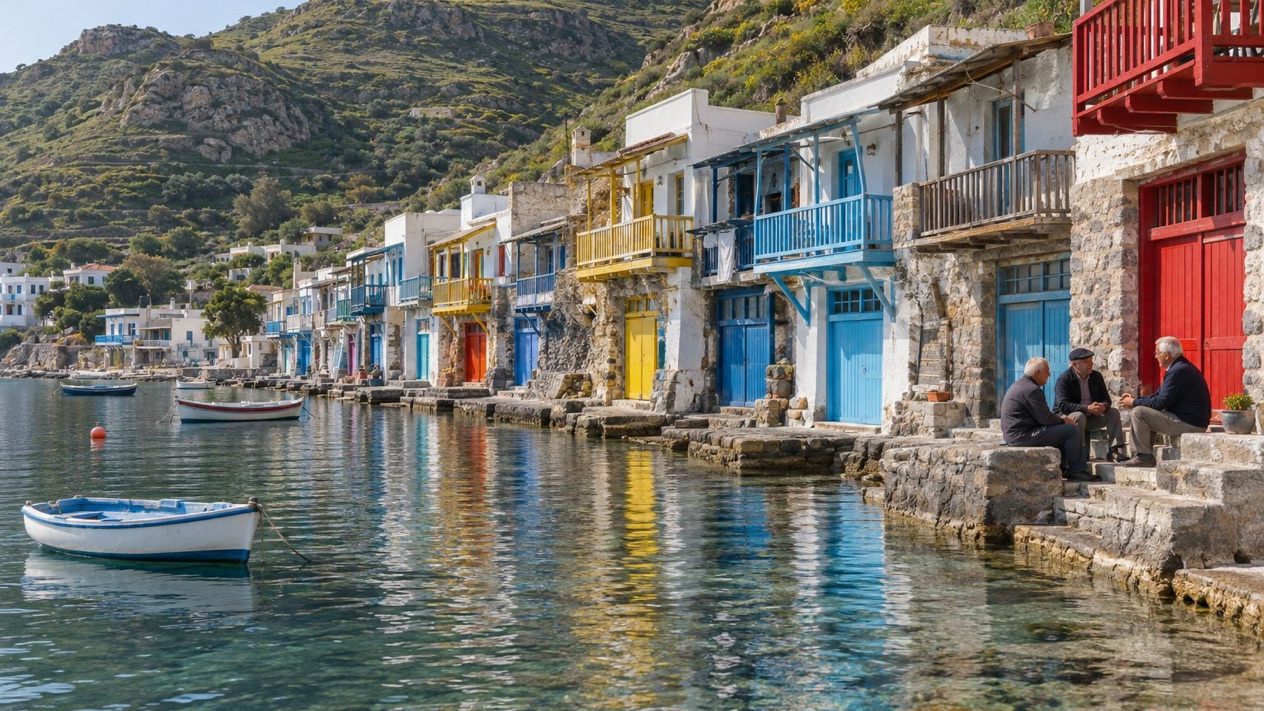
A few minutes from Firopotamos, Mandrakia is a colorful fishing village of whitewashed houses and boat garages carved into the cliffs. The beach mixes rocky outcrops with little sandy spots, and the water in the tiny port is clear enough to swim right off the dock. Medusa, a well-known seafood taverna, sits in the village for lunch or dinner with a view.
Fyriplaka (Firiplaka)
On the south coast, Fyriplaka is the pick for a full beach day. The water is shallow far from shore, so you can wade out a good distance. Walk to the far end for candy-colored rock walls and quieter sandy inlets.
There's a beach bar, sunbeds and umbrellas, bathrooms, and a shack renting kayaks and paddleboards. Shade is scarce here, so rent one of the straw umbrellas early or bring your own. Parking is along a tight, semi-steep road with no lot, and it's at its worst in early afternoon, so come first thing or late in the day. You can park at Tsigrado and walk down, but you'll climb back up in the heat.
Tsigrado
A two-minute drive from Fyriplaka, Tsigrado is a small cove tucked between high cliffs. Getting down means climbing two ladders, the first about 13 feet (4 meters) and the second about 20 feet (6 meters), with a short walk through a narrow canyon in between, and a rope runs alongside to help. Some people find it fine, while others call it difficult and even dangerous. Wear a backpack to keep your hands free. Because of the ladders and rope, you may need to wait for people to come up before you go down. The cove is small enough to feel crowded quickly. In the morning the sand can sit in shade, with seaweed clouding the water.
A small parking lot sits above the beach. If the climb doesn't appeal, the view from the top is gorgeous. Another option is to rent a kayak at Fyriplaka and paddle over, floating into the sea caves on the way.
Paleochori
In the southeast, Paleochori has multicolored volcanic cliffs and a mix of soft sand and pebbles. Geothermal activity below warms the water, and steam vents heat the sand along the shore, so wear sandals under the midday sun. The water is clear, and the bottom is rocky enough to reward a mask.
Restaurants and bars sit along the beach, which makes it a good pick when you want a proper meal by the sea. Sirocco cooks fish in the hot volcanic sand and is among the pricier restaurants on Milos. The bohemian cabanas and chairs can feel overpriced. A summer bus route runs here, and the drive from the old sulfur mines is a pleasant way to cap off a day of exploring.
Gerakas
Gerakas has no road at all, so you arrive by boat or kayak. The sand is white, and the water is so clear you can see little dune patterns on the sea floor. Boat tours around Milos sometimes stop here, and when few boats are around you may have the beach nearly to yourself.
Kleftiko
There's no real beach. Pirates reportedly hid in its coves. The east cove has deep water, and snorkeling along the cliff faces and through the tunnels is superb.
Most people come by boat. A trail also leads down from the land side, a walk of about 45 minutes after roughly an hour's drive from Adamas. Some hikers call it fairly easy, while others say it's best left to experienced locals. If you try it, start first thing in the morning and bring plenty of water.
Sykia
Sykia is a collapsed sea cave on the west coast. Boats can slip through the tunnel and anchor inside, under a rock ceiling. Below is a clear sea floor scattered with big boulders, with a small pebble beach to one side and mineral streaks coloring the rock. Rocks lurk below the surface, so anchoring takes care. Strong wind can close the cave to tour boats.
Thiorichio and the quiet east coast
At Thiorichio, also called Paliorema, the ruins of an old sulfur mine stand right by the shore. The mine closed during World War II. Abandoned equipment and empty rooms remain, and the sulfur has stained the rock gold and red. The beach is small, rocky and often nearly empty. There are no facilities, so pack food and drinks.
You can come by boat or drive a narrow, rough, unpaved road along the cliff. Drive slowly on the rough terrain, park at the wider area before the last two hairpin turns, and walk the rest of the way down.
Farther along the east coast, Kolympisionas can feel completely private even in midsummer. It's reached by an unpaved road or by a trail from the Milos Cove Hotel.
Which beach suits which traveler?
Families do best at Fyriplaka, with its shallow, calm water, sunbeds and beach bar.
On a day without a car, walk about 15 minutes from Adamas to Papikinou. It's a simple town beach, but it's sheltered, calm and shallow enough for small kids. It has sunbeds and umbrellas to rent and restaurants along the way. Pollonia Beach runs right along its village, lined with restaurants, cafes, chairs and umbrellas, and the Adamas to Pollonia bus runs year-round.
For quiet, take a boat to Gerakas or head to Thiorichio or Kolympisionas on the east coast. Another option is Plathiena, a sand-and-rock cove near Plaka at the end of a manageable dirt road, with sunsets worth staying for. Sarakiniko at sunrise is peaceful, too.
A guided kayak tour paddles from Fyriplaka toward Tsigrado and Gerakas, with swim and snorkel stops along the volcanic coast.
How do you get around Milos?
A car is nearly essential. Most visitors rent a car, ATV or motorcycle at the airport or port, or have their hotel arrange one in advance. The western half of the island is reachable by 4WD, while the eastern half holds more than a week's worth of exploring. Before you sign, ask to see which roads the rental contract permits. On the dirt roads to the eastern coves, an SUV or ATV handles far better than a small economy car.
Buses are limited. They start and end at the main square in Adamas, about 492 feet (150 m) from the port, where the printed timetable is posted, and trips elsewhere on the island usually change there. The two year-round lines run from Adamas to Triovasalos, Plaka and Tripiti, and from Adamas to Pollonia. The Pollonia route is slower than it looks on a map. In summer, extra routes reach Paleochori, Achivadolimni, Sarakiniko and Provatas. The Milos bus does not go anywhere that needs a dirt road, and a large share of the best of Milos needs one.
Taxis are limited, with roughly a dozen to 15 serving the whole island. The main rank is in central Adamas, and there's no Uber or Bolt. For the stretches of the south and west coasts that no road reaches, a boat fills the gap.
When does wind decide your beach day?
Wind often shapes beach days in July and August, when the Meltemi blows across the Cyclades. On a calm day, the north coast is yours: Sarakiniko, Papafragas and Firopotamos. On those days, head south to Tsigrado or Fyriplaka. Papikinou and Pollonia are also protected, and Plathiena's cove blocks some of the wind. WindFinder and Windy can help you spot the windiest days, and a local report helps too: ask your hotel each morning where the wind is coming from.
How do you book a boat?
Book before you arrive. Group cruises sell out, sometimes for weeks at a time, and Kleftiko can't be reached any other easy way. Full-day catamaran cruises typically stop at Kleftiko, Gerakas and the neighboring island of Poliegos, with food, drinks and snorkel gear on board. Five-hour half-day trips offer a shorter sampling.
Half-day Kleftiko tours leave from Agia Kyriaki on the south coast, about a half-hour drive from Pollonia. The pebbly beach there has a taverna and a beach bar for the wait. Small self-drive boats can also be picked up at Agia Kyriaki, which gives you a way to explore the southern coast at your own pace. The beaches can be hard to identify from the water, so ask the operator to point them out. Fuel is charged separately. Confirm the permitted route, sea conditions, fuel costs and license requirements with the operator, then compare the total with a group tour.
Strong wind cancels boat trips, and sailboats are called off more often than powerboats built for bigger waves. Plan your boat day for your first full day on the island, so a cancellation leaves time to rebook.
Sources
- thegenxtravels.com (https://thegenxtravels.com/2026/03/01/top-beaches-on-milos-island-in-greece/), checked October 18, 2026
- beatthebucketlist.com (https://www.beatthebucketlist.com/blog/milos), checked October 18, 2026
- apassionandapassport.com (https://apassionandapassport.com/best-beaches-in-milos-greece/), checked October 18, 2026
- awaylands.com (https://www.awaylands.com/story/9-best-beaches-in-milos-greece-the-most-beautiful-greek-island/), checked October 18, 2026
- coupleinthekitchen.com (https://coupleinthekitchen.com/milos-greece-beaches/), checked October 18, 2026
To plan your stay
- Agia Marina Beach near Chania: Setting, Seasons and the Old Town Next Door
- The Beaches of Antiparos: Sandy Shores, Nudist Coves, the Cave and Despotiko
- Agios Gordios Beach on Corfu: Ai Gordis Village, the Pink Palace, Weather by Season and Tips
- Agios Prokopios Beach: Naxos Setting, Seasons, Food and Nearby Sights