
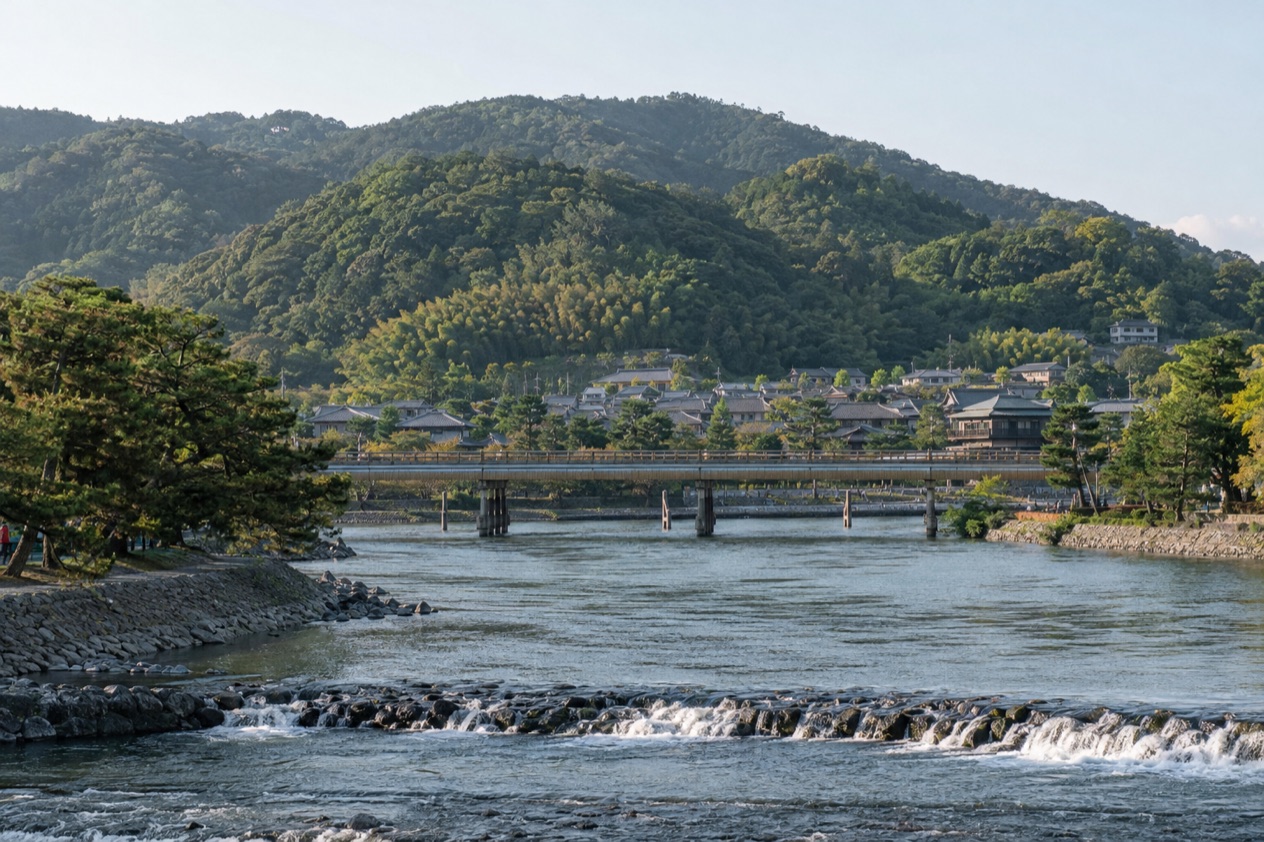
Step off the train in Uji and the first thing you meet is the river, running past the Uji Bridge with tea shops lining the approach. The air in town has a grassy, roasted note, because Uji is the place where green tea and matcha are a way of life. It is a town on the southern edge of Kyoto, a visit built around a temple, a shrine, a river and a bowl of tea.
Is visiting Uji worth it?
Yes, for travelers who already have Kyoto’s big sights in mind and want a different pace beside a river, with tea in the cup and a classic of Japanese literature in the background. It suits temple lovers, readers of The Tale of Genji, and anyone who likes to eat and drink what a place is known for.
What sets Uji apart from the other temple towns around Kyoto is how many threads meet in one small town. Byodo-in belongs to the UNESCO World Heritage listing for the Historic Monuments of Ancient Kyoto.
Ujigami Shrine, Manpuku-ji and Mimuroto-ji each add a different chapter, from Shinto to Chinese-style Zen to a garden of hydrangeas. The last ten chapters of The Tale of Genji are set here, which is why Uji has a museum devoted to the novel. And in summer the river itself becomes a stage, with evening cormorant fishing and a fireworks festival.
The city offers a heritage that has developed over 1,200 years, and Uji is one of its quieter corners to explore on foot, with tea shops to stop in between the sights.
What to see at Uji
The sights of Uji gather around the river and the Uji Bridge, with temples, a shrine and a literary museum each telling a different part of the town’s story. Tea shops and tea-based sweets fill the gaps between them.
Byodo-in
Byodo-in is the temple visitors come for, and it is part of the UNESCO World Heritage Site Historic Monuments of Ancient Kyoto. It began as an aristocratic retreat before becoming a Buddhist temple, and its elegant hall, reflected in a pond, is the image people carry away. Look for the symmetry of the building and the way the water doubles it.
The hall takes its name from the phoenix, and the bird figures appear on the roof. Take time for the grounds around the pond as well as the hall itself, since the setting is part of the design. The museum on the grounds adds context on the temple’s art.
Ujigami Shrine
Ujigami Shrine was built in 1060, which makes it a rewarding stop for anyone curious about how Shinto sanctuaries looked a thousand years ago. Its main hall has the low, restrained lines of early shrine architecture, a contrast with the grander temple halls elsewhere in town.
As at any shrine, you pass beneath a torii gate, and visitors pause to rinse their hands at the water basin before approaching the hall. The grounds are wooded and give a sense of the older Uji behind the tea shops.
Manpuku-ji
Manpuku-ji is the head temple of the Obaku Zen sect, and it was built in Chinese Ming style in 1661. That sets it apart at once from Japan’s more familiar temples: the architecture, the carved details and the layout echo China rather than the more common Japanese style.
Walking the covered corridors between its halls, you notice the unfamiliar shapes of railings, windows and doors. It is a good stop for travelers who like to see how Zen Buddhism took different forms in Japan.
Mimuroto-ji and The Tale of Genji Museum
Mimuroto-ji is known for its purple hydrangeas, which make the temple a draw for garden lovers. It is a place to wander slowly among plantings, with the temple buildings set behind the flowers.
The Tale of Genji Museum exists because the last ten chapters of the Japanese classic The Tale of Genji take place in Uji. You do not need to have read the novel to enjoy the idea of walking through a town that a thousand-year-old story chose as its final setting, and the museum brings the tale’s world to life for those who know it.
Hours, tickets and rules
Uji’s calendar is built around a few dated events, and they are the clearest things to plan around. The Agata Festival runs through a full day, the fireworks festival fills an evening with hours of display, and the cormorant fishing is an evening activity through the summer months.
| Event | When | Time of day |
|---|---|---|
| Agata Festival | June 5 | Early morning until late at night |
| Fireworks festival | August 10 | Hours-long display |
| Cormorant fishing | Mid-June to late September | Evening |
Kyoto’s shrines are best visited at less crowded times, such as early morning or late evening when they are illuminated, according to the Japan National Tourism Organization. That advice is given for Kyoto’s shrines in general, and it is a useful habit to carry to Uji’s sanctuaries as well.
How to get to Uji
Uji lies on the southern outskirts of Kyoto, in Kyoto Prefecture, so Kyoto is the base from which travelers reach it. Kyoto Station is served by the Tokaido Shinkansen, which also connects the city to major cities across Japan, so a trip to Uji can begin from nearly anywhere on that line.
The Keihan Uji Line runs from Chushojima station to Keihan Uji Station, which stands beside the Uji Bridge. Arriving there puts you at the river, with the town’s tea shops and walking routes at hand. The line is a branch, so you reach Chushojima first and continue from there.
Kyoto Station itself is worth a look before you set out. Its building holds a full floor of ramen restaurants, an Isetan department store, a theater and a Granvia hotel, and Kyoto Tower stands a few steps from the main entrance, visible across the city. A bowl of ramen there makes a fine start to a day of temples and tea.
When to visit Uji
Uji suits several seasons, and each gives it a different character. Summer is the season with the most going on at the river, with cormorant fishing in the evening from mid-June to late September, the Agata Festival on June 5 and the fireworks on August 10. Mimuroto-ji’s hydrangeas give garden lovers another reason to come.
The weather figures here are those of Kyoto, the city beside Uji. January is cold, with snow or sleet falling on many days, though the sunshine and light rain make walking possible. April brings mild days and more rain. July is hot and humid, which makes the evening river a pleasant place to be. October is comfortable for walking, with warm afternoons and cooler evenings.
| Month | Average high (°F) | Average low (°F) | Rain days | Sunshine (hours) |
|---|---|---|---|---|
| January | 48.4 | 34.7 | 6.4 | 124 |
| April | 68.2 | 48.6 | 9.4 | 177 |
| July | 89.6 | 74.5 | 11.6 | 143 |
| October | 74.1 | 57.9 | 8.2 | 156 |
Within a day, the Japan National Tourism Organization recommends visiting Kyoto’s shrines early in the morning or late in the evening when they are illuminated. For a river town like Uji, that means the evening has its own pull in summer, when the cormorant boats go out. A July day calls for a hat and water, and an October day for a light layer.
Tips for your visit
Bring comfortable shoes for temple grounds and gardens, and in July a way to stay cool, since the humidity is high. In January, warm layers matter, and in April and October a light rain jacket is a sensible companion on days with showers.
Plan Uji around its tea. A pause at a tea shop between temples is part of the experience, and matcha sweets and green tea make a natural lunch or afternoon break. Think of the day as a loop through the river, a temple, a shrine and a museum with tea in between, rather than a race through sights.
Uji combines well with the rest of Kyoto. A day in the city might add Nijo Castle in central Kyoto, built in 1603 by Tokugawa Ieyasu, the first shogun of the Edo period, where the nightingale floors chirp like birds when walked on.
For a family or anyone traveling with mixed interests, the river gives children something to watch, and the summer evening events add a festive note. Garden paths and temple grounds mean walking between sights, so plan the day at an unhurried pace.
Good to know before you go
Uji is a place for slow wandering, so a relaxed day with a few stops works better than a packed list. Summer brings heat and humidity, and the warm months carry the rainy season and typhoon season in Japan, so a flexible plan helps if the weather turns. The festival dates are fixed, so those who want the fireworks or the Agata Festival can plan around June 5 and August 10.
Sources
- Wikipedia, Uji (https://en.wikipedia.org/wiki/Uji), checked October 11, 2026
- Japan National Tourism Organization, Kyoto (https://www.japan.travel/en/destinations/kansai/kyoto/), checked October 11, 2026
- Japan Meteorological Agency (JMA), Normal values 1991-2020, monthly (https://www.data.jma.go.jp/stats/etrn/view/nml_sfc_ym.php?prec_no=61&block_no=47759), station Kyoto, elevation 41 m, checked October 11, 2026
To plan your stay
- Best Time to Visit Japan: Cherry Blossoms, Autumn Colors, Weather and Festivals
- Where to Stay in Japan: Ryokan, Temple Stays, Capsule Hotels and the Best Cities to Base In
- Sending Luggage from the Airport in Japan: Hands-Free Travel, Hotel Delivery and Coin Lockers
- Know Before You Go to Japan: Entry, Money, Etiquette and Getting Around