
You step off the street in Kamakura and the world changes: a wide avenue of gravel and stone runs ahead between old trees, with a red torii framing the way and the shrine’s roofs somewhere beyond. Tsurugaoka Hachimangu is where the town’s history gathers, a Shinto shrine tied to the warriors who once ruled Japan from here. A visit is a slow walk along a ceremonial approach, past ponds and gates, to a main hall set above the town.
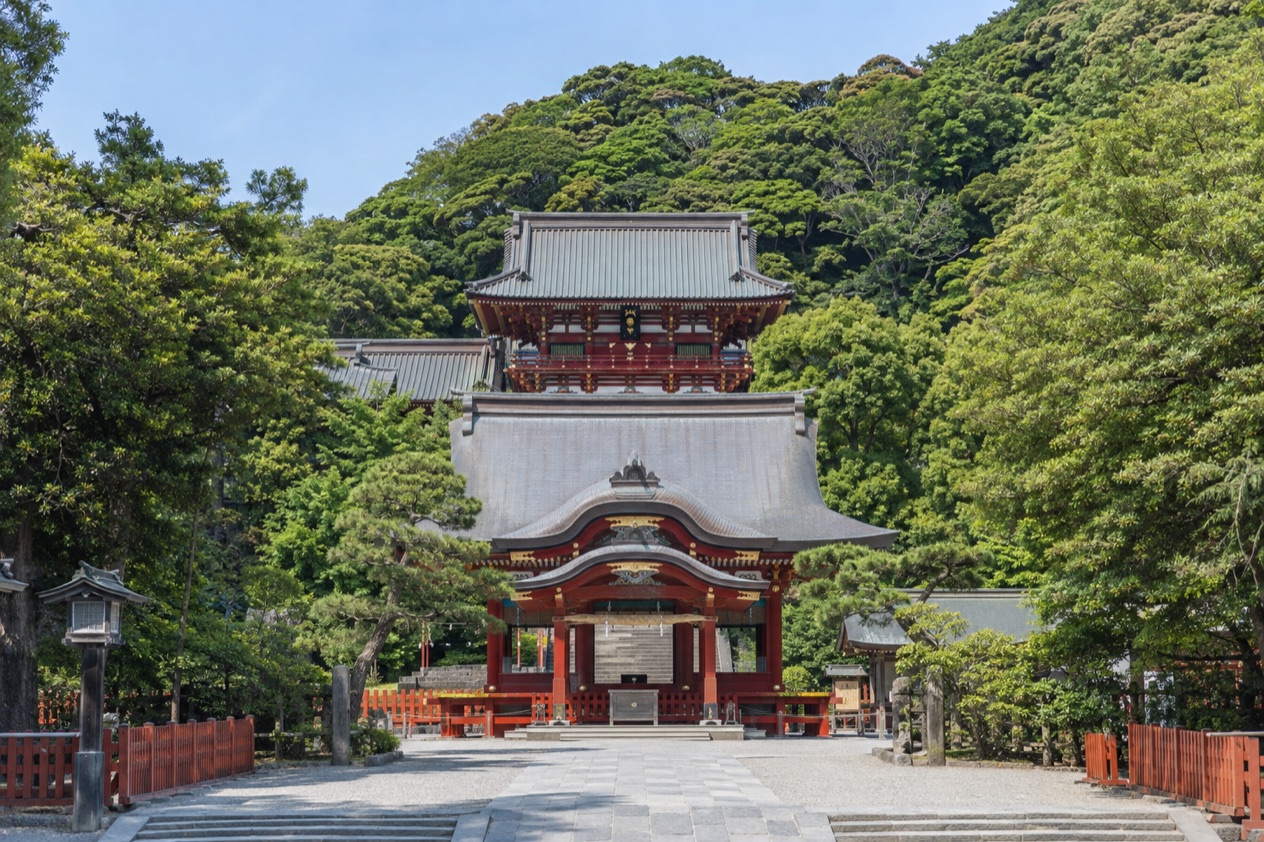
Is visiting Tsurugaoka Hachimangu worth it?
Yes, if you like your sightseeing built around a story and a walk, and especially if you are curious about the age of the samurai. Tsurugaoka Hachimangu is the most important Shinto shrine in the city of Kamakura, and Kamakura itself was the political capital of Japan under the Kamakura shogunate, from 1185 to 1333. Standing on the shrine grounds means standing at the center of the world those rulers built.
The shrine suits travelers who enjoy atmosphere over spectacle. There is no single dazzling object here. Instead you get a long, deliberate approach, a sequence of gates, water, stone steps and wooden halls, each one shifting your sense of arrival. It rewards people who like to look at roof lines, read the names on lanterns and watch how visitors bow, clap and offer prayers.
What sets it apart from the other temples and shrines of Kamakura is its role as the town’s own shrine. It was founded in 1063 and moved by Minamoto no Yoritomo to its present location in 1191, so it carries the story of the shogunate itself rather than a single religious tradition.
For most of its history it served both as a Hachiman shrine and as a Tendai Buddhist temple, a blend of faiths that was ordinary in Japan for centuries. It is also a place where martial traditions are still practiced, with yabusame, archery from horseback, and kyudo, Japanese archery, both held within the grounds.
It pairs well with the rest of the town, which holds more temples, a historic center and a rail line that runs toward the coast. For travelers weighing how to spend a day out of Tokyo, this shrine gives the historical backbone, and the other stops in Kamakura fill in the detail around it.
What to see at Tsurugaoka Hachimangu
The shrine is best understood as a sequence rather than a single building. You move from the street through gates, past water, up to the main hall, and each stage has its own character. Allow yourself to stop at the details, the carved wood, the lanterns, the stone paving, because the walk is the experience.
The three torii and the long approach
Three large torii, the Shinto gates that mark the boundary of sacred ground, stand along the approach: Ichi-no-Torii, Ni-no-Torii and San-no-Torii, the first, second and third. Passing under each one is a small ritual of arrival, and visitors pause and bow slightly as they cross. Between the gates the avenue is broad, lined with trees and lanterns, and it gives the shrine the processional feel of a place built for ceremony.
Look at how the scale of the approach prepares you for the shrine itself. The gates grow more formal as you go, the gravel gives way to stone, and the sounds of the town fade behind the trees. It is a good stretch for photographs of the red torii against green, and for noticing how much of a Japanese shrine’s meaning lies in the journey toward it rather than in the destination.
The ponds and their bridges
Near the approach lie two ponds that locals call the Genpei ponds, named for the rival clans of the age of the shogunate. Stone bridges cross the water, and in summer the surface is often covered with lotus leaves and blossoms. The ponds soften the formality of the shrine and give you somewhere to slow down and watch the light on the water.
The ponds are also a good place to read the shrine’s history, since the design reflects the taste of the warrior government that shaped it. Turtles and carp are a common sight in ponds like these, and the benches and paths around the edges invite you to stay a while before moving on to the stairs and the main hall.
The stairs, the dance hall and the main hall
At the end of the approach a flight of stone steps leads up to the main hall, which sits above the town on the slope of the hill. Along the way you pass the Maiden Hall, an open stage associated with sacred dance, and the contrast between its low, open form and the grander building above makes a pleasing study in shrine architecture. The main hall is where visitors line up to make offerings, ring the bell if there is one and offer a short prayer.
The setting is part of the appeal. Because the shrine was moved here deliberately in 1191, the layout was planned around the hill and the town below, so the view back down the approach shows how the whole composition fits together. Take a moment at the top to look back along the line of the avenue and the trees before you go on.
Yabusame and kyudo on the grounds
Yabusame, archery from horseback, and kyudo, the Japanese art of archery, are both practiced within the shrine. Yabusame goes back to the warrior culture that made Kamakura its capital, with riders in traditional dress shooting at targets as they gallop along a track. Kyudo is quieter and more meditative, a discipline of stance, breath and form as much as of aim.
These practices are what make the shrine feel alive rather than preserved. You may come across archers in practice or a ceremony in progress, and the link between the shrine, the horse and the bow explains why a warrior clan chose this site as its spiritual home. Watch the posture and the silence before each shot, since that is where the discipline shows.
The place of the old ginkgo
Near the entrance once stood a ginkgo tree about a thousand years old, a living witness to the shrine’s long history. It was uprooted by a storm on 10 March 2010. Its loss was felt across Kamakura, and the spot remains a reminder of how much of a shrine’s character lives in its trees.
Even without the great tree, the ginkgos and other trees around the grounds give the approach its shade and its seasonal color. Stand near the place where the old tree grew and take in the scale of what was lost, then look at the younger growth coming up around it.
When to visit Tsurugaoka Hachimangu
Any season gives the shrine a different face, because so much of its charm is outdoors. The approach, the ponds and the trees all change with the months, so the question is less about the best moment than about which version you want to see. The shrine is a place for walking, which means weather matters more than it would at a museum.
Spring brings blossom to the trees along the approach, and visitors plan a trip around it. The exact timing shifts from one year to the next, so it is wise to think of it as a general season rather than a fixed week.
Autumn is the season for color in the ginkgo and maple leaves, and the contrast of yellow and red with the vermilion of the torii is a favorite subject for photographers. Winter strips the grounds back to their structure, with bare branches, clear lines and stone and wood standing out, and for visitors who like the look of the buildings themselves it is a good moment.
The shrine’s calendar adds its own moments. Yabusame and kyudo are practiced within the grounds, and if you can arrange a visit to coincide with a demonstration you will see the shrine’s warrior heritage in action. Because dates for these events move, look to the shrine itself for the schedule rather than relying on a general rule.
If rain comes, the shrine does not close down as an experience. Wet stone and dark wood make the approach look different, and the ponds take on a deeper color. Bring an umbrella and treat the weather as part of the visit, since the grounds are built for a walk and the trees give them a different feeling in every kind of weather.
Tips for your visit
The shrine is at 2-1-31 Yukinoshita in Kamakura, in Kanagawa Prefecture, on the island of Honshu in the Kanto region. From Shinjuku in Tokyo, one route is the private Odakyu line to Fujisawa, where you change onto the Enoden line to Kamakura. The trip takes about 90 minutes.
The Enoshima-Kamakura Free Pass is a ticket that gives a roundtrip from Shinjuku and unlimited use of the Enoden line for one day. It does not include fares on local buses, which is worth knowing if you plan to use them around town. The pass is aimed at visitors who want to see both Kamakura and the coast of Enoshima in the same trip.
Plan the shrine as the center of a day in Kamakura rather than a stop of its own. From here you can go on to other temples and sights in town, such as the Great Buddha at Kotoku-in, and then continue along the Enoden line toward Enoshima.
Think of the visit as a walk with pauses. Stop at each torii, look at the ponds, take the steps to the main hall and, if you have time, look for the archery grounds. The shrine’s practice of both Shinto and, for most of its history, Tendai Buddhist worship means the buildings carry a mix of influences, so look at the details, from the roof ornaments to the lanterns.
As at any shrine in Japan, it is the habits that make a visit smoother. Visitors bow slightly at the torii, keep to the sides of the approach when a procession passes and speak quietly near the main hall. Photography is part of most visits, and the ponds, the torii and the stairs all make good frames, so take your time with them.
Good to know before you go
Kamakura is a city in Kanagawa Prefecture with an estimated population of 172,929, and the shrine sits at its center as a working place of worship, so the usual habits of respect apply: lower your voice near the main hall, bow at the torii and take photographs with a sense of what is going on around you. Bring a little cash for offerings and small purchases. Rain can arrive in any season, and in the typhoon months the weather is worth watching before you set out, since the walk is outdoors from start to finish.
Sources
- Wikipedia, Tsurugaoka Hachiman-gū (https://en.wikipedia.org/wiki/Tsurugaoka_Hachiman-g%C5%AB), checked October 11, 2026
- Wikipedia, Kamakura (https://en.wikipedia.org/wiki/Kamakura), checked October 11, 2026
- Wikivoyage, Kamakura (https://en.wikivoyage.org/wiki/Kamakura), checked October 11, 2026
To plan your stay
- Best Time to Visit Japan: Cherry Blossoms, Autumn Colors, Weather and Festivals
- Where to Stay in Japan: Ryokan, Temple Stays, Capsule Hotels and the Best Cities to Base In
- Sending Luggage from the Airport in Japan: Hands-Free Travel, Hotel Delivery and Coin Lockers
- Know Before You Go to Japan: Entry, Money, Etiquette and Getting Around