
The first thing you see at the Toyota Commemorative Museum of Industry and Technology in Nishi-ku is red brick. It is an old textile factory, its walls the color of rust and terracotta, standing in a city better known today for cars than for cloth.
Inside, the story begins with looms rather than engines, and the machinery itself is the attraction. It is a museum for anyone curious about how a weaving business grew into a carmaker, and it gives a day in Nagoya a very different feel from its castle and its zoo.
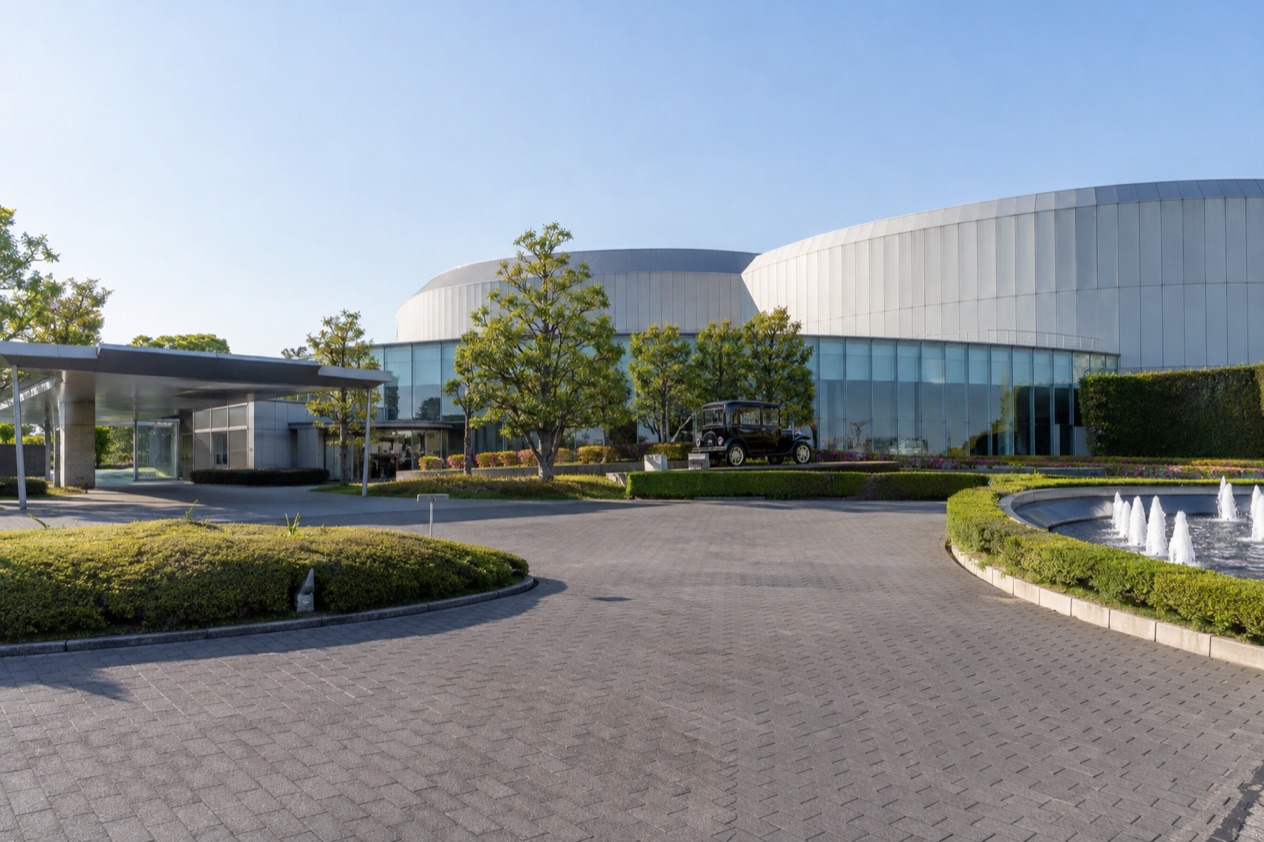
Is visiting the Toyota museums in Nagoya worth it?
Yes, if you like seeing how things are made, and especially if you enjoy machines, engineering or the history of everyday objects. It also suits travelers who have already done Nagoya’s better-known landmarks and want something that explains why the city has the character it does. Children who like robots and big moving parts will find plenty to look at, and adults who know nothing about cars can still follow the story, because it starts with thread and cloth.
The museum, also called the Toyota Tecno Museum, opened in June 1994 and is housed in a former textile factory. That building is part of what sets it apart. Many technology museums are glass boxes built for the purpose. Here the displays sit inside the very kind of place where the industry took root, so the brick walls and the large workshop spaces tell you something before you read a single label.
Among the things Nagoya is known for are Atsuta Shrine, Nagoya Castle, Higashiyama Zoo and Botanical Gardens, and the Port of Nagoya Public Aquarium. Those are places of history, animals and sea life. This museum is about industry and invention, and it follows one thread from looms through automobiles to robots. If your trip already has a castle and a shrine in it, this is the stop that shows another side of the city.
It is not a place for someone who wants a quick photo and a souvenir. The pleasure lies in lingering at the machines and following the sequence from one era to the next. Give it an unhurried part of your day, and it repays you with a clear picture of how a regional industry shaped a metropolitan area of about ten million people.
What to see at the Toyota museums in Nagoya
The visit follows a clear arc: cloth first, then cars, with robots alongside. Each part builds on the one before, so it helps to move through in order and see how one kind of machine leads to the next.
The red-brick factory
The building is the first exhibit. A textile factory of this kind was made for large machines and for work that needed space and light, and the former factory keeps that scale. Walk around the outside before you go in and you can see the brickwork, the tall proportions and the plain industrial lines that give the place its look.
Inside, the sense of a working building carries through the rooms. Notice how the open floors let large machines sit with room around them, which lets you look at them from several sides. It is a setting that suits the subject, and it explains why the museum feels more like stepping into a workshop than visiting a gallery.
Textile machinery, where the story starts
The display opens with textile looms, and this is the part that surprises first-time visitors. The family behind Toyota began with weaving machinery, and Sakichi Toyoda, the inventor most closely tied to that story, is remembered for his automatic looms. Look for the progression from simple hand-operated devices to machines that do more and more of the work themselves.
A key idea in that history is that a loom can be built to stop itself when something goes wrong, such as a broken thread. That thinking later shaped how the company approached making cars. Standing among the looms, you can see the logic of that step from cloth to automobiles take shape, long before any engine appears.
From looms to the history of cars
After the textile rooms, the display moves gradually into the history of the automobile. The change is gentle rather than abrupt, because the museum treats cars as the next chapter of the same story of machines that make work easier. Look for the early vehicles and the engines and mechanical parts that show how a car is put together.
This is the part that rewards slow looking. Cars from different periods let you compare shapes, materials and the way the machines changed over time. Even if engines mean little to you, the contrast between the early vehicles and the later ones makes the passing of time easy to read.
High-tech robots
The museum also features high-tech robots, which bring the story up to the present. Robots are a natural next step after looms and cars, since all three are about machines doing precise, repeated work. They tend to be the part that holds the attention of younger visitors, who can compare these machines with the clattering looms they saw earlier.
Seen at the end of the visit, the robots close the circle. You have moved from threads to engines to machines that look almost lifelike, and the red-brick walls around you remind you where it began. It is a satisfying way to understand a city whose economy has been built on making things.
How to get to the Toyota museums in Nagoya
The museum can be reached by rail from two stations, one on a private railway and one on a subway line. Both are inside the city, so you can reach it from a hotel in central Nagoya without leaving the urban rail network. The museum stands in Nishi-ku, a ward of the city.
By Meitetsu line to Sako Station
Sako Station on the Meitetsu line is one of the two stations that serve the museum. Meitetsu is the private railway company that runs trains through the Nagoya region, and its lines are a common part of getting around the city. If your hotel is near a Meitetsu station, this route may fit your plans well.
When you leave the station, you are heading for a large brick building that does not look like a modern museum. Your phone’s map will guide you, and the coordinates, 35°10′59.68″N 136°52′33.40″E, can be typed straight into a map app if the name does not bring up the right result.
By subway on the Higashiyama Line to Kamejima Station
The other access point is Kamejima Station on the Higashiyama Line, one of Nagoya’s subway lines. This is the choice for travelers already riding the subway, perhaps from a hotel or sights near another Higashiyama Line stop. Higashiyama Zoo and Botanical Gardens shares its name with the line, which helps you remember it.
Choose whichever station is more convenient from where you are staying, since the museum is served by both. Keep the Japanese name of the museum, or the name of the station, handy on your phone so you can show it to someone if you need to confirm your direction.
Arriving from the airport
If you land at Chubu Centrair International Airport, which sits on an artificial island 30 minutes south of central Nagoya, you will first travel into the city. From there you can continue by rail to one of the two stations above. Visitors treat the museum as a part of a day in the city, so it fits easily around a hotel check-in in Nagoya.
Nagoya itself is the capital of Aichi Prefecture, on the Pacific coast in central Honshu, and it is Japan’s fourth-largest city. That size means plenty of rail connections, and it is why a visit to this museum can combine with other parts of the city without much planning.
When to visit the Toyota museums in Nagoya
The displays sit inside a former factory building, so the museum works in any weather, and your choice of month is mostly about how pleasant the walk to and from the station will be. Spring and autumn are the gentlest seasons for being out on foot in Nagoya, while midsummer is hot and humid and midwinter is cool.
| Month | Average high (°F) | Average low (°F) | Precipitation (in) | Days with rain | Sunshine (hours) |
|---|---|---|---|---|---|
| January | 48.7 | 34.0 | 2.00 | 5.2 | 174 |
| April | 68.2 | 49.5 | 5.02 | 9.4 | 200 |
| July | 88.5 | 74.3 | 8.32 | 12.0 | 166 |
| October | 73.9 | 58.6 | 6.48 | 9.0 | 169 |
April brings mild afternoons and cool mornings, and it is the sunniest of the four months in the table. Cherry blossom season often falls in the weeks around then, so a walk through the city on the way to the museum can feel lively. Showers are common enough that a small umbrella is worth carrying, though the museum itself keeps you dry.
It is a comfortable time to travel between stations and to combine the museum with other sights. Rain falls on roughly one day in three, often in showers, so it helps to plan the outdoor parts of your day with some flexibility.
In July the heat and humidity are heavy, and rain falls on many days. January is cool and drier, with occasional snow or sleet on a handful of days, so a warm coat helps for the walk from the station.
If your visit coincides with the Nagoya Castle Autumn Festival, you can pair the two. During the festival, admission to the castle’s Honmaru Palace runs until one hour before the gates close, so plan the castle for the earlier part of that day and the museum for the other.
Tips for your visit
Wear comfortable shoes, because a museum of machines invites a lot of standing and walking from one display to the next. Bring a light layer, since the weather outside changes with the season and a large brick building can feel different from the street. A phone with a map app helps for the walk from the station.
Travelers who are less interested in engineering can move faster through the middle of the display and slow down for the looms at the start and the robots at the end, which are the parts with the most visual interest.
Combining it with the rest of Nagoya
The museum pairs naturally with a day built around Nagoya’s other sights. Nagoya Castle, Higashiyama Zoo and Botanical Gardens, Atsuta Shrine and the Port of Nagoya Public Aquarium are all well-known stops in the city, and a day that mixes one of them with the museum gives you both heritage and industry.
The NAGOYA Sightseeing Pass is described as a great-value way to enjoy the city’s major attractions, including Nagoya Castle, Chubu Electric Power MIRAI TOWER, the Nagoya Port Aquarium and Higashiyama Zoo and Botanical Gardens. It is worth looking at if you plan to see several of those, though the museum itself is not among the attractions named for it.
Families and mobility
For families, the robots and the large machines are the likeliest to hold a child’s attention, and the progression from looms to cars gives parents an easy story to tell along the way. Let younger children set the pace in the sections that interest them most and move quickly through the rest.
The same goes for guided tours, parking and any restrictions inside the galleries.
Good to know before you go
Nagoya is a large, busy city, and the museum sits in one of its residential and industrial wards, so a little planning for the route pays off. Carry some yen for small purchases, and keep the museum’s name in Japanese on your phone for station staff or taxi drivers. Rain falls through much of the year, so a compact umbrella is a sensible companion on any day of your visit.
Opening days, hours and admission are set by the museum and can change, so confirm them close to your date, and check the weather for the day you choose to go.
Sources
- Wikipedia, Toyota Commemorative Museum of Industry and Technology (https://en.wikipedia.org/wiki/Toyota_Commemorative_Museum_of_Industry_and_Technology), checked October 11, 2026
- Visit Nagoya, the Nagoya city guide (https://www.nagoya-info.jp/en/), checked October 11, 2026
- Wikipedia, Nagoya (https://en.wikipedia.org/wiki/Nagoya), checked October 11, 2026
- Wikivoyage, Nagoya (https://en.wikivoyage.org/wiki/Nagoya), checked October 11, 2026
- Japan Meteorological Agency (JMA), Normal values 1991-2020, monthly (https://www.data.jma.go.jp/stats/etrn/view/nml_sfc_ym.php?prec_no=51&block_no=47636), station Nagoya, elevation 51 m, checked October 11, 2026
To plan your stay
- Best Time to Visit Japan: Cherry Blossoms, Autumn Colors, Weather and Festivals
- Where to Stay in Japan: Ryokan, Temple Stays, Capsule Hotels and the Best Cities to Base In
- Sending Luggage from the Airport in Japan: Hands-Free Travel, Hotel Delivery and Coin Lockers
- Know Before You Go to Japan: Entry, Money, Etiquette and Getting Around