
A shamisen starts up inside a little tourist train rolling along the foot of the Shirakami Sanchi mountains, and the passengers lean toward the windows. Out there are beech forests, rice fields and apple orchards, with no skyline in sight.
Tohoku is the northeastern end of Honshu, a region of rural prefectures, onsen towns, castle towns and heavy winter snow. It suits travelers who want to leave the Tokyo-Kyoto-Osaka loop behind and spend a vacation on mountains, food and festivals.
Where is Tohoku and what is it like?
Tohoku occupies the northeastern part of Honshu, Japan’s main island, and it is made up of six prefectures: Aomori, Akita, Iwate, Yamagata, Miyagi and Fukushima. It is a big, rural region of mountain ranges, farmland, hot springs and a long coast. The region carries a reputation as remote and scenic, with a harsh climate, and that picture holds up well once you are on the ground.
The scale takes a little getting used to. Tohoku covers about 25,850 square miles, and just over eight million people live in it. The towns are spread out, and each prefecture has its own character.
Miyagi, with the city of Sendai, forms the region’s urban center. Akita and Yamagata hold castle towns and mountain villages, and Iwate holds the temples of Hiraizumi.
The pace is slower than in the big cities, and the rhythm follows the seasons: cherry trees that bloom a few weeks later than in Tokyo or Kyoto, green summer hills for rafting and hiking, leaves turning red in the gorges, then deep winter. Hot-spring baths close out most days, and sake and rice-country cooking fill the evenings.
Tohoku is for people who like to travel at the speed of a local train and do not need a long list of sights each day. It may disappoint anyone hoping for dense nightlife in every town, or a trip that works without some planning around distances. The region is still rebuilding after the earthquake and tsunami of 2011, and local pride and passion are a large part of why a visit feels personal rather than staged.
What is there to do in Tohoku?
The main reasons to come are the outdoors, old towns and temples, the hot springs, and the festivals and food. What sets Tohoku apart from its neighbors is that all of these come with room around them. Kanto has the capital and Hokkaido has its wide open spaces, but Tohoku is where rice country, apple orchards and snowy mountains sit within reach of one another.
Mountains, rivers and snow
Summer here is for rafting, hiking and other outdoor activities, and winter brings abundant powder snow and skiing. The Shirakami Sanchi range, between Akita and Aomori in the north, is a landscape of dense forest that you can watch from the JR Gono Line, which runs along its foot with views out the window.
On the Gono Line, the Resort Shirakami tourist train adds regular events and musical performances, including shamisen music, to the ride. Zao Onsen, on Mount Zao, combines a hot-spring village with the winter slopes, and in cold seasons you may see the trees on the upper mountain coated heavily in snow and ice.
Castle towns, temples and apples
Hiraizumi, a town in Iwate, is home to Chuson-ji Temple, a World Heritage Site. The visit is a walk among temple buildings and trees, with the sense of a place that mattered long ago. Kakunodate, in Akita, is a former samurai town where the streets are lined with old residences and trees, and where cherry blossoms draw visitors in spring.
Hirosaki, in western Aomori, is the largest apple producer in Japan, and its orchards set the tone for the surrounding countryside. Apple pie, apple juice and cider turn up in cafés and shops around town.
Hot springs and craft sake
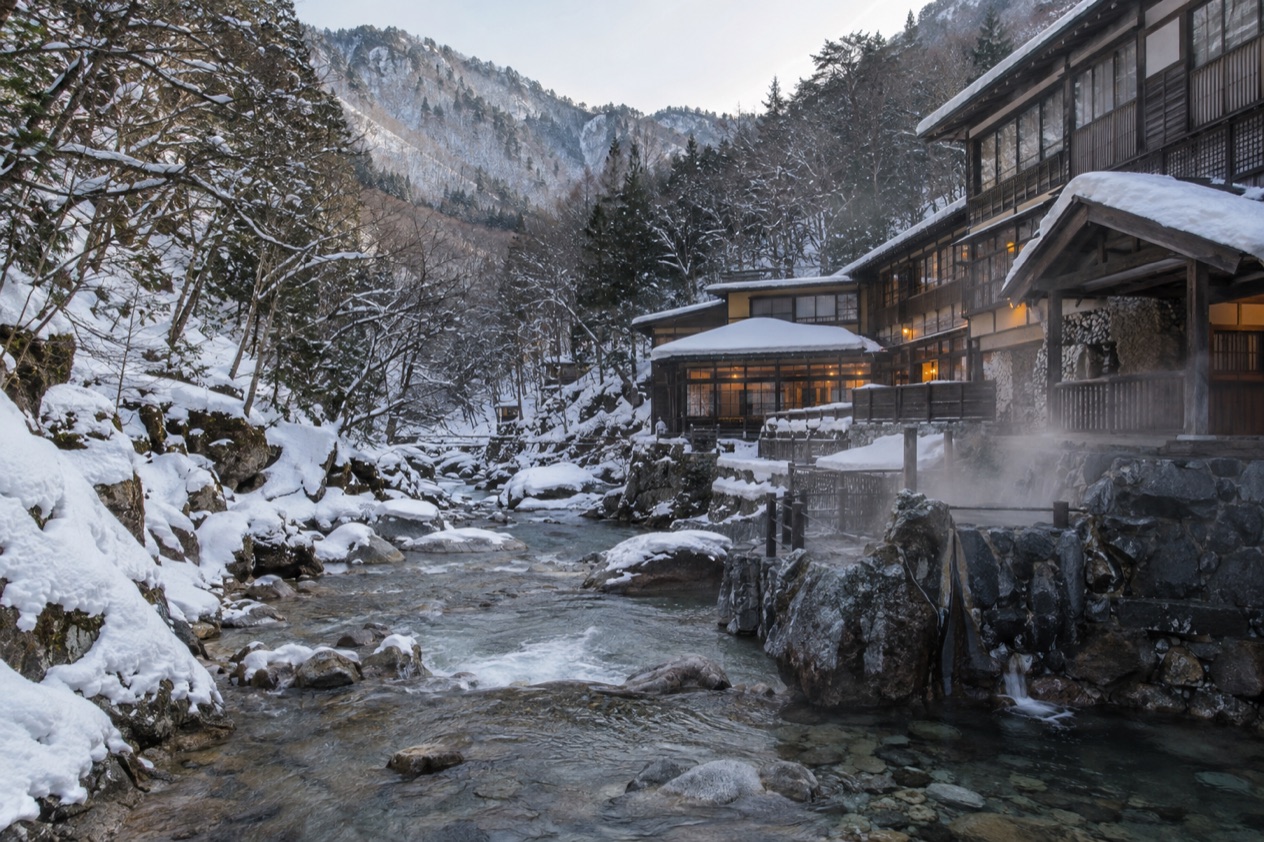
Ginzan Onsen, in Obanazawa, Yamagata, is a river valley lined with old wooden inns, where a soak and a multicourse dinner in a ryokan make the evening. Zao Onsen, also in Yamagata, offers a more mountain-based bathing experience.
Craft sake is another reason to come. This is rice country, and tasting local breweries is a good way to understand a prefecture. A cup of local sake alongside regional dishes like grilled rice skewers and fresh seafood is as much a part of the trip as any temple.
Festivals and fall color
Sendai holds the Sendai Tanabata Festival in summer, the largest Tanabata festival in Japan, with streets hung with long paper streamers. Aomori and Akita also have large summer festivals with lanterns, drums and dancing. In autumn, Naruko Gorge in Miyagi is famous for its fall leaves, and the gorge becomes a color-viewing destination.
How many days do you need in Tohoku?
A long weekend is enough for one corner of Tohoku, and a week lets you link several. The region is too large to see in one trip, so most visits work best when they focus on one or two prefectures rather than trying to cover all six.
With three or four days, Sendai makes a convenient base. It is the capital of Miyagi and the largest city in the region, and the Shinkansen from Tokyo reaches it in about an hour and a half. From there you can explore the city, its food and its festival culture, then add a gorge such as Naruko in autumn or a hot-spring stay in the mountains.
With five to seven days, the north opens up. Aomori and Hirosaki fit together, with the apple orchards and castle in one and the city and its summer festival in the other. Add Kakunodate in Akita for the samurai streets, and the Gono Line for the Shirakami Sanchi mountain scenery. This is a trip for travelers who enjoy train rides as part of the day.
If you have more time, Iwate and Hiraizumi add the temples and a sense of history, while Yamagata brings Ginzan Onsen and Zao Onsen for a few nights of bathing. Aomori is also the stepping-off point for Hokkaido, since you can reach Aomori from Hakodate in only 60 minutes. That makes Tohoku a natural half of a longer northern trip.
Travelers who love hiking, skiing or rafting can easily fill extra days with outdoor activities. Those who prefer cities and culture will find that two prefectures are enough for a week, with time left over for slow meals and long soaks.
Where to stay in Tohoku
Sendai is the base for most first visits, since it is the capital of Miyagi and the largest city in northeastern Japan. Staying there puts you in a city with restaurants, shopping and the Shinkansen station, and it works for day trips around Miyagi and nearby prefectures. It suits travelers who like a city evening after a day in the countryside.
In the north, Aomori city and Hirosaki make two different bases. Aomori sits at the northern tip of Honshu and suits those continuing to or from Hokkaido, or planning to see the city’s summer festival. Hirosaki is smaller, built around its castle grounds and apple country, and suits travelers who want a quieter town with its own sights close together.
Kakunodate, in Akita, is a place to stay when you want to wake up in a former samurai town. Small guesthouses and inns suit travelers who enjoy a slower, quieter trip. Hiraizumi in Iwate is a smaller town again, a base for temple visits and for those who like to feel the history of a place by lingering.
For a hot-spring stay, Ginzan Onsen in Yamagata is the classic choice for a ryokan night, with its wooden inns along a river. Zao Onsen suits skiers in winter and hikers in other seasons, with baths to finish the day. Both reward an overnight rather than a quick visit, since dinner and the bath are part of the experience. A reasonable plan for a week is to split nights between a city and one or two onsen villages, so you get both a place for restaurants and a place to unwind.
How do you get to Tohoku and get around?
Travelers reach Tohoku by train from Tokyo, since there are no major airports in the region. Sendai and Akita airports have some international flights, mostly to China and South Korea, but visitors arrive via Tokyo.
The Shinkansen is the main link. The Komachi and Hayabusa services are all-reserved, and they run nonstop to Sendai after leaving Omiya in Saitama, taking between 1 hour 30 minutes and 1 hour 40 minutes from Tokyo.
Miyagi and Fukushima prefectures can both be reached from Tokyo in about 90 minutes this way. The JR Akita Komachi Shinkansen runs from Tokyo Station to Akita Station in 3 hours 50 minutes, and the JR Tohoku Shinkansen offers regular trips from Tokyo to Shin-Aomori.
The Tohoku Shinkansen now continues across the strait to Hakodate in Hokkaido, though the rest of the route to Sapporo will not open until 2038. That makes Tohoku a gateway to the north as well as a destination in itself.
Once in the region, trains remain the thread that connects the towns. The JR Gono Line follows the foot of the Shirakami Sanchi mountains and carries the Resort Shirakami tourist train, so getting around can itself be a sight. The region is large and rural, so plan your days around the places you want to reach rather than trying to see everything.
When is the best time to visit Tohoku?
Spring, summer and autumn each have a clear reason to come, and winter suits snow lovers. Spring brings cherry blossoms a few weeks later than in Tokyo or Kyoto, which makes Tohoku a good backup plan if the southern blooms have passed. Castle grounds such as Hirosaki and the old streets of Kakunodate are among the places where the trees draw visitors.
Summer is the season for outdoor activities: rafting, hiking and time in the mountains. It is also festival season, with the Sendai Tanabata Festival and the big summer festivals of the north. Autumn brings red and gold to the gorges, and Naruko Gorge in Miyagi is famous for its fall leaves, so it is a natural stop for leaf viewing.
Winter is the season of abundant powder snow, and skiing and onsen stays are the draw. Aomori and its surrounding areas are known for having the heaviest snowfall in the world, so the cold months suit those who come for the snow and a hot bath. The region’s reputation for a harsh climate is earned, and a winter trip is a different experience from a summer one.
Good to know before you go
Tohoku is a region of small towns and rural areas, so it helps to plan each day around a few places rather than many. Winters bring heavy snow to the north, and that shapes what is possible in those months.
Local sake, apples and rice-country cooking are part of the experience, so leave room in your schedule for meals. The region was struck by the earthquake and tsunami of 2011, and the rebuilding there continues with local pride, which is worth keeping in mind as you travel.
Sources
- Japan National Tourism Organization, Tohoku (https://www.japan.travel/en/destinations/tohoku/), checked October 11, 2026
- Travel to Tohoku, the official tourism website (https://www.tohokukanko.jp/en/), checked October 11, 2026
- Wikipedia, Regions of Japan (https://en.wikipedia.org/wiki/Regions_of_Japan), checked October 11, 2026
- Wikipedia, Tōhoku region (https://en.wikipedia.org/wiki/T%C5%8Dhoku_region), checked October 11, 2026
- Wikivoyage, Tohoku (https://en.wikivoyage.org/wiki/Tohoku), checked October 11, 2026
- Wikipedia, Hiraizumi (https://en.wikipedia.org/wiki/Hiraizumi), checked October 11, 2026
- Wikipedia, Zaō Onsen (https://en.wikipedia.org/wiki/Za%C5%8D_Onsen), checked October 11, 2026
- Wikipedia, Kakunodate, Akita (https://en.wikipedia.org/wiki/Kakunodate,_Akita), checked October 11, 2026
- Wikipedia, Ginzan Onsen (https://en.wikipedia.org/wiki/Ginzan_Onsen), checked October 11, 2026
- Japan National Tourism Organization, Sendai (https://www.japan.travel/en/destinations/tohoku/miyagi/sendai-area/), checked October 11, 2026
- Wikipedia, Sendai (https://en.wikipedia.org/wiki/Sendai), checked October 11, 2026
- Japan National Tourism Organization, Aomori (https://www.japan.travel/en/destinations/tohoku/aomori/aomori-city-and-around/), checked October 11, 2026
- Wikipedia, Aomori (city) (https://en.wikipedia.org/wiki/Aomori_(city)), checked October 11, 2026
- Wikipedia, Hirosaki (https://en.wikipedia.org/wiki/Hirosaki), checked October 11, 2026
To plan your stay
- Best Time to Visit Japan: Cherry Blossoms, Autumn Colors, Weather and Festivals
- Where to Stay in Japan: Ryokan, Temple Stays, Capsule Hotels and the Best Cities to Base In
- Sending Luggage from the Airport in Japan: Hands-Free Travel, Hotel Delivery and Coin Lockers
- Know Before You Go to Japan: Entry, Money, Etiquette and Getting Around