
You step off the train at Hiraizumi Station into a small Tohoku town where rice fields and low hills come before anything else, and the great temples feel like part of the countryside. Gold leaf, garden ponds and grassy temple foundations sit within the same town, each telling a piece of one story. This is a visit for travelers who like history laid out in the open air, among cedar groves and water.
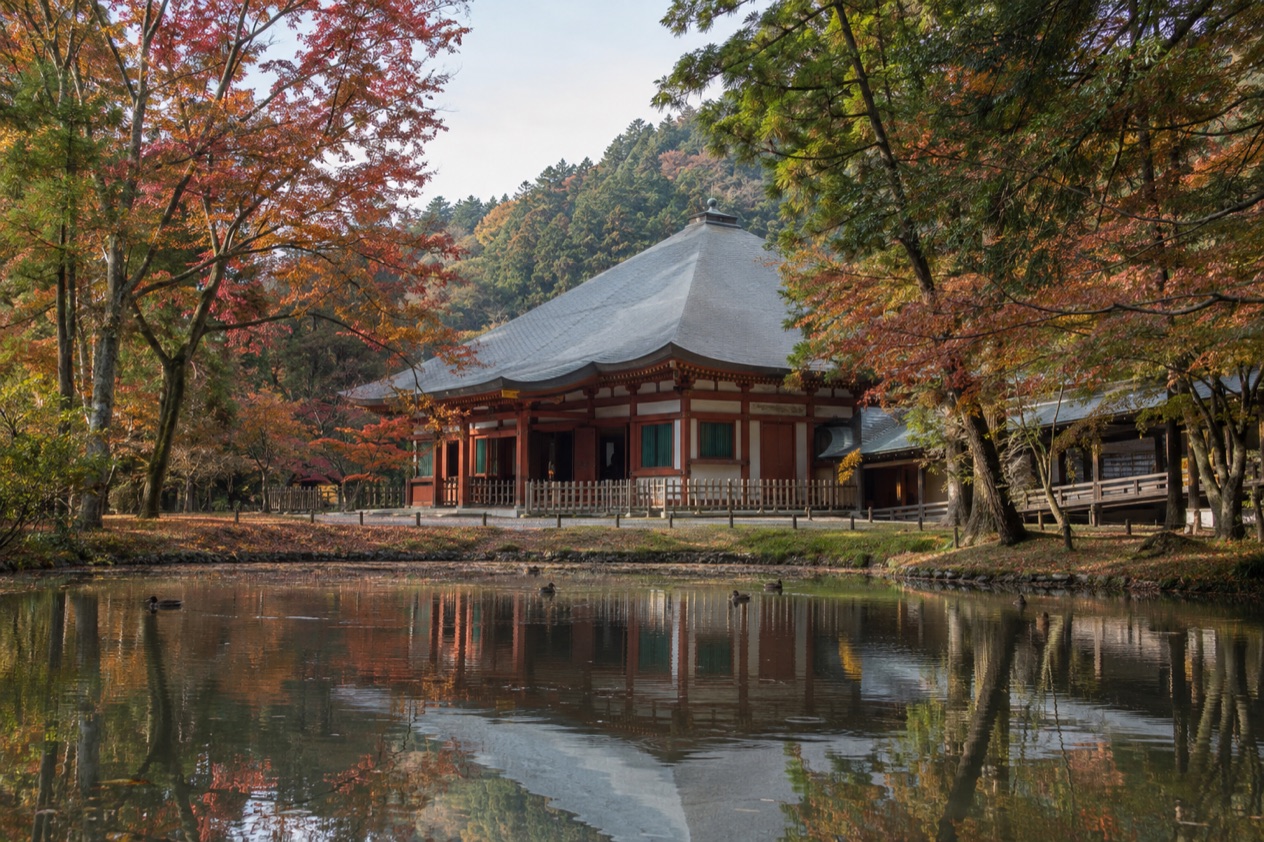
Is visiting Hiraizumi worth it?
Yes, if you enjoy temples, gardens and sites where the story is as important as the buildings, and you are happy to spend a day in a rural town in Iwate Prefecture instead of a big city. The place rewards curiosity more than speed, and it suits anyone who likes to read a landscape.
Hiraizumi’s standing is official. The Historic Monuments and Sites of Hiraizumi achieved UNESCO World Heritage Site status in 2011, a recognition that covers the temple of Chuson-ji with its Konjikido Golden Hall, the Jodo garden of Motsu-ji and the ruins of other temple sites. What you see is a group of places that belong together, each with a role in a larger picture of belief and power.
What sets it apart from the better-known temple towns of Japan is the way the story is told. In Hiraizumi, much of the past is no longer standing. Some of it survives as a gilded hall, some as a garden pond, and some as stone bases in the grass where a great temple once rose.
You learn to read absence as well as presence, and that gives the visit a thoughtful tone. The setting is also part of the Tohoku region, which Japan’s national tourism office describes as a land of rural landscapes, historical treasures and summer outdoor activities, so the town fits well into a longer trip through the northeast.
It is less suited to travelers who want a long list of attractions packed into a single afternoon, or who prefer sights that are intact and complete. If you like to pause at a pond, look at a plan of what used to stand on a site and picture it, Hiraizumi is a good match. The sites reward visitors who read the signs, think about the people who built and lost these places, and let the surrounding hills do the rest.
What to see at Hiraizumi
The sights of Hiraizumi fall into three kinds: working temples with treasures inside, gardens shaped to evoke a Buddhist paradise, and sites where only the outline of the past remains. Together they make a day of varied scenes.
Chuson-ji and the Konjikido Golden Hall
Chuson-ji is the Buddhist temple at the heart of the Hiraizumi story, and the Konjikido, the Golden Hall, is what visitors come to see. As the name says, it glitters. Gold leaf covers the small hall, and the whole structure is treated as a precious object, kept inside its own protective housing as a jewel in a case.
The temple belongs to the age when the Fujiwara family ruled this part of northern Japan and wanted a capital that expressed Buddhist ideals of peace. Look for the contrast between the glow of the Golden Hall and the dark, mossy wood and old trees that surround the temple grounds. Chuson-ji is a temple you move through slowly, taking in each building in turn.
Motsu-ji and its Jodo garden
Motsu-ji is a Buddhist temple known for its Pure Land style Jodo garden. The idea behind a garden of this type is to recreate on earth a vision of paradise, with a pond at the center and the grounds arranged around it so that every view feels composed. Water, stone, pines and open sky carry the design.
What you see today is the garden more than the great halls that once stood beside it, and that is part of the appeal. You walk along the water and let the outline of the pond guide you, imagining the temple buildings that once reflected in it. The garden changes with the season, from fresh green in the warm months to bare branches and a harder light in winter, so no two visits look the same.
Kanjizaio-in and Muryoko-in ruins
Two temple sites in Hiraizumi are now ruins. The ruins of Kanjizaio-in also include a Pure Land style Jodo garden, so they echo the design you see at Motsu-ji from a different angle. The ruins of Muryoko-in are a Buddhist temple site listed as a local attraction.
These are places for people who enjoy imagining. There is no grand hall to enter, just the shape of the ground, the pond and the grass where buildings once stood. Visiting both gives you a sense of how many temples the Fujiwara era held in one small area, and how much has been lost. Think of them as a quieter chapter of the same story that Chuson-ji tells in gold.
Takadachi Gikeido and Yanagi-no-Gosho
Takadachi Gikeido, written 高館義経堂 in Japanese, is a historic site in Hiraizumi linked to Minamoto no Yoshitsune, the warrior hero whose fate is told in many Japanese tales and plays. The hall is a memorial to him, and the story of a brilliant fighter who found refuge here and met a tragic end gives the site its emotional weight.
The poet Matsuo Basho is said to have stood in the fields nearby and written a haiku about summer grasses covering the dreams of warriors. That line captures the mood well. The Yanagi-no-Gosho Palace Site is another historic site in Hiraizumi, a place where a residence of the ruling family once stood. Together the two sites show the human and political side of the town’s past.
Takkoku-no-Iwaya Bishamon chapel
Takkoku-no-Iwaya Bishamon chapel is a Buddhist temple site in Hiraizumi, built against a rock face, a setting that makes it different from the other places on your route. Bishamon is the name of a guardian deity in Japanese Buddhism, often associated with warriors.
Where the other sites are about gardens and ruins on open ground, this one shows how the builders of Hiraizumi also worked with cliffs and stone. It is worth adding if you want a fuller picture of the area’s religious sites, and it rounds out the three kinds of place you meet here: gilded temple, garden, and a shrine set into the landscape.
How to get to Hiraizumi
By rail, Hiraizumi is served by the East Japan Railway Company, known as JR East, on its Tohoku Main Line, and the town has its own stop at Hiraizumi Station. For visitors arriving without a car, that station is the starting point for everything in town.
The Tohoku region is large, and Hiraizumi sits in Iwate Prefecture, one of six rural prefectures that make up the region along with Aomori, Akita, Yamagata, Miyagi and Fukushima. That context matters when you plan a route, because Hiraizumi works best as a stop within a broader trip through the northeast and not as a stand-alone detour from a faraway base.
By train on the Tohoku Main Line
The Tohoku Main Line is the rail connection into town, and Hiraizumi Station is the stop to look for on your itinerary. If you are traveling through the region by rail, you can plan the town as one of your stops along the way. From the station you reach the temples and sites that make up the visit.
Because the town is small and the sites are spread across it, take a look at the layout before you set out and decide which places matter most to you.
By car on the Tohoku Expressway
If you travel by road, the Tohoku Expressway has an interchange for the town called Hiraizumi-Maezawa IC, and National Route 4 passes through Hiraizumi itself. Those are the two roads to know when you plan a drive through this part of Iwate.
A car lets you shape the day on your own timetable, linking the temples and ruins in whatever order suits you. Whether you come by rail or road, the sites themselves are within the town, so once you arrive the visit is about moving between them and giving each the attention it deserves.
When to visit Hiraizumi
Hiraizumi has a humid climate with mild summers and cold winters, so each season gives the town a different face, and the right time depends on what you want from the gardens and temple grounds.
Summer is mild, which suits a day spent outdoors among ruins and ponds, and the grass that Basho wrote about is at its greenest. The Jodo gardens carry the full green of the season, and the open ruin sites look as they do in the old poem. September is the wettest month of the year, so late summer and early autumn may bring a gray, damp day, and you will want to think about how you would spend a rainy afternoon among the temples.
Winter is cold. That changes the character of the visit, with bare branches around the ponds, a harder light on the gold and a landscape stripped down to its outlines. February is the driest month, which gives the cold season a clearer, plainer look than you might expect, though the cold itself should shape your plans for a day outdoors.
Spring is when the town holds a festival connected to the Fujiwara story, usually in the early part of the season, and visitors who like to see living tradition alongside the monuments may wish to time a trip around it. Exact dates move, so treat spring as a loose window.
Whatever the month, the sites are outdoors for the most part, so the weather shapes the day. A mild summer day suits a long slow circuit between the temples, while a cold winter morning calls for a shorter, more focused visit to the Golden Hall and the garden.
Tips for your visit
Think of Hiraizumi as a day of varied sights and let the weather and your own interests set the pace. The town gathers a good deal in one place: a temple with a golden hall, a garden built to resemble paradise, ruins with their own ponds, a memorial hall and a chapel against a rock face.
Begin with the sites that matter most to you. For travelers that means Chuson-ji and its Konjikido, then Motsu-ji and its Jodo garden. These two give you the temple and the garden, the two main ways the builders of Hiraizumi expressed their ideas, and they set the context for everything else.
From there, add the ruins. Kanjizaio-in and Muryoko-in are for those who want to understand how much more once stood in town, and the Jodo garden at Kanjizaio-in gives you a second look at the same design idea as Motsu-ji.
Takadachi Gikeido and the Yanagi-no-Gosho Palace Site bring in the human side, the warriors and rulers whose lives shaped the place. Takkoku-no-Iwaya Bishamon chapel adds the cliffside setting and fills out the picture.
Bring curiosity and a taste for reading a landscape. Many of the sites ask you to imagine what is no longer there, and a little background on the Fujiwara family and on Yoshitsune will make the ruins and memorial hall more vivid. Basho’s haiku about the summer grasses is a good thing to carry in your head as you walk the open ground.
Because Hiraizumi is a town in the Tohoku region, you can also pair it with other stops in the northeast. The region, with its six rural prefectures, offers rural landscapes, historical treasures, summer outdoor activities and powder snow in winter, so a visit here fits into a longer journey through the north of Honshu. Within town itself, the best combination is simply the group of sites above, taken in an order that suits your energy and the weather.
Good to know before you go
Hiraizumi is a town of temples, gardens and open ruin sites, and most of what you do here is outdoors, so the weather shapes the day more than any other factor. The wettest month is September and the driest is February, and winters are cold, so match your plans to the season. Carry your own sense of what each site is, and let the history, more than a checklist, set the tempo of your visit.
Sources
- Wikipedia, Hiraizumi (https://en.wikipedia.org/wiki/Hiraizumi), checked October 11, 2026
- Japan National Tourism Organization, Tohoku (https://www.japan.travel/en/destinations/tohoku/), checked October 11, 2026
- Travel to Tohoku, the official tourism website (https://www.tohokukanko.jp/en/), checked October 11, 2026
To plan your stay
- Best Time to Visit Japan: Cherry Blossoms, Autumn Colors, Weather and Festivals
- Where to Stay in Japan: Ryokan, Temple Stays, Capsule Hotels and the Best Cities to Base In
- Sending Luggage from the Airport in Japan: Hands-Free Travel, Hotel Delivery and Coin Lockers
- Know Before You Go to Japan: Entry, Money, Etiquette and Getting Around