
Step off the train at Kakunodate and the town begins to shift from the modern to the old. Dark wooden gates, plank fences and tall trees line the lanes where samurai families once lived, and the houses still stand behind them. It is a town for wandering slowly, looking over garden walls and into old rooms, in the northern reaches of Japan’s Tohoku region.
Is visiting Kakunodate worth it?
Yes, if you like history you can walk through rather than read about, and especially if you want a corner of Tohoku where the past is still part of the street plan. Kakunodate is famed for its well-preserved samurai houses, and that is the heart of the visit. It suits travelers who enjoy architecture, gardens and seasonal scenery, and anyone building a trip through northern Honshu who wants a break from big-city sightseeing.
The town is sometimes called the little Kyoto of Tohoku, a nickname that gives you a sense of the mood without promising a copy of the older capital. Where Kyoto spreads over a whole basin of temples and shrines, Kakunodate is about one warrior quarter, its trees and its river.
The scale is smaller, and the focus is sharper. You come here to see how a samurai household lived, and how a castle town was laid out around those households.
What sets it apart from other historic towns in the region is how the seasons carry the whole place. Kakunodate has a proliferation of cherry trees and is a popular destination for hanami, the custom of gathering under the blossoms. In winter the same streets become the setting for a fire and snow festival with kamakura snow domes. A visit in spring feels nothing like a visit in midwinter, and both are worth planning around.
Kakunodate is a former town in Senboku District, Akita Prefecture. It merged with the town of Tazawako and the village of Nishiki in 2005 to form the city of Semboku, so you may see both names on maps and signs. The old district is still called Kakunodate by everyone, and it is the name that matters for the samurai streets.
Tohoku itself is a vast region of rural prefectures, known for its countryside, its historical treasures, its summer outdoor activities and its powder snow in winter. Kakunodate fits that picture as the place where the history is concentrated in a few streets. If your trip leans toward landscapes and mountains, this stop adds the human side of the region.
What to see at Kakunodate
The sights fall into a few groups: the samurai houses, the cherry trees, the remains of the castle and the festivals that fill the calendar. Each one tells a different part of the town’s story, and together they explain why people come.
The samurai houses
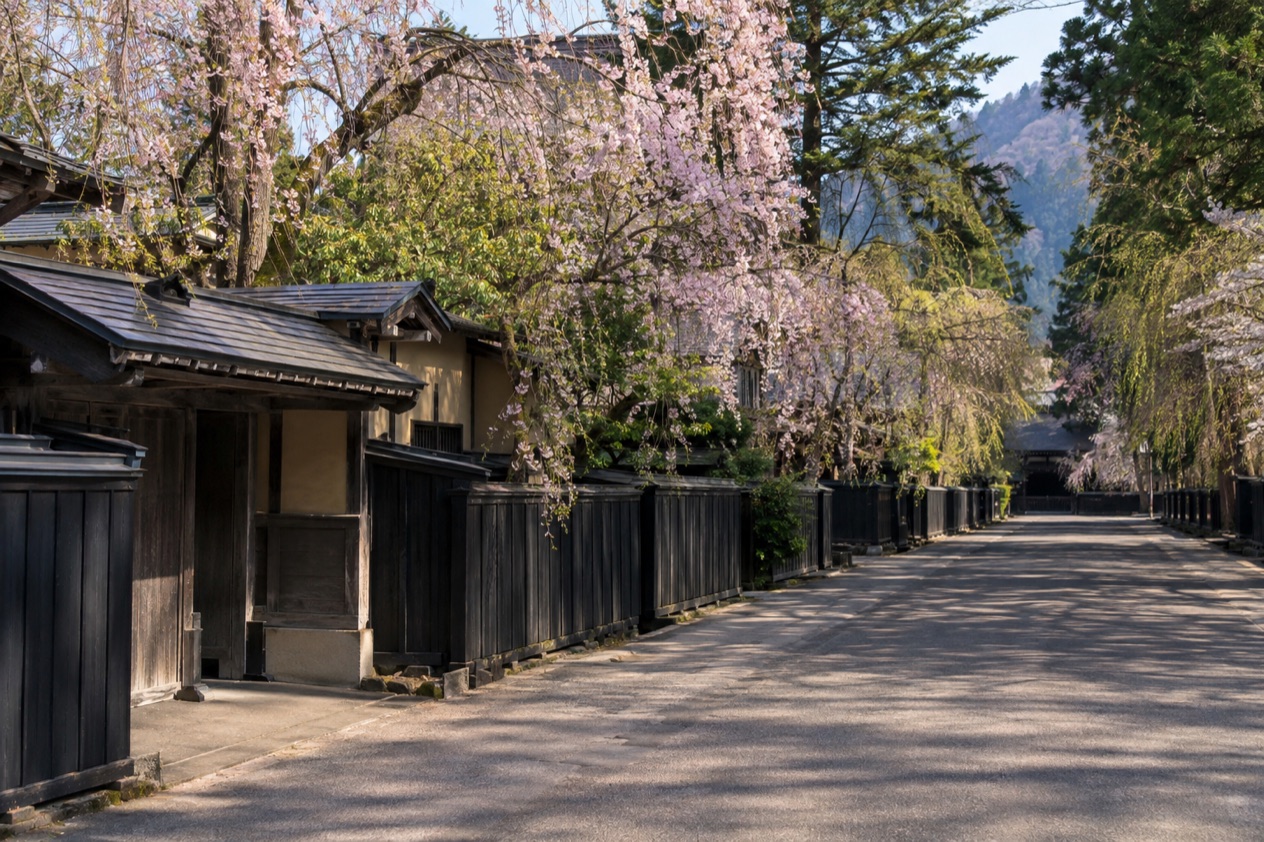
The samurai district is the reason Kakunodate is on the map. Low-ranking warrior families lived here in houses set back behind gates and walls, and several of these homes have been kept in good shape, with their thatched or tiled roofs, their wide wooden verandas and their gardens. Walking the lanes, you pass long fences of dark boards, and old trees spill over them, so each turn gives a framed view of branches against the sky.
Inside the houses that open to visitors, look for the details of daily life. There are sliding paper doors, a sunken hearth in the main room, storerooms of armor, writing tools and household objects, and gardens arranged to be seen from the veranda. Some houses are still the homes of the descendants of the original families, which gives the district a lived-in feel rather than the look of a museum set.
Take your time in the gardens. The district rewards the visitor who looks at roof lines, gate posts and the textures of old timber as much as at the displays.
Cherry trees along the streets and river
The cherry trees are the second great draw. Weeping cherries, with branches that fall like curtains, are planted in the samurai district, and their pink blossoms drape over the dark walls and gateways. The contrast between the soft flowers and the severe black fences is what makes photographs of Kakunodate so recognizable. Hanami here means strolling under the trees, stopping at a gate to look in, and picking up a snack from a stall.
Along the river the cherry trees are planted in a long line on the embankment, and in bloom they form a tunnel of blossoms over the path. People walk, sit on the grass and look up. It is a different mood from the samurai lanes, more open and more social, and visitors do both in the same outing to see the two faces of the town’s spring.
Outside the blossom season the trees still matter. In summer they give shade along the lanes, and in autumn the leaves turn and fall onto the gravel and moss of the gardens. The same walk is worth taking in any of these seasons, and each leaves a different picture.
The castle ruins and the layout of the old town
There are ruins of Kakunodate Castle in town, and they explain the shape of everything else. In a castle town, the lord’s stronghold stood at the center of power, the warrior families lived close by and the merchants lived in a separate district.
Do not expect a standing keep. What remains is the site itself, and the pleasure lies in imagining the castle from the layout of the lanes, the old trees and the open ground. Put the ruins together with a walk through the samurai district and the pieces fit: the castle gave the orders, and the houses nearby were home to the people who served it.
Kakunodate-matsuri and the fire and snow festival
Kakunodate-matsuri is an Important Intangible Folk Cultural Property, a recognition that places the festival among Japan’s valued living traditions. It is a matsuri, a community festival, in which the town’s neighborhoods take part with floats and music. It usually takes place in early September, and the streets of the old town are the stage, so the old houses form the backdrop for the processions.
In winter the town hosts a fire and snow festival featuring kamakura, the snow domes that are a tradition of snowy northern Japan. Fire against snow is the image, with flames lighting the white mounds and the dark fences. It shows the town as a cold-country place, very different from its pink spring face, and gives a reason to come when the cherry trees are bare.
When to visit Kakunodate
Spring is the season that has made Kakunodate’s name, and the cherry blossoms are the reason people plan a visit then. The trees along the samurai lanes and the river bring hanami crowds, and the town is most photographed.
If blossom is your goal, think of the visit as a window rather than a date. Plan some flexibility into the trip, and be ready to enjoy the town even if the trees are just opening or just past their best. Weeping cherry branches are beautiful even half in bloom, and the dark fences and old gates do not depend on the flowers.
Summer shows the town in green. The trees fill out, the gardens are lush and the lanes are shaded. It suits a slow walk, a pause on a veranda and a cold drink. This is also the season for outdoor activities across Tohoku, so Kakunodate can be one stop on a trip that mixes history and landscape.
Early September brings Kakunodate-matsuri, usually in the first part of the month. If you are interested in living traditions, this is the date to look at, since the old town becomes the setting for the festival. The processions, music and crowds change the mood completely, so it is a good choice for those who want a lively experience more than a contemplative walk.
Autumn is the season of changing leaves in the gardens and along the lanes, and the town takes on warmer colors. It is a good time for those who like the old houses and their gardens without the spring hanami atmosphere. Cool air and soft light suit a day spent between the houses, the river path and the ruins.
Winter is a separate trip altogether. Tohoku is known for abundant powder snow, and Kakunodate in snow is a different place, with white roofs, bare branches and the kamakura of the fire and snow festival. Dress for real cold if you come, and treat it as a visit to a northern town in the snow, not a copy of the spring postcards.
Tips for your visit
Wear comfortable shoes, because the pleasure of Kakunodate is in walking the lanes and the river path, and you will go in and out of houses where shoes come off at the entrance. Slip-on shoes make that routine easier. Bring layers in spring and autumn, when the weather changes, and warm clothing in winter. A camera is useful, though the best views often come from simply stopping at a gate and looking in.
Leave room in the day for slow looking. The district is a place for lingering, so a rushed visit loses the point. Combine the samurai houses with the cherry trees, the river and the castle ruins, and you have a full outing built around one town. Seen in this order, the layout of the old castle town becomes clear, from the lord’s ground to the warrior lanes to the open embankment.
Kakunodate also works as part of a wider journey. The former town of Tazawako, which merged with Kakunodate in 2005, is part of the same city of Semboku, so the area invites a longer stay.
Tohoku as a whole covers six rural prefectures, Aomori, Akita, Iwate, Yamagata, Miyagi and Fukushima, and Akita is the one that holds Kakunodate. A route through the region can pair this town with mountain scenery, such as the Shirakami Sanchi range between Akita and Aomori, which the JR Gono Line runs beside.
For families and for travelers with limited mobility, think about the ground you will cover. The visit is mostly on foot, and the houses have verandas, thresholds and raised floors typical of traditional Japanese buildings, so the experience involves steps and shoe changes. The river path and the lanes are the main areas to move through, and you can choose how much to take in at your own pace.
Spring blossom brings visitors who come for the same trees, so expect company under the branches in that season. In the other seasons, you are more likely to be a solitary walker among the fences. Whatever the month, the best approach is the same: pick a house or two that interest you, spend time in the gardens and let the lanes between them do the rest of the work.
Good to know before you go
Kakunodate sits in a rural prefecture of Tohoku, so plan for a smaller town with the pace of the countryside, and carry some yen in case a small shop or stall wants it. The weather turns cold in winter and can be changeable in spring and autumn, so pack with the season in mind.
Earlier in the page, the old district was described as the heart of the visit, and it is the part of the town to keep in mind when you map out your day. Visitors who come for the samurai houses and the cherry trees will find them within the old quarter.
Sources
- Wikipedia, Kakunodate, Akita (https://en.wikipedia.org/wiki/Kakunodate,_Akita), checked October 11, 2026
- Japan National Tourism Organization, Tohoku (https://www.japan.travel/en/destinations/tohoku/), checked October 11, 2026
- Travel to Tohoku, the official tourism website (https://www.tohokukanko.jp/en/), checked October 11, 2026
To plan your stay
- Best Time to Visit Japan: Cherry Blossoms, Autumn Colors, Weather and Festivals
- Where to Stay in Japan: Ryokan, Temple Stays, Capsule Hotels and the Best Cities to Base In
- Sending Luggage from the Airport in Japan: Hands-Free Travel, Hotel Delivery and Coin Lockers
- Know Before You Go to Japan: Entry, Money, Etiquette and Getting Around