
A local train rolls out of Okayama and stops at one small station after another, until the passengers with sketchbooks and camera bags get off at Uno and walk toward the water. From there a boat carries them across the Seto Inland Sea to an island that has turned its hillsides, its old houses and its shoreline into a gallery. Naoshima rewards the traveler who treats the journey as part of the visit.
How do you get to Naoshima from Okayama?
You go by train and then by boat: a local train from Okayama to Uno Station in Tamano, then a boat from Uno across to Naoshima. That is the route described for travelers coming from Honshu, and Okayama is one of the main transportation hubs for the whole Setouchi archipelago, which is why so many art-minded visitors pass through it.
What decides everything is the island’s odd geography. Naoshima sits closer to Honshu than to Shikoku, yet it belongs administratively to Kagawa Prefecture on Shikoku. For you, that means the island is reached from the Honshu side through Uno, even though the prefecture it belongs to lies across the water. Okayama is the place where you change from the long-distance rail network to a slower, more local rhythm.
The local train matters because of how Japanese trains work. A local stops at every station, which makes it suited to short distances, while rapid trains skip the smaller stations and carry no extra fee. Japanese trains also have a reputation for running on time, so a connection between the train and the boat is something you can plan around the timetables you find on the day.
The second route runs through Takamatsu. The major art islands of Setouchi, Naoshima among them, can be reached from Takamatsu Ferry Port, a few minutes’ walk from Takamatsu Station. That gives you a choice between two ports, one on each side of the sea, and the choice usually comes down to where you are sleeping and what else is on your itinerary.
One date rule shapes the whole day more than any timetable. Most of the museums on Naoshima are closed on Mondays, so a Monday arrival, however smooth the trains, can leave you with a beautiful island and locked doors.
Ways to get to Naoshima from Okayama
Local train to Uno, then the boat
This is the route from Okayama. You board a local train that runs to Uno Station in Tamano, a town on the shore of the Seto Inland Sea, and from there you take a boat to Naoshima. The first leg is a regular rail ride with a window seat on the stopping service, and the second turns the trip into a small sea crossing with islands scattered along the horizon.
A local train suits anyone who is comfortable with a stopping service, because it halts at every station along the way. The ride gives you a look at the towns and the changing landscape between a big rail hub and the water’s edge. Having your onward plan ready before you leave Okayama keeps the connection at Uno simple, since the boat is the part of the trip that sets your pace.
Think of the boat as the real beginning of the visit. The mild climate of the Seto Inland Sea islands, the scattered shapes of the archipelago and the light on the water are all part of why people come here for a short getaway from Okayama. A camera or a notebook is worth keeping in your hand rather than in your bag for this stretch.
Through Takamatsu and its ferry port
Takamatsu on Shikoku is the other gateway. From Takamatsu Ferry Port, Naoshima, Teshima, Shodoshima and the other major art islands of Setouchi can all be reached, and the port is a few minutes’ walk from Takamatsu Station. Takamatsu and Matsuyama are the two main transportation hubs on the Shikoku side of the archipelago, just as Okayama, Hiroshima and Kobe are on Honshu.
This way in fits a trip built around the Setouchi islands rather than a single day from Okayama. If you plan to see more than one art island, starting at the ferry port in Takamatsu puts several of them within reach of the same harbor. It also fits travelers already staying on Shikoku, who would otherwise cross back toward Honshu just to reach an island that belongs to their own prefecture.
From Okayama, going this way means leaving the Honshu route for a different port, so it suits people who have a reason to be in Takamatsu rather than those looking for the most direct line from Okayama. The Uno route above is the one the Honshu journey is built around.
Options compared
| Option | Route | What to know |
|---|---|---|
| Local train and boat from Okayama | Local train to Uno Station in Tamano, then a boat to Naoshima | Local trains stop at every station. Rapid trains skip smaller stations and need no supplement |
| Takamatsu Ferry Port | Boat from the port, a few minutes’ walk from Takamatsu Station | Also serves Teshima, Shodoshima and other major art islands of Setouchi |
The two options differ more in where you start than in what you find on arrival. The Okayama route is the one built around Honshu, with a rail transfer to a small port town and a boat from there. The Takamatsu route belongs to travelers who are already on Shikoku or planning to island-hop, with a ferry port set right beside the station.
Whichever way you choose, you land on the same island, with the same museums and the same Monday closures. Pick the route that fits where your hotel is and what comes next on your itinerary, then let the crossing be the first piece of the day’s scenery.
Making a day of it
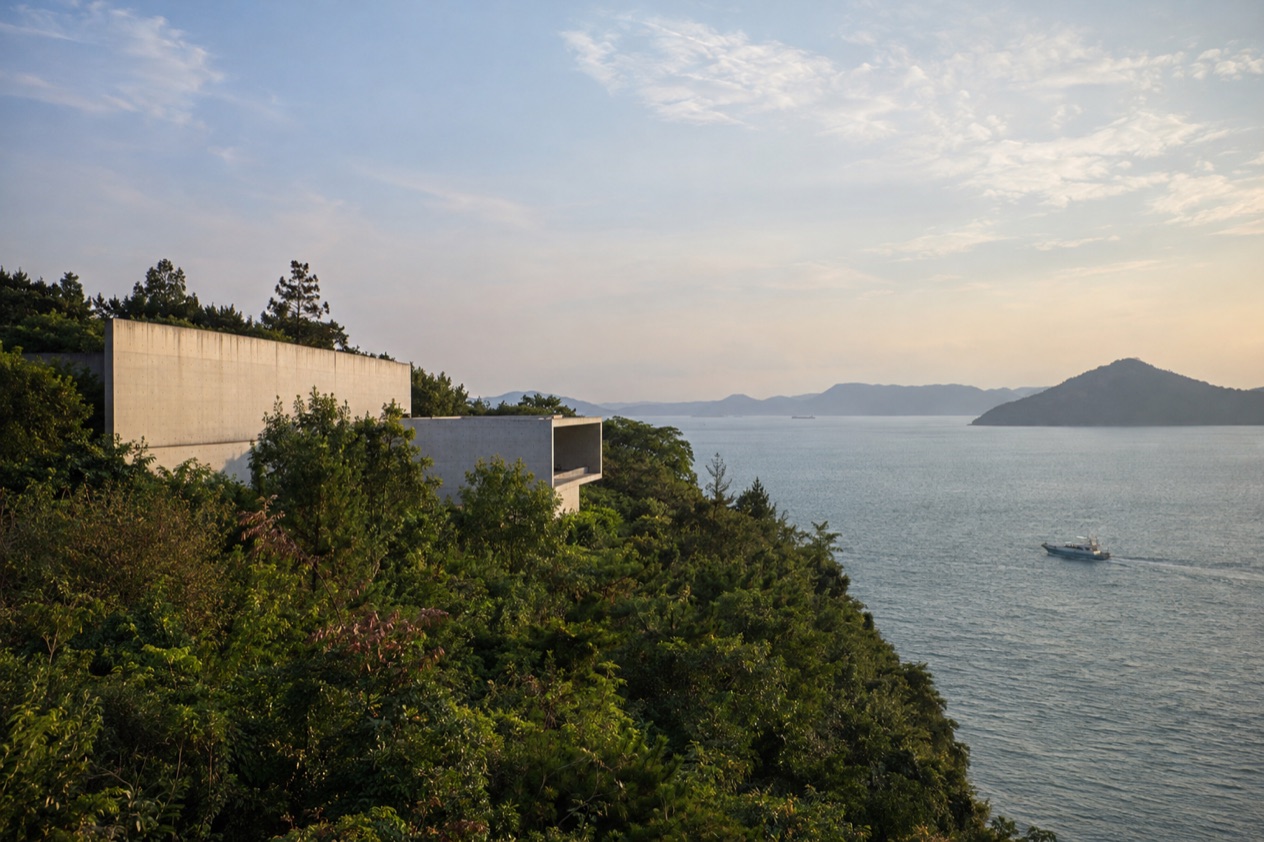
A day on Naoshima is built around its museums, so start with the three that anchor the island. The Chichu Art Museum, designed by Tadao Ando, stands on one of the highest points of the island and houses site-specific installations by James Turrell and Walter De Maria, along with paintings by Claude Monet. Benesse House is a contemporary museum and hotel, also designed by Ando, while the Naoshima Fukutake Art Museum has an outdoor sculpture garden.
Beyond the big names, the island is known for its many contemporary art installations scattered through the town and along the shore. There is even a James Bond museum, inspired by the island’s use as a setting for Raymond Benson’s 2002 novel The Man with the Red Tattoo. It makes a lighter counterpoint to the quiet gallery rooms.
The one firm piece of planning advice is to avoid Mondays, when most of the museums are closed. Aim for another day of the week and the doors you came for will be open. Because Naoshima is a place where you move between buildings, gardens and shoreline, wear shoes you are happy to walk in and keep a camera or a notebook ready.
If you want more than the island itself, the Setouchi archipelago is a chain of thousands of islands of different sizes. Teshima and Shodoshima count among the other major art islands, and the area’s clean beaches and blue waters suit short getaways from Okayama, Takamatsu, Hiroshima and Kobe. A second island turns the outing into an overnight trip, while a single island stays an unhurried excursion built around its museums.
Back in Okayama, you return the way you came, by boat to Uno and then a local train. Keeping the boat and train connection in mind when you plan your last museum visit means the day ends on the island’s art and not at a pier.
Good to know before you go
The details that shape this trip are the Monday closures, the two-leg journey of train and boat, and the fact that the island belongs to Kagawa Prefecture even though it is reached from Honshu. Carry the route in mind before you leave Okayama and let the rest of the day unfold on the island, between the museums, the garden and the water.
Sources
- Wikipedia, Naoshima (https://en.wikipedia.org/wiki/Naoshima), checked October 11, 2026
- Japan National Tourism Organization, Naoshima (https://www.japan.travel/en/destinations/shikoku/kagawa/setouchi-islands/), checked October 11, 2026
- Wikivoyage, Naoshima (https://en.wikivoyage.org/wiki/Naoshima), checked October 11, 2026
- Japan National Tourism Organization, trains and buses (https://www.japan.travel/en/guide/how-to-travel-by-train-and-bus-in-japan/), checked October 11, 2026
- Japan National Tourism Organization, traveling by rail (https://www.japan.travel/en/guide/traveling-by-rail/), checked October 11, 2026
- Japan National Tourism Organization, getting around Japan: trains, subways, buses, taxis (https://www.japan.travel/en/plan/getting-around/), checked October 11, 2026