
A ferry slides across the Seto Inland Sea, and the island ahead looks like any other green hump in a sea scattered with them. Then you step ashore and find that the museums, the installations by the water and the buildings of concrete and glass have become part of the landscape. Naoshima is a small island given over to contemporary art, for travelers who like to spend a day looking slowly and who don’t mind that the whole trip is built around galleries and the sea.
Where is Naoshima and what is it like?
Naoshima is an island in Japan’s Seto Inland Sea, part of Kagawa Prefecture, and it belongs to the Setouchi archipelago, a chain of thousands of islands of various sizes dotting those waters. A curious detail of the map is that the island lies closer to Honshu, yet administratively it belongs to Kagawa Prefecture on Shikoku. That is why you can reach it from either side of the sea, and why the cities of both shores serve as its gateways.
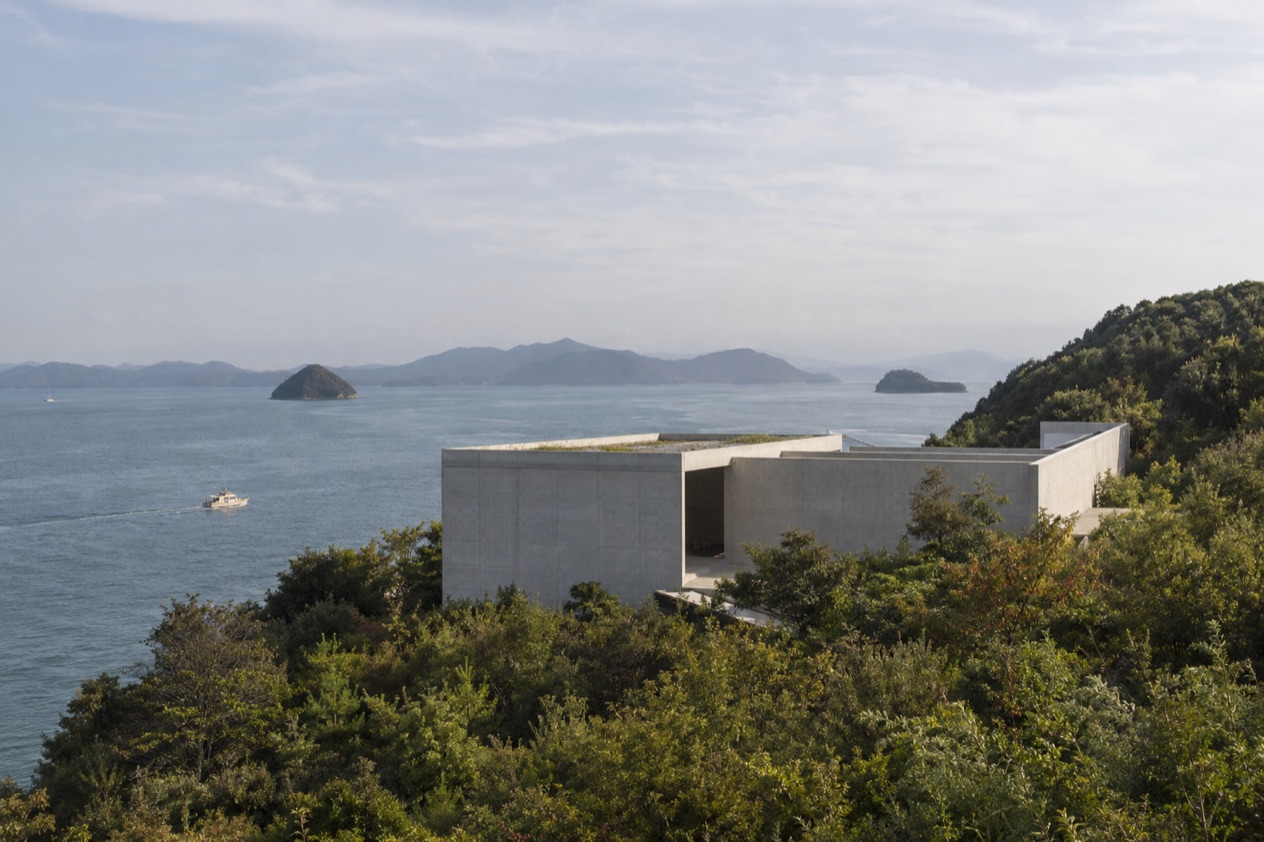
The character of the place comes from one idea: it is best known for its many contemporary art installations and museums. The island is also a town, so the art sits among ordinary village life rather than behind a resort fence. Outdoor works stand in the open, and the museums are built into the island’s own shape.
The Seto Inland Sea islands have a mild climate, clean beaches and sparkling blue waters, and that backdrop does a lot of the work here. Between one gallery and the next you spend time looking at water, at neighboring islands and at ferries crossing in the distance. The pace follows the museums: you look, you walk, you sit down, you look again.
Who will love it? Travelers who enjoy architecture, installations and the pleasure of a day with a single theme. Who may not? Anyone who wants a long list of temples, shopping streets or nightlife. Naoshima asks for attention to a few things done properly, and it rewards that kind of attention.
What is there to do in Naoshima?
The things to do come down to a few big reasons: the museums designed by Tadao Ando, a night or a meal at an art hotel, a special house you must reserve, and the wider circuit of neighboring art islands. What sets Naoshima apart from the other islands of Setouchi is that it is where the idea is concentrated, with the buildings themselves treated as works to walk through.
Chichu Art Museum
Designed by Tadao Ando, the Chichu Art Museum is located on one of the highest points of the island. Inside you find site-specific installations by James Turrell and Walter De Maria, alongside paintings by Claude Monet. The works were made for the rooms they occupy, so the building and the art cannot be separated.
Think of it as the place to give the most patience. Turrell’s work is about light and perception, De Maria’s is about scale and stillness, and the Monet paintings belong to a different century than the walls around them. Together they make a visit that stays with you longer than a stroll past labels would.
Benesse House
Benesse House is a contemporary museum and hotel, also designed by Tadao Ando. That double role matters: it is a gallery you can walk through by day and also a place to sleep surrounded by art. For travelers it turns a day visit into something closer to a stay on a work of architecture.
It suits travelers who want the island to be the whole trip rather than an outing. The Setouchi shores outside the building belong to the experience, with the sea always close at hand. Those who prefer to see the museum without the overnight can still treat it as one stop among several.
The Kinza art house
Kinza is one of the art houses, and it is the one that asks for planning, since reservations must be made in advance online. It follows its own calendar, and the winter pause is worth knowing about if you travel in the cold months.
| Site | Open |
|---|---|
| Kinza | Thu to Sun and holidays, 11:00-13:00 and 14:00-16:30. Closed Thu and Fri from Dec 1 to end of Feb. |
Teshima and the other art islands
Teshima, Shodoshima and the other major art islands of Setouchi are accessible from Takamatsu Ferry Port, a few minutes’ walk from Takamatsu Station. The Teshima Art Museum sits on the island of Teshima, in Kagawa Prefecture, in the same inland sea.
For a traveler with more time, hopping between islands turns the trip into a small circuit of art and sea. Each island has its own mood, and Naoshima is the natural starting point because the other places make more sense after you have seen how the idea works here.
How many days do you need in Naoshima?
The island is small enough that its headline sights fit together, and the pleasure lies in not hurrying between them.
In a short stay, choose the museums you most want to see and give each its full attention. Chichu Art Museum alone can fill a good part of a day, given how the installations reward slow looking. Benesse House adds a second building by the same architect, and the outdoor works connect the two as you walk between them.
One thing shapes every plan: avoid visiting Naoshima on Mondays, as most of the museums will be closed. Build the trip around that, and if you want the Kinza art house, remember it opens only from Thursday to Sunday and on holidays, with a reservation made ahead.
With more time, add the islands around it. Teshima has its own art museum, and Shodoshima is reached from the same ferry port in Takamatsu. A longer trip can also use the hub cities as bases for other outings, since Okayama, Takamatsu, Hiroshima and Kobe are all described as places from which the islands make short getaways.
A slower itinerary lets the sea become part of the journey. Ferries link the islands, the light shifts over the water, and the days between museums are often the ones you remember. Spending a night on the island rather than rushing back changes the rhythm of the whole visit.
Where to stay in Naoshima
The most distinctive place to stay is on the island itself, at Benesse House, a contemporary museum and hotel designed by Tadao Ando. Sleeping there means the art is around you in the evening and the morning rather than only during opening hours. It suits travelers who want Naoshima to be the center of the trip.
The other choice is to stay on the mainland and visit by ferry. The main transportation hubs to reach the Setouchi archipelago are Okayama, Hiroshima and Kobe on Honshu, and Takamatsu and Matsuyama on Shikoku. These are the cities where trains meet and where the islands become a day outing rather than a destination.
Takamatsu fits the traveler who wants to be close to the boats, since the ferry port is a few minutes’ walk from Takamatsu Station. Okayama suits those arriving by the Honshu rail network and continuing toward the island on local lines. Hiroshima and Kobe work for travelers combining Naoshima with other cities on a longer route, treating the island as one chapter in a wider trip.
Choosing between the two comes down to what you want from the evening. On the island, the day ends with art and sea around you. On the mainland, you trade that for the lights and meals of a city, and you take a boat in the morning.
How do you get to Naoshima and get around?
You reach Naoshima by boat, from either Honshu or Shikoku. From Honshu, take a train to Okayama, then a local train to Uno Station in Tamano, and then a boat to Naoshima. From the Shikoku side, the major art islands of Setouchi, Naoshima among them, are accessible from Takamatsu Ferry Port, a few minutes’ walk from Takamatsu Station.
The rail links on the way are part of the plan. Express trains connect Takamatsu from Okayama, and a major high-speed train line runs between Osaka and Hiroshima, which puts the Honshu gateways on a well-used network. Okayama, Hiroshima and Kobe on Honshu and Takamatsu and Matsuyama on Shikoku are the main hubs for the archipelago.
Once on the island, the practical questions concern how to link the museums. The sources describe the island’s sights and its ferry connections, so plan around the places you most want to see and the days they are open. Remember that most museums are closed on Mondays, so the day you arrive matters.
Ferries are also the way between the art islands. A trip that includes Teshima or Shodoshima returns you to the sea each time, and the crossing becomes part of the day. Travelers who like journeys with a view tend to count this as a pleasure of the trip rather than a chore.
When is the best time to visit Naoshima?
Naoshima is an island for the whole year, because the Seto Inland Sea islands have a mild climate, clean beaches and sparkling blue waters. Since the museums are indoors and the outdoor works sit by the water, no single season decides the trip. What shapes the dates is more often the opening calendar than the weather.
The first rule is the day of the week: avoid Mondays, when most of the museums are closed. The second concerns winter. The Kinza art house is closed on Thursdays and Fridays from December 1 to the end of February, so those who want to see it should plan around that window, with an advance reservation online.
Because the figures for the island itself are not given, the guidance stays in words: the sea and the mild climate suit short getaways from the surrounding cities, and the time to go is whenever the days you want line up with the museums you most want to enter. A traveler who plans around the weekly closure will find the island ready to welcome them in any month.
Good to know before you go
Naoshima is an island, and everything depends on the calendar of its museums, so the weekly closure on Mondays is the main thing to hold in mind. The Kinza art house needs a reservation made in advance online. Plan your boat crossings around the places you want to enter, and remember that the gateway cities of Okayama, Takamatsu, Hiroshima and Kobe are where your journey connects to the island.
Sources
- Japan National Tourism Organization, Naoshima (https://www.japan.travel/en/destinations/shikoku/kagawa/setouchi-islands/), checked October 11, 2026
- Wikipedia, Naoshima (https://en.wikipedia.org/wiki/Naoshima), checked October 11, 2026
- Wikivoyage, Naoshima (https://en.wikivoyage.org/wiki/Naoshima), checked October 11, 2026
- Japan National Tourism Organization, art museums (https://www.japan.travel/en/things-to-do/art-and-design/art-museum/), checked October 11, 2026
- Wikipedia, Teshima Art Museum (https://en.wikipedia.org/wiki/Teshima_Art_Museum), checked October 11, 2026