
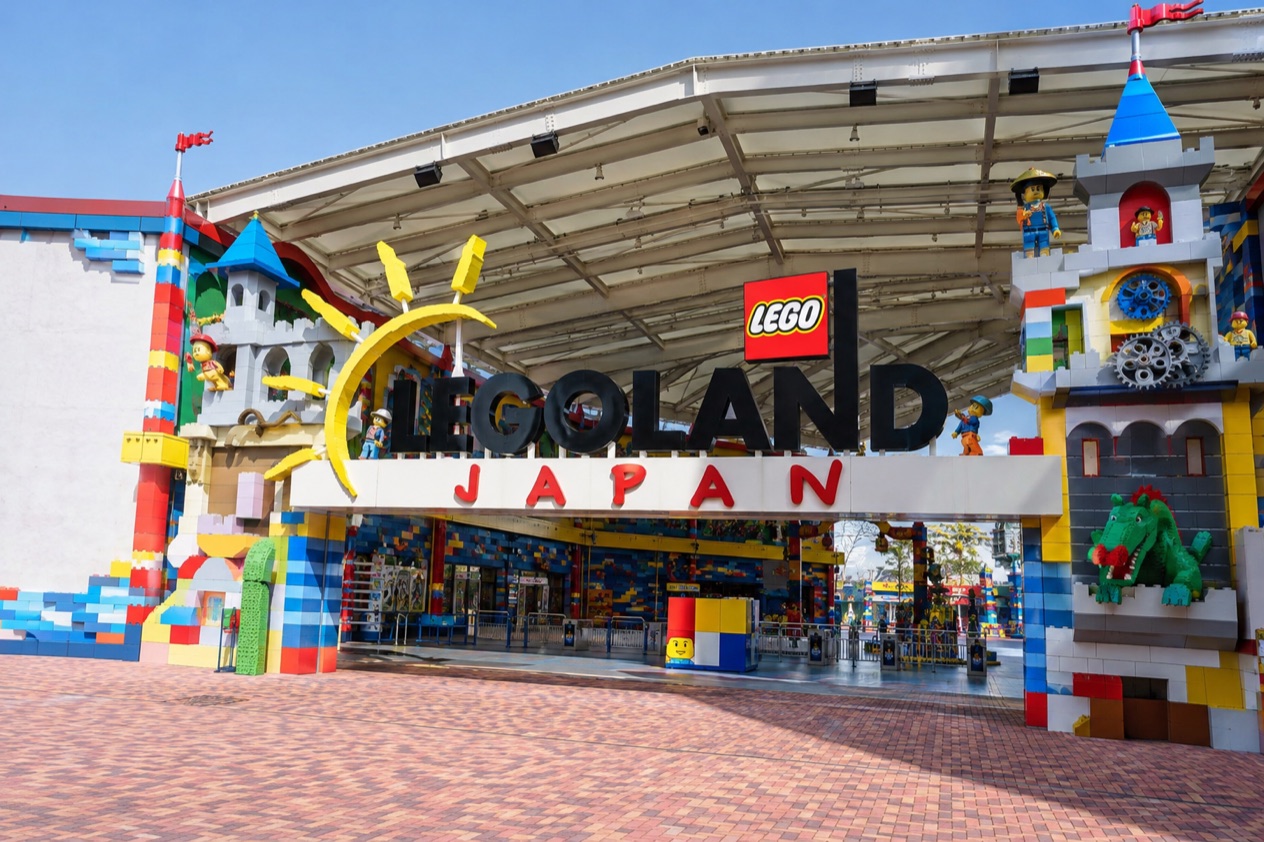
Step through the gates and the first thing that catches your eye is color: red, yellow and blue bricks stacked into shapes taller than the children racing toward them. Somewhere nearby a brick-built figure waves, a ride clatters, and the smell of fried snacks drifts across the paths.
Is visiting Legoland Japan worth it?
Yes, if you travel with children or you simply love LEGO, and it suits a family far better than a couple looking for temples and gardens. The park is made for hands-on play: kids climb, build, steer and ride, while adults get the pleasure of spotting how much can be made from a single small brick.
What sets it apart from the other family outings around Nagoya is the scale of imagination. The Port of Nagoya Public Aquarium and Higashiyama Zoo and Botanical Gardens show you living animals, and Nagoya Castle shows you history.
Legoland Japan Resort opened on April 1, 2017, and it is built around a single idea: everything, from landmarks to rides, is made of or inspired by bricks. The compact grounds cover 23 acres, so the park feels like one big playground rather than a sprawling theme-park trek.
It also works as a change of pace in a trip heavy on shrines and museums. Children who have been patient through a castle visit tend to come alive among the models and rides, and the park gives grown-ups a reason to slow down and look at details.
What to see at Legoland Japan
The park holds over 40 attractions, a mix of rides, shows, play zones and building areas. Three parts of the visit stand out: Miniland, the Observation Tower and the hotel next door.
Miniland
Miniland is the heart of any Legoland, and here it is dedicated to Japan. Landmarks and city scenes are built from 10,496,352 LEGO bricks, so you walk among miniature streets, buildings and tiny brick people going about their day. It is the part of the park that appeals as much to adults as to kids.
Look closely at the small touches: figures posed in little scenes, rooftops, bridges and crowds, each assembled one brick at a time. It is a good way to see Japanese places in condensed form before or after visiting the real ones, and it makes a natural spot for photos with children pointing out what they recognize.
The Observation Tower
The Observation Tower rises 60 meters and offers a 360-degree view of the entire park. From up there the layout becomes clear: the paths, the colored zones, the rides tracing loops and the Miniland scenes shrunk even smaller than they look at ground level.
It is a useful stop for getting your bearings and for deciding where to go next, and a good moment for children to spot the rides they want to try. Tell younger ones to look for the places they have already visited, which turns the view into a small game.
Legoland Hotel and the wider park
Legoland Hotel opened next to the park on April 28, 2018, with reservations accepted from December 1, 2017. For families who want to keep the theme going after the gates close, it extends the visit into an overnight stay, and the brick theme continues beyond the park entrance.
The rest of the park fills the days with rides, building zones and play areas that mix gentle thrills with creative time. With so many attractions, most families pick a handful of favorites and let the children decide where to linger.
Hours, tickets and rules
Legoland Japan Resort operates year-round, so there is no closed season to plan around, and the park can be part of a Nagoya stay in any month. That makes it a flexible choice when the weather turns for a castle or garden day, or when a family wants a change of scene between sights.
Daily opening times and admission prices are set by the park itself and shift with the calendar, so the park’s own booking channels are the place where a visit is arranged. The nearby Nagoya Sightseeing Pass is a separate product aimed at the city’s major attractions, including Nagoya Castle, Chubu Electric Power MIRAI TOWER, Nagoya Port Aquarium and Higashiyama Zoo and Botanical Gardens. It is described as a great-value way to enjoy those sights, though Legoland Japan is not among the attractions named for it.
How to get to Legoland Japan
The train is the way into the park: Legoland Japan Resort stands near Kinjo-futo Station on the Nagoya Rinkai Rapid Transit Aonami Line. That is the station to look for on your route map, and it is the stop that places you at the park’s doorstep.
The Aonami Line is a separate railway from the main JR and subway networks, so on a route planner you will see it listed as its own operator. Building the day around the line’s name and the station name gives you the clearest picture of the journey, whichever part of Nagoya you start from.
Travelers arriving by air land at Chubu Centrair International Airport, Japan’s third major international gateway, which sits on an artificial island 30 minutes south of central Nagoya. From the city you then head to Kinjo-futo Station for the park. Nagoya itself is a large city, the fourth largest in Japan, so the park is one stop in a metropolis with plenty of other sights to fold into a stay.
When to visit Legoland Japan
Because the park is open all year, the choice of month comes down to what kind of weather you enjoy spending a day outdoors in. Nagoya’s seasons differ a lot, and the park is mostly an open-air visit with walking between zones.
| Month | Average high (°F) | Average low (°F) | Rain days | Precipitation (in) |
|---|---|---|---|---|
| January | 48.7 | 34.0 | 5.2 | 2.00 |
| April | 68.2 | 49.5 | 9.4 | 5.02 |
| July | 88.5 | 74.3 | 12.0 | 8.32 |
| October | 73.9 | 58.6 | 9.0 | 6.48 |
April and October bring the mildest afternoons of the four months, comfortable for walking between rides and for lingering outside. April carries a fair share of rainy days, so a light rain layer fits the bag. October has a similar number of wet days and feels pleasantly cool by evening.
July is hot and humid, with the most rainy days of the four, so it suits families who can handle heat and who want to be ready for showers. January is cold, with frosty mornings and now and then a day of snow or sleet, which makes warm layers the priority. Sunshine is generous in January and April, while July and October are somewhat cloudier.
Tips for your visit
Dress for being outside and on your feet, with comfortable shoes and layers that match the month. A compact umbrella or rain jacket fits most of the year, and in summer a hat and a water bottle make the long stretches between shade easier on the children.
With over 40 attractions and the Miniland scenes to study, the park rewards a slow pace, and children do best when they choose a few favorites rather than try everything. The Observation Tower is a good first stop for orienting everyone, and Miniland is worth time with the camera. Families who want to stretch the experience can stay at Legoland Hotel next door.
Nagoya offers natural pairings for a second day. The Port of Nagoya Public Aquarium and Higashiyama Zoo and Botanical Gardens are good matches for animal-loving children, while Nagoya Castle and Atsuta Shrine bring in history. If your visit falls during the Nagoya Castle Autumn Festival, admission to the Honmaru Palace runs until one hour before gate closing. The Nagoya Sightseeing Pass is one way to enjoy the city’s major attractions.
Good to know before you go
Nagoya’s rainy stretches are worth a thought when you pick a date, since the park is largely outdoors and July in particular brings the most wet days of the months above. Moisture in the air stays noticeable in summer, and a rain layer is a small thing to carry. Money matters, such as what to carry for snacks and souvenirs, are best settled before you leave the hotel, so the day at the park can stay about the bricks.
Sources
- Wikipedia, Legoland Japan Resort (https://en.wikipedia.org/wiki/Legoland_Japan_Resort), checked October 11, 2026
- Visit Nagoya, the Nagoya city guide (https://www.nagoya-info.jp/en/), checked October 11, 2026
- Wikipedia, Nagoya (https://en.wikipedia.org/wiki/Nagoya), checked October 11, 2026
- Wikivoyage, Nagoya (https://en.wikivoyage.org/wiki/Nagoya), checked October 11, 2026
- Japan Meteorological Agency (JMA), Normal values 1991-2020, monthly (https://www.data.jma.go.jp/stats/etrn/view/nml_sfc_ym.php?prec_no=51&block_no=47636), station Nagoya, elevation 51 m, checked October 11, 2026
To plan your stay
- Best Time to Visit Japan: Cherry Blossoms, Autumn Colors, Weather and Festivals
- Where to Stay in Japan: Ryokan, Temple Stays, Capsule Hotels and the Best Cities to Base In
- Sending Luggage from the Airport in Japan: Hands-Free Travel, Hotel Delivery and Coin Lockers
- Know Before You Go to Japan: Entry, Money, Etiquette and Getting Around