
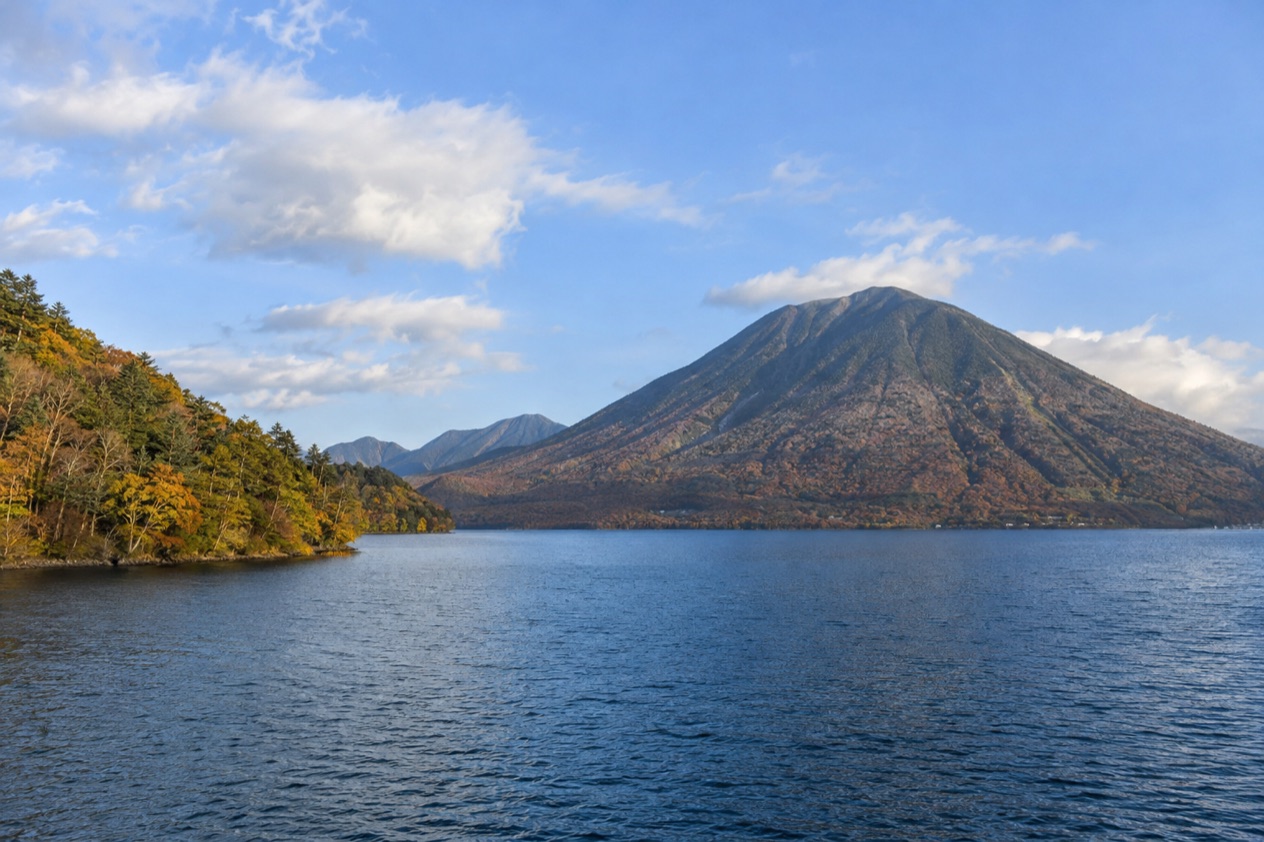
The first thing you notice at Lake Chuzenji is the cool air and the dark, steep outline of Mount Nantai standing over the water. The shoreline is lined with forest, and the old villas and the shrine sit among the trees. It is a lakeside visit in Nikko National Park that suits slow walking, looking at the water and following the story of a lake made by a volcano.
Is visiting Lake Chuzenji worth it?
Yes, if you like mountain lakes with a history attached, and if you are already in Nikko and want to spend part of your trip higher up. The lake sits at 4,124 feet, so the air feels different from the town below, and the place rewards people who like to walk, watch the water change color with the weather and learn who lived here.
What sets it apart from other lakes in the Japanese mountains is how many layers it holds. A volcano dammed a river to create it. A priest named Shodo is said to have found it after climbing Mount Nantai.
A shrine stands on its shore, and foreign diplomats later built villas here, one of them used by the British Embassy for over a century. Few lakes combine geology, pilgrimage and embassy history in one short stretch of shoreline.
It also changes completely with the season. Cherry blossoms in spring, hiking and bird watching in summer, autumn leaves in fall and a Snow and Ice Festival in winter mean the same shore offers a different visit each time. If you want a place to linger, the lake is the answer.
What to see at Lake Chuzenji
Mount Nantai and the lake it created
Lake Chuzenji exists because Mount Nantai erupted about 20,000 years ago and blocked a river, and the water collected behind the barrier. Today the lake reaches a depth of 508 feet, which helps explain its deep color on a clear day. The mountain stays in view from many points around the shore, and it gives the lake its shape and its mood.
The mountain also carries a long religious story. Shodo and his group climbed it and found the lake in 782. For centuries it was treated as sacred, and it was closed to women, horses and cows until 1872. When you look up at the summit from the water, you are looking at a mountain that people approached with ceremony long before anyone built a villa here.
Futara Shrine
Futara Shrine was built in 790, only a few years after the lake was found, and it stands around the lake in the same forest setting. A shrine of this age rewards a slow visit: look at the gate, the wooden buildings, the weathered stone and the way the trees frame everything. It connects the lake to the mountain beliefs that shaped the area.
A visit here pairs well with the story of Mount Nantai, since the two belong to the same history of worship in the mountains. Take the time to read the setting rather than hurry through. The shrine is a place to understand what the lake meant before it became a vacation spot.
The lakeside villas
The shore holds traces of a later chapter, when foreign diplomats came to escape the summer heat of the capital. Sir Ernest Satow, Britain’s envoy in Japan from 1895 to 1900, built a house by the lake that the British Embassy used as a villa for over a century. It is a reminder that Chuzenji was a retreat for visitors from abroad as well as a pilgrimage mountain.
The former Italian villa has been renewed and is now open to visitors. Walking through a building made for a diplomat’s summer, with the lake just outside, gives you a feel for how people lived here in another era. It is a good counterpart to the shrine, since the two show very different reasons for coming to the same water.
The water, Kegon Falls and the trout
The Yukawa River is the main source of the lake’s water, and the lake drains through Kegon Falls. That means the still surface and the drop of the falls belong to one system, and you can think of the lake as the held breath before the waterfall. Seeing both gives the best sense of how the place works.
The lake is also presumed to hold the oldest brown trout population in Japan. You may notice the trout in the way the lake is talked about locally, and anyone curious about fish or the history of introduced species will find it a pleasant detail to carry along while walking the shore.
Hours, tickets and rules
The lake itself is a stretch of shoreline and water, and it has no gate or schedule of its own. The places with fixed hours are the big shrines down in Nikko, which visitors combine with a day at the lake. Their hours change with the season, with a later closing from spring to autumn and an earlier one in the colder months.
| Site | Open |
|---|---|
| Toshogu Shrine, Nikko | 8:00 to 16:30 from April to October, 8:00 to 15:30 from November to March |
| Taiyuin-byo, Nikko | 8:00 to 16:30 from April to October, 8:00 to 15:30 from November to March |
The renewed Italian villa is open to visitors. Beyond that, nothing further is stated here about admission, swimming, drones, tripods or sunscreen at the lake, so the sensible approach is to treat the shore as a place to walk and look, and to follow any signs you find on site.
When to visit Lake Chuzenji
The lake has a good case in every season, and the choice depends on what you want to see. Spring brings cherry blossoms around the water, summer is the time to escape the heat for hiking and bird watching, fall brings autumn leaves and winter brings the Snow and Ice Festival along with skiing and skating. Each season offers a different reason to make the trip.
The figures for Oku-Nikko, close to the lake, show how much the climate shifts. January is cold and snowy, with snow or sleet falling on most days. April is cool and wetter, with the last snow still possible. July is mild but damp, with humidity near saturation and rain on more than half the days, so showers and cloud are normal. October is cool and wet, with only a rare day of sleet.
| Month | Average high (°F) | Average low (°F) | Precipitation (in) | Days with rain or snow | Sunshine (hours) |
|---|---|---|---|---|---|
| January | 31.5 | 17.8 | 2.26 | 6.4 | 165 |
| April | 50.2 | 32.4 | 6.08 | 10.7 | 187 |
| July | 71.8 | 58.8 | 11.04 | 16.4 | 110 |
| October | 56.7 | 42.3 | 9.48 | 11.1 | 123 |
For autumn colors, the fall season is the one to aim for, and in October the days are cool enough that a warm layer makes sense. For a winter visit, expect real cold and snow, which suits the festival and the winter sports. July suits anyone who wants the cooler mountain air, though cloud and rain are likely.
Tips for your visit
Dress for the altitude. Even in summer the lake is cooler than the town, and in October the highs stay in the mid-50s with lows near freezing at night. A warm layer, a rain jacket and shoes that handle damp ground are sensible in most months, and in winter you will want proper cold-weather gear for snow.
Plan to give the lake a real part of a day rather than a stop between two other things. The shrine, the villas and the shoreline each ask for some time, and the water is a place to sit and look. If you are staying in Nikko, the trip from Tokyo brings you to Tobu-Nikko Station in about two hours from Asakusa or Shinjuku, which makes Nikko a base for both the lake and the town’s big shrines.
Pair the lake with Toshogu Shrine and Taiyuin-byo in Nikko, since those two have clear hours and give you the grander side of the area’s history alongside the lake’s quieter one. Travelers coming from Oze in the mountains can also reach Nikko by bus between mid-spring and mid-autumn. For birders and hikers, summer is the season that the area itself names for those activities.
Bring a camera for Mount Nantai and the water, and a curiosity about the stories attached to both. If the weather turns, the villas and the shrine give you reasons to stay out of the rain, and the shrines in town are open on their seasonal schedule.
Good to know before you go
Weather decides a great deal at this altitude. July brings the heaviest rain of the months shown, while winter brings steady snow, so the lake can look very different from one trip to the next. Carry a layer and a rain jacket, and allow for cloud hiding the mountain on some days. The Italian villa and Futara Shrine are the two shore sites to plan around, and the lake itself asks for nothing but time.
Sources
- Wikipedia, Lake Chūzenji (https://en.wikipedia.org/wiki/Lake_Ch%C5%ABzenji), checked October 11, 2026
- Japan National Tourism Organization, Nikko (https://www.japan.travel/en/destinations/kanto/tochigi/nikko-area/), checked October 11, 2026
- Wikipedia, Nikkō, Tochigi (https://en.wikipedia.org/wiki/Nikk%C5%8D,_Tochigi), checked October 11, 2026
- Wikivoyage, Nikko (https://en.wikivoyage.org/wiki/Nikko), checked October 11, 2026
- Japan Meteorological Agency (JMA), Normal values 1991-2020, monthly (https://www.data.jma.go.jp/stats/etrn/view/nml_sfc_ym.php?prec_no=41&block_no=47690), station Okunikko, elevation 1292 m, checked October 11, 2026
To plan your stay
- Best Time to Visit Japan: Cherry Blossoms, Autumn Colors, Weather and Festivals
- Where to Stay in Japan: Ryokan, Temple Stays, Capsule Hotels and the Best Cities to Base In
- Sending Luggage from the Airport in Japan: Hands-Free Travel, Hotel Delivery and Coin Lockers
- Know Before You Go to Japan: Entry, Money, Etiquette and Getting Around