
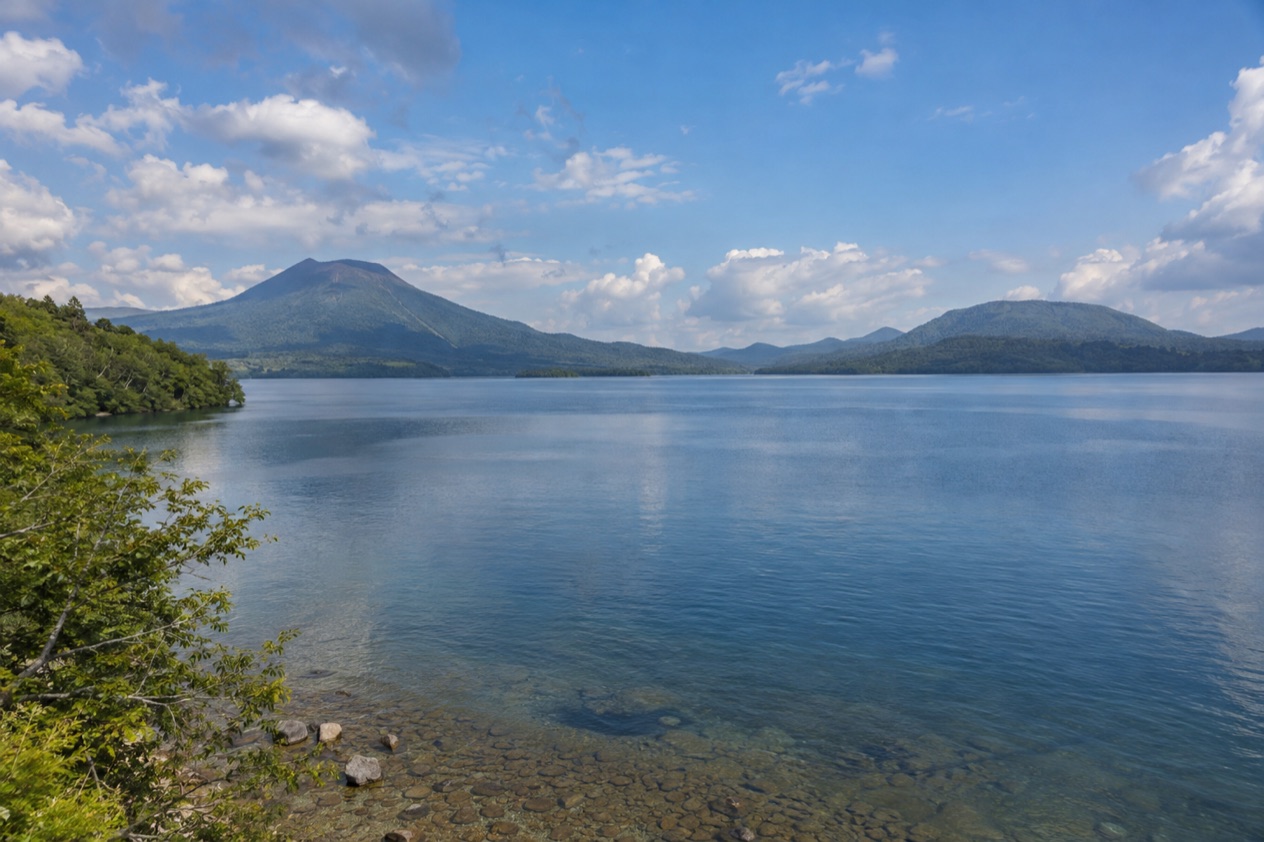
At Lake Akan, the water is the color of strong green tea, and the shoreline is a dark line of conifers rising into hills that were once volcanic. The hot spring resorts sit at the edge, steam drifting from their baths into the cool Hokkaido air. This is a lake for people who like nature, soaking in an onsen and learning about a strange green ball of algae that has become the symbol of the place.
Is visiting Lake Akan worth it?
Yes, if you want a quiet-minded nature stop in eastern Hokkaido built around water, forest and hot springs rather than a checklist of monuments. It suits travelers who enjoy lakes, wildlife stories and the slow rhythm of a resort town where the evening plan is a bath.
What sets Lake Akan apart from other lakes in the region is its living attraction. The lake is famous for marimo, spherical aggregations of algae that grow in the water, and few places anywhere can offer that. Add the volcanic origin of the lake itself, formed when a lava dam closed off a valley, and you have a landscape with a clear story that you can read in the shoreline and the islands.
The setting is part of Hokkaido’s eastern area around Kushiro, one of the regions the island is divided into. Hokkaido as a whole draws travelers for seasonal views, trekking, skiing, Ainu and Jomon culture, regional food and hot springs, and Lake Akan folds several of those into one stay. It is a place to slow down, rather than to hurry between sights.
It also looks different from one season to the next. The lake freezes over in winter, and in the warmer months the water, forest and islands take center stage. Whichever season you pick, plan for a night or more rather than a rushed look, since the onsen and the evening atmosphere are half of the point.
What to see at Lake Akan
Marimo, the green algae balls
Marimo is the reason many people come. These are spherical aggregations of the alga Aegagropila linnaei, ranging from 2 to 30 cm across, and Lake Akan is famous for them. Seen in the water they look like soft green velvet spheres rolling gently along the lake bed, and they have turned into a mascot of the area, appearing on souvenirs and in shop windows around the resort town.
The fascination lies in their form. Algae usually grow as strands or films, yet here they gather into balls. When you look at them, notice the perfectly rounded shape and the dense, fuzzy surface. Treat them as a living thing to appreciate and learn about, rather than something to take away.
The lake and its four islands
The lake holds four islands: Ojima, Kojima, Yaitai Island and Churui Island. Their wooded shapes break up the surface and give the view its character, especially when mist lies across the water. Looking out from the shore, you can pick out how the islands break the line of the far bank.
The water itself is tea-green and not transparent. Clarity has dropped from 8 to 9 meters in the 1930s to 3 to 4 meters because of pollution from the local hot spring resorts, which is a reminder that the town and the lake share the same space and affect each other.
A lake made by a lava dam
Lake Akan came into being through volcanic activity some 6,000 years ago, when a lava dam was created and water gathered behind it. Standing on the shore, you are looking at a basin shaped by that event, set within Akan National Park. The surrounding hills and forest are the frame for that story.
The lake is also a protected wetland, designated a Ramsar Site in November 2005. That recognition speaks to the value of its waters and the life they hold, including the kokanee salmon, a fish native to the lake. It is a good detail to keep in mind while looking at the surface, since much of what makes the place special is out of sight below it.
The hot spring resort town
The resorts on the lakeshore are where the evening unfolds. Hot spring towns in Japan are built around the bath, so after a day outdoors the natural next step is an onsen soak, followed by a dinner of local food and an early night. The steam rising from the baths in cool air is part of the look of the town.
Strolling the streets, you will see marimo-themed shops and small restaurants. It is a good way to take in the local mood after the lake has gone dark, and to see how closely the community is tied to the water that gives it its name.
When to visit Lake Akan
The most useful fact for timing is that Lake Akan is frozen from December to April. That single line divides the year in two: a frozen winter lake and an open-water season for the rest of the year.
If you want to see the lake as water, with its islands, shoreline and the green tint that marimo make famous, plan outside the frozen months. Late spring, summer and early autumn bring a lake you can look at in its open form, with forest around it. Autumn adds the chance of colored leaves on the slopes, though no date for that is certain, and it varies from one year to the next.
Winter is for a different kind of trip. With the surface frozen, the lake becomes a white landscape, and the draw shifts toward the hot spring and the cold-weather mood of Hokkaido.
Hokkaido is known for winter events and skiing, with Niseko among the ski areas and the Sapporo Snow Festival among the island’s winter events. Those are elsewhere on the island, but they show how strongly winter is a season of its own here.
As for the time of day, treat it as a relaxed place. The lake suits a slow morning by the shore and a long evening in the bath, and since the resort is the center of the visit, the day naturally bends around meals and soaking rather than a fixed schedule.
Pick your month by what you want to see. For the open lake and its islands, go when it is not frozen. For a snow-and-onsen mood, go in the cold months and accept that the lake will be a frozen sheet rather than moving water.
Tips for your visit
Plan to stay at least one night, because the hot spring is a main part of the experience. A day trip would capture the lake but miss the evening, which is when the resort town feels most like itself. Bring layers, since this is the northernmost prefecture of Japan and the air by a lake can feel cooler than in town.
Getting to the region starts with Hokkaido itself. New Chitose Airport near Sapporo is the air gateway, and direct flights from Tokyo take about 1 hour 30 minutes.
By train, Tokyo to Sapporo takes about 8 hours, using the JR Tohoku/Hokkaido Shinkansen to Shin-Hakodate-Hokuto and then the limited express Hokuto to Sapporo. Lake Akan lies in the Kushiro and eastern Hokkaido area, so it works best as part of a wider trip across the island.
Because the area belongs to Akan National Park, it pairs well with other nature stops in eastern Hokkaido. Hokkaido as a whole offers trekking, outdoor activities and regional cuisine, so a loop that mixes the lake with other landscapes and a few good meals makes a full trip.
- Bring layers for changeable lakeside air, and something warm for evenings.
- Leave room in the schedule for an onsen soak and a slow dinner.
- Look at the marimo as a living thing, and leave the lake as you found it.
- Pair the lake with other eastern Hokkaido stops rather than treating it as a single stop.
For families and anyone with limited mobility, the main pleasures are easy to enjoy from the shore and from the resort, with the view and the baths doing most of the work. Details on specific paths, boat rides and access are best confirmed locally, since they depend on the season and on the lake being open water.
Good to know before you go
Lake Akan is a resort setting, so most of what you need is gathered in the town by the water, from the baths to the shops that sell marimo souvenirs. The lake and its wetland are protected, so the courteous habit is to look, photograph and leave everything where it is. Winter freezes the lake, and Hokkaido weather can turn cold, so dress for the season you choose.
Sources
- Wikipedia, Lake Akan (https://en.wikipedia.org/wiki/Lake_Akan), checked October 11, 2026
- Japan National Tourism Organization, Hokkaido (https://www.japan.travel/en/destinations/hokkaido/hokkaido/), checked October 11, 2026
- Hokkaido Love, the official Hokkaido tourism site (https://www.visit-hokkaido.jp/en/), checked October 11, 2026
To plan your stay
- Best Time to Visit Japan: Cherry Blossoms, Autumn Colors, Weather and Festivals
- Where to Stay in Japan: Ryokan, Temple Stays, Capsule Hotels and the Best Cities to Base In
- Sending Luggage from the Airport in Japan: Hands-Free Travel, Hotel Delivery and Coin Lockers
- Know Before You Go to Japan: Entry, Money, Etiquette and Getting Around