
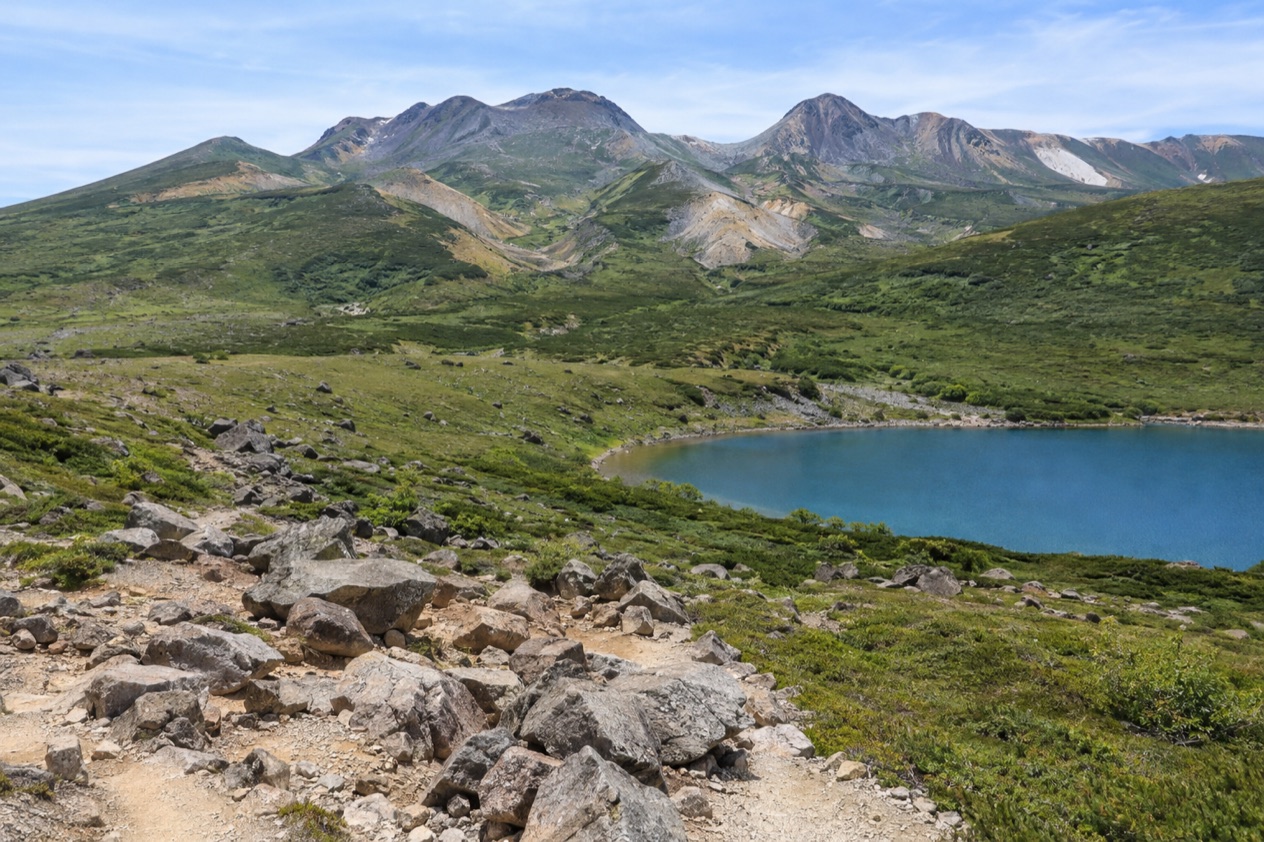
Step out of the car in the mountainous center of Hokkaido and the first thing you notice is the scale: volcanic ridges rolling away in every direction, rocky summits rising above dark forest, and a faint smell of sulfur drifting from steaming vents. Daisetsuzan is a park of high plateaus, hot springs and wild ground where brown bears still live. It suits travelers who want to hike, soak in an onsen and see a rugged side of Japan far from the cities.
Is visiting Daisetsuzan National Park worth it?
Yes, if you want mountains and open space more than temples and shopping streets, and it rewards hikers, hot spring lovers and anyone drawn to wilderness. The park is described as offering some of Japan’s most rugged scenery, and it is large enough that you can spend several days here without repeating yourself.
It sits at the heart of Hokkaido, the northernmost prefecture of Japan and the country’s second largest island. Hokkaido as a whole draws travelers for seasonal views, trekking, skiing, Ainu and Jomon culture, regional food and hot springs, and Daisetsuzan gathers several of those threads in one place. You can climb among alpine flowers in the morning and end the day in a mineral bath at an onsen resort inside the park.
What sets it apart from other places on the island is its character as a true mountain range. Instead of a single volcano or a lakeside resort, the park is made of three volcanic mountain groups: the Daisetsuzan Volcanic Group, the Tokachi Volcanic Group and the Shikaribetsu Volcanic Group.
Niseko, nearby in Hokkaido’s travel imagery, is known as a winter sports area, while Daisetsuzan feels more like a high, wild country where the landscape itself is the attraction. It also shelters a population of brown bears, a reminder that this is real wilderness and not a manicured garden.
The park is also a place for people who enjoy plants and small animals. Half of the alpine plant species found in Hokkaido grow here, and the pika, a small mammal with short limbs, rounded ears and no visible tail, lives among the rocks. Even if you never climb a summit, those details make a walk here feel different from a stroll in an ordinary forest.
What to see at Daisetsuzan National Park
Asahi-dake and the northern peaks
Asahi-dake rises in the north of the park and is the highest peak in Hokkaido, at 7,510 feet. It is a volcanic mountain, and the slopes around it show the bare, rocky look of ground shaped by eruptions, with steam rising from vents in places. This is the part of the park most associated with serious mountain scenery.
Look for the contrast between the dark rock and the patches of alpine vegetation that cling to it. The area around Asahidake Onsen sits at the foot of this northern group, so it makes a natural base for anyone who wants to see the summit country and then soak afterward.
Alpine plants and the pika
Of the 450 species of alpine plants found in Hokkaido, half grow in Daisetsuzan. That makes the high ground a kind of living garden, with low plants adapted to wind, cold and thin soil. Walking slowly and looking down is as rewarding here as looking up at the peaks.
Among the boulder slopes you may spot the pika, a small mammal with rounded ears and no external tail. It is shy and easy to miss, so a sharp ear and a bit of patience help more than a long lens. Sightings are a chance, never a promise.
The three volcanic groups
The park is divided among the Daisetsuzan Volcanic Group, the Tokachi Volcanic Group and the Shikaribetsu Volcanic Group. Each is a cluster of volcanic peaks, and together they cover a very large area, over 2,000 square miles of mountains in all if you count the park’s full extent. Knowing there are three distinct groups helps you plan, because different trailheads and towns lead into different parts of the range.
The park was established as a national park in 1934, which gives it a long history as protected ground. You feel that in the way the landscape has been left to its own rhythms, with forest, rock and plateau running on without much interruption.
Onsen resorts inside the park
Four hot spring resorts lie within the park: Asahidake Onsen, Fukiage Onsen, Sounkyo Onsen and Tenninkyo Onsen. An onsen is a natural hot spring bath, and in a mountain park like this it is the natural way to end a day on foot. Warm mineral water after hours of walking is one of the quiet pleasures of Hokkaido travel.
Each resort is its own small world, so it is worth choosing by the part of the park you plan to explore. Asahidake Onsen belongs with the northern peaks, and the others open onto different corners of the range.
When to visit Daisetsuzan National Park
Daisetsuzan is a high mountain park in the far north of Japan, so the seasons shape everything: what you can walk, what you will see and how you will dress.
Hokkaido is known for seasonal views, and in a mountain park that means a real change from one part of the year to the next. The warm months are the time of alpine plants and trekking, when the high ground shows its flowers and the volcanic slopes open up to walkers. Cooler seasons bring a different mood, with the hot spring resorts becoming the main attraction.
Winter brings snow to Hokkaido, and the island is known for skiing and for winter events such as the Sapporo Snow Festival. In the mountains this is a season for people who come specifically for snow and hot water, rather than for summit views. The onsen resorts inside the park are a reason to come in the cold months, since a hot bath feels different when the air around it is freezing.
Because brown bears live in the park, the time of year you choose is also a question of how you want to move through the landscape. Treat any walk as one in real wildlife country, and let the season you pick guide how adventurous you want to be.
Tips for your visit
The park covers a huge area, and the pleasure comes from combining walking with an onsen stay rather than rushing between viewpoints.
Getting to Hokkaido is the first step. New Chitose Airport, near Sapporo, is the air gateway, with direct flights from Tokyo taking about 1 hour 30 minutes. By train from Tokyo to Sapporo takes about 8 hours, using the JR Tohoku/Hokkaido Shinkansen to Shin-Hakodate-Hokuto and then the limited express Hokuto.
Within Hokkaido, the island is divided into areas such as Sapporo and its surroundings, Asahikawa and northern Hokkaido, Hakodate and southern Hokkaido, and Kushiro and eastern Hokkaido. Daisetsuzan lies in the mountainous center, so you can pair it with other parts of the island, including a visit to Sapporo, which hosts the Sapporo Snow Festival in winter.
- Look for alpine flowers close to the ground, since so many of Hokkaido’s alpine species grow here.
- Keep an eye on the rocky slopes for a pika, and remember that brown bears also live in the park.
- Choose your onsen resort by the part of the park you want to explore.
- Combine the park with Hokkaido’s food, which is one of the main draws of the island.
Hokkaido’s local cuisine is part of the reason people travel here, so leave room in your plans for meals in the towns around the park. A day of mountain scenery followed by a hot bath and a regional dinner is a very Hokkaido way to spend time.
Good to know before you go
Daisetsuzan is wild country, and the presence of brown bears means it is wise to treat every walk with the respect you would give any large mountain park. Hot spring resorts within the park give you places to rest and warm up, and the surrounding Hokkaido towns offer the meals and lodging that make a longer stay comfortable. Bring layers, because mountain weather in the north changes the feel of a day quickly.
Sources
- Wikipedia, Daisetsuzan National Park (https://en.wikipedia.org/wiki/Daisetsuzan_National_Park), checked October 11, 2026
- Japan National Tourism Organization, Hokkaido (https://www.japan.travel/en/destinations/hokkaido/hokkaido/), checked October 11, 2026
- Hokkaido Love, the official Hokkaido tourism site (https://www.visit-hokkaido.jp/en/), checked October 11, 2026
To plan your stay
- Best Time to Visit Japan: Cherry Blossoms, Autumn Colors, Weather and Festivals
- Where to Stay in Japan: Ryokan, Temple Stays, Capsule Hotels and the Best Cities to Base In
- Sending Luggage from the Airport in Japan: Hands-Free Travel, Hotel Delivery and Coin Lockers
- Know Before You Go to Japan: Entry, Money, Etiquette and Getting Around