
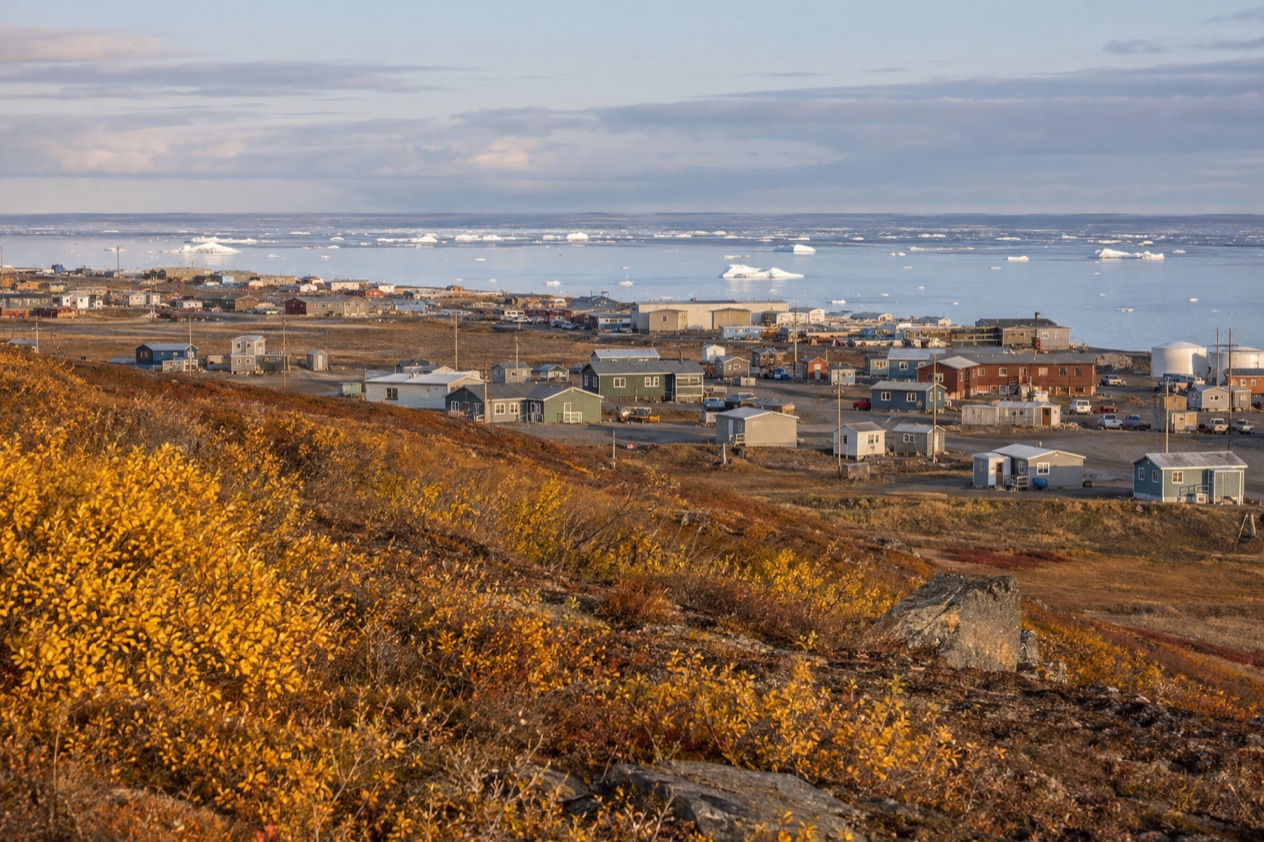
In September, the tundra around Utqiagvik turns the color of rust and straw, and the evenings begin to darken again after a summer when the light barely let go. Wind comes off the Arctic Ocean, the first dusting of snow can settle on the gravel streets, and the town of about 5,000 people goes about its business at the top of the country. It is a month for travelers who want the northernmost city in the United States in a quieter, moodier mood.
What is the weather like in Utqiagvik in September?
September in Utqiagvik is cold, with afternoons that hover just above freezing and nights that dip below it, and it sits between the milder days of August and the real onset of winter in October.
| Month | Average high (°F) | Average low (°F) | Precipitation (in) | Days with precipitation | Daylight on the 15th |
|---|---|---|---|---|---|
| August | 44.5 | 35.1 | 1.09 | 3.8 | 19 h 04 min |
| September | 37.1 | 30.3 | 0.77 | 2.1 | 13 h 41 min |
| October | 25.6 | 16.8 | 0.54 | 1.2 | 9 h 01 min |
Afternoons reach the upper 30s, so a warm insulated jacket is the baseline, and the nights fall to around freezing. Wind off the water makes it feel colder than the thermometer suggests, which is why hats and gloves belong in the daypack even at midday.
Precipitation is light and comes on only a couple of days. September is also the month when snowfall increases, with a few inches in an average year. Waterproof outer layers and boots with a grip are more useful than an umbrella.
The light is the big change. Daylight runs a little under fourteen hours in the middle of the month, so there are real mornings and real evenings again, with low sun that casts long shadows across the tundra and the lagoon. The endless summer glow is gone, and nights are dark enough that the sky can feel properly big.
What to do in Utqiagvik in September
September offers the Arctic Ocean, returning darkness, and an introduction to Iñupiat culture at the Iñupiat Heritage Center.
The edge of the Arctic Ocean
Utqiagvik sits on the coast where the Chukchi and Beaufort seas meet the land, and the shoreline is the natural place to start. You look out over cold gray water, driftwood and gravel, with weather that changes the view from hour to hour. September light, lower than in summer, gives the water a steely look and makes the horizon feel far away.
The water is for looking at, not for swimming. Stand a while and watch the sky, the waves and the movement of birds along the shore. Dress for wind, because the coast is where it bites hardest.
Polar bears in the Chukchi and Beaufort seas come onto land when the summer sea ice is gone, but a sighting is only a chance, and nothing here says where or when. Keep your eyes open and your expectations modest.
Wandering the northernmost town
Utqiagvik is the largest settlement in the United States north of the Arctic Circle, and just walking its streets tells you where you are. Houses sit on raised foundations, trucks and four-wheelers rattle by, and the tundra begins where the last street stops. The town has no road link to the rest of Alaska, so everything arrives by air or water, and you feel that remoteness in the way the place is organized.
Walk in the middle of the day, when it is warmest, and keep the evening for somewhere indoors. A light dusting of snow on the ground in the morning changes how the whole town looks, and it often vanishes by afternoon.
The sky after dark
With real darkness returning, the aurora remains a possibility, never a promise. Auroral activity tends to be stronger around the fall equinox than at midsummer or midwinter, and the northern lights oval covers most of Alaska. That makes a clear night worth stepping outside for, though the lights remain a chance and never a promise.
Look for a spot away from streetlights and let your eyes adjust. Cloud is the usual spoiler, so a clear sky matters more than any particular hour. Bring warm layers, since standing still in the cold is far colder than walking.
A two-day itinerary for Utqiagvik in September
Day 1 begins late, once the sun has warmed the afternoon a little. Spend the morning settling in and walking the streets of town, then head to the shoreline in the middle of the day to watch the Arctic Ocean under whatever sky you get. The daylight lasts well into the evening, so there is no rush.
Have dinner at a local restaurant, then step out after dark. If clouds roll in, call it an early night.
Day 2 is for the tundra edge. Take layers and a windproof shell, since a clear morning can turn gray and gusty quickly.
If rain or wet snow settles in, spend the afternoon in a café or a warm restaurant and wait for a break. Finish the evening with another look at the sky before you leave.
Is Utqiagvik busy in September?
Utqiagvik is a town of about 5,000 people, and September brings a quieter pace than the long light of summer. September has the feel of a working Arctic town heading into winter.
Utqiagvik has no road link to the rest of Alaska. That isolation sets the rhythm of the place more than any season of visitors does.
What to pack for Utqiagvik in September
Pack for cold, wind and the chance of a flurry, with layers you can add or remove through the day.
- A warm insulated jacket, because afternoons stay in the 30s.
- A windproof, waterproof shell for coastal gusts and wet snow.
- A hat and gloves, since wind off the ocean cuts through.
- Waterproof boots with a good grip for damp gravel and a possible dusting of snow.
- Thermal base layers for nights that fall to freezing.
- A warm extra layer for standing outside on a clear night in hope of the aurora.
Good to know before you go
Utqiagvik is the northernmost city in the United States and is cut off from the rest of the Alaska road system, so planning begins with how you arrive. In September the daylight is back to a normal rhythm of morning and evening, but it shortens quickly as the month goes on. Plan outdoor time for midday and keep evenings flexible for the sky.
Utqiagvik in September vs August and October
August is milder, with afternoons in the mid-40s and long light that stretches late into the evening. It has more rain days, though still few, and almost no snow. Choose August if you want the gentlest weather and the longest days for walking.
October is a different season. Afternoons stay in the mid-20s, snow becomes a real feature, and daylight shrinks to about nine hours. It suits travelers who want winter arriving and a darker sky, but it demands heavier clothing and flexible plans.
September sits between the two. It keeps some usable daylight and a chance of the first snow, with darkness back at night. Pick it if you want that transition, and choose August or October if you want a firmer summer or winter.
Is September a good time to visit Utqiagvik?
Yes, for travelers who like the Arctic in a quiet, changing mood and are happy with cold, wind and a flexible plan. Those who want warm weather, guaranteed wildlife or a long list of organized activities should look elsewhere.
On arrival, start with a walk to the shoreline to get a feel for the wind and the light, then dress accordingly for the rest of your stay. Keep an evening or two open for the sky, since the aurora becomes possible as the nights darken. What is special about September here is the balance: daylight enough to wander the town and the tundra edge by day, and real darkness returning at night, with the chance of the aurora overhead at the top of the country.
Sources
- NOAA NCEI, U.S. Climate Normals 1991-2020, monthly (https://www.ncei.noaa.gov/access/services/data/v1?dataset=normals-monthly-1991-2020&stations=USW00027502), station Barrow Post Rogers Ap, elevation 31 feet, checked October 11, 2026
- Computed from the date and the latitude of the place (sunrise equation, solar elevation -0.833 degrees), October 11, 2026
- University of Alaska Fairbanks Geophysical Institute, Aurora forecast (https://www.gi.alaska.edu/monitors/aurora-forecast), checked October 11, 2026
- Wikivoyage, Northern lights (https://en.wikivoyage.org/wiki/Northern_lights), checked October 11, 2026
- Wikipedia, Aurora (https://en.wikipedia.org/wiki/Aurora), checked October 11, 2026
- Visit Anchorage, northern lights viewing (https://www.anchorage.net/winter/things-to-do/northern-lights-viewing/), checked October 11, 2026
- Wikipedia, Arctic Circle (https://en.wikipedia.org/wiki/Arctic_Circle), checked October 11, 2026
- Wikipedia, Polar bear (https://en.wikipedia.org/wiki/Polar_bear), checked October 11, 2026
- Wikipedia, Polar night (https://en.wikipedia.org/wiki/Polar_night), checked October 11, 2026
- Wikipedia, Midnight sun (https://en.wikipedia.org/wiki/Midnight_sun), checked October 11, 2026
- Wikipedia, Alaska North Slope (https://en.wikipedia.org/wiki/Alaska_North_Slope), checked October 11, 2026
- Wikipedia, Climate of Alaska (https://en.wikipedia.org/wiki/Climate_of_Alaska), checked October 11, 2026