
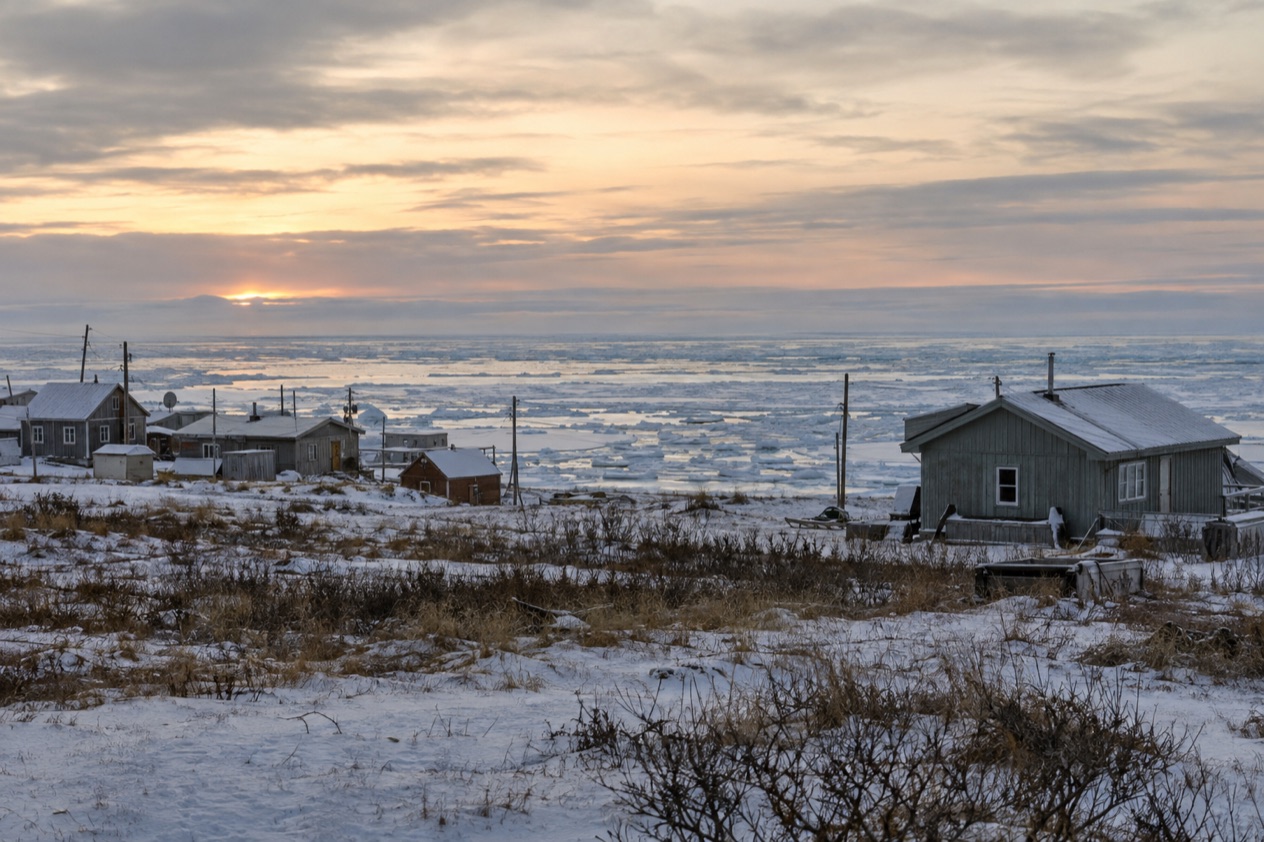
In October the Arctic Ocean off Utqiagvik turns the color of slate, and the first real snow settles on the gravel streets and the flat tundra behind the last houses. Pickups idle outside the store, hoods are pulled tight, and the whole town seems to lean into the wind.
This is the northernmost city in the United States, and early October is when it changes from late summer into winter.
What is the weather like in Utqiagvik in October?
October in Utqiagvik is cold and wintry: afternoons stay below freezing, snow is normal, and the days shorten fast.
| Month | Average high (°F) | Average low (°F) | Precipitation (in) | Days with precipitation | Daylight on the 15th |
|---|---|---|---|---|---|
| September | 37.1 | 30.3 | 0.77 | 2.1 | 13 h 41 min |
| October | 25.6 | 16.8 | 0.54 | 1.2 | 9 h 01 min |
| November | 11.5 | -0.1 | 0.37 | 0.7 | 2 h 54 min |
Mornings are the coldest part of the day, well down in the teens, and the wind off the ocean makes it feel colder still. Afternoons bring only a modest rise. Standing still on the shore for a few minutes is enough to remind you how far north you are, so most outings here are built around short stretches outdoors and warm stops in between.
What falls from the sky is mostly snow, and not much of it by calendar standards, though over the month it adds up to about ten inches. It arrives in dry, light flurries or blowing snow rather than long stormy days, and only one or two days in the month bring measurable precipitation. Wind often matters more than snow: it lifts what has already fallen and cuts visibility along the open edges of town.
The light is the real story of the month. Daylight shrinks quickly through October, and by the end of it the sun is low and brief, with long dusks and early dark. Evenings are for indoor plans. Dress in layers you can add and shed, with a windproof shell, insulated boots and a hat that covers the ears, since the ocean beside the town is cold and the shoreline stays exposed.
What to do in Utqiagvik in October
October here is a month for understanding a place rather than ticking off a list. Utqiagvik is the largest U.S. settlement north of the Arctic Circle, with about 5,000 inhabitants, and it is a working Iñupiat community, not a theme-park version of the Arctic. The best days are slow ones, spent walking the town, learning how people live at this latitude and spending your daylight well.
Early winter also changes what the landscape looks like. The tundra whitens, the lagoons and the edge of the ocean take on a pewter look, and the horizon blurs into one pale band. Photographers tend to love it, because the low, soft light flatters everything, and a gray day over the ocean has a stark beauty of its own.
The shoreline and the whale-bone arch
The Arctic Ocean shore is the natural first stop, and the reason people come at all. A well-known marker here is the arch of whale jawbones, which speaks to the long Iñupiat relationship with the bowhead whale and the sea. Standing beside it you look out over cold, open water with a wind that explains the thick parkas around you.
Go in the middle of the day, when the light is best and the temperature has risen as far as it will. Wear your full layers, because the shore has no shelter, and keep your visit short enough to enjoy it. Along the beach you may notice driftwood, drying racks, boats pulled up for the season and the quiet signs of subsistence life that continue here whatever the month.
It suits anyone who wants to see the real edge of the continent. Bring a camera that works with gloves on, and expect to take pictures in bursts, with warm-up breaks in between.
Iñupiat culture and the town itself
The heart of a visit is Iñupiat culture, which is present in the town’s daily life rather than staged for visitors. The Iñupiaq language, though spoken by only a small share of the Iñupiat people today, still sounds in place names, in greetings and in school efforts to revive it. A cultural center is the natural place to start, with exhibits on whaling, clothing, tools, dance and storytelling that give context to everything you then see on the street.
Afterward, walk through the streets themselves. Houses sit on raised foundations, snow machines and four-wheelers line the yards, and fishing and hunting gear hangs outside. It is a plain, practical place, and the pleasure is in noticing details: a whale-bone sculpture in a yard, a sled leaning on a wall, the way children play in the cold as if it were nothing.
Respect matters here. People are going about their lives, so ask before photographing anyone and keep to public places. The town rewards a polite, curious visitor with conversation, and a few minutes of listening often teaches more than an hour of reading.
Food, warm rooms and evenings
Food in Utqiagvik reflects both the Arctic and the modern world. Traditional Iñupiat foods, such as maktak (whale skin and blubber), caribou and fish, belong to community life and are often shared at gatherings rather than sold, so treat any chance to taste them as an invitation, not an expectation. In town you will also find restaurants and cafés serving familiar American and international dishes, which turn out to be welcome after a cold afternoon.
Evenings are short on sights and long on dark, so plan a warm meal, a hot drink and an early night. Hot coffee and a table by a window, watching snow blow along the road, count as a full activity in October. If the sky clears, step outside after dark: the aurora oval covers most of Alaska, so a clear night may show the northern lights, though that is a chance and never a promise.
Why October rewards a slower pace
The surest way to enjoy October is to accept the town’s tempo. Daylight is limited, the wind is real and plans shift with the weather, so the visitors who do best keep a few indoor options ready and treat each outdoor hour as a gift. The reward is a place stripped of summer’s busyness, where the Arctic feels like itself.
A good rhythm is simple: a late breakfast, an outing at midday, a warm stop in the afternoon, and a quiet evening. Each part of the day gets its own mood, and the contrast between the cold outside and the warmth indoors becomes part of the trip.
A two-day itinerary for Utqiagvik in October
Day 1 is for the edge of the continent. Start slowly with a hot breakfast, since mornings are the coldest hours, and let the day warm as far as it will before heading out. Around midday, walk to the Arctic Ocean shore and the whale-bone arch, when the low light is best and the wind is least harsh.
After the shore, retreat indoors for lunch at one of the town’s cafés or restaurants. Spend the afternoon on a slow walk through the residential streets, noticing the raised houses, the drying racks and the boats waiting out the season. Daylight fades quickly through October, so be back inside by late afternoon, with dinner and a warm room waiting.
If the night is clear, step outside once after dinner and look up for a chance at the aurora, then call it a day. If the weather turns and snow blows hard, stay in with a long lunch and save the shore for another hour.
Day 2 turns to people and stories. Begin at the Iñupiat cultural center, where exhibits on whaling, dance, clothing and language help you read the town you walked through the day before. Give it the late morning, when the center feels calm and the cold outside is still at its sharpest.
Have lunch in a different kind of place from yesterday, perhaps a simple local diner or a store counter where residents gather. In the afternoon, take a short second outing to the tundra edges of town while there is still light, looking at the whitening landscape and the flat horizon. Finish with a quiet dinner, an early night and, if the sky cooperates, one more look for the northern lights.
A rain card here is really a snow card: when flurries or wind close in, spend the day at the cultural center, at a café table and in a long, unhurried meal.
Is Utqiagvik busy in October?
No, October is a quiet month in Utqiagvik, a town of about 5,000 people whose pace slows as winter closes in.
The midnight sun that draws travelers to the Arctic in summer is long gone, and the daylight has already dropped to a short winter rhythm. What remains is the town itself: neighbors greeting each other in the store, trucks and snow machines on the roads, and the sounds of everyday work. A visitor in October is part of a small crowd and sees the community as it is, without summer’s bustle.
Because so few people come at this time of year, the town feels calm, and you set the tempo of your own days. The cold and the early dark do the rest, keeping most outings short and most evenings indoors.
What to pack for Utqiagvik in October
Pack for real Arctic cold and for wind, since afternoons stay below freezing and the shoreline gives no shelter. Think in layers that you can add and remove between the street and the warm indoors.
- An insulated, windproof parka, because wind off the ocean makes the cold feel sharper than the temperature.
- Warm base layers, since mornings drop well into the teens.
- Insulated waterproof boots with good grip for snowy, gravelly streets.
- A warm hat, a neck gaiter and insulated gloves for the shoreline.
- A camera with a spare battery, because cold drains batteries fast.
- Sunglasses, because low sun on fresh snow is bright.
Good to know before you go
The main thing to plan around in October is daylight. It shortens quickly through the month, so outdoor time belongs in the middle of the day, and evenings are for warm rooms. Keep the schedule loose, because wind and blowing snow can change an outing on short notice.
Utqiagvik is a living Iñupiat community, so treat the town with the courtesy you would give any small place. Ask before photographing people, leave subsistence gear alone and keep to public areas. The reward is a more human, less staged visit.
Utqiagvik in October vs September and November
Moving the trip four weeks earlier brings a softer season. September is milder and noticeably lighter, with long afternoons for walking the shore, and the town still feels close to summer. Snow is lighter and less likely to stay, so outdoor time is more comfortable and the ocean front is easier to explore.
Moving four weeks later brings the deep cold and a very short day. It suits travelers who want the winter extreme and are ready to spend most of their time indoors.
October sits between the two: wintry enough to feel like the Arctic, with enough daylight left for a real outing every day. Choose September for comfort and long light, November for severe cold and darkness, and October for a balance of both.
Is October a good time to visit Utqiagvik?
Yes, October is a good time to visit Utqiagvik for travelers who want to see the Arctic changing into winter and who are comfortable with real cold.
It will suit people who care about culture and landscape more than comfort: those who want to stand at the northern edge of the country, learn about Iñupiat life and watch the tundra turn white. Photographers will find the low, soft light rewarding, and anyone with a taste for quiet, unhurried places will like the pace. It is a poorer choice for travelers who need warm weather, long daylight or a busy schedule of outdoor activities.
On arrival, start with the Arctic Ocean shore and the whale-bone arch while the midday light lasts, then settle into the town’s rhythm. What is special about October is the sense of a threshold: the ocean is cold and gray, the first snow lies on the tundra, and the winter dark is coming, and you are there to see the town at that turning point.
Sources
- NOAA NCEI, U.S. Climate Normals 1991-2020, monthly (https://www.ncei.noaa.gov/access/services/data/v1?dataset=normals-monthly-1991-2020&stations=USW00027502), station Barrow Post Rogers Ap, elevation 31 feet, checked October 11, 2026
- Computed from the date and the latitude of the place (sunrise equation, solar elevation -0.833 degrees), October 11, 2026
- University of Alaska Fairbanks Geophysical Institute, Aurora forecast (https://www.gi.alaska.edu/monitors/aurora-forecast), checked October 11, 2026
- Wikivoyage, Northern lights (https://en.wikivoyage.org/wiki/Northern_lights), checked October 11, 2026
- Wikipedia, Aurora (https://en.wikipedia.org/wiki/Aurora), checked October 11, 2026
- Visit Anchorage, northern lights viewing (https://www.anchorage.net/winter/things-to-do/northern-lights-viewing/), checked October 11, 2026
- Wikipedia, Inupiat (https://en.wikipedia.org/wiki/Inupiat), checked October 11, 2026
- Wikipedia, Prudhoe Bay, Alaska (https://en.wikipedia.org/wiki/Prudhoe_Bay,_Alaska), checked October 11, 2026
- Wikipedia, Arctic Circle (https://en.wikipedia.org/wiki/Arctic_Circle), checked October 11, 2026
- Wikipedia, Polar bear (https://en.wikipedia.org/wiki/Polar_bear), checked October 11, 2026
- Wikipedia, Polar night (https://en.wikipedia.org/wiki/Polar_night), checked October 11, 2026
- Wikipedia, Climate of Alaska (https://en.wikipedia.org/wiki/Climate_of_Alaska), checked October 11, 2026