
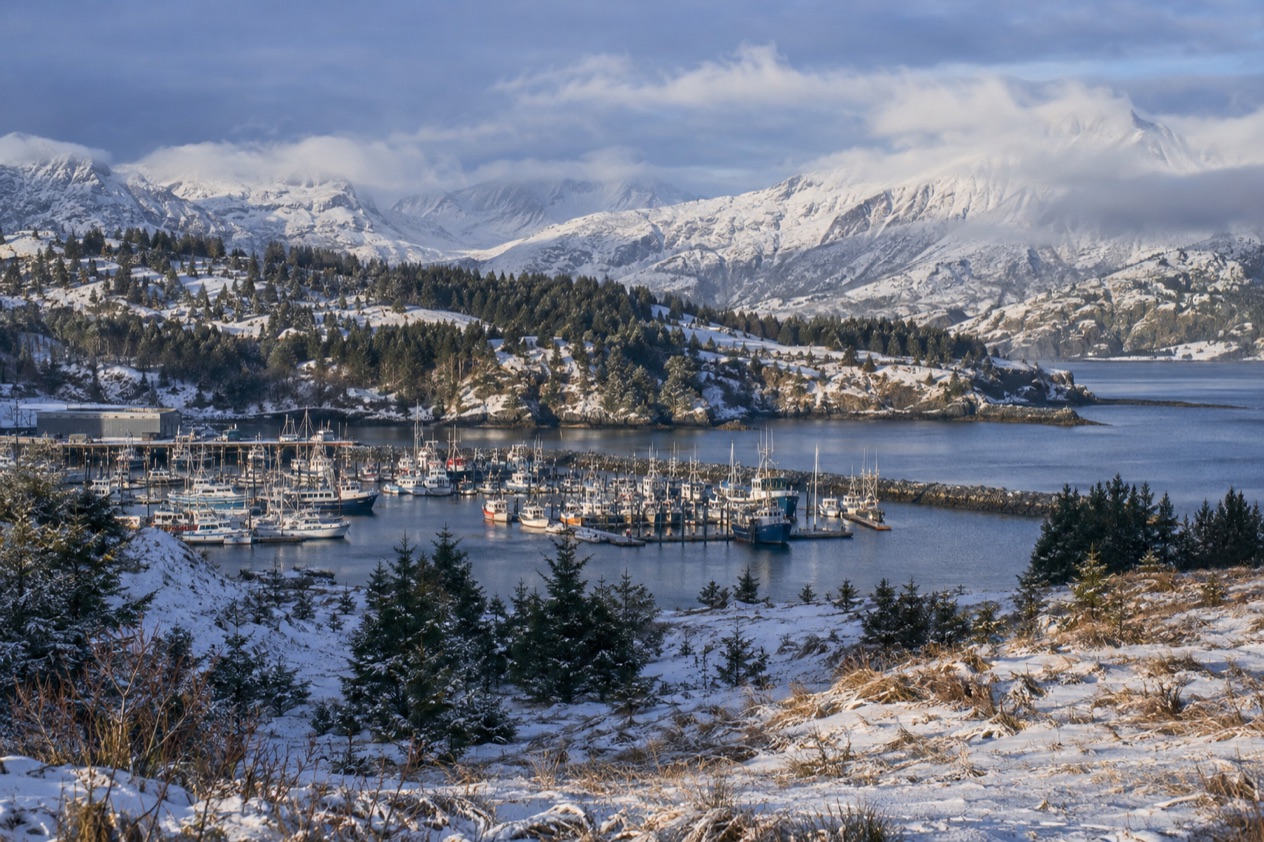
In January, Kodiak is a harbor town in its winter clothes, with fishing boats rocking at their moorings, gulls wheeling over the cannery docks and snow dusting the green hills that give the island its Emerald Isle nickname. Mornings start late and lamps glow in the windows of the cafés downtown. It is a quiet month on the island, made for travelers who like a working fishing town in its own season and a slow pace.
What is the weather like in Kodiak in January?
January in Kodiak is cold but not bitter, a mix of snow, rain and gray skies, with temperatures that hover around the freezing mark and a damp wind off the water.
| Month | Average high (°F) | Average low (°F) | Precipitation (in) | Days with precipitation | Daylight on the 15th |
|---|---|---|---|---|---|
| December | 37.3 | 26.5 | 8.81 | 13.5 | 6 h 35 min |
| January | 36.1 | 26.2 | 8.35 | 13.3 | 7 h 12 min |
| February | 37.5 | 27.2 | 6.31 | 11.4 | 9 h 23 min |
Afternoons usually sit just above freezing, so the day’s best hours feel raw but workable in a good coat. Nights drop a few degrees below, and the snow that falls often turns to rain and back again, leaving sidewalks wet, slushy or glazed depending on the hour. Precipitation comes on more than half the days, sometimes as steady rain, sometimes as wet snow, and a clear, still day stands out when it arrives.
The light is short but already growing. The sun climbs a little later than most travelers expect and sets early in the afternoon, so plans work best when they are built around the middle of the day. Waterproof layers matter more than heavy bulk, since wet wind is what chills you, and boots with a good grip make the harbor docks and downtown hills far more comfortable.
What to do in Kodiak in January
January in Kodiak is about the town itself and the winter edge of the island, not about big events or wildlife tours. You walk the waterfront, drop into local cafés and shops, watch the fishing fleet at rest and enjoy a place that is not performing for visitors. Nothing here needs hurrying, and the slow rhythm is the point.
The harbor and downtown
The city of Kodiak is the largest community on the island and the hub through which everything arrives, by ferry or by air. Its harbors are the center of life, and in winter they are a good place to stand and watch. Boats sit tied up in rows, crews repair nets and gear, and the smell of salt and diesel hangs in the cold air.
From the water, the streets climb into the town, where small shops, a museum or two and plain, friendly restaurants offer a warm place to duck into when sleet starts. A loop on foot around the waterfront and the downtown blocks fills a pleasant morning, and the brief midday light is the time for it. Choose boots with grip, because slick patches are common.
This is also the month to talk with people. With fewer visitors, conversation at a café counter or in a shop comes easily, and you leave with a sense of how the island lives through the dark months.
Bears, in their dens
Kodiak is promoted as the brown bear viewing capital of the world, but January is not the time to see them. Kodiak bears begin entering their dens in late October, and the males do not come out until early April, while sows with new cubs stay until late June. The best months for bear viewing are July, August and September.
What you can do in winter is learn about the animals. The bears here are among the largest of their kind, and talking about them over coffee, or planning a return in the warmer months, is part of a January visit. The southwestern two-thirds of the island is part of Kodiak National Wildlife Refuge, a reminder of how much wild country lies beyond the town.
Getting here is part of the trip
Alaska Airlines offers daily scheduled flights from Anchorage, and the airport is five miles southwest of downtown. The Alaska Marine Highway also serves Kodiak with the MV Tustumena and the MV Kennicott, linking it with Homer and Whittier. Arriving over the water or by air, you feel how separate the island is.
Once you are in town, a slow day of walking, eating and watching the harbor is enough. If the weather turns heavy, cafés, museums and restaurants become the plan, and the waiting out of a gray afternoon over a hot drink is as much a part of winter here as any outing.
A two-day itinerary for Kodiak in January
Day 1 begins after the sun is up, which comes late. Have a slow breakfast at a downtown café, then walk the harbor in the middle of the day while the light is at its fullest. Watch the boats, look at the gear stacked on the docks and follow the waterfront at your own pace.
In the afternoon, move into the town streets for shops and a museum stop, which keeps you out of the wind as the light fades early. Dinner is a plain, hearty meal at a local restaurant, ideally with seafood, and the evening ends early with a warm drink.
Day 2 is for the edges of town. Spend the late morning on a drive or walk away from the center, looking at the hills and the winter coastline when the weather allows. A clear day shows the island’s green slopes under snow, and a gray one gives the moody, quiet look of a northern harbor.
If the rain or wet snow sets in, switch to indoor stops: a long lunch, a bookstore or gift shop, and a second coffee while the weather passes. Save the last hours for a seafood dinner, then an early night, since the days here are short.
Is Kodiak busy in January?
No, January is a quiet month in Kodiak. The bear viewing season runs July through September, so the visitors who come for the island’s big draw are far away from this time of year.
The pace of the town reflects that. You will mostly meet locals, fishermen and travelers who come for the island as it is in winter. It is a good moment to enjoy the harbor and streets without the summer activity, with a calm, lived-in feel.
What to pack for Kodiak in January
Pack for cold, wet and changeable weather, with layers you can add or shed between the street and a warm café.
- A waterproof outer shell, because rain and wet snow both come often.
- Insulating layers such as fleece or wool, for temperatures near freezing.
- Waterproof boots with good grip, for slushy sidewalks and docks.
- A warm hat and gloves, for the wind off the water.
- A small daypack, to carry layers as the day changes.
Good to know before you go
Daylight is short in January, so plan the outdoor part of each day around the middle hours. Everything commercial reaches the island by air or ferry, so your arrival is the first thing to settle. Alaska Airlines flies daily from Anchorage, and the Alaska Marine Highway serves Kodiak from Homer and Whittier.
Kodiak in January vs December and February
December is a little shorter on daylight and a touch wetter, with the holiday season giving the town a festive edge. The cold is much the same, so the choice is mostly about whether you want that seasonal mood and the very short days.
February brings noticeably more light and somewhat less precipitation, so days feel longer and drier. The bears are still in their dens, and the town is still quiet, but the extra daylight makes outings easier to plan.
Choose January if you want the deepest winter calm. Shift to February if you want more light for walking and sightseeing, and to December if the holiday atmosphere appeals. For bears, none of the three works, and the summer months are the ones to pick.
Is January a good time to visit Kodiak?
Yes, for travelers who like quiet places, working harbors and cold-weather coziness, and no for anyone who has come for wildlife or big outdoor days. January offers a Kodiak without the summer crowds, where the town goes about its business and you are welcome to watch.
On arrival, get your bearings with a walk along the harbor in the best light of the day, then settle into the slow rhythm of cafés, shops and early dinners. Keep a flexible mind about the weather, since rain, snow and clear spells all take turns. What is special about January here is the feeling of seeing an island in its own season, with boats resting, bears asleep in the hills and the harbor lights coming on early over dark water.
Sources
- NOAA NCEI, U.S. Climate Normals 1991-2020, monthly (https://www.ncei.noaa.gov/access/services/data/v1?dataset=normals-monthly-1991-2020&stations=USW00025501), station Kodiak Ap, elevation 80 feet, checked October 11, 2026
- Computed from the date and the latitude of the place (sunrise equation, solar elevation -0.833 degrees), October 11, 2026
- Discover Kodiak Visitors Bureau (https://www.kodiak.org/), checked October 11, 2026
- Wikivoyage, Kodiak (https://en.wikivoyage.org/wiki/Kodiak), checked October 11, 2026
- Wikipedia, Kodiak, Alaska (https://en.wikipedia.org/wiki/Kodiak,_Alaska), checked October 11, 2026
- Wikipedia, Kodiak bear (https://en.wikipedia.org/wiki/Kodiak_bear), checked October 11, 2026
- Wikipedia, Kodiak Island (https://en.wikipedia.org/wiki/Kodiak_Island), checked October 11, 2026
- Wikipedia, Climate of Alaska (https://en.wikipedia.org/wiki/Climate_of_Alaska), checked October 11, 2026
To plan your stay
- Things to Do in Kodiak: Brown Bears, Fort Abercrombie, Fresh Seafood and Day Trips
- Kodiak from Anchorage: Flights, Ferry Routes and What to Do on Arrival
- Kodiak Brown Bears: Salmon Season, Frazer River Viewing and Getting to Kodiak Island
- Best Time to Visit Kodiak: Bear Season, Weather by Month and Seasonal Things to Do